Rye Bay scallops
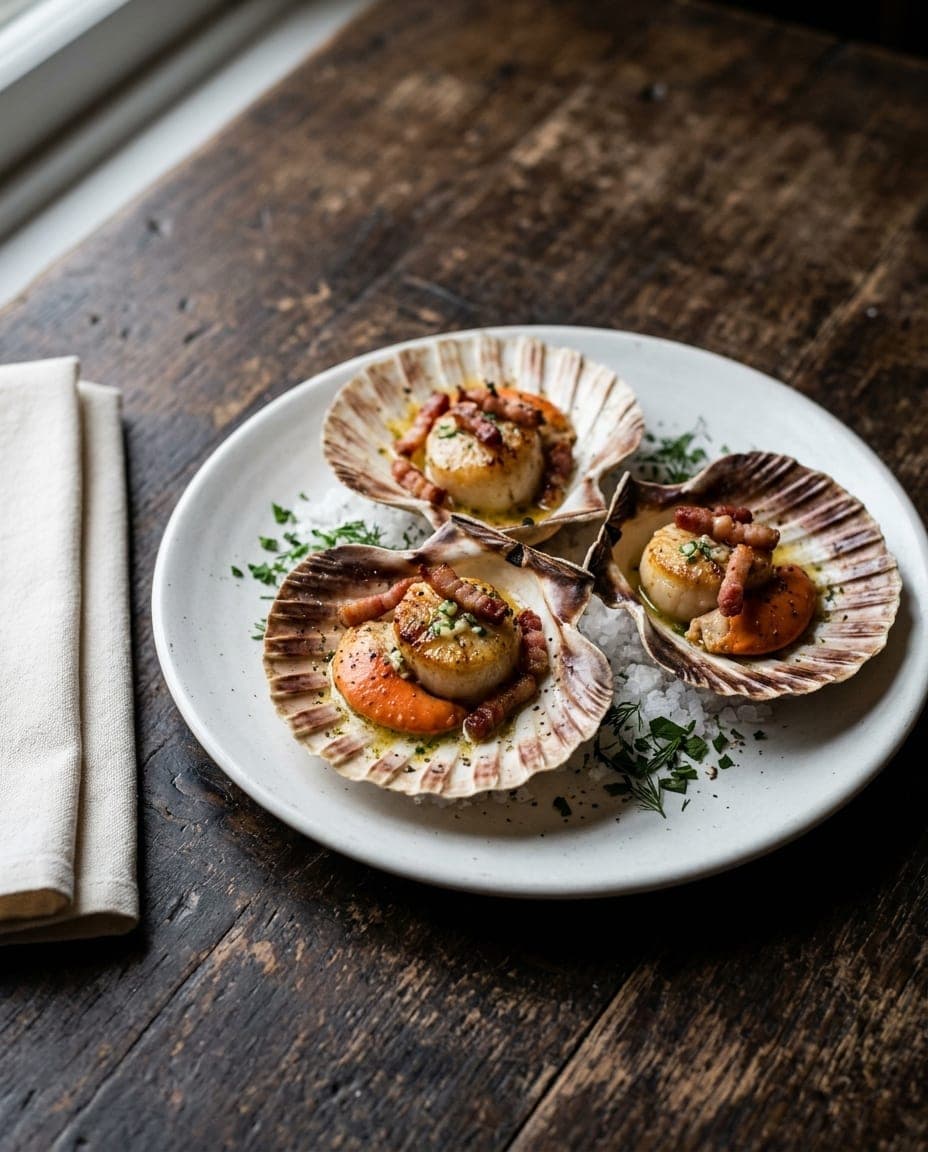
Scallops seared with bacon, in winter only
- Local name
- Rye Bay scallops
- Served with
- Bacon, garlic butter
- Best eaten at
- Rye Bay Scallop Week
- Pairs with
- Sussex sparkling wine
What it is
Rye Bay scallops refer to king scallops caught in the waters off the coast of East Sussex, specifically around the small hill town of Rye. While the fishery extends along parts of the south coast, these shellfish are closely associated with Rye and the marshes behind it. The season runs from November through May, a period when the cold water brings out the best in the catch before the fishery closes for the summer months to allow stocks to recover.
The dish is defined by its simplicity. Unlike many seafood preparations that rely on heavy sauces or complex techniques, Rye Bay scallops are usually cooked with minimal intervention to let their natural sweetness shine. They are often seared quickly in butter alongside smoked bacon, or served with a generous spoon of garlic butter and crusty bread. The orange coral, the roe attached to the white muscle, is considered an essential part of the experience. Leaving it behind is widely viewed as a waste of the most flavourful element.
The Rye Bay Scallop Week
Rye holds an annual event known as Rye Bay Scallop Week, now also billed as the Rye Bay Scallops Festival, which runs for nine days in February when the season is at its peak. During this time, restaurants in and around the town focus on the local catch. It is not a competition between individual establishments but rather a collective celebration of the harvest. The week draws visitors who wish to taste the scallops fresh from the water while they are still abundant and at their best quality.
The timing aligns with the traditional fishing calendar. As the weather turns colder and the days shorten, the local fishermen head out to Rye Bay. The town then opens its doors to welcome those eager to sample the result of that work. This gathering has become a key moment in the culinary calendar for East Sussex, marking the arrival of winter seafood with a focus on local provenance rather than imported alternatives.
What goes into it
The preparation relies on a few core ingredients that highlight the quality of the shellfish. There is no single official method, but the most common approach involves searing the scallops in butter until they develop a light golden crust. The fat from smoked bacon is often used to cook them, adding a salty depth that complements the sweetness of the meat.
Other variations see the scallops served with garlic butter, where the heat of the pan melts the butter into a rich sauce that coats the shellfish and any accompanying bread. The orange coral is usually cooked along with the white muscle, either seared together or added to the sauce at the end. This combination creates a dish that is rich in texture and flavour without requiring heavy seasoning.
- King scallops: Caught from Rye Bay, these are larger than many other varieties and prized for their sweet, nutty taste.
- Smoked bacon: Provides a salty, smoky counterpoint to the delicate sweetness of the shellfish.
- Butter: Used for searing or as a base for garlic butter, adding a creamy richness.
- Garlic: Often minced into the butter to infuse it with a sharp, aromatic flavour.
- Crusty bread: Served alongside to soak up the melted butter and scallop juices.
How to eat it
The dish is best enjoyed as a starter or a light main course during the winter months. They arrive on the half-shell or plated plainly with the bacon and the butter. The orange coral should be eaten alongside the white muscle, as the two parts offer different textures and flavours that work well together.
A glass of Sussex sparkling wine is the local pairing, and the acidity does the work against the butter and the bacon fat. Much of it is grown on the chalk of the South Downs, the same chalk that runs under Champagne.
Curious facts
- The coral is key. Many diners overlook the orange roe, but it is often described as the sweetest part of the scallop and is eaten with the white muscle in Rye.
- Seasonal closure. The fishery closes during the summer months to protect the breeding stocks, meaning these scallops are only dredged from November to May.
- A town-wide celebration. Unlike a single restaurant special, the Rye Bay Scallop Week sees restaurants across the town preparing the dish in their own way.
- Local waters. The scallops come specifically from the bay off the coast of Rye, an area known for its specific conditions that support the king scallop population.
- Simple cooking. The best versions rely on minimal ingredients, letting the natural flavour of the shellfish be the star of the plate.
Where to try it
Rye, in February, during Scallop Week, when most kitchens in the town have them on in one form or another and the place is busier than its size suggests.
Outside that week the scallops are landed from November to May and sold across Rye, Hastings and the villages between them, from quayside shops as well as restaurants. In summer local dredging is closed, so scallops advertised then almost certainly came from somewhere else.
Where to try it
1 region
 Wine Tasting1 destination
East Sussex
East Sussex, located on the southern coast of England, features a mix of coastal beauty and historical significance. The region is famous for its striking white chalk cliffs, particularly at Beachy Head and the Seven Sisters. Brighton, the largest city, is known for its vibrant arts scene and historic pier, while smaller towns like Lewes offer a glimpse into medieval life with its well-preserved castle and charming streets. The South Downs National Park presents excellent hiking opportunities, showcasing diverse landscapes and rich wildlife. East Sussex is also home to unique local produce, including wines from the vineyards around the area, making it ideal for culinary exploration.
Wine Tasting