Pork scratchings
Hard fried pork rind, sold on the bar
- Local name
- Pork scratchings
- Best eaten at
- A Black Country pub
- Pairs with
- Bitter or mild ale
What it is
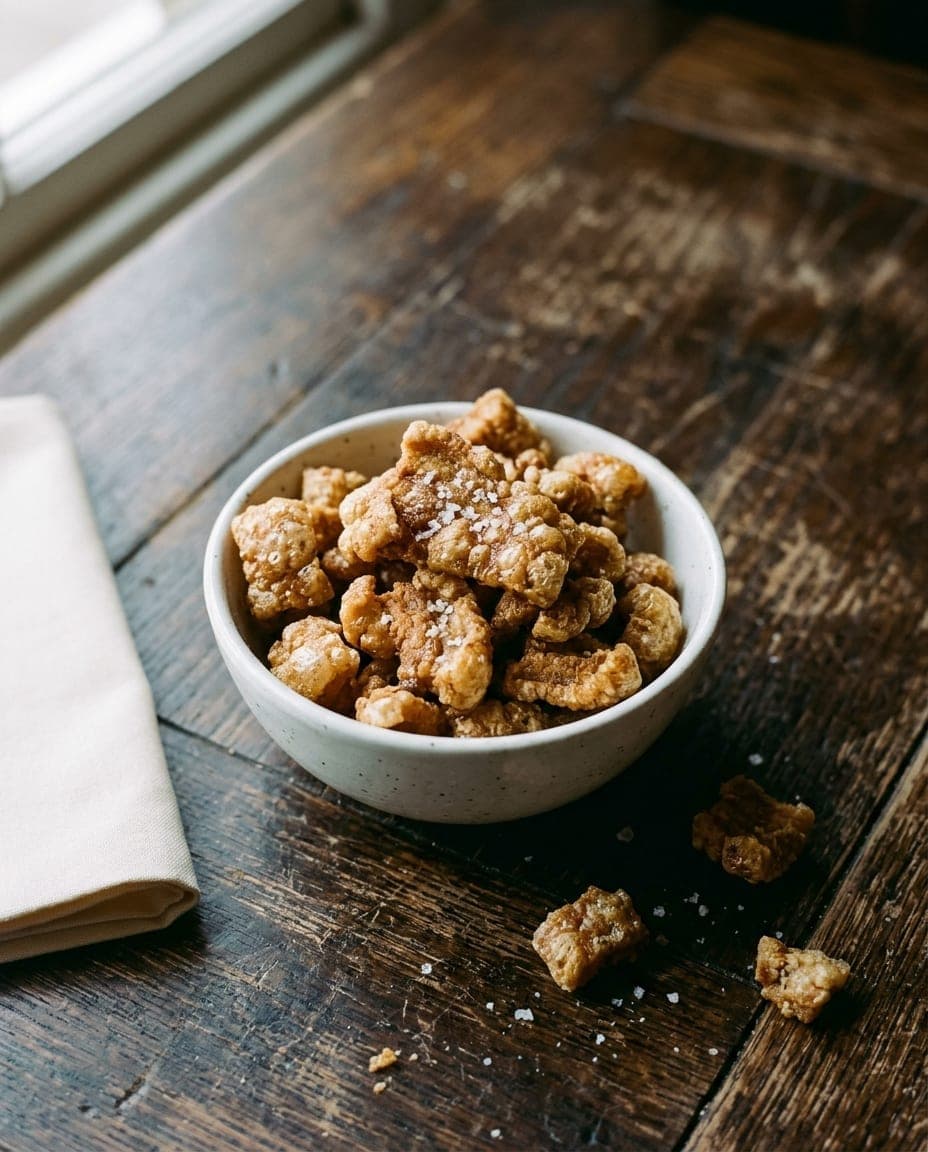
Pork scratchings are pork rind, with its layer of fat, that has been deep-fried until it blisters, turns a deep brown and shatters under pressure, then salted. Unlike the softer skin found on a Sunday roast or the light, airy puffs popular in modern snack aisles, these are dense, hard and intensely savoury. The texture is the defining feature: they do not bend but break with a sharp crackle, releasing a burst of salted fat that coats the tongue.
This dish belongs firmly to the Black Country, an area in the West Midlands defined by its industrial history rather than its scenery. Scratchings are now sold in pubs across Britain alongside crisps and nuts, but popular belief puts their roots in the working-class communities of this region. The product is sold in small bags on the bar, often weighing just enough to be finished in one sitting or kept for hours while drinking.
The name distinguishes the item from other forms of pork skin. Crackling refers to the skin roasted fresh with meat, where the fat remains soft and the skin crisp but chewy. Puffs or crunch are modern variations where the skin is puffed up to be light and airy. Scratchings retain the weight and density of the original cut, sometimes with a few bristles still on the skin. The Black Country version is the hard style, a snack in its own right rather than a side dish.
Where the habit began
The tradition of eating fried pork rind is not unique to the United Kingdom, but popular belief ties the form known as scratchings to the industrial landscape of the West Midlands, though the details of its origin are uncertain. In the 19th and early 20th centuries, the region was a hub for metalworking, coal mining and heavy industry. The working conditions were harsh, and food needed to be cheap, filling and portable.
Pork skin was an inexpensive by-product of butchery, and working-class families who kept their own pigs wasted little of them. Frying the rind in the animal's own fat turned it into a hard snack that kept. The Black Country pubs became the natural venue for this habit. The environment of a pub in this region, with its low ceilings and warm atmosphere, suited a snack that could be eaten with one hand while holding a pint.
The practice spread through the local networks of workers who shared these bags on the bar or took them home to share with families. Over time, the snack became a marker of identity for the Black Country. It is not merely a food item but a cultural touchstone that signals belonging to the region. While other parts of the UK might serve crackling or puffed rind, the hard, dark scratchings remain the signature of the West Midlands.
The making and the texture
The process relies on simple ingredients and patience rather than complex equipment. The rind is taken from the pig with its fat, the hair is singed off and the skin is cut into pieces. It is then fried in hot fat until it blisters and turns a deep brown colour. The heat causes the fat within the skin to expand rapidly, creating the characteristic hard structure.
The result is salty, savoury and purely of pork: nothing is added beyond salt — no sugar, no spice, no smoke. Some pieces keep a few bristles on the skin, adding to the rustic character. The texture is distinct from the crackling served with roast pork or the light puffs found in supermarkets. These scratchings are hard enough to require care when biting, often breaking into shards rather than chewing smoothly.
The fat used for frying is usually lard or a neutral oil, which does not overpower the pork flavour but allows the saltiness to dominate. The final product is dry and brittle, designed to be eaten quickly or kept in its bag until needed. There is no soft centre; every part of the rind is intended to shatter.
How it is eaten
The traditional way to eat pork scratchings is at a Black Country pub, where they are sold in small bags on the bar. The bag is often handed directly to the customer, who may hold it while drinking or place it on the table to share with others. It is not a dish served on a plate with cutlery; it is a hand-held snack meant to accompany conversation and drink.
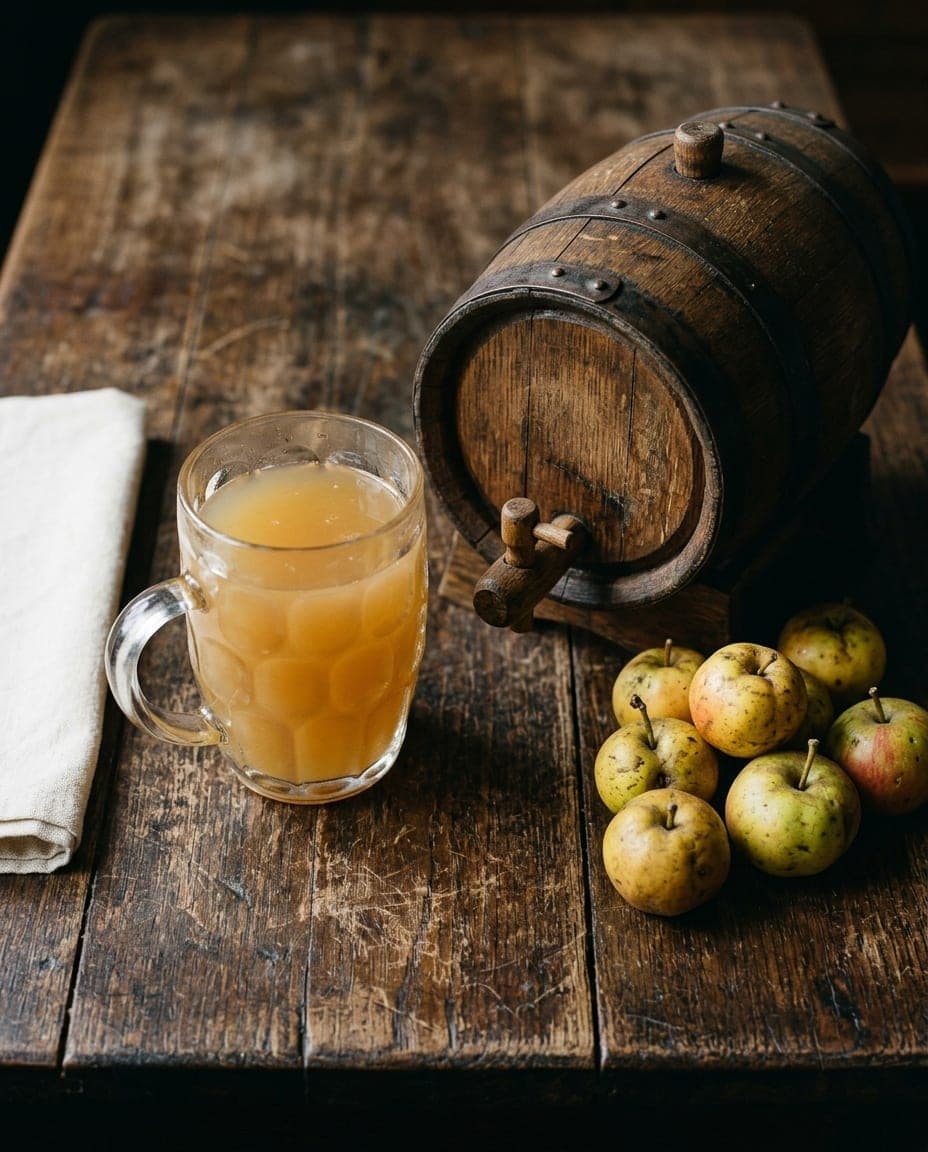
The pairing is specific. Scratchings are almost always eaten with bitter or mild ale from the region. The bitterness of the beer works against the salt and the fat, and the carbonation clears the mouth between handfuls. A pint of ale provides a liquid contrast to the dry, hard texture of the rind. Some drinkers also enjoy them with cider, though ale remains the standard companion.
The consumption is social and informal. In a pub setting, one person might open the bag and pass it around, or everyone might have their own small portion. The snack is often eaten slowly, allowing the salt to dissolve on the tongue and the fat to coat the mouth. It is not a dish for rushing; the texture demands attention.
Curious facts
- The hard edge. Unlike the soft crackling of a roast or the light puffs of modern snacks, Black Country scratchings are intentionally dense and brittle, designed to shatter rather than chew.
- A by-product turned staple. The snack originated from pork skin, a cheap by-product of butchery, which was fried and salted to create a long-lasting, portable food for industrial workers.
- No spices needed. Traditional scratchings rely only on salt for flavour; they do not contain added herbs, pepper or sugar, making the taste purely salty and porky.
- A regional marker. While other parts of the UK serve pork rind, the hard, dark version is a specific signature of the West Midlands and the Black Country.
- Bag service. Butchers once sold scratchings in small paper bags; today they come in sealed packets on the bar, not on plates, reinforcing its role as a casual hand-held accompaniment to drink.
Where to try it
The best place to eat pork scratchings is in a Black Country pub, particularly those in towns like Dudley, Wolverhampton, West Bromwich or Stourbridge. These pubs sell the hard, dry version in bags on the bar, often made in the region, and usually alongside local ale.
Pork crunch is a different product: lighter, puffed, uniformly shaped. Proper scratchings are heavier, irregular, and often still carry a bristle or two on the skin.
Where to try it
1 region
 Boat Rentals1 destination
West Midlands
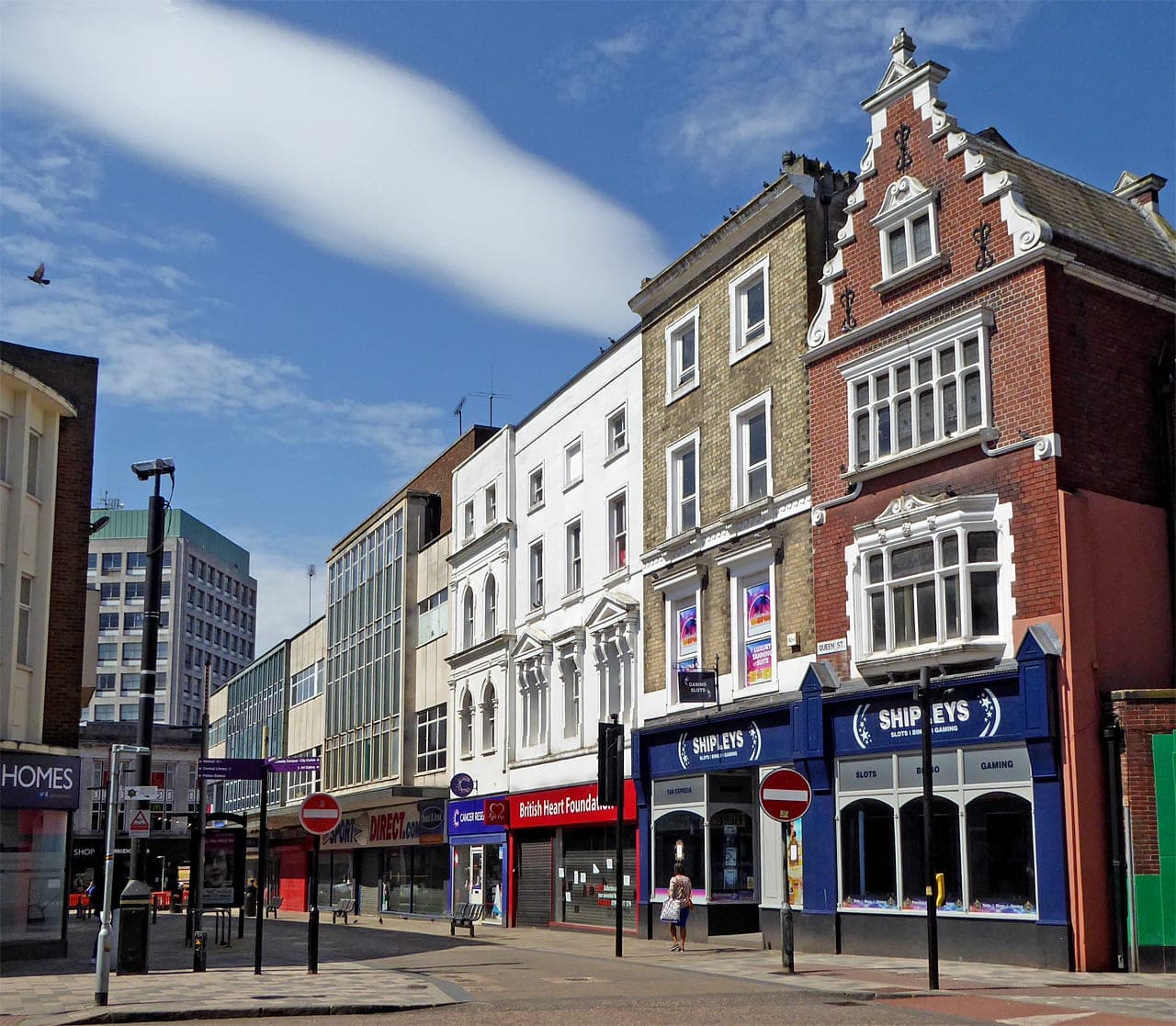
The West Midlands is a historically rich region in the UK, known for its industrial heritage and vibrant cultural scene. Birmingham, the largest city, boasts a variety of museums and the diverse cuisine of its Balti Triangle. Nearby, Coventry is famous for its medieval cathedral and the unique Herbert Art Gallery. The region also features the picturesque canals of Stratford-upon-Avon, the birthplace of Shakespeare, where visitors can explore historic sites related to the playwright. The Malvern Hills offer stunning landscapes and walking trails, ideal for outdoor enthusiasts. This area is recognized for its local festivals celebrating everything from music to food, providing a glimpse into the region's cultural tapestry.
Boat Rentals