Isle of Mull Cheddar
A pale, sharp raw-milk cheddar from Mull
- Local name
- Isle of Mull Cheddar
- Served with
- Oatcakes, chutney
- Best eaten at
- Tobermory, Isle of Mull
- Pairs with
- Single malt whisky
What it is
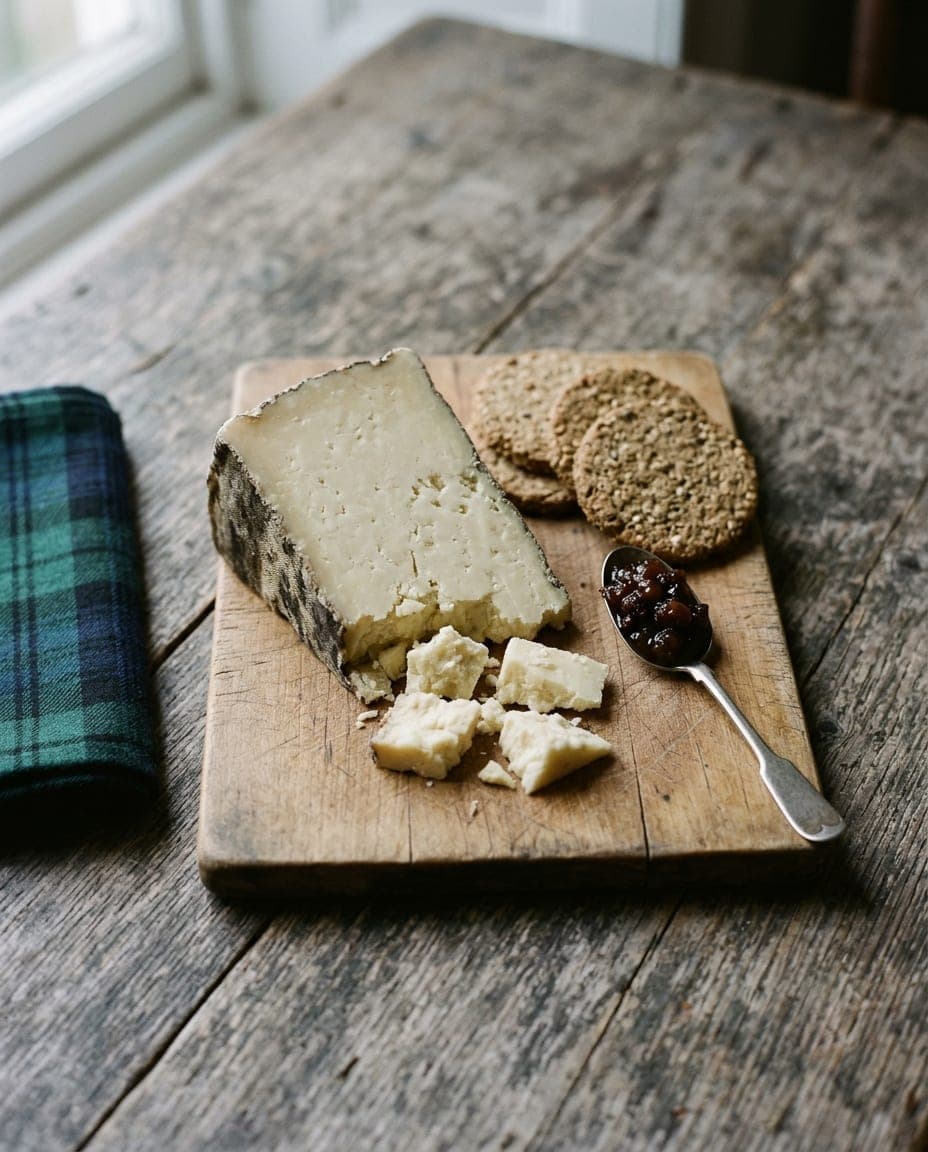
Isle of Mull Cheddar is a local speciality made on a farm just outside Tobermory, the main town on the Isle of Mull in Argyll and Bute. It is not a nationwide product but a regional one, defined by its location and the specific conditions of the island. The cheese is pale in colour, avoiding the deep orange often seen in British cheddars, and it carries a sharp, tangy flavour that can turn slightly fruity with age.
Unlike many industrial versions, this is a raw-milk cheese, meaning the milk is used without being pasteurised. This preserves the natural microflora of the herd and the local grasses. The texture is firm but often crumbly when cut, and it frequently displays faint blue veining. In this context, the veining is not considered a fault or an error in production; it is an accepted characteristic that adds to the complexity of the flavour.
The cheese is made year-round, though its character shifts with the seasons. The wet climate of the west coast limits grass growth during the winter months, which forces the herd to rely on stored feed. This reliance on alternative fodder plays a significant role in the final taste of the cheese, giving it a distinct profile that differs from cheddars made purely on fresh pasture.
Why the feed matters
The most notable feature of this cheddar is the diet of the cows. The herd is fed in part on draff, the spent barley left over from the whisky distilling process. It is a practical use for a distillery by-product on an island where winter grazing is limited, and it leaves a specific mark on the milk.
The explanation usually given for the cheese's particular taste is that the draff imparts a subtle, earthy sweetness to the milk, which then translates into the finished cheddar. Whether the draff is the cause or only part of it is not settled, but the link between the island's two trades is plain enough: what the distillery finishes with, the dairy starts with.
How to eat it
Isle of Mull Cheddar is best enjoyed as part of a simple, rustic meal rather than a complex culinary presentation. The traditional accompaniment is oatcakes, which provide a neutral, slightly nutty base that allows the sharpness of the cheese to stand out. A jar of sweet chutney, often made from local fruit like apples or plums, offers a necessary counterpoint to the salt and tang of the curd.
The pairing extends beyond the plate. Single malt whisky is the usual glass for this cheese, creating a natural harmony between the two products of the island. The smoky, peaty notes of a dram from a nearby distillery can complement the earthy undertones of the draff-fed cheddar, while the alcohol cuts through the fat to refresh the palate.
The cheese is usually met over a counter rather than at a table — bought by the wedge, eaten later with oatcakes.
Curious facts
- No colouring. Many Scottish cheddars are tinted with annatto, a seed dye, to a deep orange. This one is left the colour the milk makes it, somewhere between off-white and straw.
- Veining is accepted. Faint blue veins appear regularly and are not treated as a defect but as an expected part of the character of the raw-milk version.
- Draff influence. The spent barley from whisky distilling is fed to the cows, and this is the explanation usually given for the cheese's unique earthy notes.
- Year-round production. Unlike many seasonal cheeses, this one is made throughout the year, adapting to the changing quality of feed in winter and summer.
- Regional scope. It is a speciality of Argyll and Bute, specifically tied to the area around Tobermory, rather than a product found across the whole of Scotland.
Where to try it
Mull itself, near Tobermory, where the farm sells at the door and the island's shops carry it. The ferry from Oban takes under an hour, and the cheese is one of the things people cross for.
Off the island, Scottish cheesemongers and good delicatessens stock it, and it travels better than most raw-milk cheeses because it is hard. What it does not do is turn up in a supermarket chiller under a plastic lid.
Where to try it
1 region
 Boat Rentals1 destination
Argyll and Bute
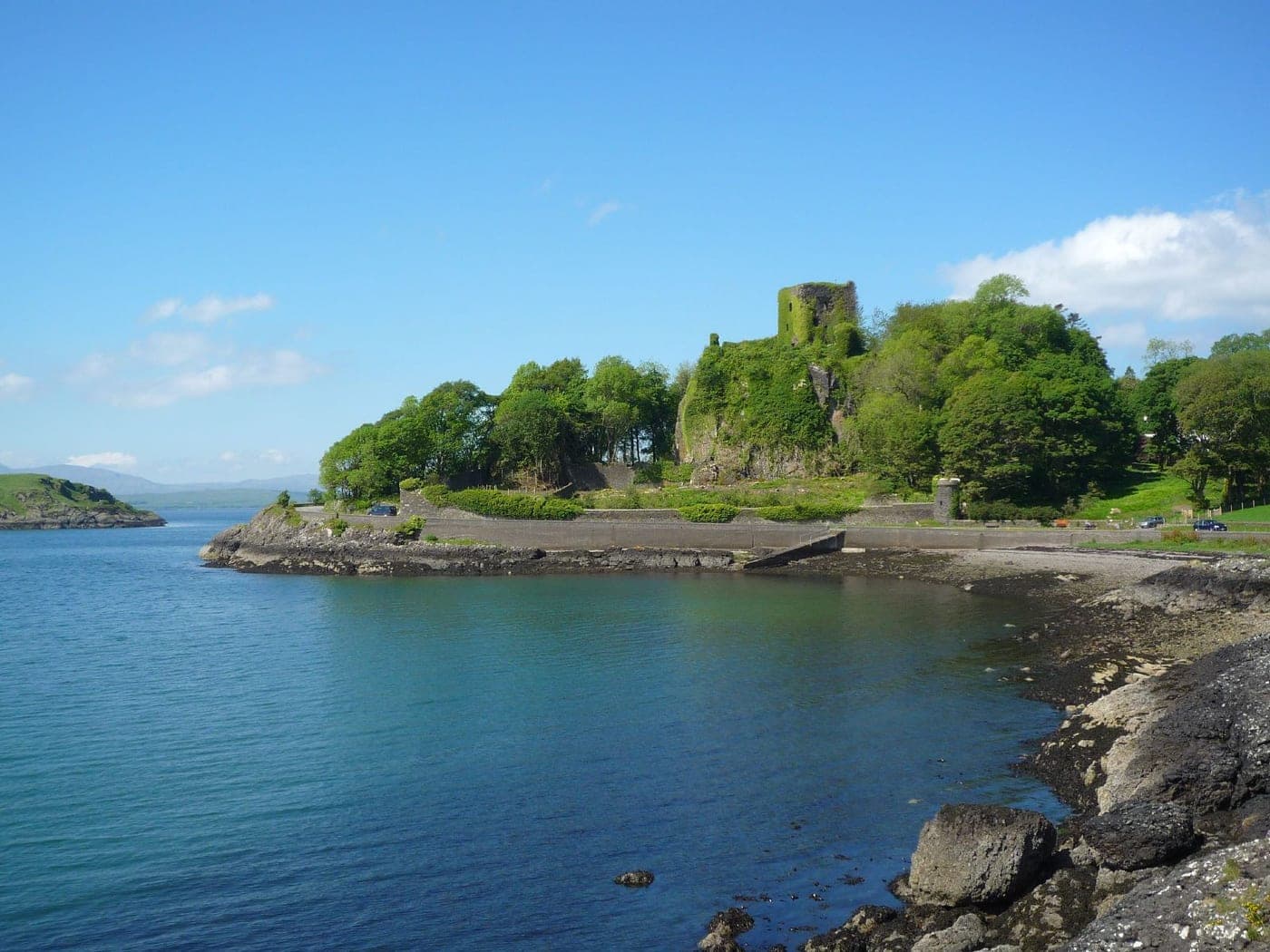
Argyll and Bute, a coastal region in Scotland, offers stunning landscapes and rich history. Home to the historic town of Dunoon, it features Victorian architecture and stunning views of the Firth of Clyde. The region is known for its islands, including Bute and Mull, each with unique cultural heritage and scenic beauty. Argyll is also famous for its ancient castles, such as Inveraray Castle, and the vibrant local food scene, including seafood and traditional whisky. This area is a gateway to exploring the rugged Highlands, with endless hiking trails and opportunities for birdwatching. Its diverse geography from mountains to coastlines provides a backdrop for authentic Scottish experiences.
Boat RentalsCastles