Haggis
Spiced sheep offal in oatmeal, served with neeps and tatties
- Local name
- Haggis
- Served with
- Neeps and tatties
- Best eaten at
- A Burns Night supper
- Pairs with
- Single malt Scotch whisky
What it is
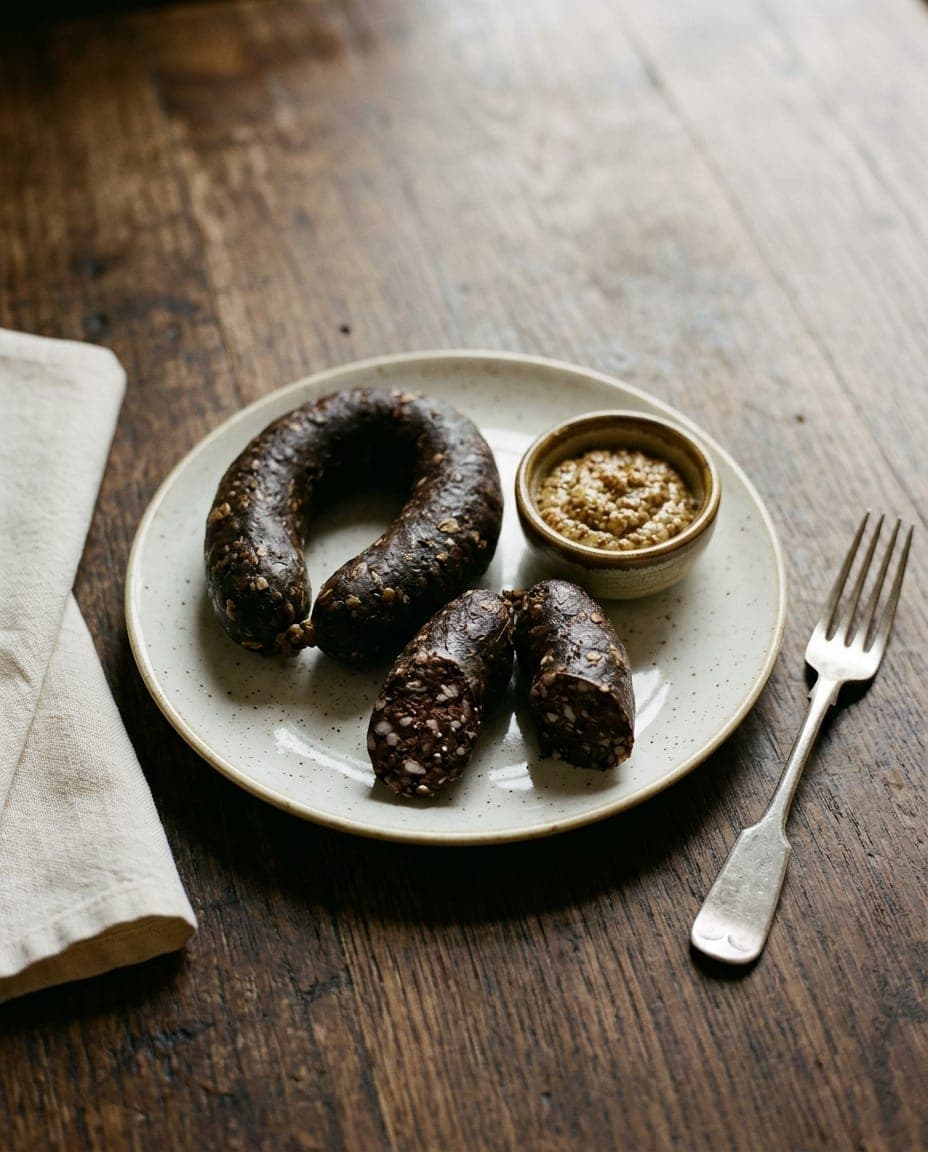
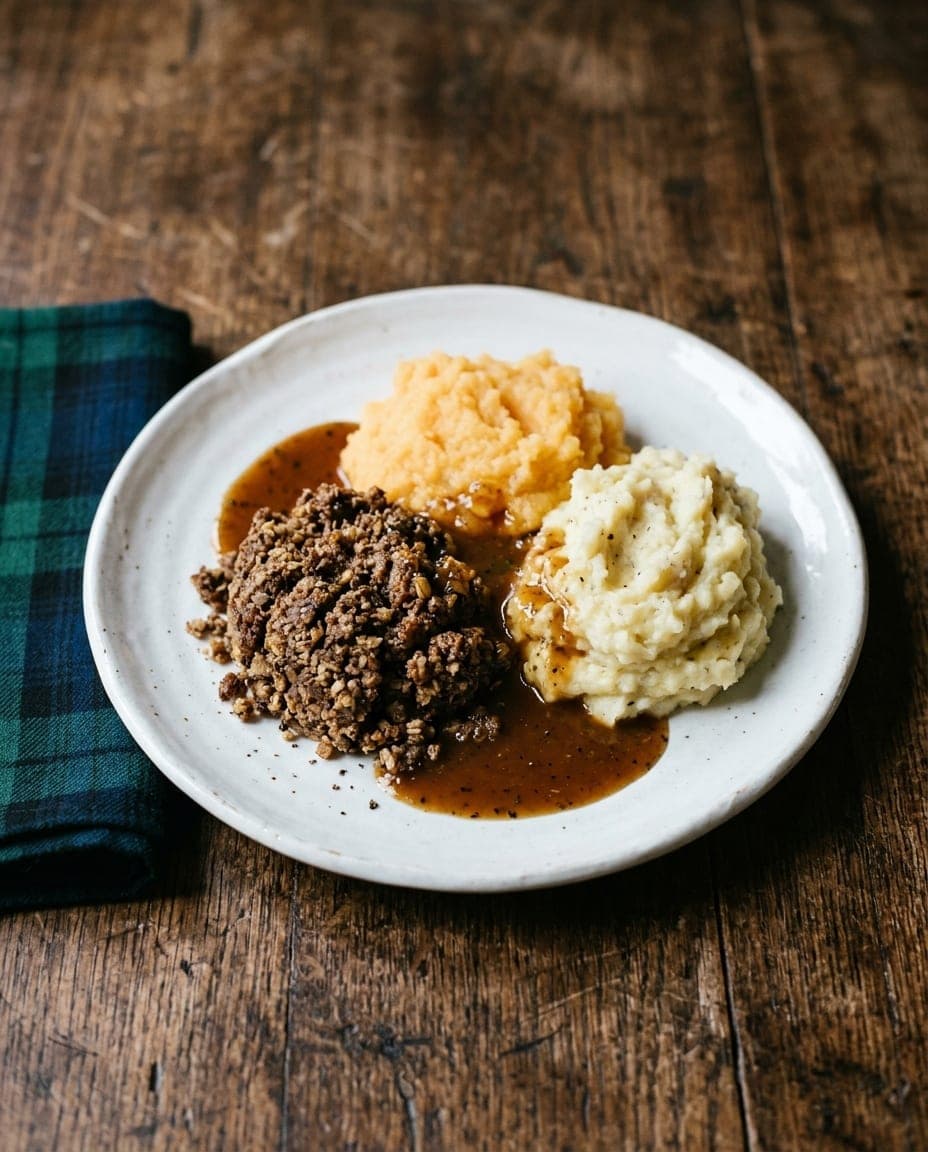
Haggis is the most recognised savoury dish of Scotland, a pudding made from sheep's pluck—heart, liver and lungs—minced together with oatmeal, suet, onion and spices, then encased in the animal's stomach or an artificial casing and simmered. It is not a single uniform taste but a textured blend of earthy meat, nutty oats and sharp seasoning, traditionally served hot with mashed swede and mashed potato, known locally as neeps and tatties. The dish has a long history across the British Isles, though it is inextricably linked to Scotland, where it remains a central feature of national identity.
The result is moist and heavily peppered rather than austere: the offal gives it body, the oatmeal takes up the fat and the juices, and black pepper carries the whole thing. It is eaten year-round in pubs across Scotland and beyond it, and on 25 January it is eaten everywhere at once.
The origins of the pudding
The exact origin of haggis is lost to time, as there is no single recorded date of invention or named inventor. Puddings of offal and grain boiled in a stomach are old and widespread; the earliest known recipe under the name appears in an English cookery manuscript of about 1430. The name has several suggested derivations — the Old French hacher, to chop, and an Old Norse verb with the same sense among them — and none is settled. All of them point at the method rather than at a place.
What is certain is that the dish became a staple of Scottish life long before it was celebrated as a national icon. In the past, it was a way for farming families to use every part of the sheep, ensuring nothing went to waste. The offal was cheap and plentiful, while oats were the primary grain grown in the cooler Scottish climate. Over time, the recipe became standardised, with black pepper and other spices becoming a defining part of the seasoning.
The dish is not unique to Scotland alone. Similar offal puddings exist elsewhere, but the Scottish version distinguishes itself through the specific combination of sheep's pluck, oatmeal and the traditional method of cooking it in a casing. Whether the modern form settled in the 18th century or much earlier is argued over, and the absence of an origin story is itself part of the point: nobody invented it.
How it is made
The traditional method involves taking the sheep's pluck—heart, liver and lungs—and mincing them finely along with oatmeal, suet (the hard fat around the kidneys), chopped onion and a generous amount of black pepper. Salt is added for seasoning, and the mixture is bound together with stock or water before being packed into the stomach of the sheep. The stomach is then sewn shut and simmered in a large pot of water for several hours until the casing is firm and the interior is cooked through.
In modern commercial production, the artificial casing has largely replaced the sheep's stomach due to hygiene regulations and ease of handling. The filling remains similar, though some producers may add other spices such as coriander or mace, and adjust the ratio of meat to oats depending on the desired texture. The result is a dense, moist pudding that holds its shape when sliced.
A good one is judged on the balance: enough offal to taste of itself, enough oatmeal to hold, and enough pepper to make the back of the throat register it.
How it is eaten
Haggis is traditionally served as a main course, accompanied by neeps and tatties: mashed swede and mashed potato. The two vegetables are often seasoned with butter, salt and pepper to complement the savoury richness of the haggis. A whisky sauce, made from Scotch whisky, stock and cream, is frequently served alongside to add a sharp, warming note that cuts through the heaviness of the dish.
It is cut into thick rounds, or spooned out of the casing, with the two mashes beside it. Softness against softness, which is why the pepper and the whisky sauce matter.
Cranachan or clootie dumpling tends to follow it on a formal night.
Burns Night and the ceremonial serving
Burns Night, celebrated on 25 January, is the occasion when haggis reaches its highest cultural prominence. The haggis is carried into the room on a platter behind a piper, and set down for the recitation of Burns's Address to a Haggis.
The poem describes the haggis with humour and affection. In the third verse, at the line "An' cut you up wi' ready slight", the speaker cuts open the casing to reveal the "gushing entrails" of the next line. At the end of the poem the haggis is toasted with whisky and then served to the guests. The recitation falls to the host or a guest, and the knife goes in on the line.
The evening is for Burns rather than for the pudding: there are toasts, readings, whisky, and Auld Lang Syne at the end of it.
Curious facts
- The lungs are banned in the United States. American food safety rules have barred sheep's lung from food since 1971, which means that authentic traditional haggis cannot be legally sold or imported into the country. Many American versions use alternative fillings to comply with these rules.
- The poem is part of the ritual. The Address to a Haggis was written by Robert Burns in 1786 and has become an integral part of the Burns Night celebration, recited before the haggis is served.
- It is not a sweet dish. Despite being called a pudding, haggis is a savoury dish with no sugar or sweet ingredients. The term "pudding" in British English refers to a variety of dishes, both sweet and savoury.
- The casing is often artificial. While traditional haggis was cooked in a sheep's stomach, most modern versions use an artificial casing made from collagen or other materials for hygiene and convenience.
- It pairs with whisky. The traditional accompaniment to haggis is single malt Scotch whisky, which complements the rich, earthy flavours of the dish.
- It is eaten year-round. While Burns Night is the peak season, haggis is available in pubs and restaurants across Scotland and the United Kingdom throughout the year.
Where to try it
The best place to eat haggis is in a traditional Scottish pub or restaurant, whether in Edinburgh, Glasgow or a Highland town. Many establishments offer a Burns Night menu on 25 January, featuring haggis as the centrepiece of the evening. In other months, the dish is often available as a main course on the regular menu, sometimes accompanied by a whisky sauce or a side of neeps and tatties.
Butchers are the other route: most Scottish towns have one that makes its own, sold by weight to reheat, and the difference between a butcher's haggis and a supermarket one is considerable.
Where to try it
1 destination
 Camper Van Rentals
Edinburgh
Historic capital with castle-crowned crags and festival culture
Camper Van RentalsCastles
1 region
- Camper Van Rentals1 destination
Edinburgh
Scotland's capital, Edinburgh, is renowned for its historic and architectural significance. The city is famous for the iconic Edinburgh Castle perched atop Castle Rock, offering panoramic views. Its Old Town is a UNESCO World Heritage site, featuring cobbled streets and medieval buildings. Nearby, the New Town showcases Georgian architecture and vibrant cultural spots. Beyond the city, the Scottish Borders offer picturesque landscapes and historic towns like Melrose and Jedburgh, known for their abbeys. Edinburgh is also a gateway to the Highlands, where travelers can explore remote glens and lochs. The region hosts various festivals, including the renowned Edinburgh Festival Fringe, celebrating arts and culture.
Camper Van RentalsCastles