Dorset Blue Vinny
A crumbly Dorset blue, revived in the 1980s
- Vegetarian
- Local name
- Dorset Blue Vinny
- Served with
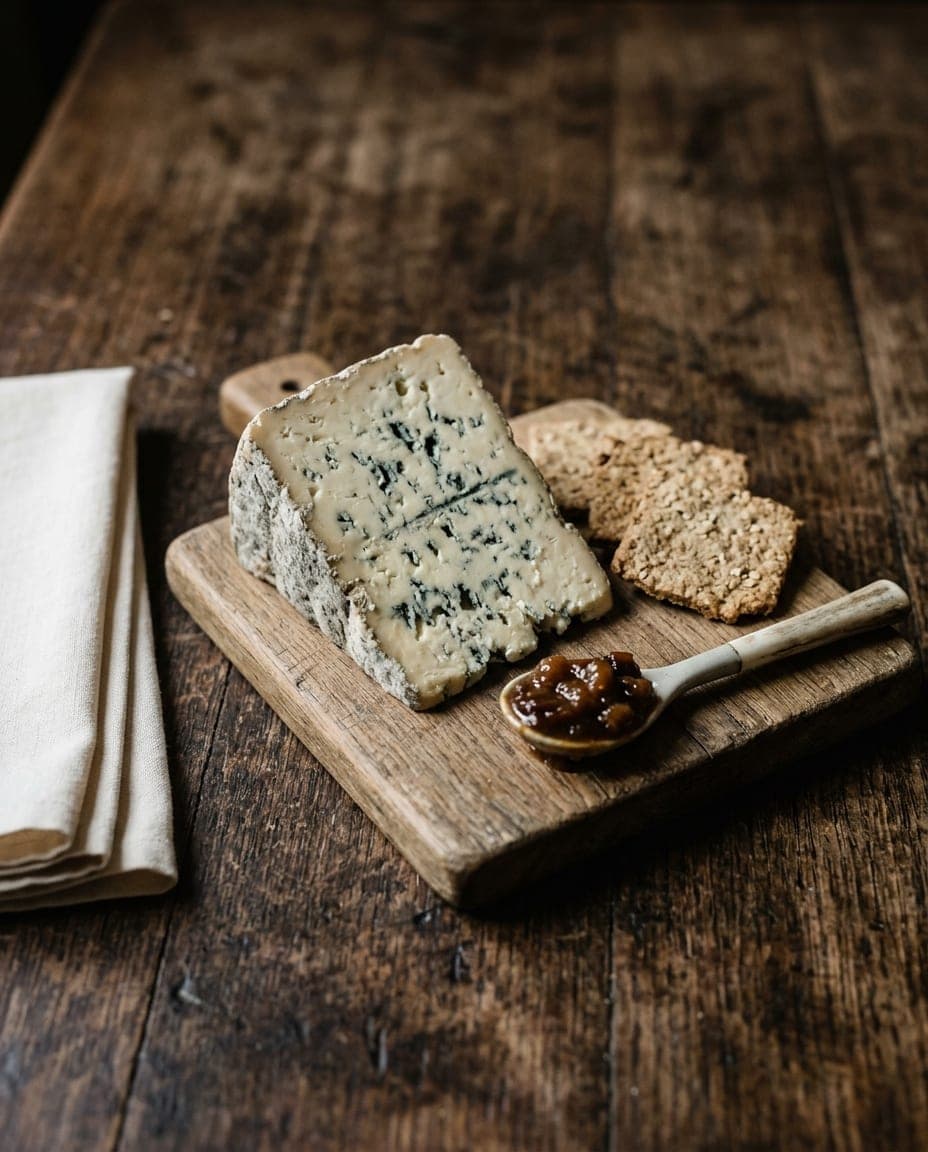
- Crackers, chutney
- Best eaten at
- A Dorset pub ploughman's
- Pairs with
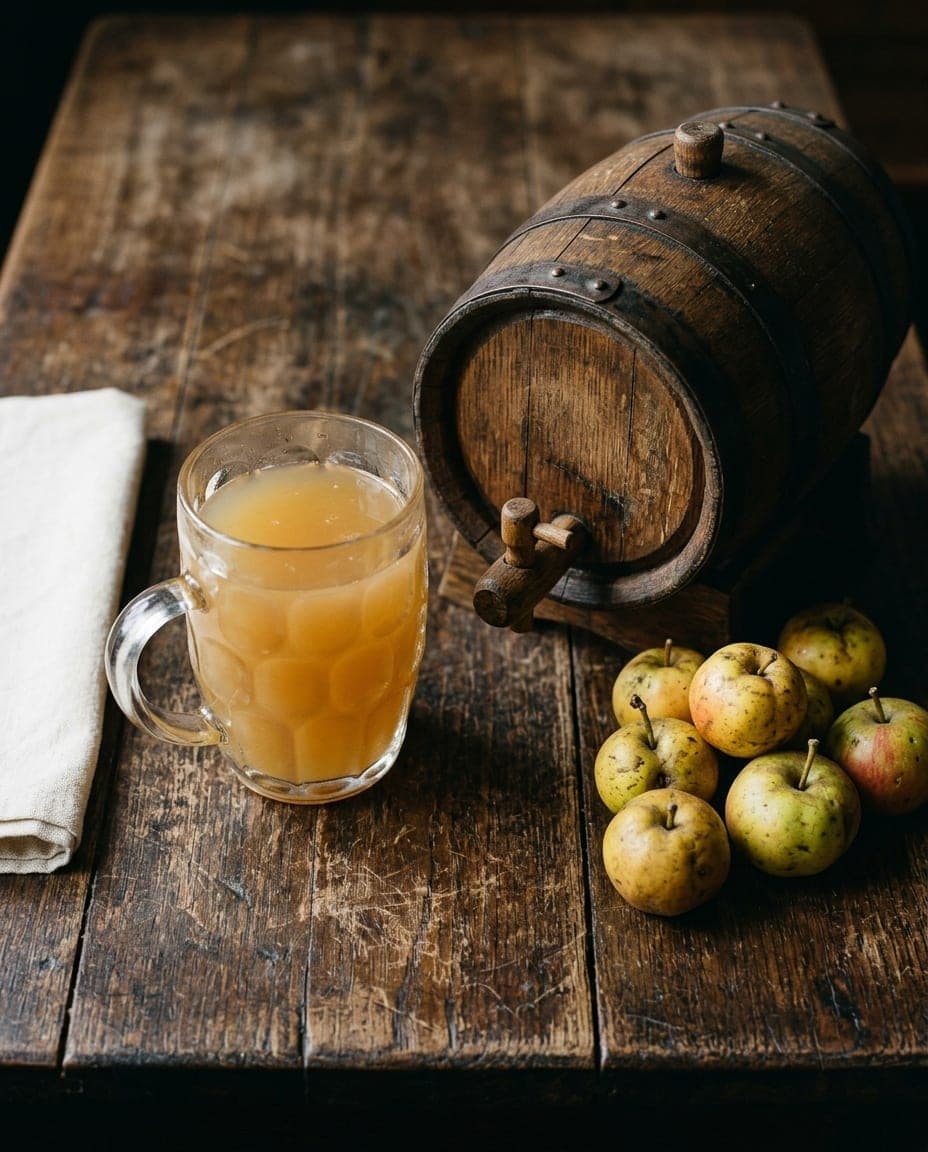
- Port or local cider
What it is
Dorset Blue Vinny is a firm, dry, crumbly blue cheese made from partly skimmed cow's milk, a habit inherited from farms where the cream went to butter making. The result is a lean cheese that lacks the creamy fat of many other blues, offering instead a chalky texture and a pale body threaded with sharp blue veins. It has a strong, earthy smell that signals its age and intensity before a single bite is taken.
The name Vinny is usually traced to an old word for mouldy, preserved in Dorset dialect (some say it is a corruption of "veiny"), reflecting the way the cheese was traditionally left to develop its character in cool cellars. After the Second World War, the farmhouse production that gave the cheese its unique identity all but stopped. It was not until the 1980s that a single Dorset dairy farm revived the recipe, turning a forgotten local product into a regional speciality once more.
Where it comes from
The cheese is tied specifically to the county of Dorset on the south coast of England. It belongs to a tradition of farming households where the milk was processed with care: the cream was skimmed off to make butter, and the remaining skimmed milk was turned into a cheese that could be stored for longer periods. This method created a dry, sturdy loaf that was practical for rural life but distinct from the richer cheeses of neighbouring regions.
By the mid-20th century, the shift towards industrial dairy farming and changes in local consumption habits meant that farmhouse Vinny production all but ceased. The knowledge of how to make it and the specific conditions required for its maturation were at risk of being lost forever. The revival in the 1980s was driven by one farming family near Sturminster Newton, who sought to restore this part of Dorset's food history, ensuring that the lean, crumbly character of the original would return to shelves and menus.
What goes into it
The ingredients are simple, reflecting the constraints of traditional dairy farming:
- Partly skimmed cow's milk, pasteurised today; traditionally the cream was taken off for butter making.
- Blue mould cultures, introduced to create the characteristic veins and sharp flavour.
- Salt, added to season the curd and aid preservation during maturation.
- Time, as the cheese is aged until it reaches a dry, crumbly consistency.
With the cream gone the texture breaks into shards rather than yielding, and the veining runs sharp against a chalky body. Only one farm makes it, so the output is small.
How to eat it
Dorset Blue Vinny is rarely served as a standalone cheese in a fine dining setting. It is most at home on a pub ploughman's, where its dryness stands up well against other ingredients without making the plate too heavy. The classic accompaniment is a side of sharp chutney, often made from apples or onions, which cuts through the strong blue flavour and adds a touch of sweetness.
Crackers are the preferred vehicle for the cheese, their crisp texture providing a necessary contrast to the crumbly body. A crumbled portion also finds a place in soups, particularly those featuring Dorset watercress, where the cheese melts into the broth to add depth without overwhelming the dish. The traditional pairing is a glass of local cider or a small pour of port, both of which complement the sharpness of the blue mould and the dry nature of the milk.
Curious facts
- The name means mouldy. Vinny is usually explained as an old word for mouldy, referring to the blue veins that define the cheese.
- A near extinction. After the Second World War farmhouse production all but stopped, before a revival in the 1980s brought it back.
- Lean and dry. The cream was removed for butter, leaving a skimmed milk cheese that is crumbly rather than creamy.
- A protected name. "Dorset Blue Cheese" has carried protected geographical status since 1998, so it can only be made in Dorset.
- One maker. Only a single farm currently makes Vinny, keeping the supply limited and the quality consistent.
Where to try it
A Dorset pub serving a ploughman's is the obvious place, and the delis and farm shops across the county sell it by the wedge. Specialist cheesemongers further afield stock it occasionally.
The soup is the other route: Dorset Blue Vinny and watercress soup appears on menus across the county, and it uses the cheese the way the farms originally did — crumbled into something hot rather than served on a board.
Where to try it
1 region
 Boat Rentals1 destination
Dorset
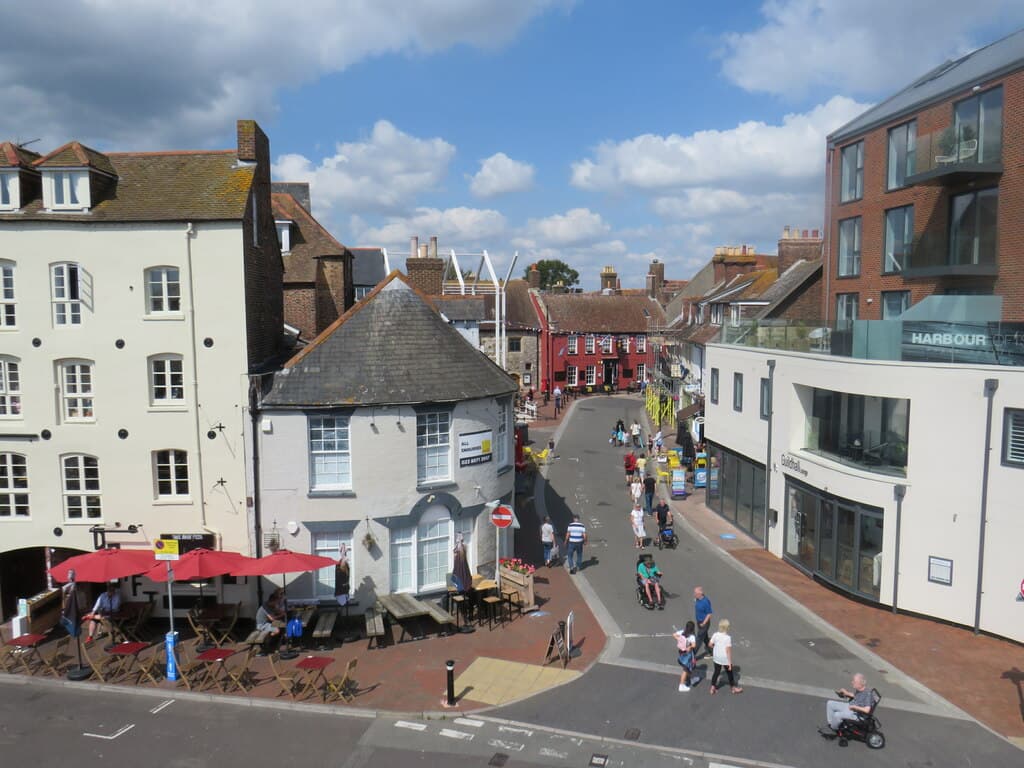
Dorset is known for its stunning Jurassic Coast, a UNESCO World Heritage site featuring dramatic cliffs and fossils. This region is home to the historic town of Dorchester, where Thomas Hardy was born, and the picturesque village of Cerne Abbas, famous for its giant chalk figure. Weymouth, with its sandy beach and Georgian seafront, adds to the coastal charm. The area offers rich agricultural landscapes, with local produce and traditional farms. Notably, it has one of the oldest recorded histories in England, with archaeological sites like Maiden Castle. The region is also famous for its unique stone circles and ancient burial mounds, revealing deep connections to prehistoric cultures.
Boat Rentals