Dorset apple cake
A moist apple cake served warm with cream
- Vegetarian
- Local name
- Dorset apple cake
- Served with
- Clotted cream
- Best eaten at
- A Dorset tea room
- Pairs with
- Tea or Dorset cider
What it is
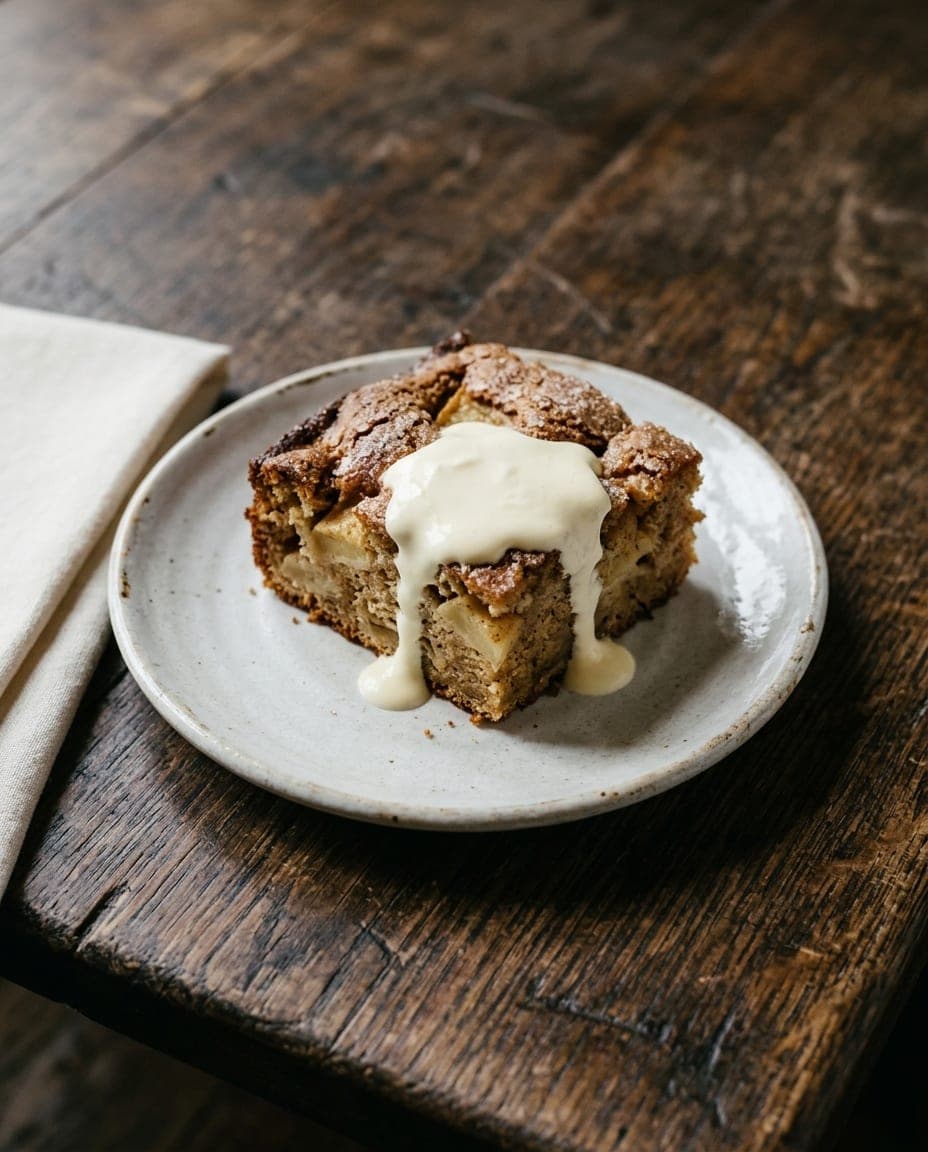
Dorset apple cake is a humble, dense sweet from Dorset in south-west England, where orchards have long been part of the landscape. It is not a light sponge or a delicate tart, but a substantial, moist cake that relies on a generous proportion of cooking apples. In the best versions the fruit is piled in generously, creating a texture that is soft, yielding and deeply flavoured.
The cake is baked in a round tin and typically served warm, often straight from the oven or reheated gently, though cold slices are just as common at tea. It is a dish designed for comfort rather than ceremony, though it holds a special place in the county's food culture. The heat of the cake mellows the sharpness of the apples, while the batter provides a simple canvas that lets the fruit shine.
Where it comes from
The origins of Dorset apple cake are rooted in the county's agricultural history rather than any single inventor or documented event. Dorset is cider country, a landscape of rolling hills and orchards where apples have been grown for centuries. The tradition of baking cakes with abundant local produce is common across rural Britain, but this particular style has become synonymous with the region.
There is no single authoritative version of the recipe. Many households in the county have their own method, varying the ratio of apple to flour, the type of apples used, and whether a sugar crust is added before baking. This lack of a fixed standard is part of its character; it is a dish defined by its ingredients and the care with which they are handled rather than a rigid set of rules.
The cake is most closely associated with the county's tea rooms, where it appears on the menu alongside scones and other local treats. It is a regional speciality that does not claim to be known everywhere in the United Kingdom, but within Dorset it remains a staple of afternoon refreshment.
What goes into it
The ingredients are straightforward, reflecting the simplicity of traditional country baking:
- Cooking apples, such as Bramley or other sharp varieties, peeled, cored and chopped into chunks or slices that soften during baking.
- A simple batter of flour, butter, sugar and eggs, usually with cinnamon or mixed spice and sometimes a little milk to keep the crumb moist.
- Cider, which some bakers stir into the batter to add depth of flavour and moisture, though others stick to water or milk.
- A sugar crust, created by scattering demerara or caster sugar over the top before baking, which caramelises slightly to form a sweet, crunchy layer.
- Clotted cream, the thick, rich dairy product of the West Country, made in Dorset as well as Devon and Cornwall, served alongside or dolloped on top of the warm slices.
The result is a cake that feels substantial and moist, with the apples providing a tart contrast to the sweetness of the batter and the sugar crust.
How it is eaten
Dorset apple cake is usually served as a dessert or as part of an afternoon tea. It is best enjoyed warm, often with the heat still lingering from the oven, which helps the butter and cider (if used) blend into the fruit. The warmth softens the sugar crust slightly while keeping the apples tender.
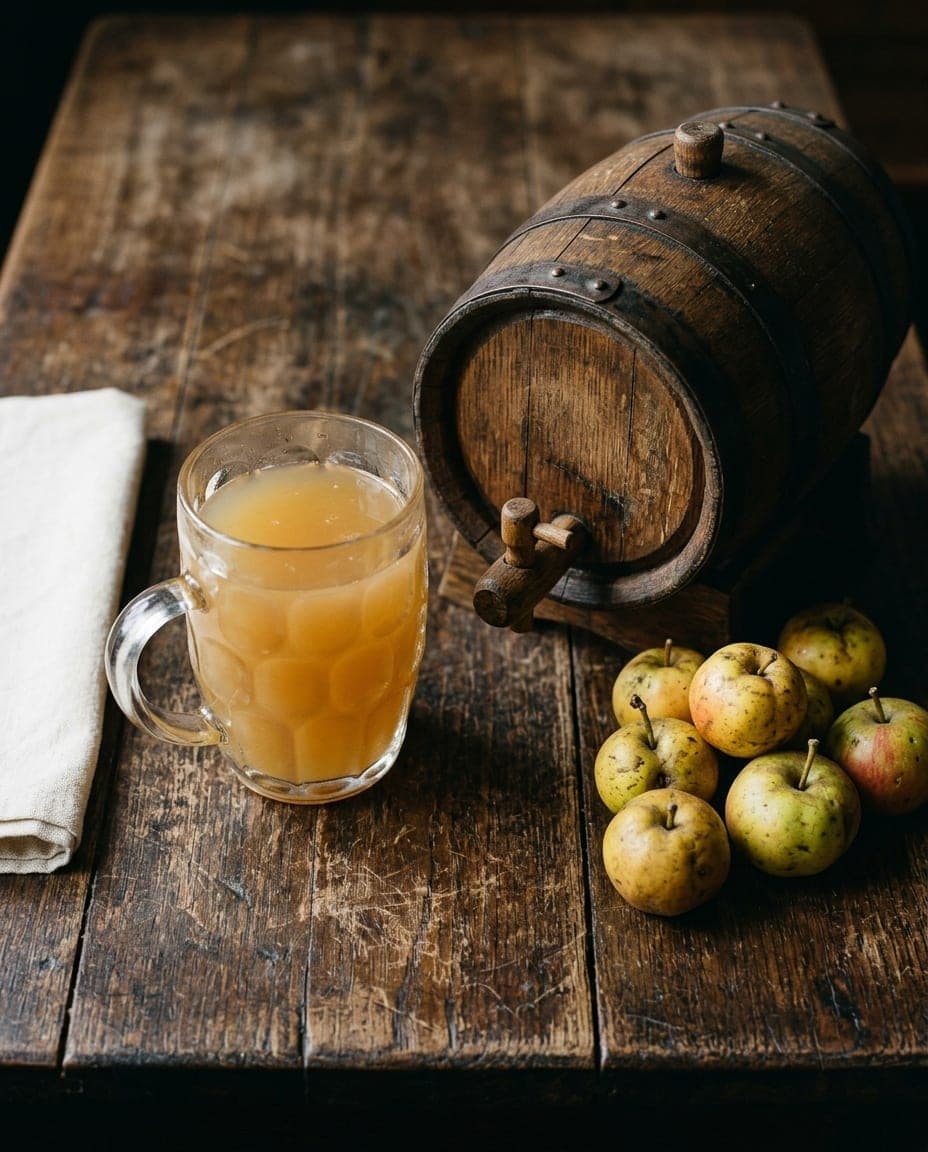
In a Dorset tea room, the cake arrives in generous slices, often accompanied by a pot of hot tea or a glass of local Dorset cider. A large spoonful of clotted cream is served on the side, meant to be scooped onto the warm cake just before eating. The contrast between the hot, spiced fruit and the cool, rich cream is the defining feature of the experience.
It is cut in large slices and eaten with a fork, and it is best on the day it is baked: by the next day the sugar crust has softened.
Curious facts
- Plenty of apple. The finest versions are generous with the chopped apples, making the fruit the true star of the dish.
- No fixed recipe. There is no single "correct" way to make it; variations in apple type, cider inclusion and sugar crust are common across the county.
- A tea room staple. While found in homes, the cake is most famously associated with traditional Dorset tea rooms rather than high-end restaurants.
- Cider connection. Some bakers stir local cider into the batter to enhance the moisture and add a subtle fermented note, tying the cake directly to the region's orchards.
- Warmth matters. The cake is at its best warm, when the apples are soft and the flavours meld; cold slices are common too, but less of an event.
Where to try it
A tea room in Dorset, inland among the orchards or in one of the coastal villages, where it is baked that morning and served warm with clotted cream. Village fêtes and church fairs are the other reliable source, and the cakes there are usually better than the ones on a menu.
It does not travel. Outside the county it is rare, and a packaged version in a supermarket is a different and much drier object.
Where to try it
1 region
 Boat Rentals1 destination
Dorset
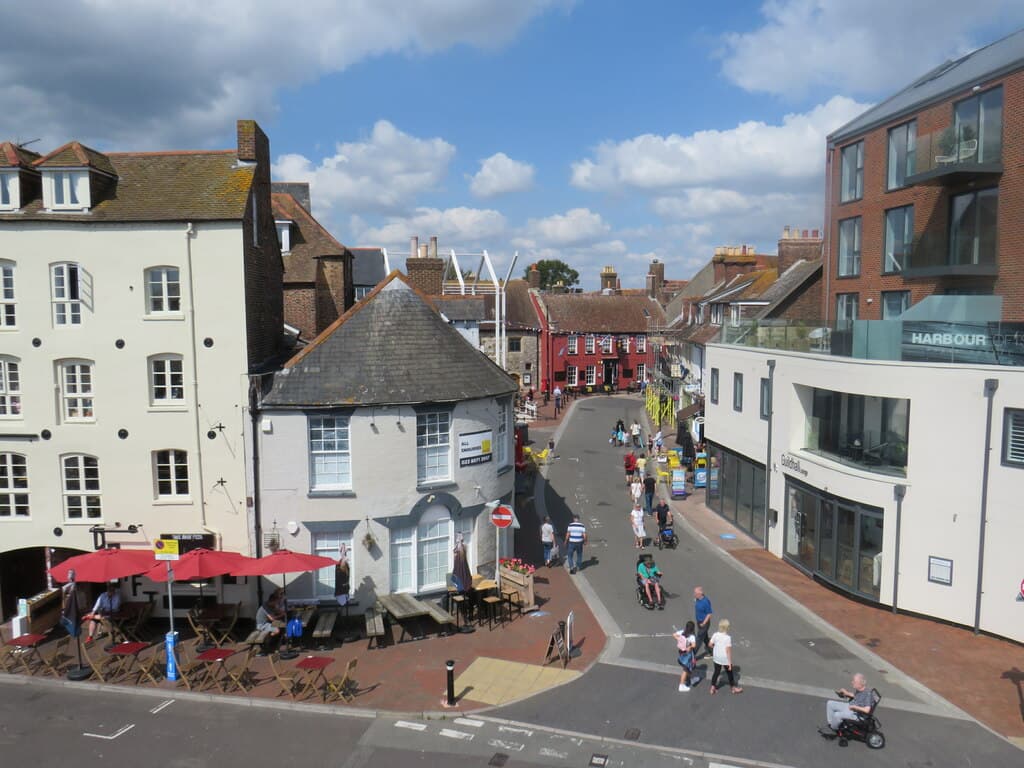
Dorset is known for its stunning Jurassic Coast, a UNESCO World Heritage site featuring dramatic cliffs and fossils. This region is home to the historic town of Dorchester, where Thomas Hardy was born, and the picturesque village of Cerne Abbas, famous for its giant chalk figure. Weymouth, with its sandy beach and Georgian seafront, adds to the coastal charm. The area offers rich agricultural landscapes, with local produce and traditional farms. Notably, it has one of the oldest recorded histories in England, with archaeological sites like Maiden Castle. The region is also famous for its unique stone circles and ancient burial mounds, revealing deep connections to prehistoric cultures.
Boat Rentals