Zürcher Geschnetzeltes
Sliced veal in cream sauce, served with Rösti, from Zurich
- Local name
- Zürcher Geschnetzeltes
- Served with
- Rösti
- Best eaten at
- A Zurich guildhall (Zunfthaus) restaurant
- Pairs with
- Swiss Pinot Noir
What it is
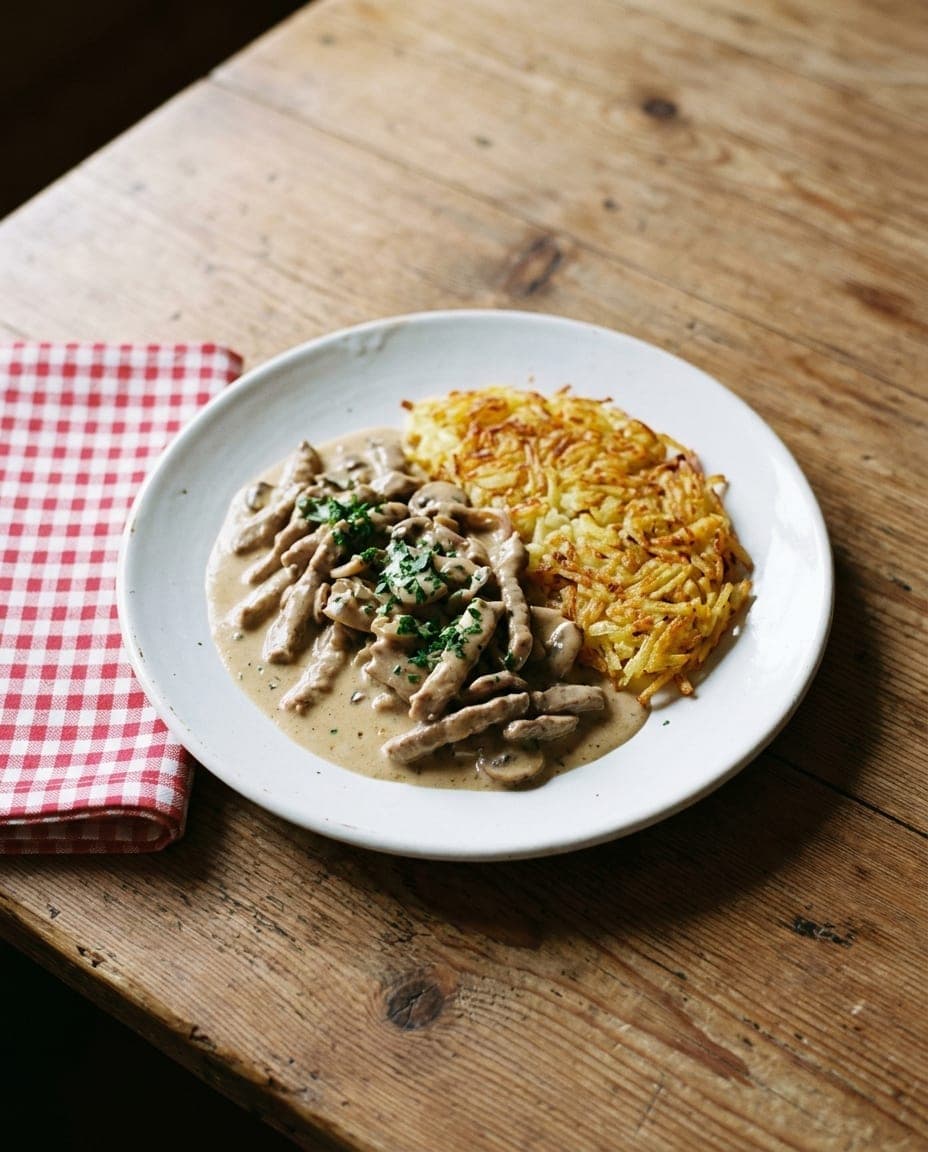
Zürcher Geschnetzeltes is the culinary signature of Zurich, a dish defined by its simplicity and the quality of its ingredients rather than complex technique. The name translates literally to "Zurich-style sliced meat", referring to the thin strips of veal that form the core of the meal. It is a creamy, golden-brown sauce containing onions, mushrooms, and a splash of white wine, into which the cooked meat is briefly returned.
It is almost always served with rösti, the pan-fried cake of grated potato, crisp outside and soft within. In Zurich, the combination is considered a complete meal that requires no other sides. While similar creamed meat dishes exist across Europe, this pairing of veal strips and potato cake is what Zurich puts in front of a visitor. It is not a rustic farmhouse stew but a restaurant classic, served today in the city's old guildhalls among other places.
The guilds and the history
The dish is often linked to the social structure of Zurich. For centuries, the city was organised into guilds, powerful associations of merchants and artisans that held significant political influence. Each guild maintained its own hall, known as a Zunfthaus, where members gathered for meetings, celebrations, and meals. Several of these halls are restaurants today and serve the dish, but there is no evidence that it was born there, and the guilds did not hand down a local dish tradition of their own.
The cooking method is about speed. The veal is cut into thin strips to ensure it cooks in just a few minutes, preventing the meat from becoming tough or grey, with no waiting for long roasting times.
The dish is younger than its reputation. The earliest known recipe "nach Zürcher Art" appears in a cookbook from 1947, and later cookbooks added kidneys, mushrooms and other variations. For a long time it was served with rice or noodles; Rösti became the classic side only in recent decades. Today many traditional restaurants in Zurich serve the dish in their historic dining rooms.
What goes into it
The composition of the dish is straightforward, relying on fresh ingredients that are easily available in Switzerland. There is no single official recipe, yet the core elements remain consistent across almost every kitchen in the region. The primary component is veal, specifically cut from the leg or shoulder into thin strips about half a centimetre thick. This cut allows for rapid cooking and ensures a tender texture when handled correctly.
The sauce begins with onions fried until soft, often accompanied by mushrooms such as field mushrooms or button varieties. White wine provides the acidity that cuts the fat of the cream, while heavy cream creates the final velvety consistency. Some cooks finish the sauce with a squeeze of lemon. Some versions include veal kidneys, though many kitchens omit them due to changing tastes or dietary preferences.
- Veal strips: Thinly cut from young cattle, providing a delicate texture that cooks in minutes.
- Mushrooms: Typically field mushrooms or button mushrooms, sautéed until they release their moisture and develop flavour.
- Onions: Fried gently to form the aromatic base of the sauce.
- White wine: A dry Swiss white wine used to deglaze the pan and add acidity.
- Heavy cream: The primary liquid that creates the rich, golden sauce.
- Lemon juice: A squeeze at the end in some recipes, to freshen the cream.
The final dish is creamy, savoury, and warm, with a texture that ranges from soft meat to a sauce that coats the back of a spoon. It is not a spicy or heavy dish but one designed to be comforting and satisfying. The Rösti served alongside it provides a necessary contrast in texture, offering a crisp exterior and a soft interior that soaks up the sauce.
How to eat it
Zürcher Geschnetzeltes is traditionally eaten as a main course at lunch or early dinner. It is rarely offered as a starter, as the portion size is substantial enough to constitute a full meal. The dish arrives on a large plate with the Rösti alongside the creamy veal, so the potato cake can absorb the sauce.
In Zurich, the experience is often enhanced by the setting. The dish is most authentically enjoyed in a traditional restaurant, particularly one located within or near a guildhall. These venues, known as Zunfthaus restaurants, maintain a historic atmosphere with wooden paneling and old engravings on the walls. The service tends to be efficient and unpretentious, focusing on the food rather than elaborate table settings.
Pairing the dish is simple but effective. A glass of Swiss Pinot Noir is the traditional accompaniment, as the light red wine complements the cream without overwhelming the delicate veal. For those who prefer white wine, a crisp Swiss Chasselas or a dry Riesling also works well. The Rösti is best eaten while hot, as it loses its crispness if left to cool too long in the sauce.
Why the timing matters
The success of the dish relies entirely on the speed of the cooking process. Veal is a lean meat that turns grey and tough if cooked for more than a few minutes. The traditional method involves frying the meat strips quickly in hot fat, removing them from the pan, and then preparing the sauce in the same vessel. Once the sauce is ready, the veal is returned to the pan for just a moment to warm through before serving.
Done fast, the strips stay tender and just cooked through. Left in the sauce, they tighten and go stringy, which is the usual fault. The Rösti must also be cooked at the right time; it should be crisp when served but soft enough to bite through easily. The coordination of these elements requires a skilled cook who understands the timing of each component.
This technique remains the standard in Zurich restaurants, distinguishing a well-made plate from a poor one. A properly executed dish will have a sauce that coats the meat without being watery, and a Rösti that is golden brown rather than pale or greasy.
Curious facts
- Younger than it looks. Often linked to Zurich's guilds, the dish is first documented in a 1947 cookbook, and Rösti as the standard side is more recent still.
- The Rösti rule. In Zurich, it is considered incomplete to order Zürcher Geschnetzeltes without the accompanying Rösti potato cake.
- Kidney variations. Some recipes include veal kidneys, but many kitchens omit them to suit contemporary tastes or dietary needs.
- Quick cooking required. The veal must be cooked in just a few minutes to prevent it from becoming tough and grey; timing is the most critical element of the dish.
- No single recipe. While the ingredients are standard, each cook has their own variation on the ratio of cream to wine or the type of mushroom used.
- A city speciality. The dish is on menus all over Switzerland, but it remains most strongly associated with Zurich.
Where to try it
The best place to experience Zürcher Geschnetzeltes is in a traditional restaurant in Zurich, particularly one located in or near a guildhall. Several of the old guildhalls on the Limmat still operate as restaurants and serve it in their original dining rooms.
Visitors can also find excellent versions in standard Zurich restaurants that specialise in Swiss cuisine. The Rösti should be served hot and crisp, and the sauce should be creamy but not overly thick. A glass of Pinot Noir or a local white wine will complete the experience.
The thing that separates a good plate from a poor one is whether the veal was sliced in that kitchen and cooked to order. Frozen strips in a pre-made sauce exist and are easy to spot: the meat is uniform and the sauce is thick.
Where to try it
1 destination
 Camper Van Rentals
Zurich
Cultural hub with medieval old town, vibrant arts scene, and Lake Zurich.
Camper Van RentalsHiking
1 region
- Camper Van Rentals1 destination
Zurich
Located at the confluence of the Limmat River and Lake Zurich, this region is Switzerland's largest urban area, known primarily for its financial institutions and vibrant cultural scene. Beyond the bustling city, Zurich offers access to numerous hiking trails in the nearby Uetliberg mountain, providing stunning panoramic views. The old town, with its medieval buildings and narrow alleys, reveals a rich history dating back to Roman times. Lake Zurich is a hub for outdoor activities such as swimming and sailing, while the nearby towns of Rapperswil and Winterthur present unique historic sites and museums. The region is also celebrated for its chocolate and cheese, with local markets showcasing artisanal products. Discovering the lesser-known neighborhoods can lead to hidden gems, including local galleries and family-owned eateries.
Camper Van RentalsHiking