Zibelechueche (onion tart)
Savoury onion tart from Bern's November Zibelemärit
- Vegetarian
- Local name
- Zibelechueche
- Best eaten at
- Bern's Zibelemärit
- Pairs with
- Mulled wine
What it is
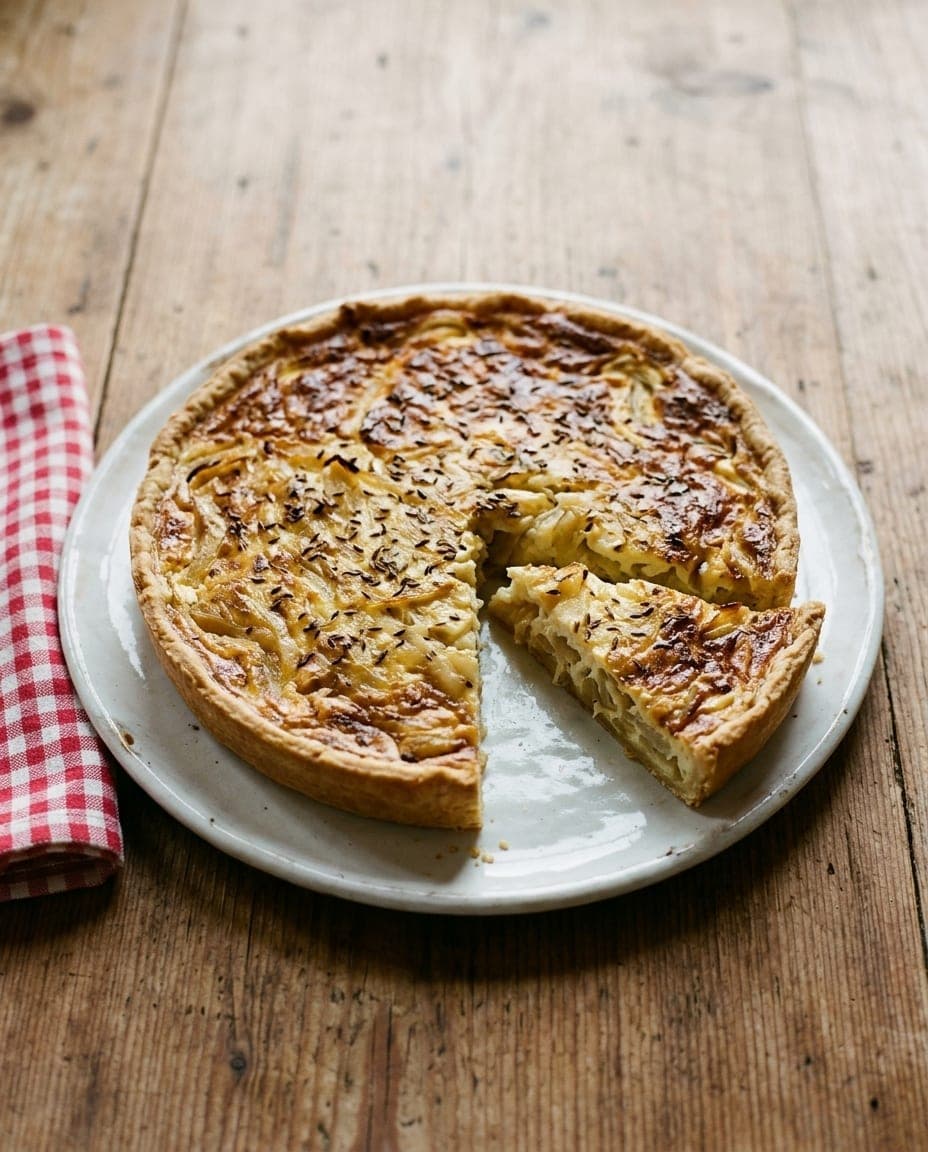
Zibelechueche, literally "onion tart", is a simple but substantial pastry that defines the culinary atmosphere of Bern in November. It consists of a thin layer of shortcrust or puff pastry topped with onions that have been cooked slowly in butter until soft and sweet, then bound with egg and cream before baking until the surface turns a golden brown. The result is a warm, savoury tart cut into squares or triangles, rich enough to be eaten as a main course but light enough to accompany the cold November air.
While similar onion tarts appear in other parts of Switzerland and Germany, the version served in Bern during its annual market has a specific character tied to the city's traditions. It is not a dish found on every menu year-round; it belongs above all to the day the Zibelemärit, or onion market, takes over the streets of the old town. The tart is designed to be eaten quickly, often held in one hand while the other holds a cup of warm drink, making it a practical companion for the bustling outdoor stalls.
The setting of the onion market
The dish lives on the fourth Monday of November, when Bern's Zibelemärit transforms the city centre into a winter fairground. Before dawn, vendors arrive to set up rows of stalls selling plaited onions in all sizes, along with confetti, gingerbread and other seasonal goods. The air fills with the scent of roasting onions and the spice of mulled wine as thousands of locals and visitors gather to celebrate the harvest.
Many restaurants in the old town, from the large taverns near the Zytglogge to small family-run establishments, serve onion tart on this day. Some also offer a bowl of onion soup, but the tart is the central attraction. The tradition is often linked to the great fire of 1405: farmers from the surrounding countryside, especially from Fribourg, are said to have helped the city recover and been granted the right to sell their produce in Bern in return. Historians treat this as folklore, as onions only appear in the market records in the mid-19th century, but it remains the story told by guides and vendors in Bern.
Bern's autumn market goes back to the 15th century, and the onion market has grown into one of Switzerland's most famous seasonal events. Today, the tart serves as a unifying element, shared by families, tourists and locals alike as they navigate the crowded streets. It is a dish that belongs to the moment, tied to the cold weather and the specific energy of the November fair.
What goes into it
The ingredients are straightforward, relying on quality produce rather than complex techniques:
- Onions, usually white or yellow varieties, sliced thinly and cooked slowly in butter until they lose their sharpness and become sweet and soft.
- A thin pastry base, often a simple shortcrust that holds the filling without becoming heavy.
- Egg and cream, whisked together to bind the onions and create a deep, custard-like layer that sets during baking.
- Butter, used generously in the cooking process to ensure the onions are tender and the pastry is crisp.
The tart is baked until the top is golden and the filling is set but still moist. It is served warm, often straight from the oven, and is best eaten within minutes of being prepared to enjoy the contrast between the hot filling and the cool autumn air.
How it is eaten
Zibelechueche is traditionally cut into squares or triangles and sold on paper or small plates at market stalls. It is designed for casual eating, allowing visitors to walk through the market while enjoying their food. A common pairing is a glass of mulled wine, known locally as Glühwein, which provides warmth against the November chill. The combination of the hot, savoury tart and the spiced wine is a standard experience at the Zibelemärit.
Some restaurants serve larger portions that can be shared, but the market stalls typically offer single servings meant to be eaten on the move. It is not a dish for formal dining tables; its purpose is to fuel the crowd as they browse the onion stalls and enjoy the festive atmosphere. The tart is often accompanied by a side of mustard or pickles in some establishments, though the simple version with just onions is the most common.
Curious facts
- A one-day dish, mostly. Outside the Zibelemärit it is much harder to find in Bern; the market Monday is when the stalls and restaurants all have it.
- The 1405 fire story. The market's origins are traditionally linked to market rights granted to helpful farmers after the fire, though historians treat this as folklore rather than confirmed history.
- Onion braiding tradition. Vendors sell onions plaited into long braids, a method used historically for drying and storing the harvest through winter.
- Market-wide availability. Stalls and many restaurants in Bern's old town serve the tart on market day, making it hard to miss for visitors.
- A warm companion. The tart is almost always paired with mulled wine or hot cider to counteract the cold November weather.
Where to try it
Bern, on the fourth Monday of November, from about four in the morning when the stalls go up in the dark and the first trains bring people in from the surrounding cantons. Most restaurants in the old town have the tart on, and the stalls under the arcades sell it by the square.
Outside that day it turns up occasionally in Bernese bakeries through the autumn, and the soup version — Zibelesuppe — has a longer season. But the tart belongs to one Monday, and the city treats it accordingly.
Where to try it
1 destination
 Camper Van Rentals
Bern
Medieval city known for its well-preserved architecture and clock tower.
Camper Van RentalsHiking