Vacherin Mont-d'Or AOP
Spoonable winter cheese from the Vaud Jura, in a spruce box
- Vegetarian
- Local name
- Vacherin Mont-d'Or
- Served with
- Boiled potatoes, baked in its box
- Best eaten at
- A Vaud Jura chalet
- Pairs with
- Chasselas
What it is
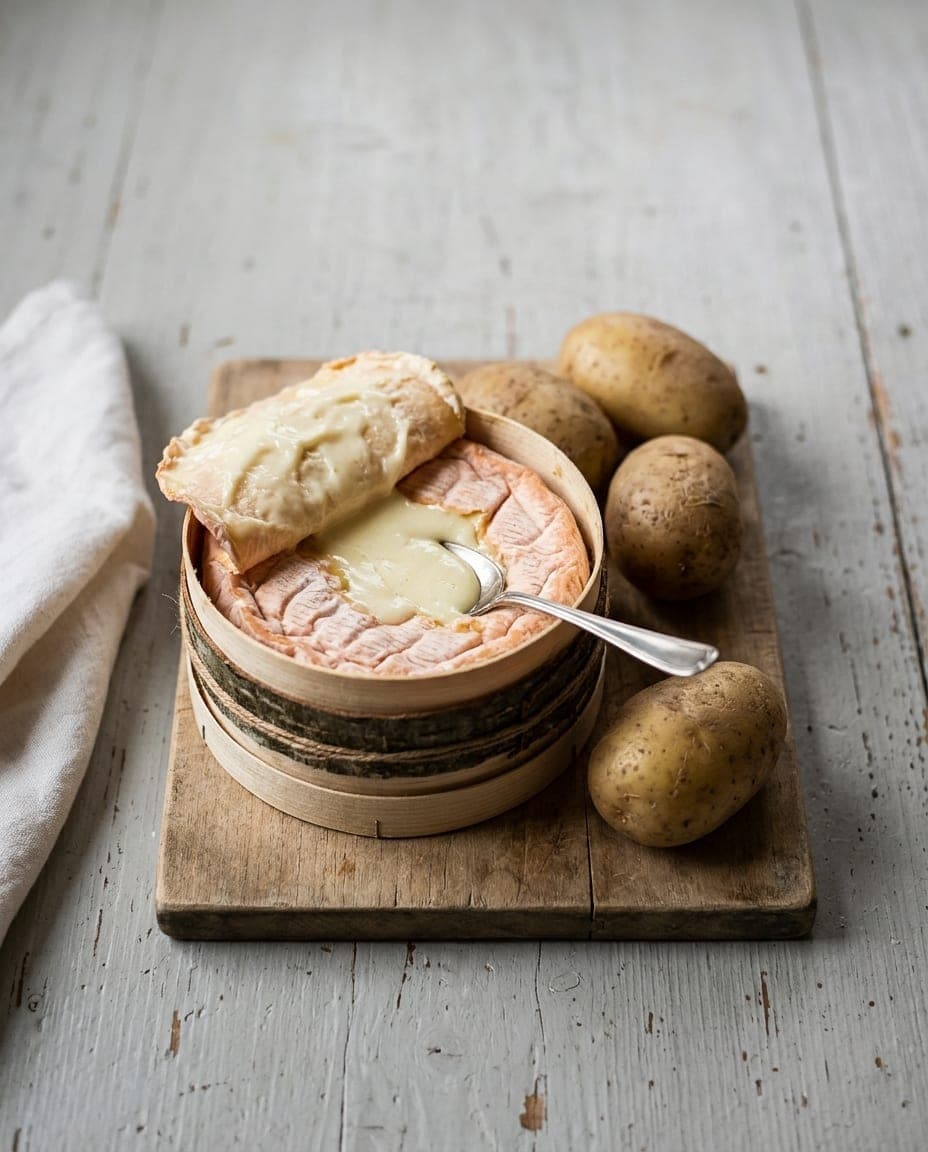
Vacherin Mont-d'Or AOP is a soft cheese from the Swiss Jura that turns into a liquid cream when fully ripe. It is made only in the canton of Vaud, specifically in the mountainous Jura region, and is bound by a band of fresh spruce bark. The cheese itself sits inside a small box of spruce wood, which holds it together as it matures through the winter months.
Unlike most cheeses that are sliced or grated, the Vacherin Mont-d'Or is designed to be eaten with a spoon once it has reached its peak texture in late autumn and winter. The rind is edible but often soft and sticky, while the interior becomes a deep, runny paste that flows when the box is tilted. It carries a Swiss Protected Designation of Origin (AOP) status, which ensures it is produced according to traditional methods within a specific geographical area.
The texture changes throughout the season. Early in the season, the cheese is still relatively firm. As the months progress, the enzyme activity increases, the rind softens, and the paste becomes increasingly fluid. By December or January, the Vacherin is at its most famous state: a soft, creamy substance that can be scooped directly from the wooden box. This transformation is central to its identity as a winter cheese, available from September until April, with production running from mid-August to the end of March.
The role of the spruce bark
The defining feature of this cheese is not just its softness but the material that contains it. A strip of spruce bark, scalded before use, is wrapped around the circumference of the cheese as it forms. This bark serves a practical purpose: it acts as a natural casing that holds the softening curd together as it liquefies during the ripening process. Without this band, the cheese would collapse into a puddle before reaching the table.
The spruce bark is not merely decorative. It imparts a subtle resinous note to the cheese, adding a layer of woody aroma that complements the creamy milk flavour. The wood also helps regulate humidity around the cheese as it ages. The cheese is always sold in a small box of spruce wood, which further enhances this forest character and keeps the product intact during transport.
The bark must be removed before eating, but the aroma it leaves behind remains. The resinous quality distinguishes it from other soft cheeses that rely on white mould or washed rinds for their character. This connection to the local spruce forests is a direct link between the cheese and the landscape of the Vaud Jura.
How it was made in the mountains
The production of Vacherin Mont-d'Or is tied to the seasonal rhythms of the mountain farms. The season begins in mid-August, as the cows start coming down from the summer pastures, and the cheese is made in the village dairies through the winter. The cheese is traditionally made by hand, with the curd gently handled to preserve its delicate structure.
Once the curd is formed, it is placed in moulds and then wrapped in the spruce bark band. The cheese is then ripened in cellars where the temperature remains cool but stable. As winter deepens, the enzymes in the milk break down the proteins, turning the solid curd into a smooth, pourable paste. This process happens slowly, requiring patience and careful monitoring by the cheesemaker.
The AOP regulations dictate that the cheese must be made from cow's milk produced within the designated Vaud Jura area, and that the milk is thermised (gently heated) rather than used raw, which is the main technical difference from the raw-milk French Mont d'Or. The band and the box must be of spruce from the same area. The Swiss version relies on these specific natural elements to achieve its unique texture and taste.
How to eat it
The most celebrated way to enjoy a ripe Vacherin Mont-d'Or is to bake it. The entire wooden box, with the cheese inside, is placed in an oven for about 15 minutes until the contents are warm and flowing. A splash of dry white wine, often from the local Chasselas grape, is poured over the top before heating, along with a few cloves of garlic. The heat melts the cheese further, creating a bubbling, aromatic dish that is scooped out with spoons.
It is served hot, usually accompanied by boiled potatoes or slices of crusty bread to mop up the creamy mixture. The combination of the warm, wine-infused cheese and the earthy potatoes creates a comforting meal that feels like a celebration of the season. This method of preparation is so common that it has become the standard way to present the cheese in restaurants across the Vaud Jura.
Restaurants across the Vaud Jura put it on through the winter, baked in its box, as a main course for two.
What goes into it
The cheese itself is strictly defined by the AOP rules; the wine and garlic belong to the baked dish:
- Cow's milk: From farms in the Vaud Jura area, thermised before cheesemaking and set with natural (animal) rennet.
- Spruce bark: A fresh band wrapped around the cheese to hold it together during ripening and add resinous notes.
- Local wood box: A small container made from spruce that houses the cheese and enhances its flavour.
- White wine: Typically a dry Chasselas, used in the baking process to add acidity and aroma.
- Garlic: Fresh cloves added during baking to complement the creamy texture.
The result is a cheese that tastes of forest, milk, and wine. The texture shifts from solid to liquid depending on how long it has been ripening, but the flavour remains consistent: mild, buttery, and slightly tangy with a hint of pine.
Where the story begins
The history of Vacherin Mont-d'Or is rooted in the farming traditions of the Jura mountains. Cheesemaking in this region dates back centuries, with farmers developing methods to preserve milk during the long winter months when fresh produce was scarce. The use of spruce bark likely evolved as a practical solution to keep the soft cheese intact while it aged in cool cellars.
The name "Mont-d'Or" refers to the Mont d'Or, a summit on the French side of the border near Vallorbe, not to any gold content. Vacherin Fribourgeois, from the next canton, shares half a name and nothing else: it is semi-hard, made all year, and used in fondue. The French Mont d'Or, made across the border in the Haut-Doubs, is the genuinely close relative, and the two sides have long disputed the name.
Curious facts
- A liquid centre. When fully ripe, the cheese is so soft that it flows like a thick cream, requiring the spruce band to hold its shape.
- The box is part of the dish. The wooden container is baked with the cheese, infusing it with wood aromas and keeping the serving vessel warm.
- A winter only product. Production stops at the end of March, and the cheese is off sale from May to August.
- It is baked, not melted down. Unlike fondue, the cheese is not grated and stirred into anything; it is warmed whole in its box and spooned out.
- The name is split in two. The Swiss AOP covers the Vaud Jura; the French cheese of nearly the same name has its own protection across the border.
Where to try it
The cheese is a winter one, on sale from roughly September to April and gone by late spring, so the season decides more than the place. In the Vaud Jura — the Vallée de Joux and the villages below the Mont-d'Or itself — it is sold straight from the dairies in its spruce box, and local restaurants put it on the menu baked whole for two people to share.
Elsewhere in Switzerland it turns up in cheese shops and on winter menus from October onwards, usually alongside the French cheese of nearly the same name. The box carries the AOP mark and the name of the dairy, which is the way to tell the Swiss one from its cross-border relative.
Where to try it
1 region
 Boat Rentals10 destinations
Vaud
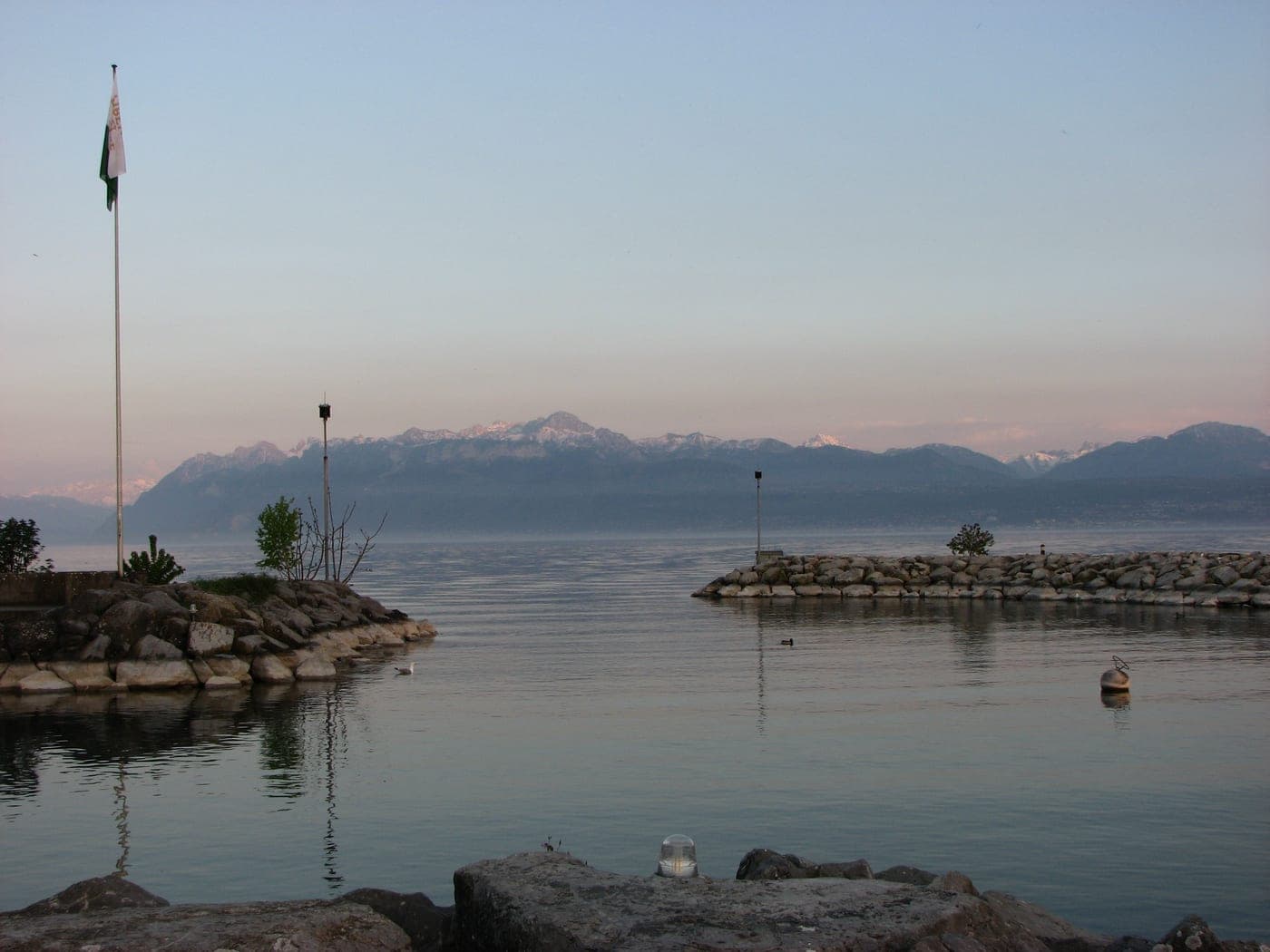
Vaud is a diverse region known for its stunning landscapes and rich cultural heritage. Nestled along the shores of Lake Geneva, it features the city of Lausanne, home to the Olympic Museum and a vibrant cultural scene. The region is famous for its vineyards, particularly the Lavaux vineyards, a UNESCO World Heritage site, offering breathtaking views and local wine tastings. Montreux, known for its jazz festival, sits nearby, while the medieval town of Yverdon-les-Bains boasts historical thermal baths. Vaud also offers numerous hiking trails in the Jura mountains, providing a glimpse into Swiss natural beauty. With a blend of urban and rural experiences, Vaud is ideal for those seeking to explore Switzerland's lesser-known gems.
Boat RentalsHikingLocal CuisineWine Tasting