Vacherin Fribourgeois AOP
The washed-rind cheese in Fribourg's half-and-half fondue
- Vegetarian
- Local name
- Vacherin Fribourgeois AOP
- Served with
- Fondue moitié-moitié
- Best eaten at
- A Fribourg fondue restaurant
- Pairs with
- Chasselas or black tea
What it is
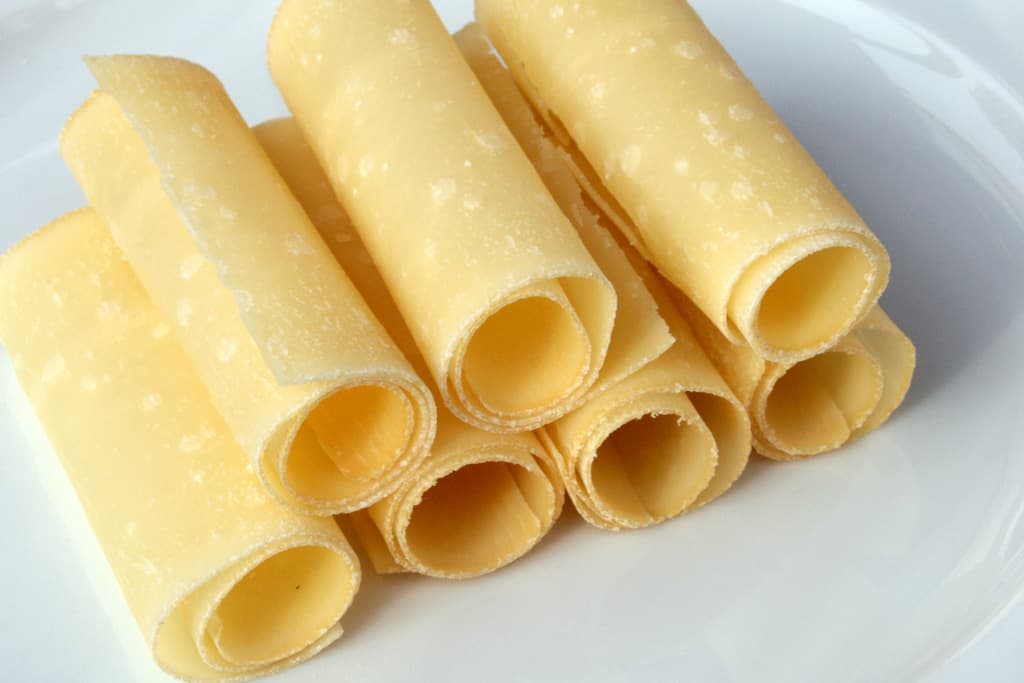
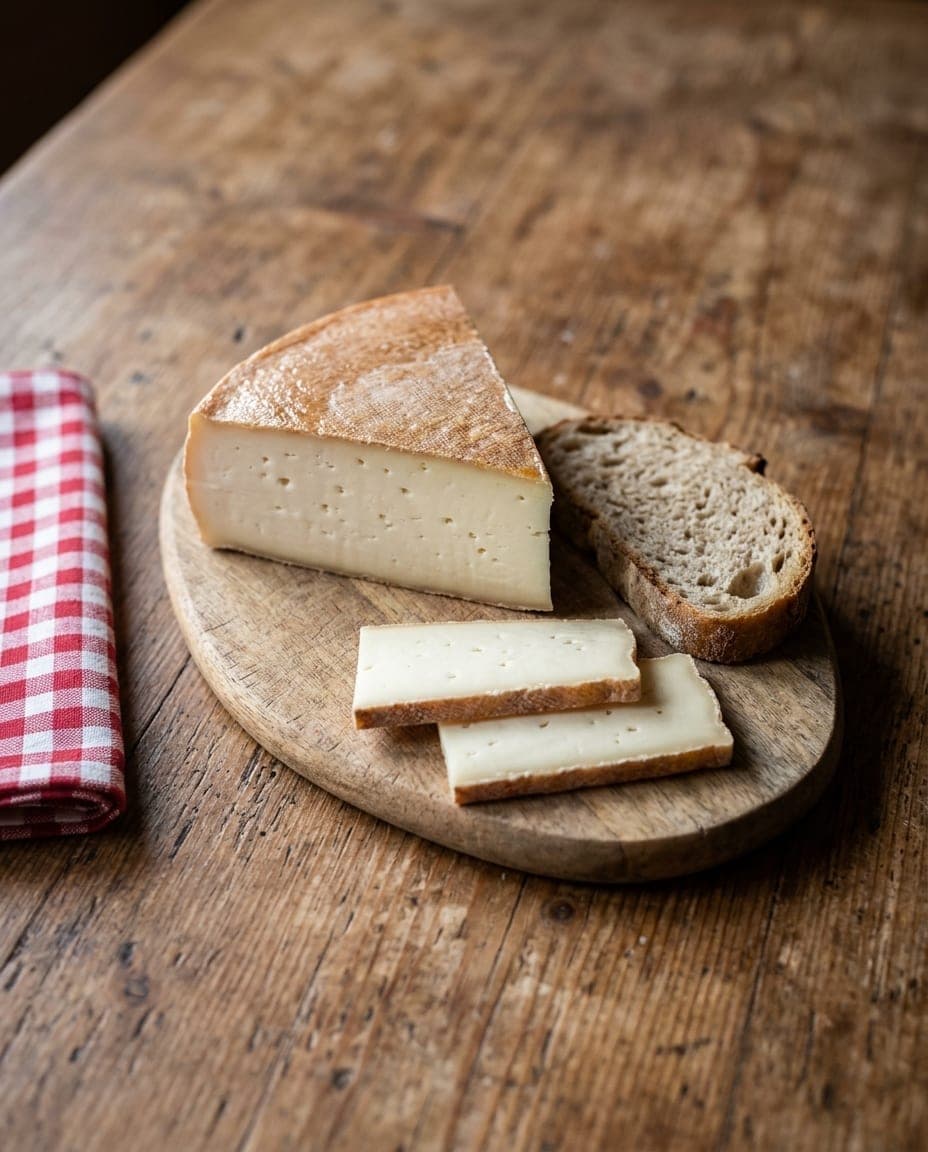
Vacherin Fribourgeois AOP is a semi-hard cheese made from raw or thermised cow's milk in the Swiss canton of Fribourg. It carries the AOP label, meaning its production follows strict rules within a defined geographic area. The wheels are flat and weigh 6 to 10 kg, with a pale yellow paste that turns creamy when heated. Its surface is washed during maturation to encourage the growth of specific bacteria, giving the rind a sticky orange hue and a distinct aroma that sharpens as the cheese ages.
The texture is supple and elastic rather than crumbly. When cut, it yields easily but holds its shape until melted. This quality makes it a cornerstone of Swiss winter dining, particularly in Fribourg where it is treated with more reverence than in other cantons. It does not break into strings when heated; instead, it flows smoothly into a uniform liquid.
The two ways to melt it
In Fribourg, this cheese serves two distinct purposes, each requiring a different approach. The most common use is in fondue moitié-moitié, or "half-and-half" fondue. This is the regional standard for the canton. A pot is filled with equal parts Vacherin Fribourgeois and Gruyère. The combination balances the sharp, nutty notes of the Gruyère with the milder, creamier character of the Vacherin. The result is a sauce that is less aggressive than one made solely with Gruyère but retains enough depth to stand up to bread.
The second method is fondue vacherin, also called fondue fribourgeoise, which relies on the cheese alone. Instead of white wine, the pot contains a small amount of water. The heat is kept lower than usual to prevent the proteins from separating. As it melts, the cheese becomes thick and velvety, coating the spoon in a heavy, glossy layer. It is traditionally eaten with potatoes boiled in their skins, which usually replace the bread. The potatoes absorb the fat without becoming soggy, allowing the eater to savour the pure flavour of the washed rind without distraction.
Where it comes from
The cheese is tied strictly to the canton of Fribourg in western Switzerland, plus two small Bernese enclave communes, Clavaleyres and Münchenwiler. The AOP designation protects the name and ensures that only milk from local cows, processed according to traditional methods within the region, can bear the title. The name Vacherin itself is recorded as early as 1420. The landscape here is a mix of rolling hills, vineyards along the lake shores, and pastures where dairy herds graze.
While similar cheeses exist in neighbouring regions, the local milk and the rind care in Fribourg's cellars give its Vacherin a profile that locals recognise instantly. It is not a cheese made for export on a massive scale; production remains small enough to be managed by local dairies and farmers who know the pasture conditions intimately. The region values this product as a key part of its agricultural identity, linking the soil, the grass, and the milk into a single flavour.
What goes into it
The ingredients are simple, but the process requires care. Only cow's milk is used, raw or gently thermised, never pasteurised or filtered. The milk is coagulated with rennet to form curds, which are then cut and heated gently.
- Cow's milk: Sourced from Fribourg farms, providing the base for the creamy texture.
- Starter cultures and rennet: To acidify the milk and set the curd.
- Salt: From a brine bath, which aids preservation and flavour development.
After brining, the wheels rest in a warm, humid cellar and then ripen on spruce boards for 9 to 24 weeks, during which the rind is regularly cared for. For fondue, the rind is usually cut away before the cheese goes into the pot.
How it is eaten
In Fribourg, the cheese turns up on the cheese board after a meal, but its best-known role is in the fondue pot. When making fondue moitié-moitié, the pot is set over a small flame at the table. Diners dip cubes of bread into the bubbling mixture using long forks, twirling the bread to ensure an even coating. The ratio of Vacherin to Gruyère can vary slightly by kitchen, but the half-and-half balance is the most common expectation.
For fondue vacherin, the experience changes. The pot sits lower on the flame, and the cheese thickens into a dense, cohesive mass. Diners usually use potatoes in their skins instead of bread, piercing them with forks to scoop up the creamy mixture. The potatoes act as a neutral vessel, allowing the fat of the washed rind to dominate the palate. This method is often preferred in colder months when a heavier, warming meal is desired.
Curious facts
- A different name. In French, it is called Vacherin Fribourgeois, but in German-speaking Switzerland it appears as Freiburger Vacherin.
- The rind comes off. The sticky orange rind is usually trimmed away before melting, leaving only the paste in the pot.
- Not that Vacherin. Unlike Vacherin Mont-d'Or from the Jura region, which is soft and seasonal, the Fribourg version is semi-hard and available year-round.
- Potato pairing. The fondue vacherin tradition specifically pairs with boiled potatoes rather than bread, a practice that distinguishes it from standard cheese fondues.
- A regional standard. While Gruyère is popular across Switzerland, the half-and-half mix is considered the definitive Fribourg style, reflecting local taste preferences.
Where to try it
The most authentic experience of Vacherin Fribourgeois AOP is found in a traditional fondue restaurant in Fribourg itself. These establishments, in the old town and in the villages of the Gruyère countryside, serve the cheese as part of their standard winter menu.
In the canton, many restaurants pride themselves on using locally sourced cheese from nearby dairies. Pairing options usually include a glass of Chasselas, a crisp white wine grown in the Fribourg part of the Vully, or a cup of strong black tea to cleanse the palate between dips. The cheese is at its best when served fresh from the pot, hot and bubbling, with no need for additional sauces or condiments.
Where to try it
1 region
 Boat Rentals3 destinations
Fribourg
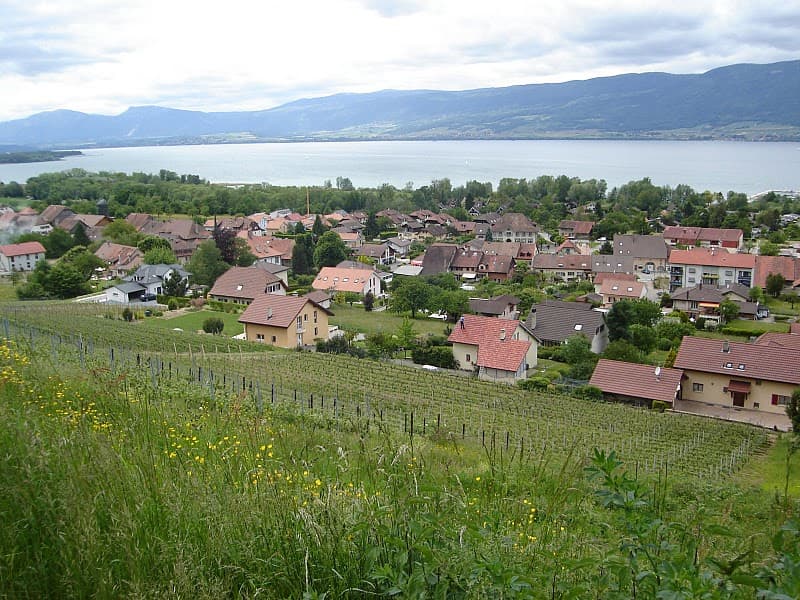
Fribourg is a Swiss region built for a slower pace. It sits between the French- and German-speaking parts of the country, and that mix still shapes daily life here — road signs change language partway through the canton, and the same cheese is sold under two names at the same market stall. The regional capital, also named Fribourg, sits on a sandstone hill above a bend in the Sarine river. Its old town is one of the larger medieval centres in Switzerland, with covered wooden bridges, a Gothic cathedral, and streets so steep that some are built as steps rather than roads. From the ramparts, the river loops below and the rest of the canton spreads out towards the hills. South of the city, the land softens into rolling dairy country. This is Gruyère territory, named after both the cheese and the small walled town of Gruyères that still gives it its name. Around Gruyères and the nearby town of Bulle, farms and mountain huts still make cheese by hand through the summer months, when herds move up to the high pastures. Several dairies open their doors to visitors watching a wheel of Gruyère being pressed and salted, a process that has changed very little over generations. The landscape rises further south into pre-alpine terrain: green terraces, scattered timber barns, and villages built from wood that has weathered dark over centuries. Walking paths here follow old cattle tracks between pasture and forest, gentle enough for an unhurried afternoon rather than a full day's climb. In autumn, cattle are led back down from the alpine pastures in a tradition still marked with flowers, bells, and a village gathering — one of the few moments when the summer's quiet farm work becomes a public event. To the north and west, the canton reaches Lake Neuchâtel and Lake Murten. Murten itself is a walled medieval town on the water, small enough to circle on foot within the hour, with a lakeside promenade that fills with café tables in summer. In warmer months, passenger boats cross the lake to nearby towns, a pleasant way to spend an afternoon without hurrying. One of the quieter pleasures of the region is its local railway, which climbs from the lowland towns into the hills in short, unhurried stages, following the river through farmland before a hilltop town's towers come into view above the tracks. These are working regional trains rather than tourist rides, and that is much of their charm — riders share the carriage with people going to market or coming home from the fields. Food shapes much of what there is to do here. Beyond cheese, the region is known for its double cream, for meringues eaten with that cream, and for a dried, air-cured meat found across French-speaking Switzerland. Village markets, especially in Bulle and Fribourg itself, are where these products change hands directly between maker and buyer, often with a taste offered first. A comfortable way to see Fribourg is over three to five days: a day or two in the old town and along the Sarine, a day around Gruyères and its cheese dairies, and a day or two further into the hills or out to Murten and the lake. Trying to fit it into a single day usually means choosing between the city and the countryside, and both reward more time than that. What makes the region worth this pace is less any single sight than how its parts connect — a cathedral town, a cheese-making valley, alpine pastures, and a lakeside village, all within a canton small enough to move between slowly and still see plenty. Fribourg does not have the scale of the Bernese Oberland or the fame of Lake Geneva, but it holds a quieter version of the same Swiss countryside, with fewer crowds and more time to notice the details: the smell of a cheese cellar, a wooden bridge underfoot, the particular green of a pasture after rain.
Boat RentalsHikingPanoramic Trains