Torta di pane
A dark Ticino cake made with stale bread and amaretti
- Vegetarian
- Local name
- Torta di pane
- Served with
- Coffee
- Best eaten at
- A Ticino grotto
- Pairs with
- Ticino Merlot or nocino
What it is
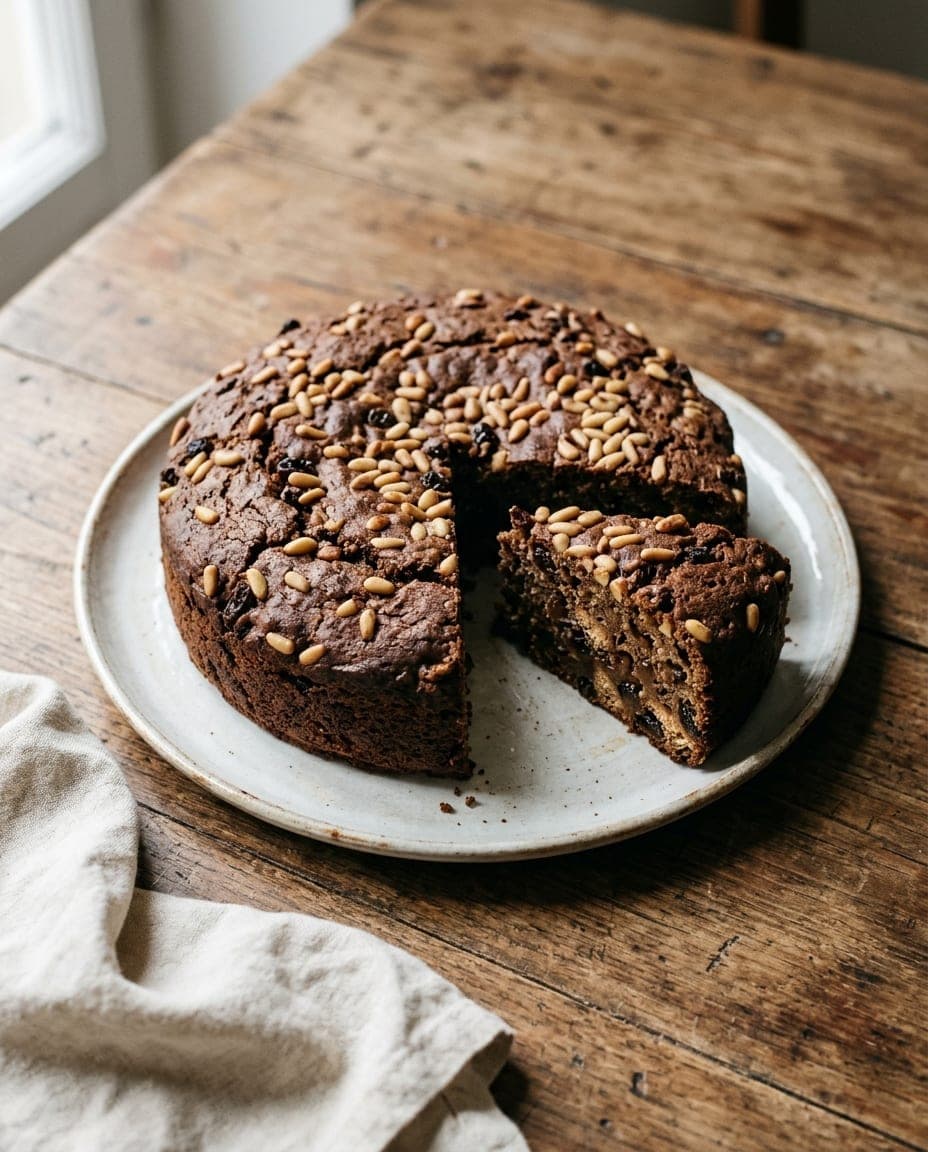
Torta di pane, literally "bread cake", is a humble yet deeply satisfying sweet from the Swiss canton of Ticino. It belongs to the family of bread puddings found across Europe, but its identity is distinctly local. The cake is dense, dark and moist, with a texture that sits somewhere between a sponge and a heavy fruit loaf. Its origins are rooted in thrift rather than celebration; it was designed to use up stale bread that had gone hard on the kitchen counter.
There is no single official recipe. Every household in Ticino has its own version, shaped by what the cook found in the pantry. The base consists of old bread soaked in milk and mashed until soft, bound with sugar and eggs. To this mixture go, depending on the cook, cocoa powder, raisins soaked in grappa, crushed amaretti biscuits, candied peel, pine nuts and lemon zest. The batter is baked in a tin until it turns a deep brown and holds its shape firmly when cut.
It is not a light pastry. Torta di pane is substantial, rich with the flavours of cocoa and fruit, and it is usually eaten at room temperature. Ticino bakeries often sell it in large slabs, cut into squares.
A history of thrift
The story of torta di pane does not involve a famous chef or a royal decree. It emerged from the practical needs of everyday life in the Ticino countryside. Bread was often baked in large batches only every couple of weeks, so stale loaves were a fact of life. Rather than throw the old bread away, housewives would soak it in milk to soften it again and transform it into something new. Until the first half of the 20th century the cake was often made for village and religious feasts and baked in the communal oven.
Over time, the recipe changed with the larder. A 19th-century description lists milk, eggs, bread, butter and even cheese; the cheese later disappeared, while cocoa and candied fruit were added. The amaretti and grappa-soaked raisins tie it to neighbouring Lombardy, where very similar bread cakes are baked. The result is a cake that tastes of the pantry rather than the plate. It is a dish born from necessity that became a beloved tradition.
What goes into it
While the proportions vary from kitchen to kitchen, the building blocks remain consistent:
- Stale bread, usually a rustic white or sourdough loaf, soaked in milk until soft and then mashed into a paste.
- Sugar and eggs, which sweeten the mixture and bind it.
- Cocoa powder, which gives the cake its dark colour and earthy depth.
- Raisins that have been steeped in grappa to plump them up and infuse the batter with a sharp spirit note.
- Crushed amaretti, the almond biscuits from Lombardy, adding a crunchy texture and sweet nuttiness.
- Pine nuts, scattered throughout for a subtle crunch and a hint of resinous flavour.
- Lemon zest and often candied peel, used to lift the richness of the cocoa and sugar.
The mixture is baked until set, resulting in a cake that is firm enough to be sliced but soft enough to melt in the mouth. It is not a dish for those seeking lightness; it is a comfort food designed to be filling and sustaining.
How it is eaten
Torta di pane is usually served cool, at room temperature, at breakfast, as an afternoon snack or as dessert. It is cut into thick squares or rectangles and placed on a simple plate. The texture holds together well, making it easy to handle without crumbling.
The traditional way to enjoy it is with a cup of strong black coffee. The bitterness of the brew balances the sweetness of the cake, creating a rhythm that many locals consider essential to the experience. In a Ticino grotto — the small stone tavern found in the hills and along the lake shores — it also comes with a glass of local Merlot, or with nocino, the walnut liqueur made in the autumn.
It keeps for several days and is often better on the second, once the grappa and the cocoa have settled through it.
Curious facts
- No fixed recipe. Every baker has their own ratio of bread to milk and their own choice of dried fruit.
- A feast-day cake. Before home ovens were common, it was baked in the village's communal oven for local festivals.
- A cross-border cousin. Brianza, across the border in Lombardy, bakes the very similar torta paesana with stale bread, milk, cocoa, amaretti and pine nuts; in Ticino it is treated as an icon of Italian-speaking Switzerland.
- Cool service. It is mostly eaten at room temperature; the texture is best once the cake has set and the flavours have melded in the cooling process.
- A thrift legacy. The cake was originally a solution for stale bread, yet it has become a celebrated treat rather than a leftover.
Where to try it
Ticino, in any village bakery, where it sits on the counter in a slab and is cut to order. It is also a common dessert in a grotto, served cold in a square with coffee or a glass of nocino.
Every bakery version differs — more cocoa here, more amaretti there, raisins soaked longer or not at all — and the canton treats the comparison as a legitimate pastime. It is usually among the cheaper things on a Ticino menu, which is a direct inheritance from what it was invented to do.
Where to try it
1 region
 Boat Rentals1 destination
Ticino
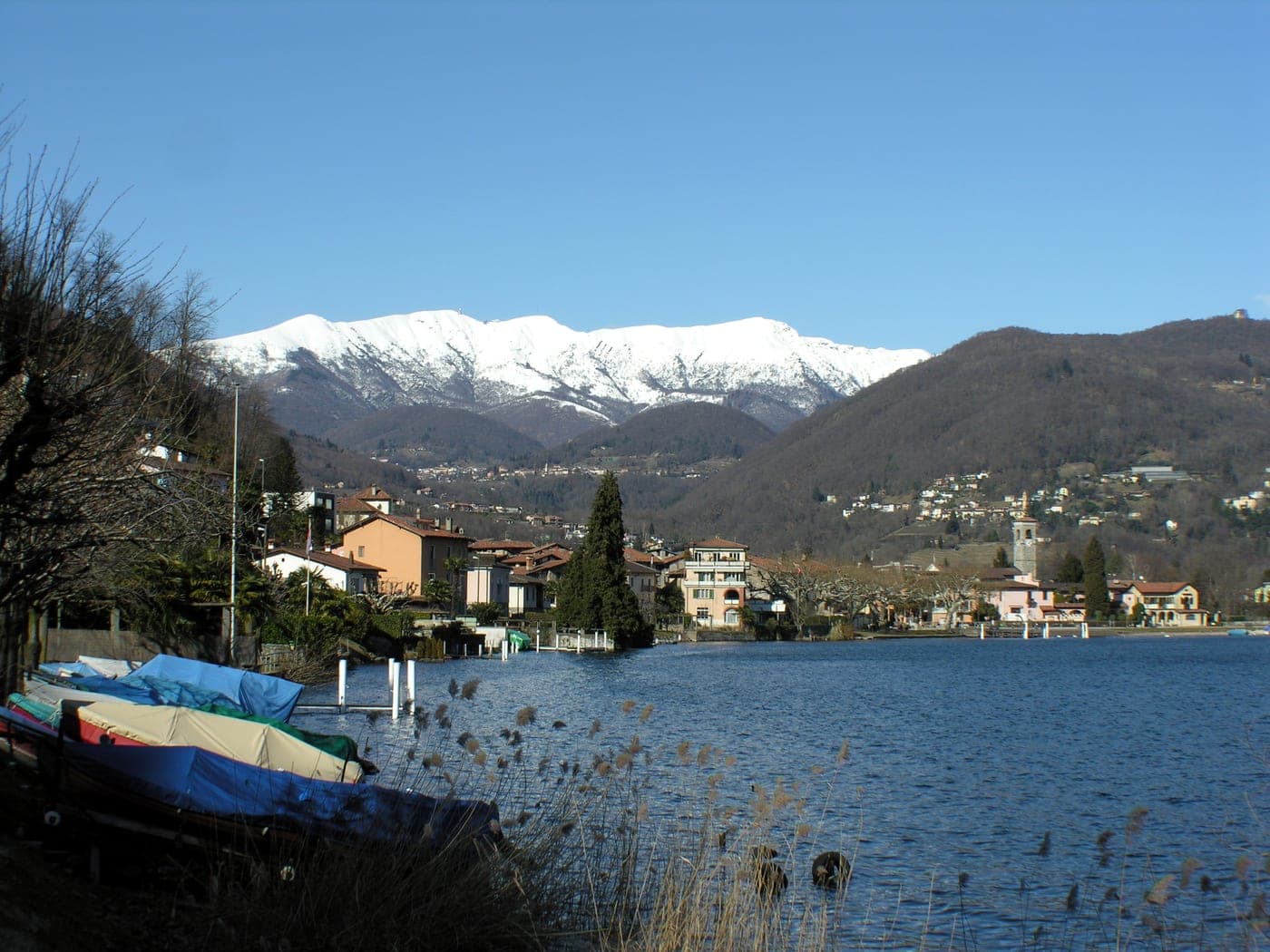
Ticino, the only Italian-speaking region in Switzerland, offers a unique blend of Mediterranean flair and Swiss efficiency. It features stunning landscapes, from the rugged peaks of the Alps to the lakeside beauty of Lugano and Locarno. The region is renowned for its picturesque villages like Morcote, where narrow streets lead to lakeside views. Known for its rich culinary traditions, Ticino is famous for polenta and Merlot wine, showcasing a blend of Italian and Swiss influences. Historic sites such as Castello di Montebello and the UNESCO-listed Bellinzona fortifications reflect its strategic importance. With its mild climate, Ticino is a haven for hiking, cycling, and exploring local markets, making it ideal for a relaxed travel experience.
Boat RentalsHiking