Swiss Tilsiter
Thurgau's mild semi-hard cheese, with irregular holes
- Vegetarian
- Local name
- Tilsiter
- Served with
- Bread
- Pairs with
- Thurgau cider or white wine
What it is
Swiss Tilsiter is a semi-hard cheese made from cow's milk in eastern Switzerland, above all in the canton of Thurgau near Lake Constance, with further dairies in St. Gallen and the Zürcher Oberland. It is not made everywhere in the country; its home is firmly rooted in this agricultural region where dairy farming has shaped the landscape for centuries. The cheese takes its name from the town of Tilsit, now known as Sovetsk in Russia, which was once part of East Prussia.
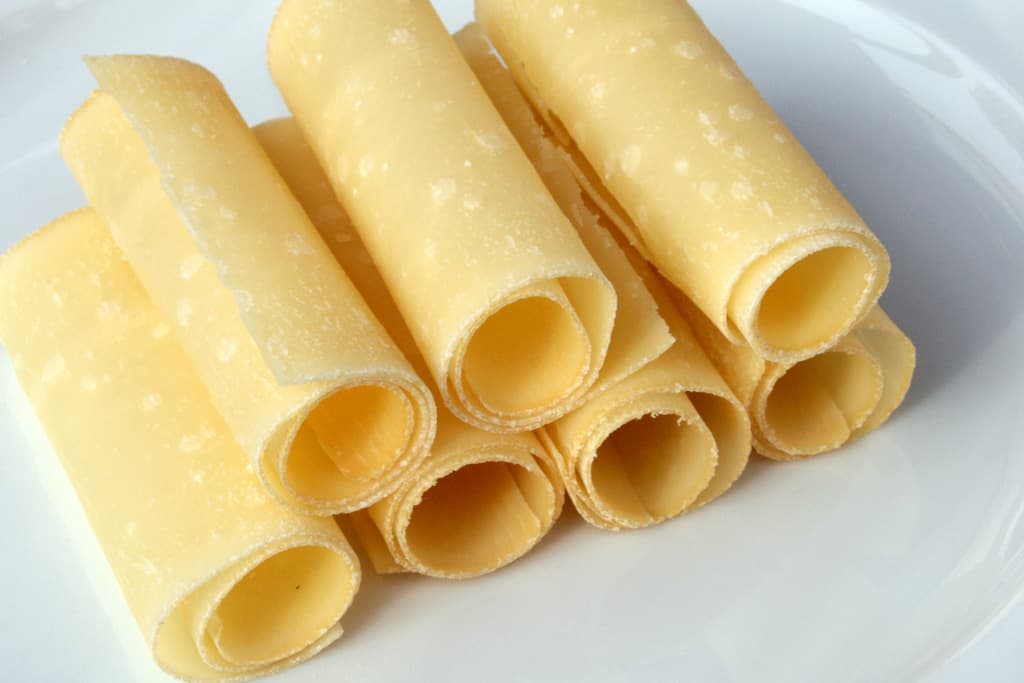
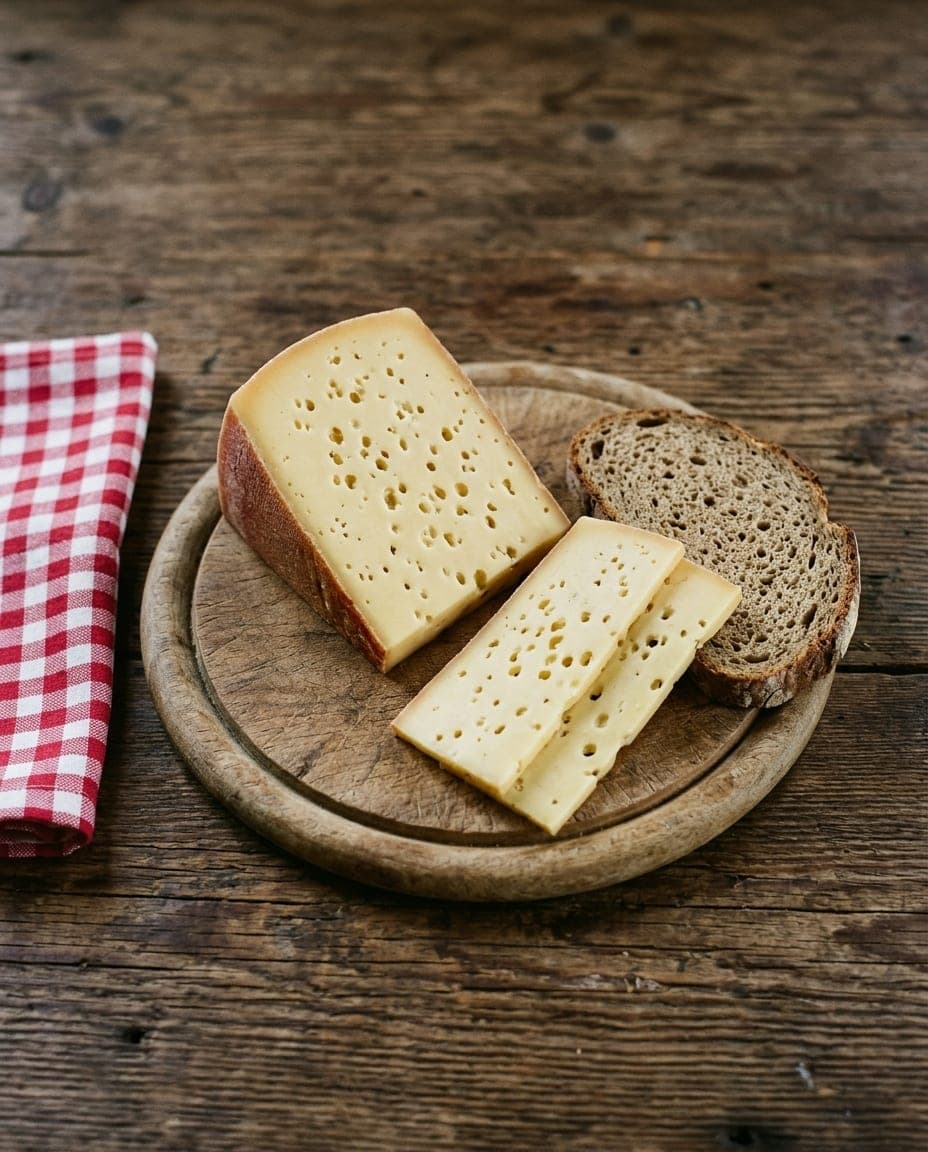
The form is distinctive: a modest wheel with a brownish-red washed rind and a pale interior marked by small, irregular holes. These are not the uniform eyes found in some other Swiss cheeses but appear somewhat randomly, giving the texture a gentle, open quality. When young, the paste is soft, elastic and mild, with a faint sweetness that does not dominate the palate. As it ages, the flavour deepens into a savoury sharpness, retaining its creamy character while gaining a more pronounced bite.
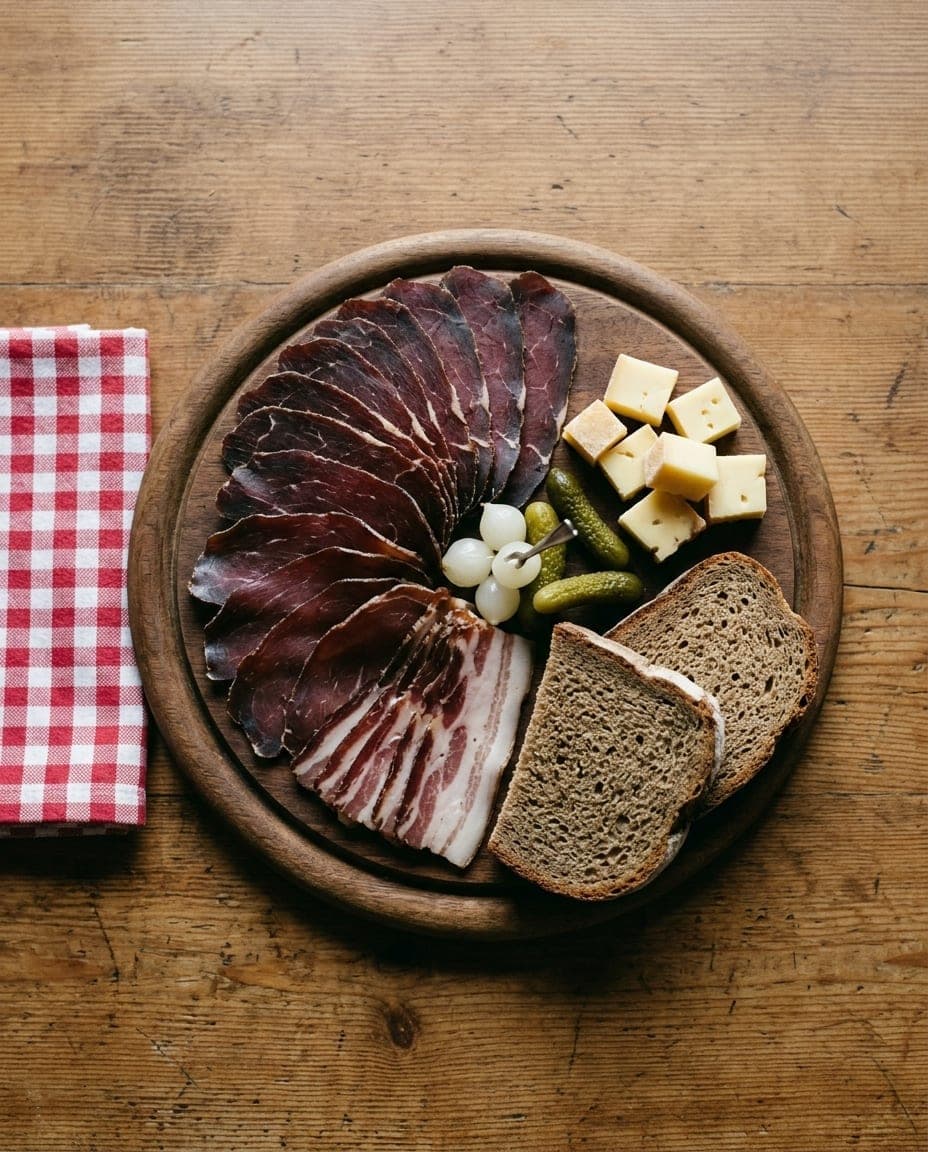
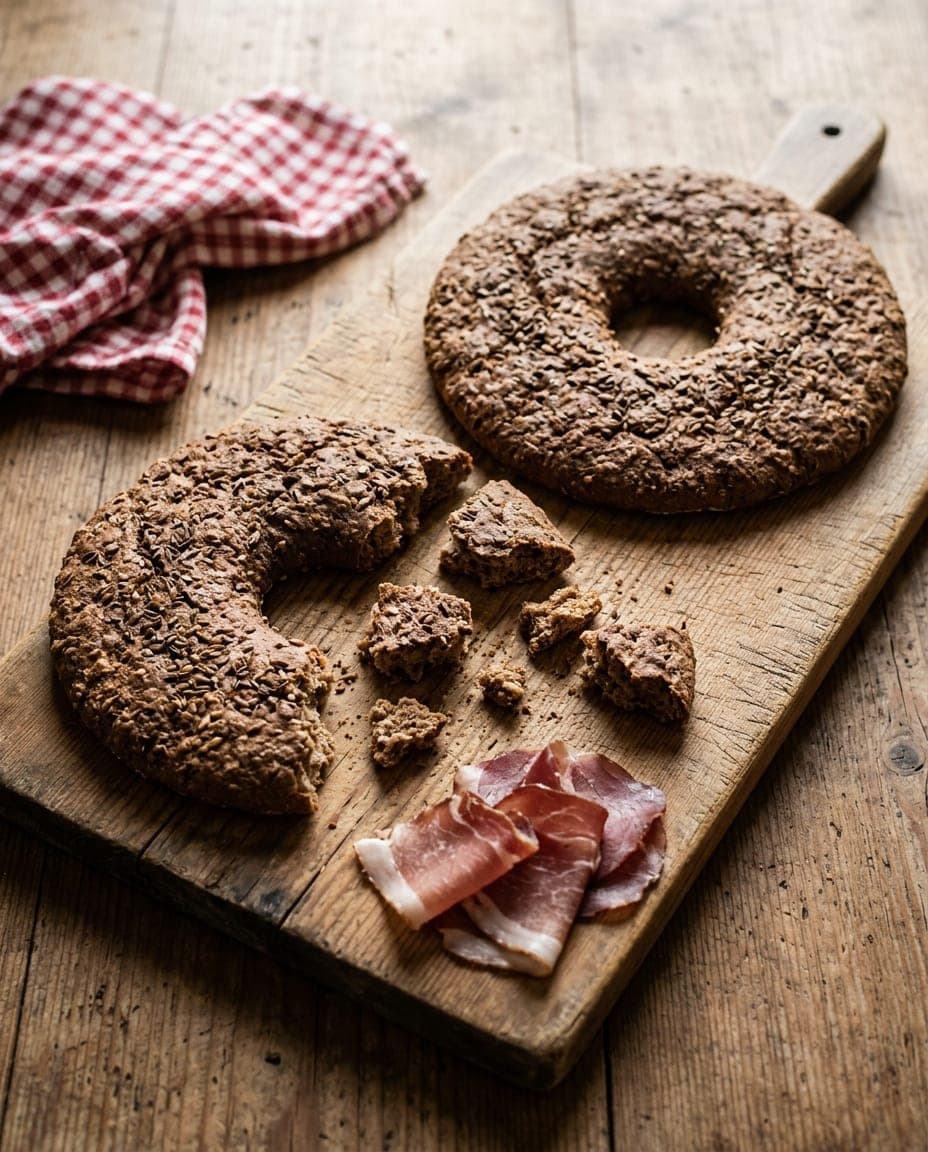
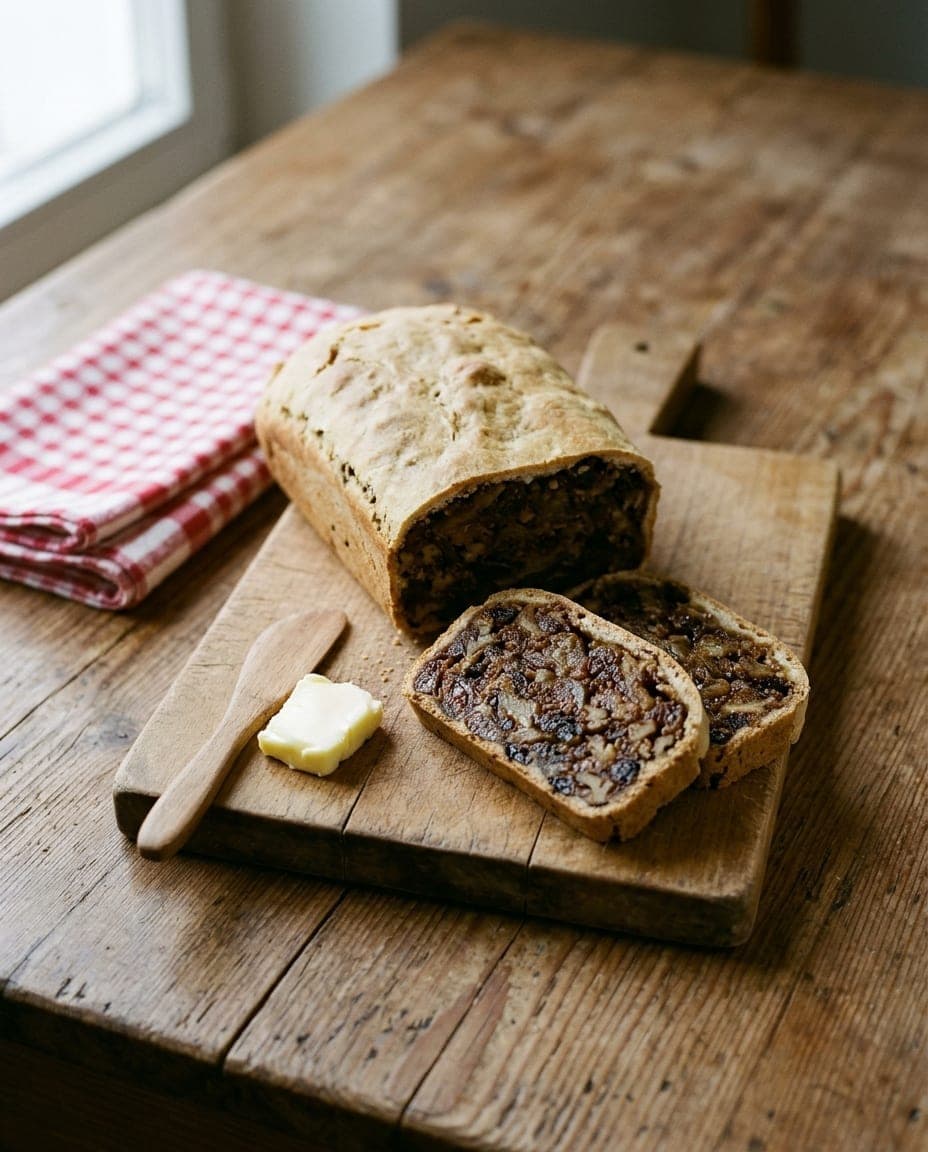
It is a cheese designed for everyday eating rather than special occasions. The texture holds up well when sliced thinly or cut into cubes, and it melts gently without becoming greasy. This versatility makes it a staple in the local diet, appearing on breakfast tables alongside dark rye bread, in simple lunches with pickles, and as a component in cooked dishes where a mild cheese is required.
The journey from Tilsit to Thurgau
The history of this cheese begins with a specific migration of skill rather than a vague tradition. In 1893, Otto Wartmann, a Swiss emigrant who had been living in Tilsit, returned to his home canton of Thurgau. He brought with him the recipe for the cheese that bore the town's name. The original region of production was East Prussia, but the Swiss version proved resilient and eventually outlasted the cheese's presence in its place of origin.
The first Swiss Tilsiter was made in 1893 on the Holzhof at Bissegg, in the Thurgau countryside, where the Wartmann family still runs a dairy today. A Prussian style took root in an eastern Swiss canton and stayed there. The technique allowed for the creation of a cheese that was consistent and reliable, fitting well with the industrialising dairy sector of the time.
Over the decades, the cheese evolved into a regional speciality. It is not made in the same way as the Swiss Emmental or Gruyère, which have their own distinct histories and protected designations. The Tilsiter remained tied to Thurgau, where it became a symbol of the region's ability to adopt foreign techniques and make them its own. The fact that the cheese survived the geopolitical shifts of the 20th century, even as the original town of Tilsit changed hands and names, speaks to the durability of the Swiss version.
What goes into it
The production relies on a few key elements that define the character of the wheel. It is made from cow's milk, which provides the base for its creamy texture. The milk may be raw or pasteurised, depending on the specific grade being produced. This distinction is visible through colour-coded labels, which indicate the type of milk and processing method used.
- Raw milk versions (red label) are ripened for at least three months and offer a deeper, more complex taste, often favoured by those seeking a traditional flavour.
- Pasteurised milk versions (green label) are matured only briefly and provide a cleaner, milder result that appeals to a broader range of palates.
- Cream-added versions (yellow label) are enriched with cream to create a richer, softer texture.
The rennet differs too: the red-label cheese uses animal rennet, while some pasteurised and cream versions use microbial rennet, so only those are suitable for vegetarians.
The curds are cut and cooked in a specific manner to develop the characteristic small holes. These holes form as the cheese matures, created by gas bubbles produced during fermentation. The size of the holes varies, remaining irregular rather than uniform. The rind forms naturally as the wheels are washed regularly with brine and stored on wooden boards, which gives it its brownish-red colour.
How it is eaten
Swiss Tilsiter is rarely served on its own as a tasting item. It is designed to be paired with other foods that complement its mild yet savoury nature. The most common accompaniment is fresh bread, particularly dark rye or wholegrain loaves that can stand up to the cheese's texture. The combination of the chewy bread and the soft cheese creates a balanced mouthfeel.
In Thurgau it is drunk with Most, the local cider — the canton has so many orchards that the rest of Switzerland nicknamed it Mostindien. The acidity does the same work a white wine would.
It is common to see the cheese served in simple settings: a slice on a wooden board with a few pickles or onions, or melted gently into hot dishes where it adds body without overpowering other ingredients. The mildness when young makes it suitable for children and those who prefer less intense flavours, while the aged version offers enough depth for experienced cheese eaters.
Curious facts
- The name outlived the place. While the original town of Tilsit is now part of Russia, the Swiss version of the cheese remains a permanent fixture in Thurgau, continuing to be made under the same name.
- Three colours, three grades. Red, green and yellow labels indicate whether the cheese is raw-milk, pasteurised or enriched with cream, allowing consumers to choose their preferred texture and flavour intensity.
- Irregular holes only. Unlike some Swiss cheeses with uniform eyes, the Tilsiter features small, random holes that form naturally during the maturation process.
- A regional speciality. The cheese is not produced across all of Switzerland but remains a product of Thurgau and its eastern Swiss neighbours, reflecting the local dairy traditions of the area.
- A practical staple. Its mild flavour and melting properties make it a daily bread-and-cheese companion rather than a rare treat for special occasions.
Where to try it
The best place to find Swiss Tilsiter is in Thurgau itself, particularly in the countryside around the Holzhof at Bissegg and the other village dairies that have maintained the tradition. Local farmers' markets in the canton often feature fresh wheels or pre-cut portions from nearby dairies. Restaurants in the canton often serve it with bread and a glass of Most.
Supermarkets across Switzerland stock it, which is how most of it is eaten: it is an everyday cheese rather than a destination one. The three grades sit side by side on the shelf under their coloured labels, and the difference between the mildest and the strongest is considerable.
Where to try it
1 region
 Boat Rentals2 destinations
Thurgau
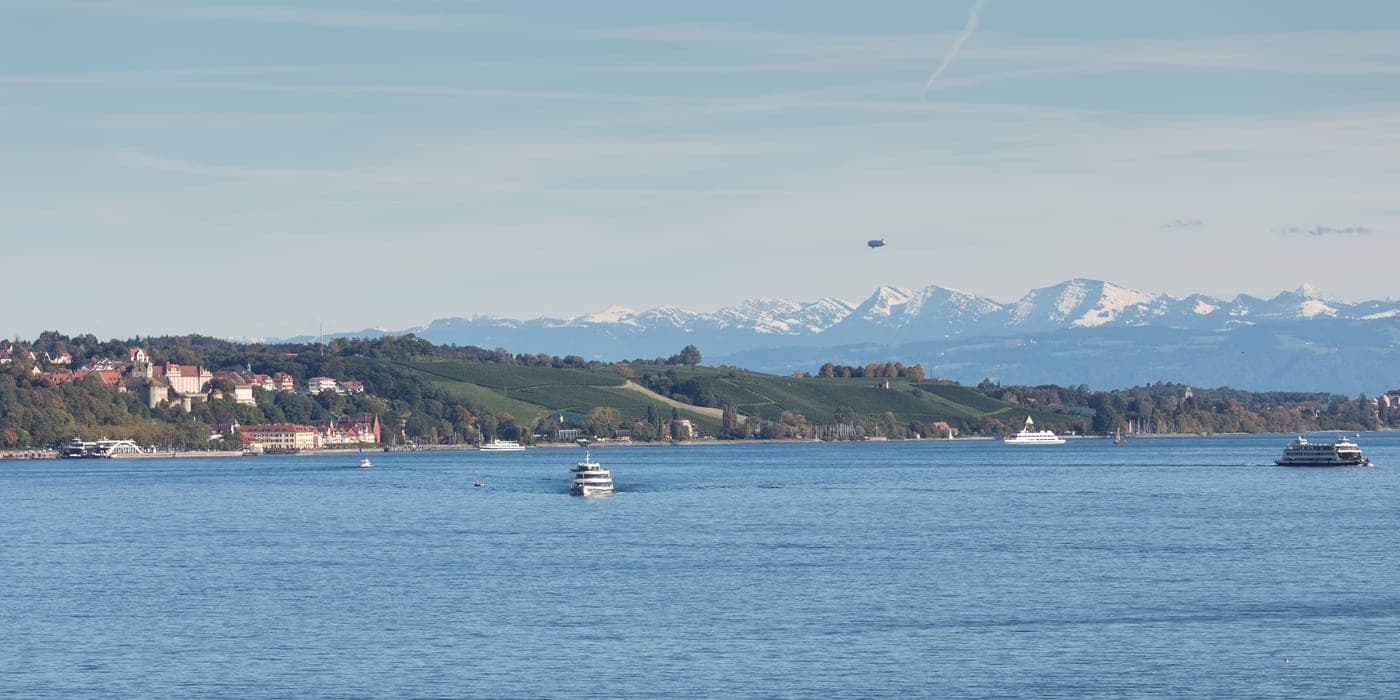
Thurgau sits in Switzerland's northeastern corner, where the land slopes gently down to the wide, calm water of Lake Constance, known locally as the Bodensee. It is the second-smallest canton in the country, and it feels like it: distances between towns are short, the land is soft and rolling rather than steep, and nothing here rushes past a visitor. This is a region built for slow travel — there is plenty to do, but everything worth doing rewards unhurried attention: an orchard in bloom, a market stall selling the season's first apples, a small harbour town with a castle looking out over the water. Locals sometimes call Thurgau "Mostindien" — cider country. Apple and pear orchards cover much of the land between the lake and the low ridges further inland, and the cider pressed from them, known as Most, is part of everyday life here. Spring brings blossom across whole hillsides; autumn brings the harvest, farm stalls, and village festivals built around it. Between the two, the land settles into a green, unhurried rhythm suited to walking. Vineyards share the same gentle slopes, especially where they catch the sun above the lake, and tasting the local wine is usually a quiet, low-key affair. The towns follow the shoreline and the rivers rather than clustering into one center. Frauenfeld, the cantonal capital, sits inland on the Murg river and carries its history in a castle that still overlooks the old town, alongside a museum and a market square that fills on trading days. Along the lake, small towns such as Arbon, Romanshorn, and Kreuzlingen each keep their own character — a harbour, a promenade, an old quarter — without growing large enough to feel like cities. Further along the shore, Ermatingen and Steckborn sit among orchards and vineyards, their waterfronts backed by half-timbered houses and quiet gardens. Inland, the historic towns hold their own stories. Diessenhofen, on the Rhine near the canton's northern edge, keeps a medieval old town and a covered wooden bridge across the river. Bischofszell, where two rivers meet, has a compact center of painted facades and a bridge that has carried travellers for centuries. Nearby, the former Carthusian monastery of Kartause Ittingen now holds art collections, a working farm, and gardens open for a slow afternoon walk. Several small places rather than one big draw is what makes Thurgau work as a slow itinerary. Three to four days is usually enough to link a few lake towns with a stop or two inland, leaving room to sit somewhere for an hour instead of checking sights off a list. A typical stretch might pair a morning in Frauenfeld's old town with an afternoon by the water in Romanshorn or Arbon, or set aside a full day for the orchard country around Ermatingen when the trees are in blossom or heavy with fruit. Medieval castles and fortified manor houses turn up more often than the region's quiet reputation suggests, many still standing amid farmland. Paths link several of them across field edges and orchard rows: Thurgau's landscape is meant to be walked through slowly, with a stop for cider, a plate of local cheese, or a piece of fruit tart along the way. Lake Constance shapes the region's mood as much as its geography. The water is wide enough to blur into the sky on a still day, and the shoreline towns face out toward Germany across it, giving Thurgau a quietly international feel without the crowding that comes with better-known Swiss lakes. Fishing still happens here on a small, local scale, and lake fish shows up on menus in towns along the shore. Thurgau rewards patience more than a packed itinerary. There is no single landmark built to justify a special trip; instead there are orchards, small harbours, a scattering of castles, and towns that stay interesting for an afternoon. Anyone planning time here does better setting a loose route between three or four towns and leaving space between them than trying to cover the whole canton.
Boat RentalsHiking