Saucisson neuchâtelois IGP
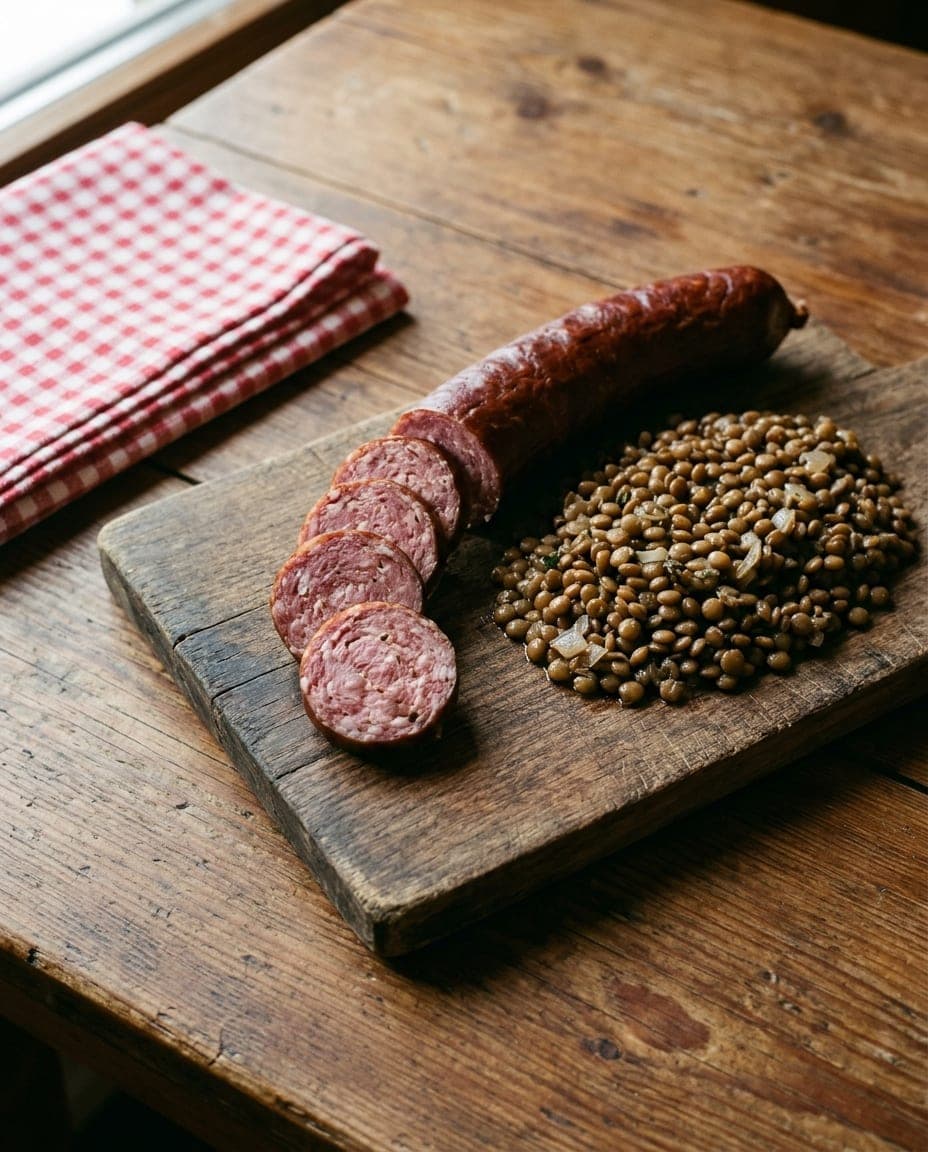
Smoked pork sausage from Neuchâtel, poached with lentils
- Local name
- Saucisson neuchâtelois
- Served with
- Lentils or potatoes
- Best eaten at
- A Neuchâtel brasserie
- Pairs with
- Neuchâtel Pinot Noir or Chasselas
What it is
Saucisson neuchâtelois is a distinctive cured meat from the Swiss canton of Neuchâtel. It is a thick, straight sausage made from coarsely ground pork in a beef casing, cold-smoked until it develops a golden-brown colour and a firm texture. Unlike many fresh sausages that are fried or grilled, this one is designed to be simmered gently in water before serving. The result is a moist, flavourful meat that holds its shape well when cut into thick slices.
The sausage has been a registered Indication Géographique Protégée (IGP) since 2003, meaning its production methods and origin are legally protected: it must be made in the canton of Neuchâtel from Swiss pork. It is a regional speciality tied closely to Neuchâtel, where it remains a staple of local cooking, and locals are quick to point out how it differs from the saucisson of neighbouring Vaud.
How it comes to the table
In the kitchen, the saucisson begins as a raw cured product. Cold smoking imparts a specific smoky aroma without making the meat overly dry or bitter. Once the sausage is ready, it is placed in a large pot of barely simmering water for 30 to 40 minutes, depending on size. This poaching step is essential; it warms the meat through, releases its fat gently into the cooking liquid, and ensures the texture remains tender rather than tough.
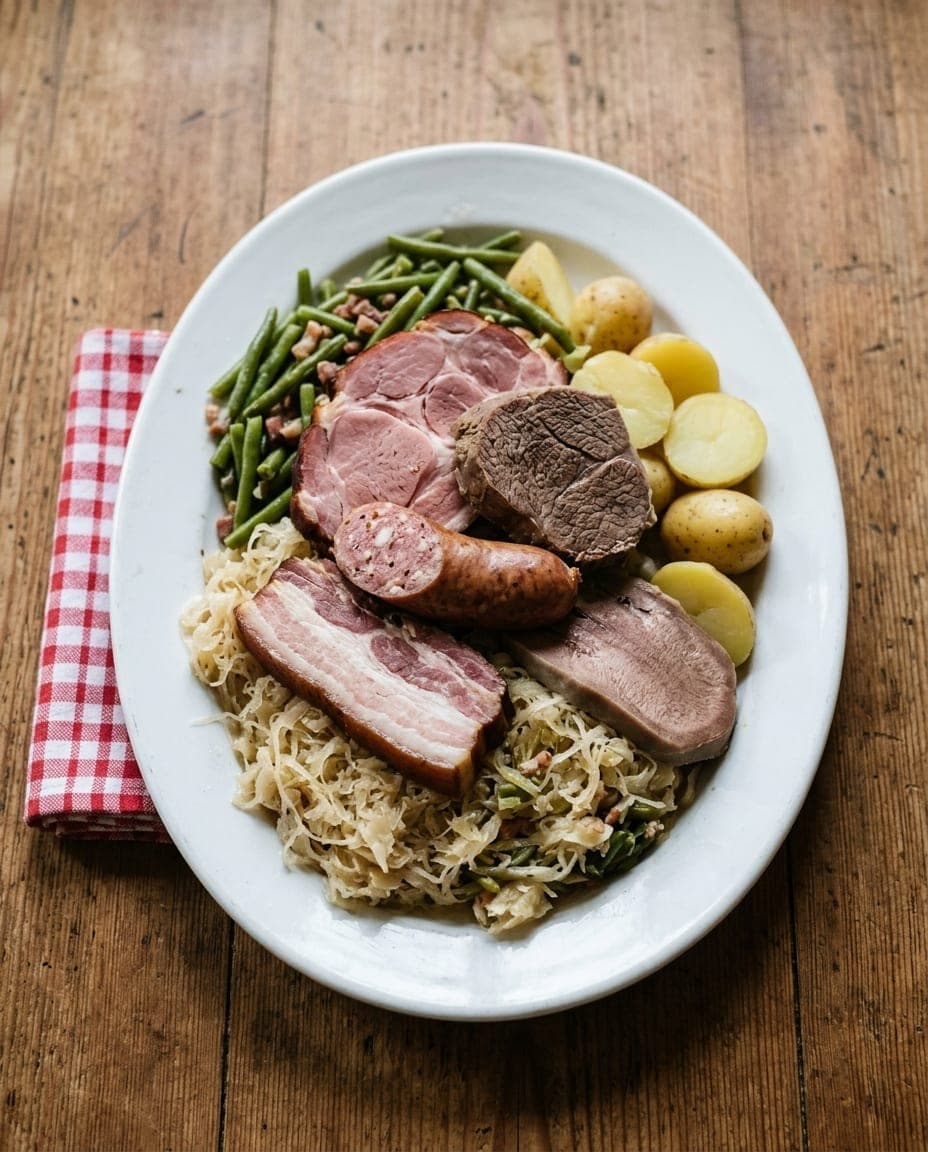
The traditional serving method pairs the sausage with simple, earthy sides. It is most commonly served with green lentils or boiled potatoes. In winter, it often appears in a papet-style stew, where the meat simmers together with leeks and potatoes until the vegetables are soft and the broth is rich. It is also baked inside brioche dough as saucisson en brioche. The dish is hearty and rustic, intended to provide warmth during the colder months. It is not usually eaten as a cold cut on a platter but rather as part of a warm meal.
What goes into it
The composition of the sausage is straightforward, relying on quality ingredients rather than complex mixing.
- Pork: The only meat is coarsely ground pork, roughly two-thirds lean meat to one-third bacon, which keeps the result moist after poaching.
- Spices: The IGP rules allow only curing salt, pepper and garlic, so the seasoning stays simple; the exact proportions vary between butchers.
- Smoke: The sausages are cold-smoked at low temperature rather than over open flame, which colours the skin and keeps the smoke mild.
The final dish often includes green lentils or waxy potatoes, which absorb the savoury juices released by the meat during cooking. Leeks are frequently added to the stew version, providing a mild sweetness that balances the saltiness of the cured pork.
How to eat it
Saucisson neuchâtelois is best enjoyed as a main course at lunch or dinner, particularly when the weather turns cool. It is typically served in a deep bowl or on a plate alongside a generous portion of the chosen side dish. The lentils or potatoes are often mixed with the sausage slices so that each bite contains both elements.
A Neuchâtel brasserie is the usual setting: a café that serves plates, open through the afternoon, with a short written menu. The sausage pairs naturally with local wines from the canton. A dry white Chasselas or a light red Pinot Noir complements the smoky notes without overpowering them.
Curious facts
- IGP protection: The sausage holds an IGP label, ensuring it is produced in Neuchâtel using traditional methods.
- Poaching method: Unlike many sausages that are fried or grilled, this one is usually simmered to achieve its correct texture.
- Cooked in the embers: In autumn, Neuchâtel families hold a torrée, a woodland gathering where the saucisson is cooked in the embers of a bonfire.
- Winter staple: The dish is a traditional winter food, designed to warm the body during the colder months in the Swiss Jura region.
- Simple pairing: It relies on local white wine or red wine from the canton rather than imported varieties.
Where to try it
Neuchâtel and the villages along the lake and up into the Jura, in brasseries and village restaurants, from autumn through the winter. It comes with lentils or with potatoes and leeks, and rarely on its own.
Butchers across the canton sell it raw and smoked, to be poached at home, and the weekly markets in Neuchâtel and La Chaux-de-Fonds carry it. The IGP mark is the thing that separates it from the Vaud saucisson next door, which looks similar and is compared accordingly.
Where to try it
1 destination
 Boat Rentals
Neuchâtel
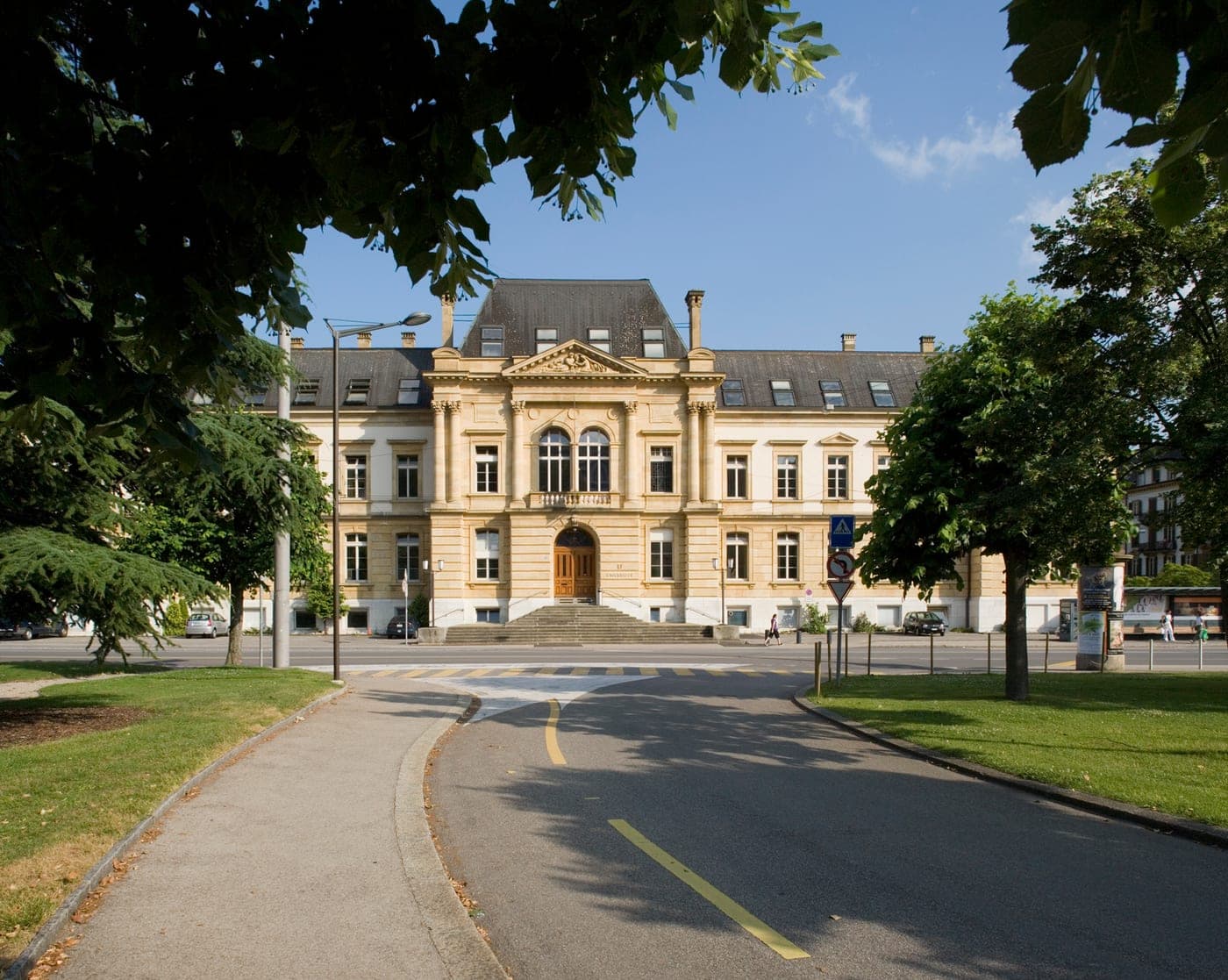
Scenic lakeside city known for its university, watchmaking, and historic architecture.
Boat RentalsHiking
1 region
- Boat Rentals2 destinations
Neuchâtel
Neuchâtel is known for its rich watchmaking heritage and stunning lake views. It is the only region in Switzerland that borders Lake Neuchâtel, providing opportunities for lakeside strolls and water activities. The town of Neuchâtel, with its medieval castle and vibrant university atmosphere, is the largest in the region. Smaller towns like La Chaux-de-Fonds and Le Locle are UNESCO World Heritage sites, recognized for their historical significance in watchmaking. The region also boasts beautiful vineyards producing white wines, particularly Chasselas. Scenic hikes in the Jura mountains offer breathtaking panoramas and a chance to engage with nature. Local festivals celebrate traditional crafts and culinary delights unique to this area.
Boat RentalsHiking