Salsiz
A hand-sized dried sausage from Graubünden
- Local name
- Salsiz
- Served with
- Bread, mountain cheese
- Best eaten at
- A Graubünden mountain hut
- Pairs with
- Graubünden Pinot Noir
What it is
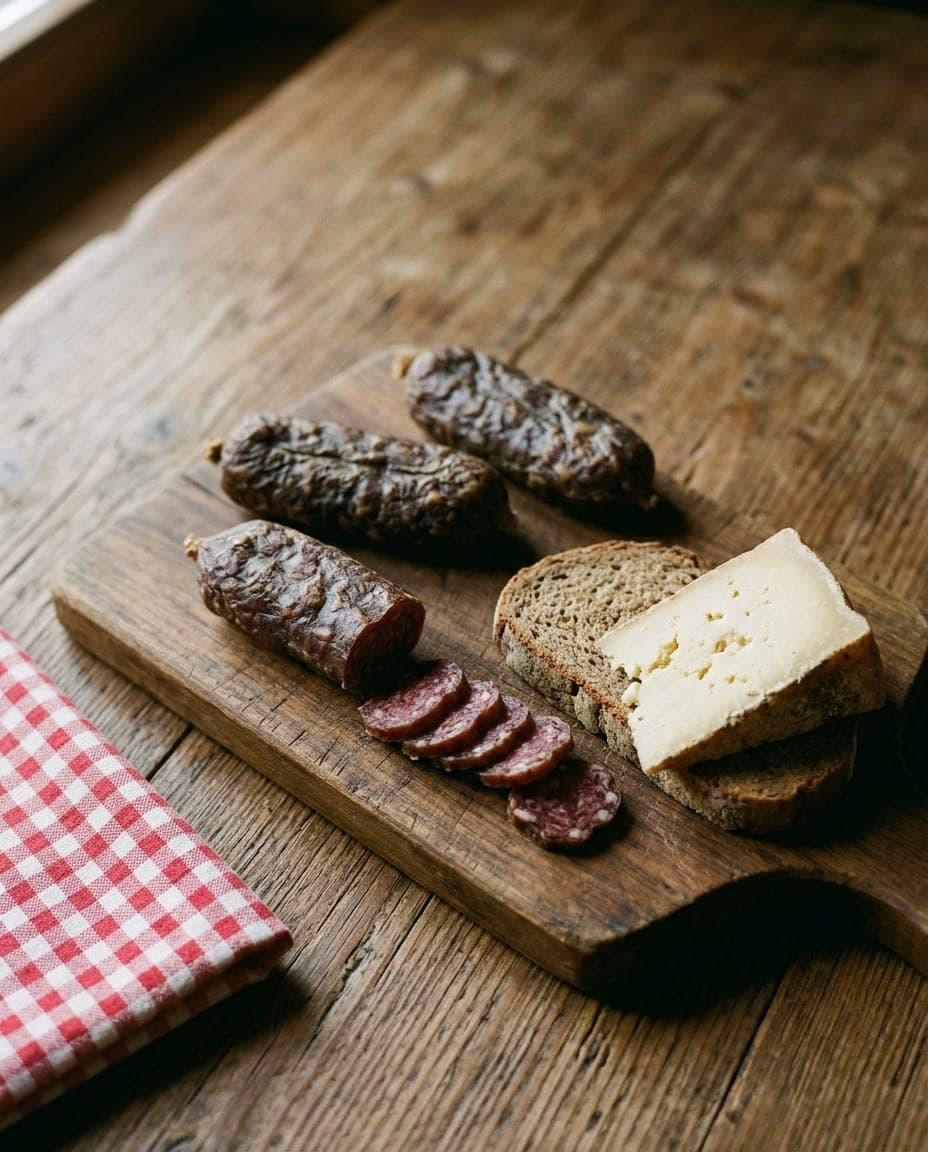
Salsiz is a small, air-dried sausage native to the Swiss canton of Graubünden. It is usually air-dried rather than smoked, and it is not a hard, rock-like salami meant for long-term storage. Instead, it is a pressed, flattened sausage made mainly from pork, often with beef or game, cured with salt and left to dry in the cool mountain air for several weeks. The result is a firm texture that yields easily to a sharp knife.
The sausage is roughly the length of an adult hand, and its pressed, squared-off profile gives slices that are rectangular rather than round. While it shares a lineage with other Alpine raw sausages, salsiz remains distinct to Graubünden, where the specific combination of meat cuts, salt ratios and drying conditions creates its unique character. It is a food of the mountains, designed for sustenance on the move rather than for long pantry storage in lowland cellars.
The mountain trail and the apéro
Salsiz serves two primary roles in Graubünden life: as walking food and as an apéro snack. In the summer and early autumn, hikers often carry a few slices of salsiz along with rye bread and local cheese to fuel long ascents or descents through the high valleys. The meat does not melt under the sun if kept cool, making it a practical choice for the trail.
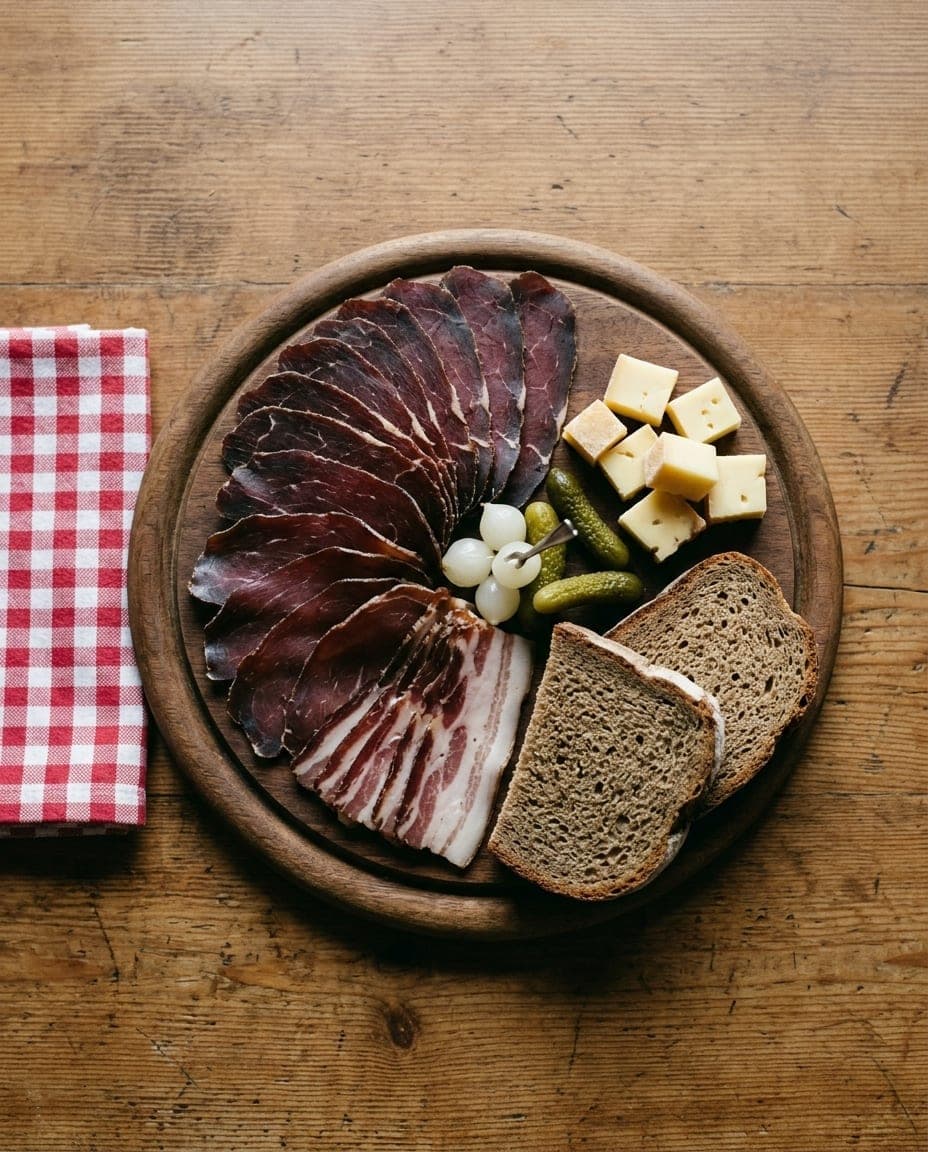
In the evening, the sausage appears on boards in mountain huts and village taverns. It is sliced thinly and arranged alongside Bündnerfleisch, the famous air-dried beef of the region, or served with a wedge of firm mountain cheese. The saltiness of the cured meat balances the earthy notes of the bread and the creamy texture of the cheese. This combination is a standard offering in a Berggasthaus, a traditional mountain restaurant, where the focus is on simple, high-quality local produce.
The sausage is also a popular starter for the evening meal, often accompanied by a glass of local wine. It is not typically cooked; its flavour comes entirely from the drying process and the quality of the raw ingredients.
How it is made
The preparation of salsiz relies on traditional methods rather than industrial machinery. The meat is coarsely ground and mixed with salt, sometimes including small amounts of pepper or other spices depending on the producer, though exact recipes are rarely public. Unlike many cured meats that are smoked over wood fires, salsiz is generally air-dried in well-ventilated rooms where cool air circulates around the sausages, though some producers give it a light smoking.
This drying process takes several weeks, allowing the meat to lose moisture and concentrate its flavour while retaining a slightly pliable texture. The sausages are pressed flat, which gives them their squared-off shape, helps them cure evenly and makes them easier to slice. Once ready, they are firm but not hard, offering a slight resistance when bitten into rather than the crunch of a fully dried product.
The meat mix can vary. A standard version uses pork, often with beef, while game salsiz, made from deer, chamois or wild boar, is most associated with the autumn hunting season. These game versions are darker in colour and carry a more intense, wild flavour that pairs well with the earthy notes of rye bread and mountain cheese.
Curious facts
- A pocket knife is the tool. On a mountain it is cut in slices off the end with whatever knife is to hand, which is most of its appeal as walking food.
- Mostly no smoke. Unlike many Alpine sausages, salsiz usually relies on air drying for preservation and flavour development.
- Game versions follow the hunt. Sausages made from deer or chamois are most common after the autumn hunt in the canton.
- A flat shape. The sausage is deliberately pressed flat, so it cuts into rectangular slices rather than rounds.
- Local wine match. Pinot Noir from the Bündner Herrschaft is the usual pairing, its fruit balancing the salt of the cured meat.
Where to try it
A mountain hut in Graubünden, where it comes on a board with Bündnerfleisch, cheese and rye bread, and a glass of the canton's Pinot Noir beside it.
Butchers and village shops across the canton sell them singly, hanging in rows behind the counter, and they are the standard thing bought before a day's walking. Game salsiz is easiest to find from late autumn after the hunt; it is darker and stronger, and often sells out.
Where to try it
1 region
 Panoramic Trains15 destinations
Graubünden
Graubünden is Switzerland's largest canton, known for its stunning alpine landscapes and unique cultural heritage. The region is famous for its diverse languages, with Romansh being one of the official languages. Notable cities include Chur, the oldest city in Switzerland, and the resort town of St. Moritz, renowned for winter sports and luxury. The area boasts the breathtaking Engadin Valley, home to picturesque villages like Sils and Maloja, and offers excellent hiking trails in the Swiss National Park. Graubünden is also known for its traditional cuisine, including hearty dishes like Capuns and Pizzoccheri, reflecting its rich agricultural roots. The region hosts lesser-known festivals that celebrate local traditions, adding to its authentic character.
Panoramic TrainsHiking