Rösti
The crisp potato cake that defined Swiss German identity
- Vegetarian
- Local name
- Rösti
- Served with
- Fried egg, bratwurst
- Best eaten at
- A Bernese Landgasthof
- Pairs with
- Chasselas
What it is
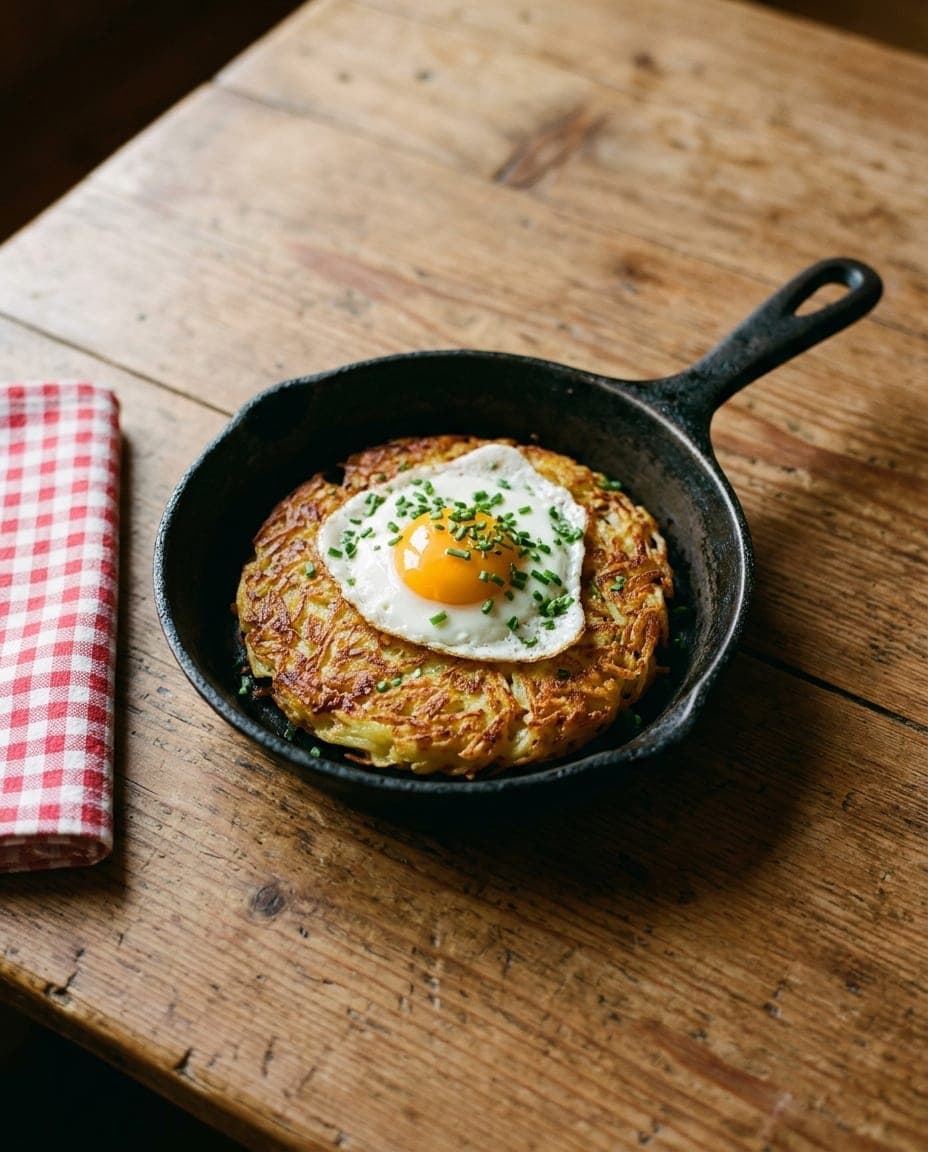
Rösti is a flat, golden-brown cake made from grated potatoes, fried in butter or lard until a thick crust forms on both sides. It is the most recognisable dish of German-speaking Switzerland and a staple that appears on menus from the Alpine peaks to the city streets of Zurich. While it began as a simple breakfast for farmers in the canton of Bern, it has evolved into a culinary symbol that defines the region's identity.
The texture is the defining feature. A well-made rösti should be crisp and shattering on the outside while remaining soft and tender within. It is not merely a side dish but often a substantial meal in its own right. The potatoes are typically grated by hand or machine, then pressed into a hot pan where they fry until they achieve that characteristic deep golden colour. There is no flour or binding agent in the traditional version; the potato's own starch holds the cake together.
Potatoes, fat and salt, and nothing else required. The difficulty is heat: too high and the crust burns before the middle cooks, too low and it never crusts at all.
The origin in Bernese farmhouses
The story of rösti is rooted in the agricultural life of the canton of Bern. It emerged as a breakfast for farmers who needed a hearty meal to start a long day of work in the fields or on the mountain slopes. Before the potato became a widespread crop, Swiss peasants relied on grain and cheese. The potato spread through the Swiss countryside in the 18th century, and it was in the farm kitchens of the Bernese plateau that it took this form.
The name comes from the Bernese German for roasting, and it described the action before it described the dish. Over time, the name stuck to the dish itself, distinguishing it from other potato preparations like mashed potatoes or boiled tubers.
The Röstigraben cultural divide
The dish is so deeply associated with German-speaking Switzerland that it gave its name to a political and cultural concept known as the Röstigraben, or "rösti ditch". This term describes the linguistic and cultural boundary that runs through the middle of the country, separating the German-speaking majority from the French-speaking minority. The line runs from the Jura across the Swiss Plateau, following the Saane/Sarine for a stretch, and cuts through the cantons of Bern, Fribourg and Valais.
The Röstigraben is a tongue-in-cheek reference to how firmly the dish belongs to the German side of the divide. In the French-speaking regions, potatoes are eaten in many forms, but the specific concept of the fried potato cake is less central to the national identity. The term has been used for decades to describe the subtle differences in lifestyle, language and political views between the two halves of Switzerland.
The word is used in earnest in Swiss newspapers on the morning after a referendum, when the two halves of the country have voted differently.
What goes into it
The traditional rösti relies on a very short list of ingredients, allowing the quality of the potato to shine through. The core components are simple:
- Potatoes: Ideally firm, waxy varieties that hold their shape when grated. Starchy potatoes can be used for a softer texture, but the classic version prefers a balance that allows for a crisp crust.
- Fat: Butter is the traditional choice, providing a deep flavour and golden colour. Some cooks use lard or a mixture of both to achieve a specific crunch and savoury depth.
- Salt: Added at the right moment to draw out moisture and season the potato evenly.
Variations are common but always respect the base recipe. Bacon bits, known as Speck, are often fried with the potatoes to add saltiness and smokiness. Grated onion is another frequent addition, caramelising in the pan to provide sweetness and depth. Cheese, particularly Gruyère or Emmental, may be sprinkled on top during the final minutes of cooking, melting into the crust for a savoury finish.
The preparation method dictates the final texture. Some cooks par-boil the potatoes before grating them, which results in a firmer cake with a distinct layering of textures. Others use raw grated potatoes directly, creating a softer interior that melts in the mouth. The choice depends on personal preference and the specific type of potato available.
How to eat it
Rösti is often a side, taking the place of the potatoes next to a main course, but it is also served as a meal in its own right, particularly at lunch or dinner. It arrives on the plate as a large, round cake, often cut into wedges for sharing. In a traditional setting, such as a Landgasthof in the Bernese Oberland, the portion can be substantial enough to satisfy a hungry appetite after a day of hiking or farming.
The classic combination is with a fried egg and a bratwurst sausage. The runny yolk acts as a natural sauce, coating the crisp potato cake and adding richness to the meal. The sausage provides a savoury contrast to the earthy flavour of the potatoes. This trio forms a complete, balanced meal that has been enjoyed for generations.
In Zurich it goes under Geschnetzeltes, the veal in cream sauce, which is the pairing the city is known for.
A glass of Chasselas, the white grape of Lake Biel's vineyards in the canton of Bern and of Lavaux on Lake Geneva, pairs exceptionally well with rösti. The wine's crisp acidity and subtle fruit notes complement the savoury potato without overpowering it. In warmer months, a cold beer is also a popular choice among locals.
Curious facts
- The name defines the divide. The term Röstigraben is widely used in Swiss politics to describe the cultural and linguistic boundary between German and French speakers, highlighting how deeply the dish is rooted in regional identity.
- It was a breakfast for labourers. Unlike many European dishes that evolved from court cuisine or urban cafes, rösti began as a practical meal for farmers needing high energy for long days of physical work.
- No flour is used. Traditional rösti contains no binding agents like flour or eggs in the batter itself; the potato's natural starch holds the cake together during frying.
- Par-boiled or raw. Potatoes boiled the day before give a firmer cake with distinct strands; raw grated potato gives a softer one. Swiss cooks hold positions on this.
- The crust is the goal. The defining characteristic of a perfect rösti is its golden, shattering crust, which requires precise heat management to achieve without burning the interior.
- A national symbol. While it originated in Bern, rösti is now considered the national dish of German-speaking Switzerland and appears on menus across the country, from city bistros to mountain huts.
Where to try it
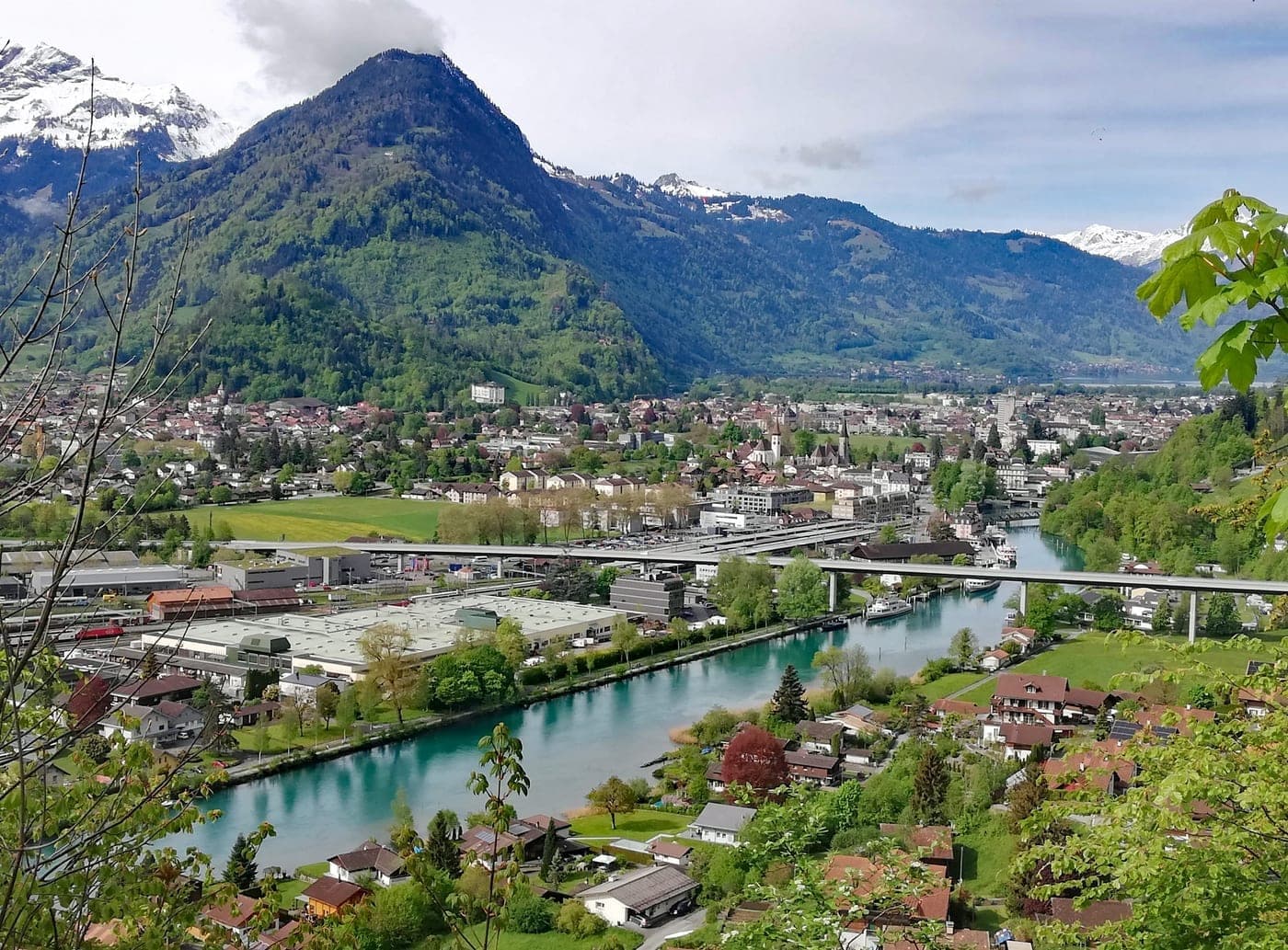
The best place to experience rösti is at a traditional Landgasthof in the Bernese Oberland or the surrounding cantons. These rural inns and restaurants serve the dish with pride, often using potatoes grown locally in the region. In Interlaken, visitors can find excellent versions that showcase the crisp texture and deep flavour of the potato cake.
City menus in Zurich and Bern all carry it, usually with cheese, bacon or an egg on top. The plainest version — potato, butter, salt, a fried egg — is the one that shows whether the kitchen can manage the crust.
Mountain restaurants serve it at altitude all winter, where it is as much fuel as food.
Where to try it
1 destination
 Panoramic Trains
Interlaken
Alpine resort town between two lakes with access to the Jungfrau region.
Panoramic TrainsBoat RentalsHiking
1 region
 Camper Van Rentals13 destinations
Bern
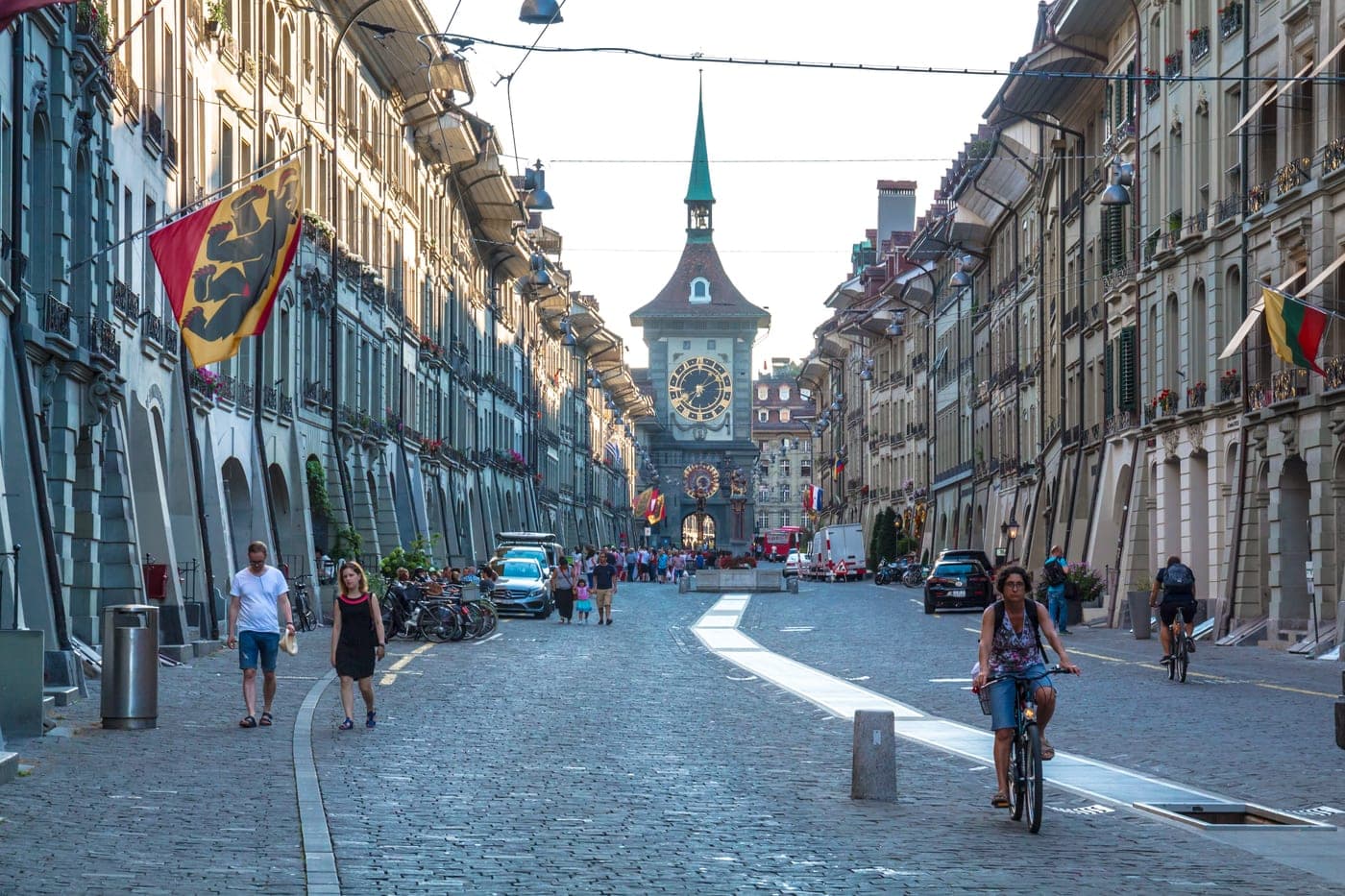
Bern is the capital of Switzerland, known for its well-preserved medieval architecture and unique UNESCO World Heritage site status. The old town features the iconic Zytglogge clock tower and the Federal Palace, showcasing the city’s political significance. Beyond Bern, the Emmental region is famous for its rolling hills and the production of Emmental cheese, with local farms offering tasting experiences. The Aare River provides opportunities for nature walks and swimming in summer. Nearby, the picturesque town of Thun offers stunning views of Lake Thun and the Alps. The region is less frequented by tourists, allowing for a deeper connection with Swiss culture and traditions.
Camper Van RentalsHikingPanoramic TrainsBoat Rentals