Risotto ticinese
Saffron or Merlot risotto from Ticino, often with luganighe
- Local name
- Risotto ticinese
- Served with
- Luganighe sausage
- Best eaten at
- A Ticino grotto
- Pairs with
- Merlot del Ticino
What it is
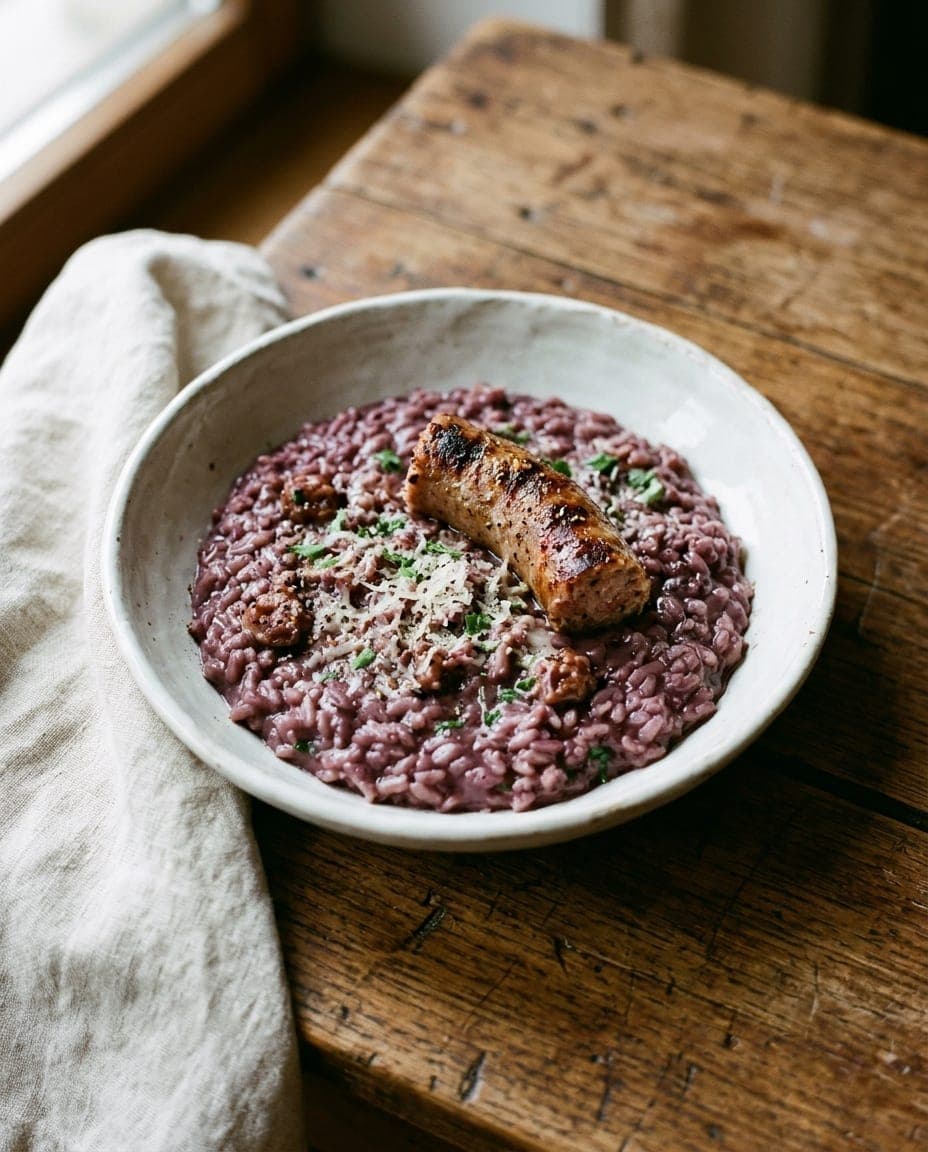
Risotto ticinese is a distinctive rice dish from the Italian-speaking canton of Ticino, in the southern tip of Switzerland. The classic version is the yellow one, coloured with saffron and served on feast days, often with luganighe sausage. A second, popular version is cooked with Merlot del Ticino, which gives it a deep red-brown colour and an earthy flavour quite unlike the white wine and stock of most northern Italian risottos.
The texture is creamy yet distinct, achieved by slowly toasting the rice in butter before adding the liquid in stages. The result is a dish that feels substantial enough to stand as a main course, yet light enough to serve as an appetiser. It is not a recipe found in every kitchen across Switzerland; it is a regional speciality tied specifically to the vineyards and valleys of Ticino.
The role of Merlot
In the red version, the defining element is the wine. Following the phylloxera plague that wiped out many European vineyards in the late 19th century, Ticino replanted its slopes with Merlot, introduced from 1906. Today, this grape is the most widely planted variety in the canton and serves as the backbone of its local red wines.
Using a dry, full-bodied Merlot to cook the rice transforms the dish completely. The alcohol cooks off, leaving behind a deep colour and a flavour that is fruity yet tannic enough to cut the fat of the butter and cheese. The wine gives the risotto a character that white wine cannot provide. With Merlot in every cellar, it was the obvious wine to reach for, and the red risotto became a regional variation in its own right.
How it is made
The preparation follows a specific rhythm common to high-quality Italian-style rice dishes, but with a local twist. The rice, often sourced from the Po valley or increasingly from small plantings within Ticino itself, is first toasted in butter until the grains are hot and slightly opaque. This step ensures the grain retains its structure during the long cooking process.
The liquid is then added gradually: stock coloured with saffron for the yellow version, and in the red version a good share of Merlot, which reduces to a glossy sauce that clings to the rice. The dish is finished with a generous knob of cold butter and a handful of grated cheese, usually Parmigiano-Reggiano or a local Swiss variety. When served at village festivals, the rice is often cooked in large copper pots over open wood fires. In these settings, it is frequently served with luganighe, a fresh pork sausage native to the area, which adds a savoury depth to the creamy grains.
How to eat it
It arrives in a shallow bowl rather than a deep one, soft enough to spread slowly across the plate but with the grains still distinct. It is a first course by convention and a whole meal by volume.
The glass beside it is Merlot del Ticino — in the red version, the same wine that went into the pot. The tannin holds against the butter and the sausage, which is the entire logic of the pairing.
Curious facts
- A regional identity. While risotto is Italian, this specific version belongs to Switzerland. It marks the cultural boundary where Italian cooking meets Swiss Alpine traditions.
- The colour comes from the pot. The red-brown shade is the wine reducing into the rice, not any colouring; a saffron version in the same kitchens comes out yellow instead.
- Sausage and rice. The combination with Luganighe sausage is so common that some cooks consider the two ingredients inseparable for a complete festival meal.
- A feast-day dish, year-round. Although most associated with Carnival and Christmas, the dish is served throughout the year in grotti as a warming staple.
Where to try it
A grotto in Ticino: the stone-walled cellars dug into the hillsides, with granite tables outside under the trees, serving one short menu and the wine of the house. They are spread through the valleys above Locarno and Lugano and down the Valle di Muggio, and most of them close through the winter.
Village festivals are the other setting, and the better one: the rice is cooked outdoors in a copper pot over wood, stirred by whoever is holding the paddle, and served by the ladle with a luganighe on top. Carnival is the great season for these risottate, and many village festivals through the year have one running.
Where to try it
1 region
 Boat Rentals1 destination
Ticino
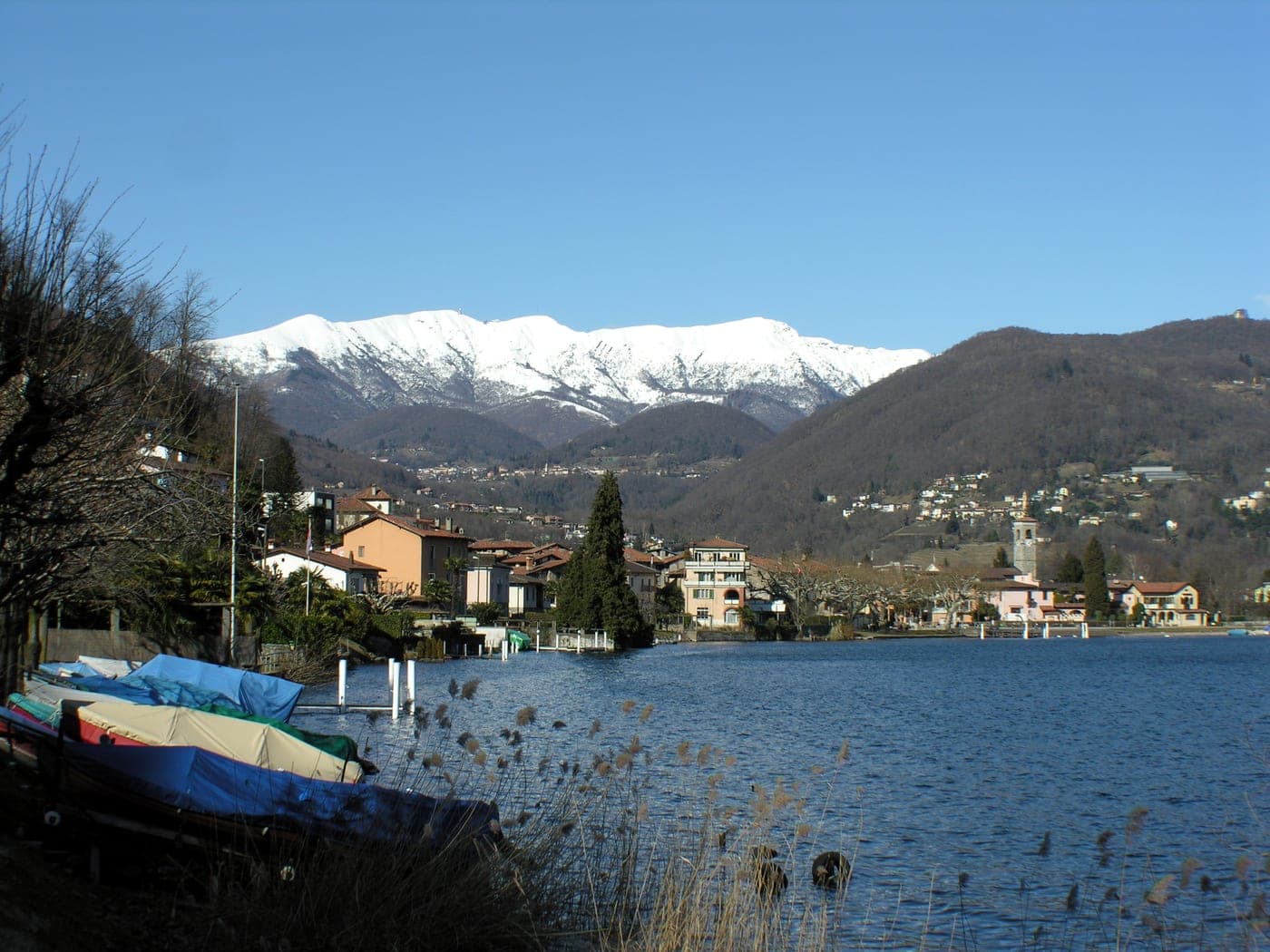
Ticino, the only Italian-speaking region in Switzerland, offers a unique blend of Mediterranean flair and Swiss efficiency. It features stunning landscapes, from the rugged peaks of the Alps to the lakeside beauty of Lugano and Locarno. The region is renowned for its picturesque villages like Morcote, where narrow streets lead to lakeside views. Known for its rich culinary traditions, Ticino is famous for polenta and Merlot wine, showcasing a blend of Italian and Swiss influences. Historic sites such as Castello di Montebello and the UNESCO-listed Bellinzona fortifications reflect its strategic importance. With its mild climate, Ticino is a haven for hiking, cycling, and exploring local markets, making it ideal for a relaxed travel experience.
Boat RentalsHiking