Raclette du Valais AOP
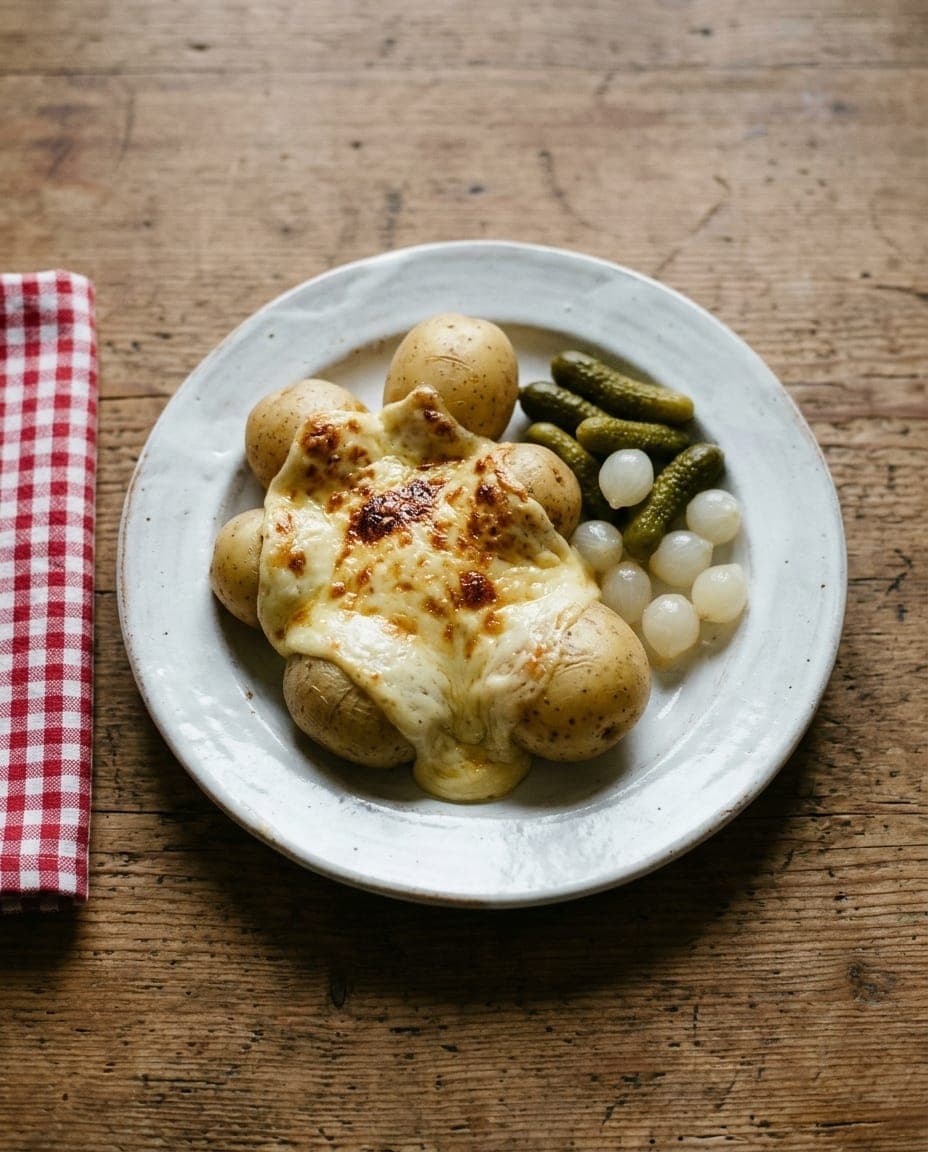
Melted Valais cheese scraped onto potatoes at a mountain fire
- Vegetarian
- Local name
- Raclette du Valais
- Served with
- Potatoes, cornichons, pickled onions
- Best eaten at
- A Valais mountain restaurant
- Pairs with
- Fendant (Chasselas)
What it is
Raclette du Valais AOP is a mountain cheese from Switzerland's Valais canton, made specifically for melting. The name refers to both the cheese itself and the meal prepared with it. In this dish, a half wheel of semi-hard raw cow's milk cheese is placed near an open flame or a heated element until the face turns soft and liquid. The melted layer is then scraped from the wheel onto a plate containing boiled potatoes, cornichons and pickled onions. This process repeats until the diners have eaten their fill, turning the meal into a communal activity that can last for hours.
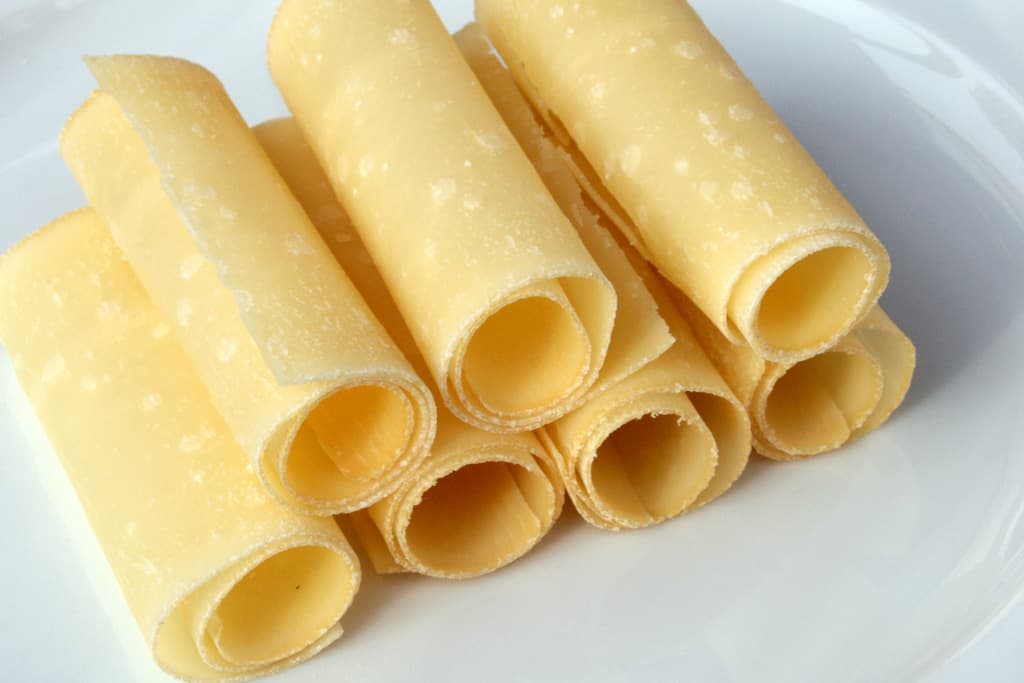
The cheese is not merely an ingredient; it defines the character of the dish. It has a supple, semi-hard texture when cold, with a pale yellow interior and a natural rind that darkens with age. When melted, it becomes creamy and glossy without losing its structure completely. The AOP status ensures that the raw milk comes from Valais cows fed largely on local forage and that the cheese is made and ripened within the canton's boundaries. This regional specificity gives the dish a taste that reflects the high-altitude pastures of the Alps.
The origins of the mountain meal
The story of raclette is rooted in the daily life of the Valais valley, where long winters and high passes made it necessary to make the most of stored food. Farmers kept cheeses through the winter months, allowing them to ripen in cool cellars. When the weather turned cold, they would bring a large wheel of cheese near the hearth fire to soften the surface. The warmth allowed them to scrape off the melted portion while keeping the rest of the wheel intact for later use.
This practice evolved from a simple way to warm a meal into a social ritual. Families and herders would gather around the fire, and scraping the cheese for everyone became part of the occasion. Over time, this method of cooking moved from the open hearth to the dining table, first using small portable stoves and later the electric grills common in modern chalets. Despite these changes, the core idea remains: melting cheese by heat and scraping it over boiled potatoes.
Raclette is now made and eaten across Switzerland, and the AOP covers only the Valais cheese. The canton is firm on the distinction: the meal is national, the cheese is theirs.
How the dish is made at the table
The preparation of raclette relies on the interaction between heat and time rather than precise measurements. In a traditional setting, a large half wheel of Raclette du Valais is placed on a stand facing an open fire or a gas burner. The heat melts the outer layer of the cheese until it becomes a thick, bubbling pool. A long, thin knife is then used to scrape this melted portion onto a plate that has already been prepared with boiled potatoes, cornichons and pickled onions.
This cycle repeats as the diners enjoy their food. Often one person does the scraping for the whole table; in other groups diners take turns. The cheese is eaten immediately while still hot, often accompanied by a slice of crusty bread to mop up the remaining melted bits. The potatoes are typically boiled until tender but not mushy, providing a neutral base that balances the salty flavour of the cheese. The cornichons and pickled onions add a sharp, acidic contrast that cuts through the fat.
Modern versions of the meal often use small electric grills with individual pans for each diner. These devices allow everyone to melt their own portion simultaneously, speeding up the process while maintaining the communal atmosphere. However, in many mountain restaurants across the Valais, the traditional method persists. A half wheel is melted at a wood fire or in a purpose-built raclette oven and scraped for the diners as it softens. This approach preserves the ritualistic aspect of the meal, where the pace of eating is dictated by the melting cheese rather than a clock.
The ingredients that define the taste
The character of the dish comes from three main components: the cheese, the potatoes and the pickles. Each element plays a specific role in balancing the flavours of the meal.
- Raclette du Valais AOP: A firm cow's milk cheese with a pale yellow interior and a natural rind. When melted, it becomes creamy and slightly salty, retaining a hint of its grassy origins from the high pastures.
- Boiled potatoes: Typically small or medium varieties that hold their shape when boiled. They provide a neutral, starchy base that absorbs the melted cheese without becoming soggy.
- Cornichons and pickled onions: Small, sharp pickles that offer a tangy contrast to the fat of the cheese. These are essential for cutting through the fat and refreshing the palate between scrapes.
The salt of the cheese against the acid of the pickles is what lets the meal run for an hour or more: each round resets the palate for the next. The AOP label ensures that the cheese meets strict standards regarding milk source and production methods, which guarantees a consistent quality across different producers in the Valais.
Curious facts
- The fire is essential. Traditional raclette requires a heat source that melts only the surface of the wheel, leaving the rest solid. This allows the cheese to be scraped multiple times from the same half wheel during a single meal.
- AOP status protects the region. Protected since 2003, the designation covers both the cheese and the specific methods used in the Valais canton, ensuring that only raw-milk cheese made from local milk can bear the name.
- The word comes from scraping. Racler is the French verb for scraping, which describes the central action of the dish. This linguistic root links the meal to its practical origins in mountain farming.
- A seasonal tradition turned year-round. While originally a winter activity when farmers needed to warm stored food, raclette is now enjoyed throughout the year in many Swiss restaurants and chalets.
- The cheese holds its shape. Unlike some soft cheeses that melt into a liquid pool, Raclette du Valais retains a thick, creamy consistency that can be scraped onto a plate without running off immediately.
Where to try it
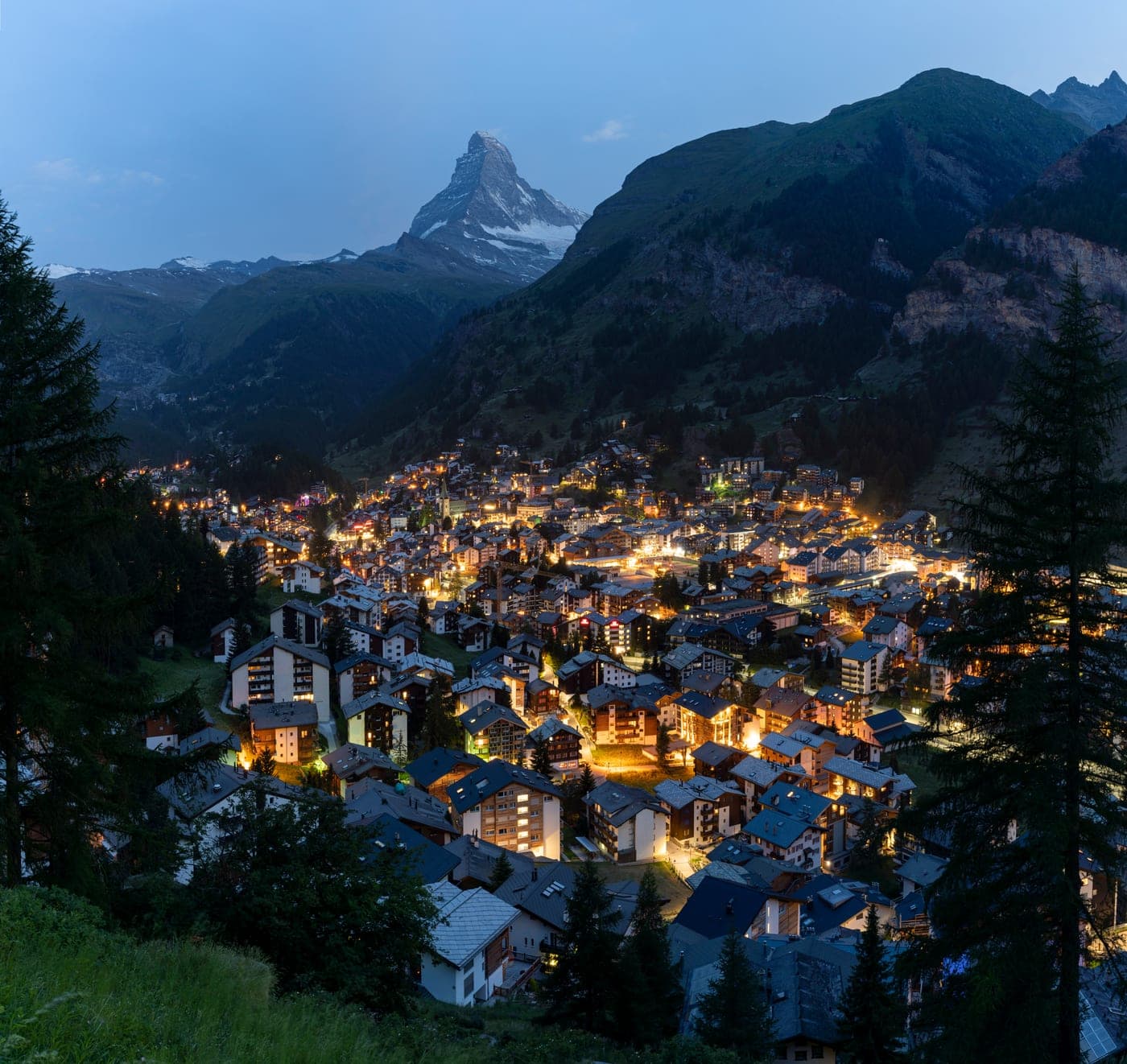
The most authentic experience of raclette du Valais is found in a mountain restaurant in the Valais canton, particularly in areas like Zermatt where the tradition remains strong. Half wheels are heated over open fires or gas burners in the middle of the dining room and scraped at the table.
Many restaurants in the Valais serve raclette as a main course for lunch or dinner, often accompanied by a glass of Fendant, the local dry white wine made from Chasselas grapes. This pairing is traditional because the crisp acidity of the wine complements the fat of the cheese and the sharpness of the pickles. Some venues also offer a selection of other local cheeses or regional wines to accompany the meal.
The electric table grill with its little pans is what most of Switzerland uses at home, and it is a different and faster thing. In the Valais many restaurants still serve it from the half wheel, scraped plate by plate.
Where to try it
1 destination
 Panoramic Trains
Zermatt
Iconic car-free mountain resort beneath the Matterhorn.
Panoramic TrainsHikingLocal Cuisine
1 region
- Panoramic Trains3 destinations
Valais
Valais is a prominent region in Switzerland, known for its striking alpine landscapes and rich cultural heritage. It is home to the famous Matterhorn and the largest ski area in the country. The region is characterized by its terraced vineyards, which produce unique wines like Fendant and Dôle. Sion, the capital, boasts a medieval old town and ancient castles. Zermatt, a car-free village, offers access to breathtaking hiking trails. The region is also famous for its local cheeses and traditional festivals, including the Fête de la Saint-Bernard. With stunning mountain scenery and charming villages, Valais invites exploration beyond the typical tourist path.
Panoramic TrainsHikingLocal CuisineWine Tasting