Pain de seigle valaisan AOP
Dense dark rye loaf from Switzerland's Valais valley
- Vegetarian
- Local name
- Pain de seigle valaisan AOP
- Served with
- Raclette, dried meats
- Best eaten at
- A Valais carnotzet
What it is
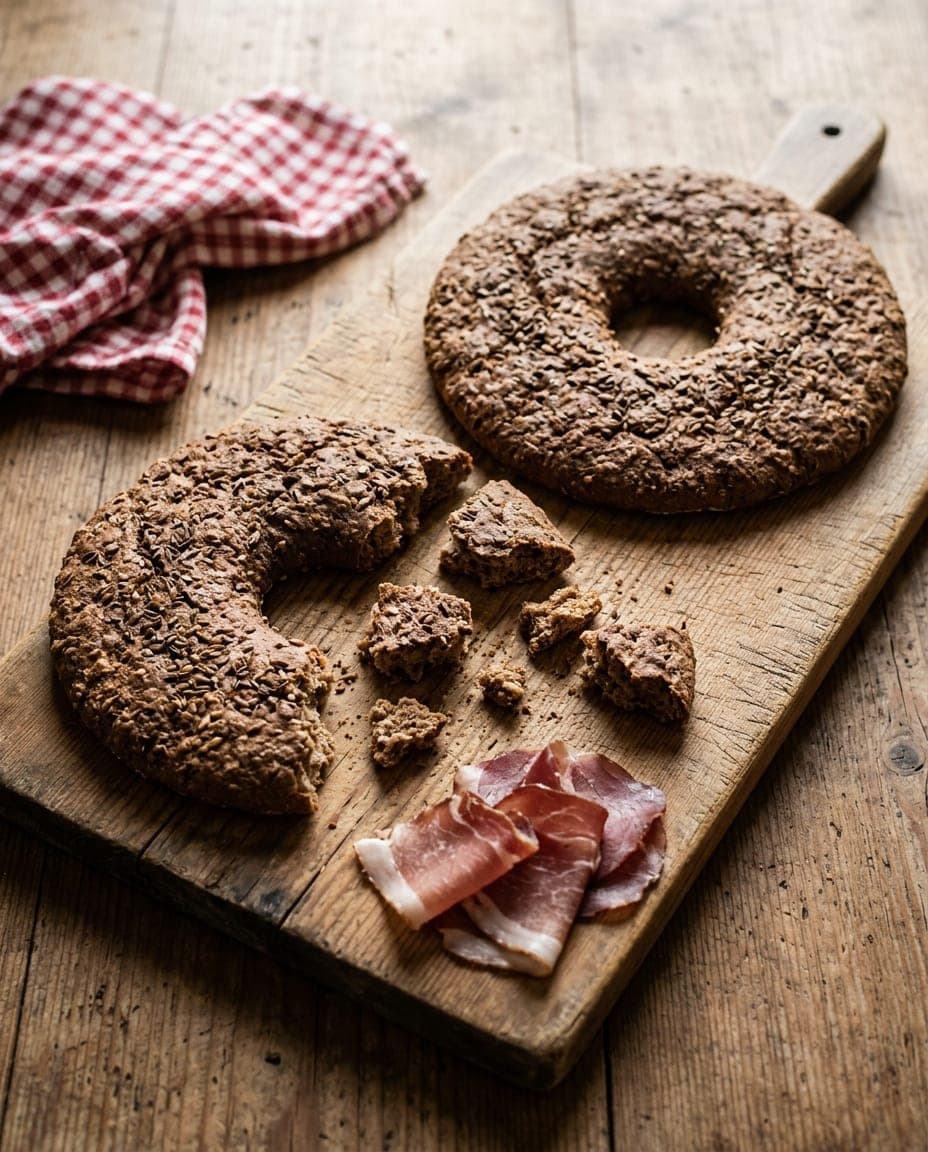
Pain de seigle valaisan AOP is a dense, dark rye bread native to the Swiss canton of Valais. The name translates simply as "Valais rye bread", but the product carries a specific legal protection known as an AOP, or Appellation d'Origine Protégée. This designation ensures that the rye grain must be grown within the canton and the baking must take place there as well. The result is a loaf that stands apart from the lighter wheat breads found elsewhere in Switzerland.
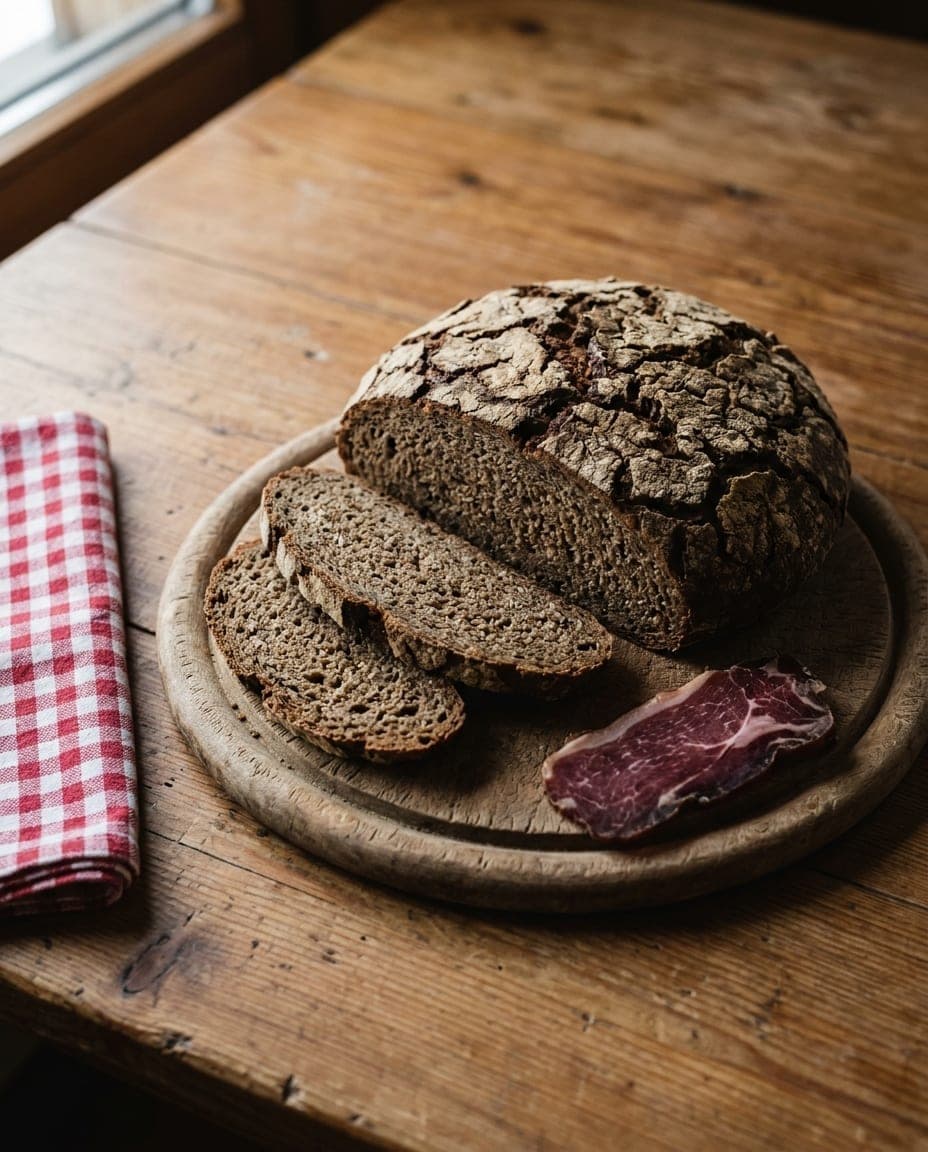
The bread is round and heavy, with a crust that often shows deep cracks running across the top. Its texture is tight and moist, reflecting a dough of at least 90 per cent rye flour, with no more than a little wheat. Because rye does not rise as high as wheat, the loaf remains compact and substantial. It is a food designed for endurance, keeping well for about a week when stored correctly.
Why it was baked in stone ovens
The history of this bread is tied to the geography of the Valais valley. The climate at higher altitudes proved unsuitable for growing wheat, but rye thrived in the cooler soil and shorter growing season. Rye bread is recorded as the staple of Valais villages as early as 1209. For centuries, villages relied on communal ovens rather than individual household hearths, and these were fired only two or three times a year.
This infrequency of baking created a practical need for preservation. Households baked large batches of loaves that could be stored for extended periods to feed families through the winter months, typically on wooden racks in dry, airy storage rooms. The tight crumb and thick crust were essential features; they slowed staling and mould, and loaves stayed edible for months even as they dried hard.
In older homes, the hardened bread was often cut using a bench-mounted blade, a heavy tool fixed to a table that allowed for clean cuts through the dense loaf without crushing it. This method of preparation highlights how the bread was treated as a staple rather than a casual side item. The AOP status today preserves these traditional methods, requiring that the grain be sourced locally and the baking follow established regional practices.
How it is eaten
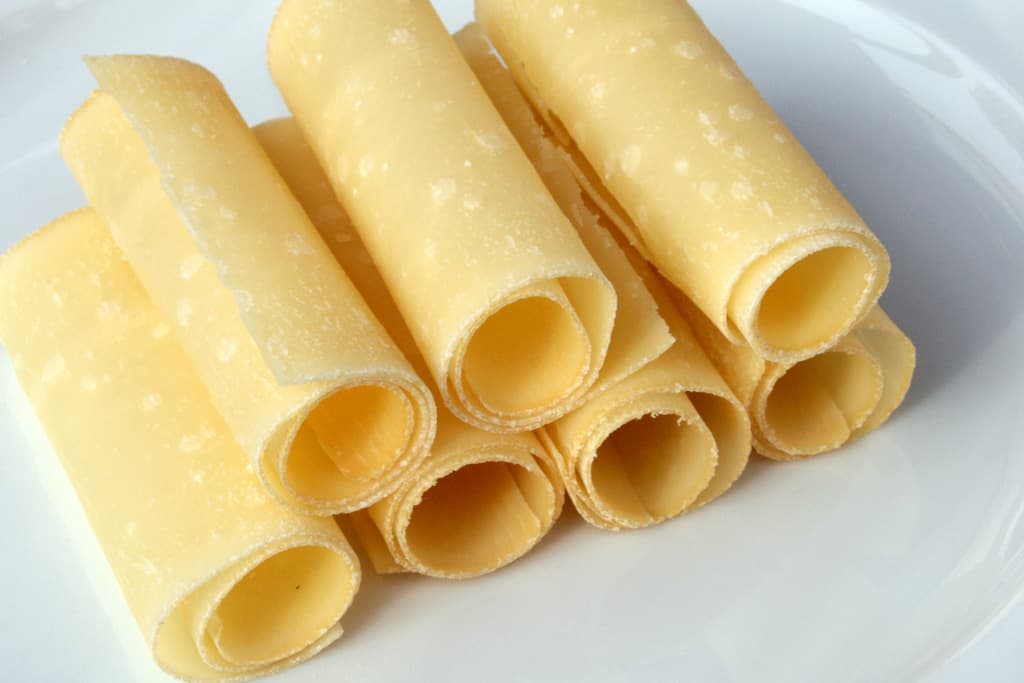
The bread finds its true purpose when paired with the region's other staples. It is often served alongside raclette, the melted cheese dish where a wheel of cheese is heated until the top melts and is scraped onto plates. The dense rye provides a sturdy base for the salty cheese, absorbing the fats without becoming soggy.
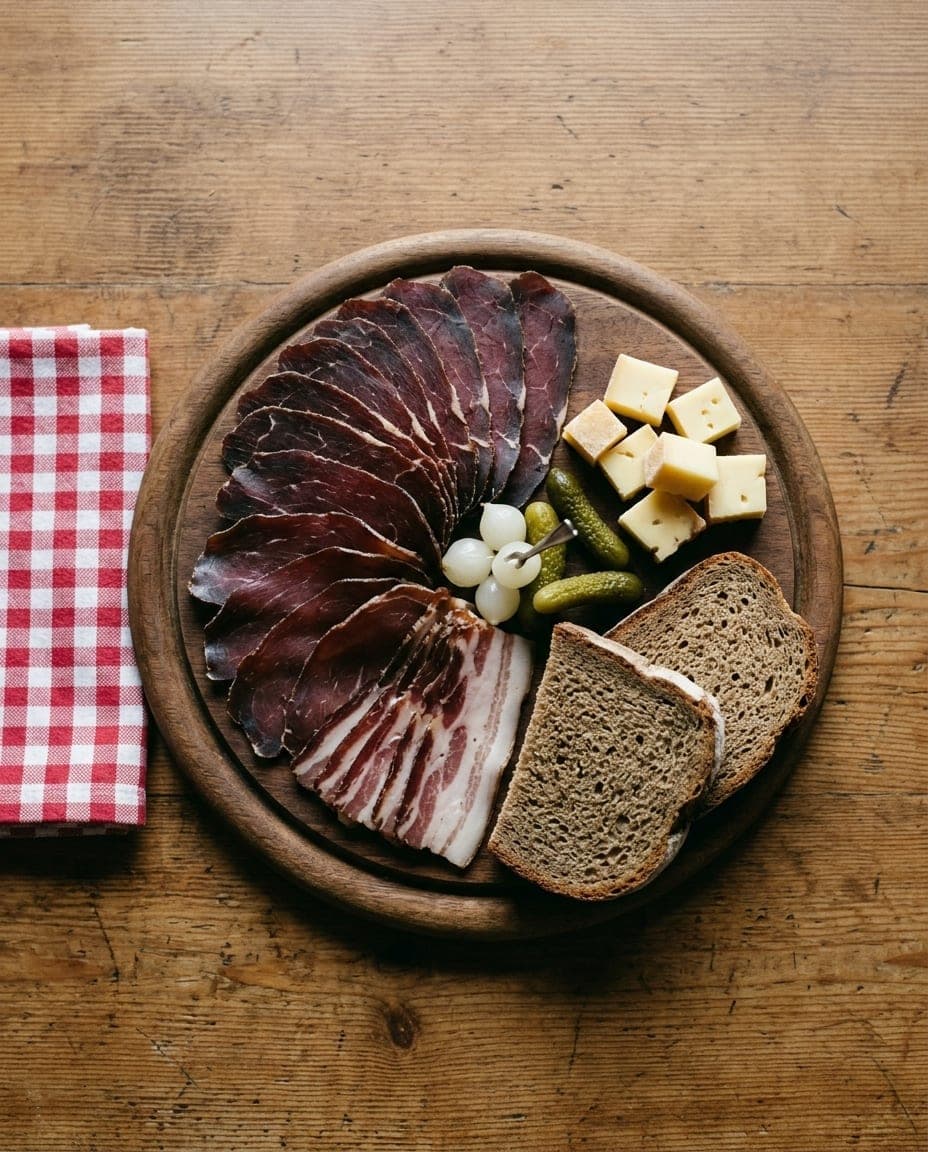
It also goes with the valley's cured meats — viande séchée and the local dried sausage. The dry texture of the meat contrasts with the moist crumb of the bread, creating a balance that has defined local meals for generations. A simple plate might hold a thick slice of the rye topped with raclette and a few slices of cured meat, perhaps accompanied by pickles to cut the fat.
The setting for all of this is often a carnotzet, the small vaulted cellar room attached to a Valais house or restaurant, built for wine and cold food. The bread on that table is not a side; it is what everything else is served on.
What goes into it
The composition of the bread is strictly defined by its AOP status. The primary ingredient is rye flour milled from grain grown in the Valais canton. Unlike many commercial breads that rely on wheat for structure, this loaf allows at most 10 per cent wheat flour, relying instead on the natural properties of rye.
- Rye flour: At least 90 per cent of the flour, providing a dark colour and distinct earthy flavour.
- Water: Used in specific quantities to achieve the dense dough consistency.
- Salt: Added to enhance the flavour and preserve the loaf.
- Sourdough: Required to leaven the bread (a little yeast may be added), giving it a slight tang that complements the cheese.
The low wheat content means the loaf lacks the airy bubbles found in standard white breads. Instead, the crumb is fine and uniform, holding together firmly when sliced.
Curious facts
- A protected name. The AOP status requires that both the grain and the final product originate from the Valais canton, preventing imitation from other regions.
- Built for storage. The tight crumb and thick crust were essential features designed to keep the bread edible through the winter months.
- Communal baking. Villages historically fired their shared ovens only two or three times a year.
- Heavy slicing. Traditional methods involved bench-mounted blades to slice the dense loaf without crushing the crumb structure.
- Ninety per cent rye. The AOP sets a minimum proportion of rye in the dough, which is why the loaf is as dense and dark as it is.
Where to try it
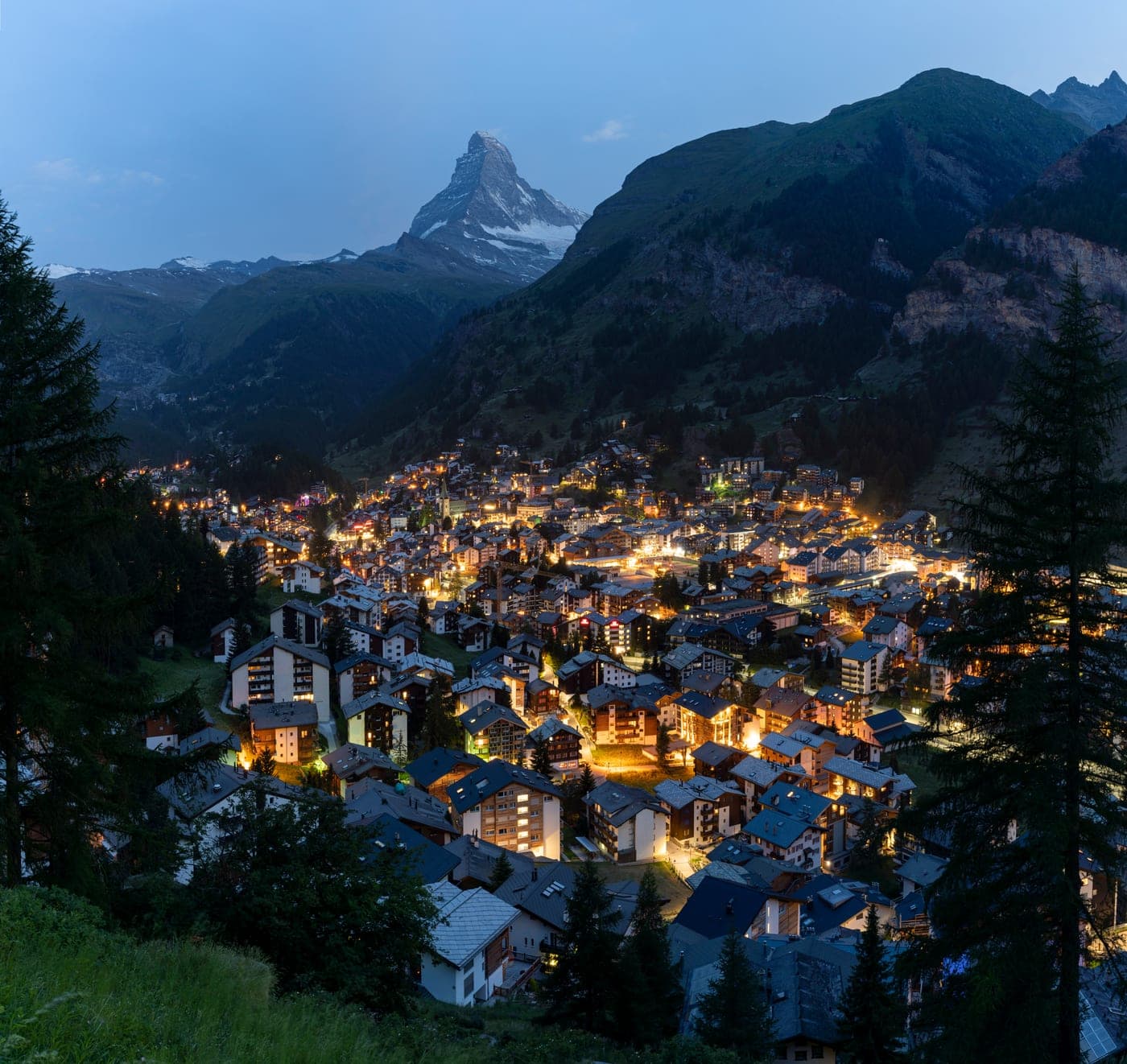
The Valais, in a village bakery — Saas-Fee, Zermatt, or any of the places up the side valleys where the loaves come out round and cracked across the top.
It arrives automatically with raclette and with any cold plate in the canton, and the AOP keeps production inside the canton, so it is at its best and freshest there. A whole loaf keeps for about a week.
Where to try it
1 region
 Panoramic Trains3 destinations
Valais
Valais is a prominent region in Switzerland, known for its striking alpine landscapes and rich cultural heritage. It is home to the famous Matterhorn and the largest ski area in the country. The region is characterized by its terraced vineyards, which produce unique wines like Fendant and Dôle. Sion, the capital, boasts a medieval old town and ancient castles. Zermatt, a car-free village, offers access to breathtaking hiking trails. The region is also famous for its local cheeses and traditional festivals, including the Fête de la Saint-Bernard. With stunning mountain scenery and charming villages, Valais invites exploration beyond the typical tourist path.
Panoramic TrainsHikingLocal CuisineWine Tasting