Moutarde de Bénichon
Sweet spiced mustard-jam from Fribourg's autumn harvest feast
- Vegetarian
- Local name
- Moutarde de Bénichon
- Served with
- Cuchaule bread
- Best eaten at
- The Fribourg Bénichon feast
What it is
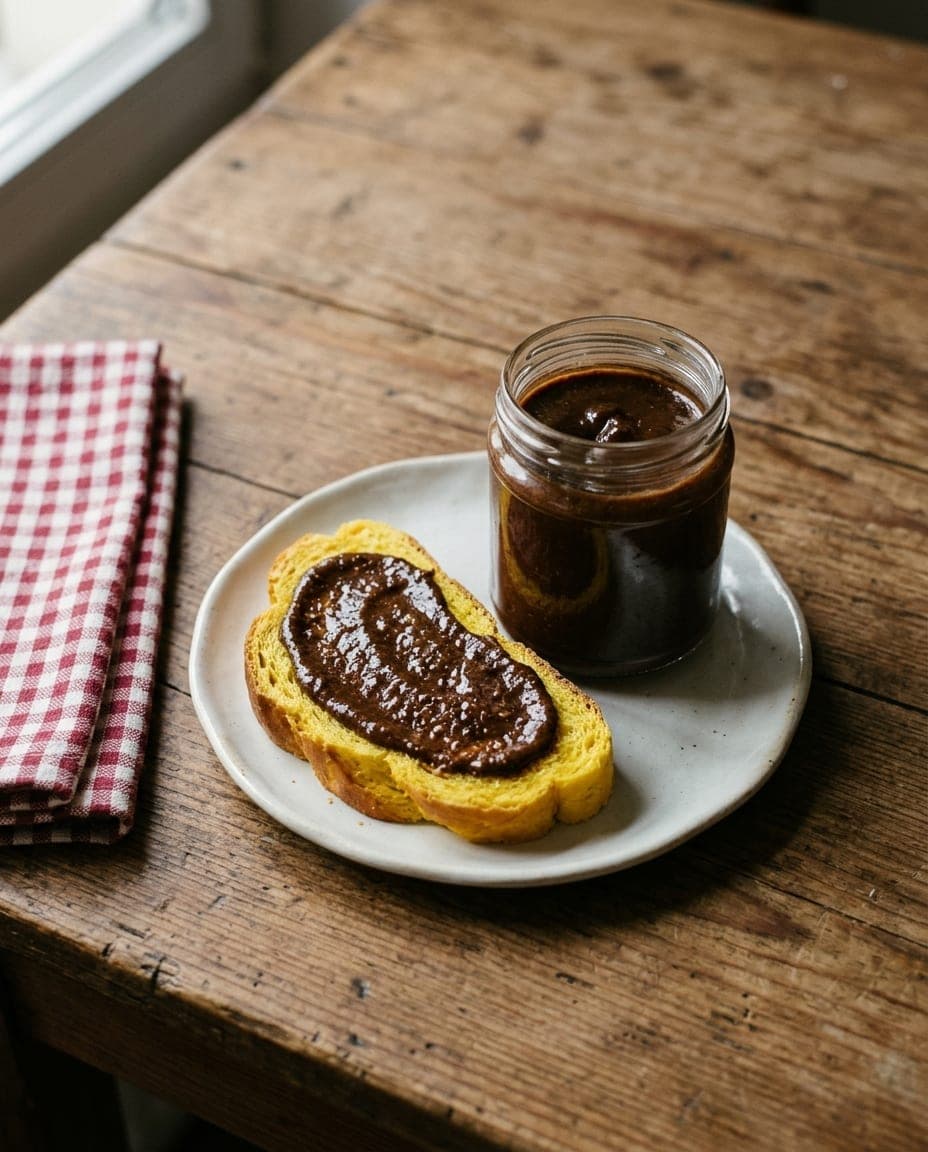
Moutarde de Bénichon is not a table mustard for daily use but a seasonal, sweet spiced condiment specific to the Swiss canton of Fribourg. It appears as a dark, thick paste that spreads like jam rather than flows like vinegar-based sauce. The texture is dense and sticky, holding its shape on a knife without running. Its taste balances the sharpness of mustard with the warmth of spices and the sweetness of vin cuit and sugar, creating a taste that is more akin to a fruit preserve than a condiment for cold meats.
This preparation exists almost entirely for one occasion: the Bénichon, the annual harvest festival celebrated in Fribourg every autumn. During the feast, held on different weekends in September and October, the moutarde opens a long menu that marks the end of the harvest season. It is spread generously onto cuchaule, the region's saffron brioche, before any savoury dishes are served. Outside of this specific window, the condiment is sold in jars across the canton, allowing locals to enjoy the taste of the festival year-round.
The Bénichon harvest tradition
The Bénichon began as a Christian feast and grew into a celebration of the agricultural cycle in Fribourg, where farmers and their families gather to mark the completion of the harvest. The event features a long, traditional menu that has remained largely consistent for decades. While the courses vary by region, cook and restaurant, the moutarde de Bénichon remains a constant presence at the start of the meal.
The feast is not merely a dinner but a communal gathering that reinforces local identity. Families gather around tables set with care, at home, on farms or in village inns. The serving of the mustard on saffron bread, often with a glass of white wine, signals the beginning of the ritual meal, before the lamb, ham and pears that follow later in the menu.
What goes into it
The ingredients for moutarde de Bénichon are simple but require time to develop the correct texture and depth. The base is made from mustard flour, which provides the characteristic pungency without the sharp bite of standard vinegar mustards. To this, cooks add vin cuit (a thick concentrate of pear or sweet apple juice), white wine and candy sugar, which give the paste its dark colour and sticky consistency.
The defining elements are the spices used in the cooking process. Star anise, cinnamon, and cloves are stirred into the mixture as it simmers. These aromatics infuse the mustard with a warm, perfumed scent that lingers on the palate. The result is a condiment that is sweet with a piquant edge, mild or fiery depending on the family recipe, designed to complement the saffron bread rather than overwhelm it.
- Mustard flour: The foundation of the paste, providing body and heat.
- Vin cuit, white wine and sugar: Add sweetness and dark colour, creating a jam-like texture.
- Star anise, cinnamon, cloves: Spices that are simmered into the mixture for warmth and fragrance.
How to eat it
The moutarde is traditionally served spread thickly on slices of cuchaule, the saffron bread. This bread is yellow from the saffron added during baking and has a soft, slightly sweet crumb, often buttered before the mustard goes on. The combination is eaten as an appetiser before the main savoury courses arrive.
While the dish is prepared in homes and bakeries across Fribourg, the most authentic experience occurs during the Bénichon feast itself. Here, the mustard is often served in large bowls or on platters for sharing among the table. It is not intended to be eaten alone but as part of a sequence of flavours that celebrate the harvest. The sweetness of the mustard balances the spices and prepares the palate for the meat and vegetables that follow.
Curious facts
- A jam, not a sauce. Unlike vinegary mustards found elsewhere, this preparation is thick enough to be spread like a preserve.
- Seasonal availability. While sold in jars year-round, its primary role is tied strictly to the autumn harvest festival.
- Spice balance. The recipe relies on star anise, cinnamon and cloves for warmth, distinguishing it from sharp table mustards.
- Regional specificity. The condiment is a Fribourg speciality, and since 2001 Estavayer-le-Lac has held a contest for the best one, with amateur and professional categories.
Where to try it
The Bénichon itself, at a Fribourg family table, farm or village inn in September or October, where it opens a fixed menu that runs for most of an afternoon. Each village holds its own on a different weekend.
Out of season it is on the shelves of grocers and delicatessens across the canton in small jars, usually next to the bakery's cuchaule. The two are sold together because they are eaten together, and a jar on its own is of limited use.
Where to try it
1 region
 Boat Rentals3 destinations
Fribourg
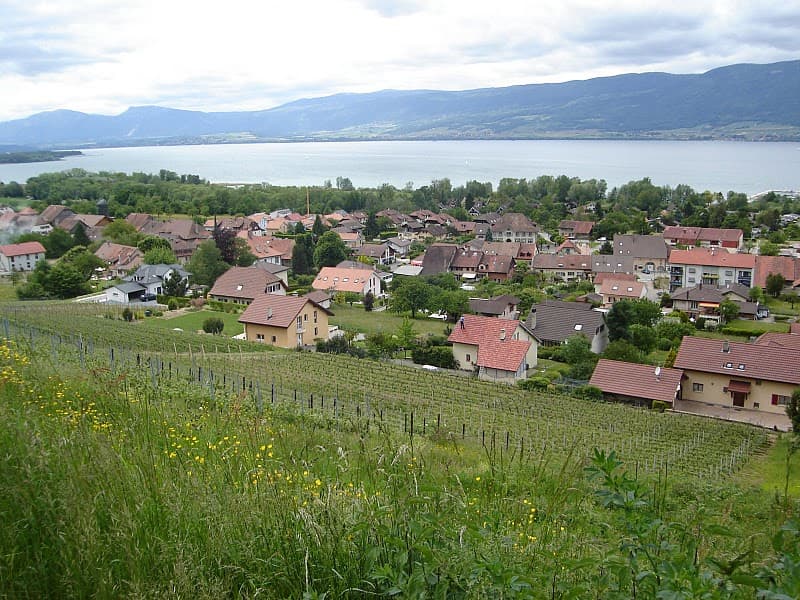
Fribourg is a Swiss region built for a slower pace. It sits between the French- and German-speaking parts of the country, and that mix still shapes daily life here — road signs change language partway through the canton, and the same cheese is sold under two names at the same market stall. The regional capital, also named Fribourg, sits on a sandstone hill above a bend in the Sarine river. Its old town is one of the larger medieval centres in Switzerland, with covered wooden bridges, a Gothic cathedral, and streets so steep that some are built as steps rather than roads. From the ramparts, the river loops below and the rest of the canton spreads out towards the hills. South of the city, the land softens into rolling dairy country. This is Gruyère territory, named after both the cheese and the small walled town of Gruyères that still gives it its name. Around Gruyères and the nearby town of Bulle, farms and mountain huts still make cheese by hand through the summer months, when herds move up to the high pastures. Several dairies open their doors to visitors watching a wheel of Gruyère being pressed and salted, a process that has changed very little over generations. The landscape rises further south into pre-alpine terrain: green terraces, scattered timber barns, and villages built from wood that has weathered dark over centuries. Walking paths here follow old cattle tracks between pasture and forest, gentle enough for an unhurried afternoon rather than a full day's climb. In autumn, cattle are led back down from the alpine pastures in a tradition still marked with flowers, bells, and a village gathering — one of the few moments when the summer's quiet farm work becomes a public event. To the north and west, the canton reaches Lake Neuchâtel and Lake Murten. Murten itself is a walled medieval town on the water, small enough to circle on foot within the hour, with a lakeside promenade that fills with café tables in summer. In warmer months, passenger boats cross the lake to nearby towns, a pleasant way to spend an afternoon without hurrying. One of the quieter pleasures of the region is its local railway, which climbs from the lowland towns into the hills in short, unhurried stages, following the river through farmland before a hilltop town's towers come into view above the tracks. These are working regional trains rather than tourist rides, and that is much of their charm — riders share the carriage with people going to market or coming home from the fields. Food shapes much of what there is to do here. Beyond cheese, the region is known for its double cream, for meringues eaten with that cream, and for a dried, air-cured meat found across French-speaking Switzerland. Village markets, especially in Bulle and Fribourg itself, are where these products change hands directly between maker and buyer, often with a taste offered first. A comfortable way to see Fribourg is over three to five days: a day or two in the old town and along the Sarine, a day around Gruyères and its cheese dairies, and a day or two further into the hills or out to Murten and the lake. Trying to fit it into a single day usually means choosing between the city and the countryside, and both reward more time than that. What makes the region worth this pace is less any single sight than how its parts connect — a cathedral town, a cheese-making valley, alpine pastures, and a lakeside village, all within a canton small enough to move between slowly and still see plenty. Fribourg does not have the scale of the Bernese Oberland or the fame of Lake Geneva, but it holds a quieter version of the same Swiss countryside, with fewer crowds and more time to notice the details: the smell of a cheese cellar, a wooden bridge underfoot, the particular green of a pasture after rain.
Boat RentalsHikingPanoramic Trains