Luzerner Birnenweggen
A Lucerne pastry roll filled with spiced dried pear paste
- Vegetarian
- Local name
- Luzerner Birnenweggen
- Served with
- Coffee
- Best eaten at
- A Lucerne bakery
- Pairs with
- Coffee
What it is
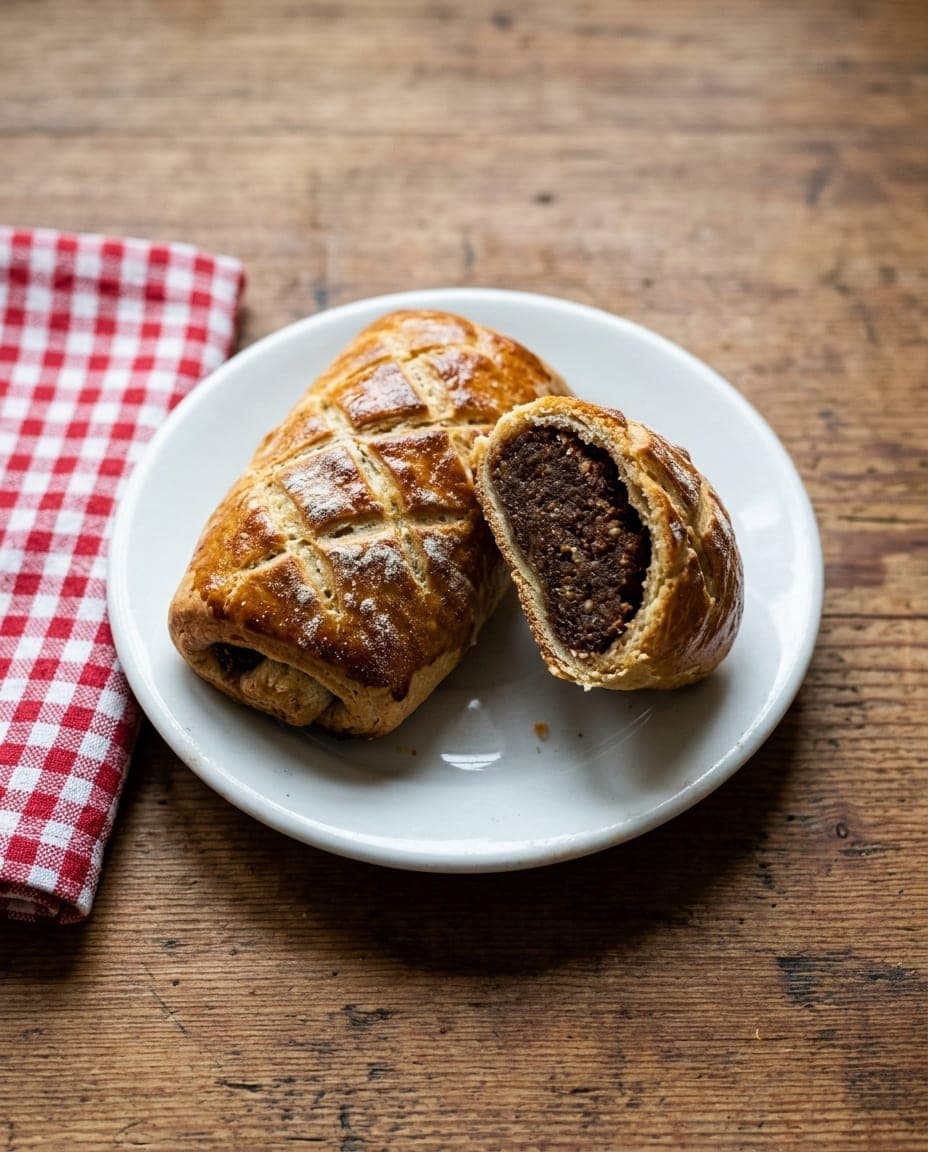
The Luzerner Birnenweggen is a sweet pastry roll from the city of Lucerne in central Switzerland. It consists of a flat, elongated log of buttery dough rolled around a thick paste made from dried pears, figs, raisins, nuts and warming spices, so that each slice shows a swirl of filling. Once baked until golden, the roll is sliced across into individual portions that are soft inside and crisp on the edges.
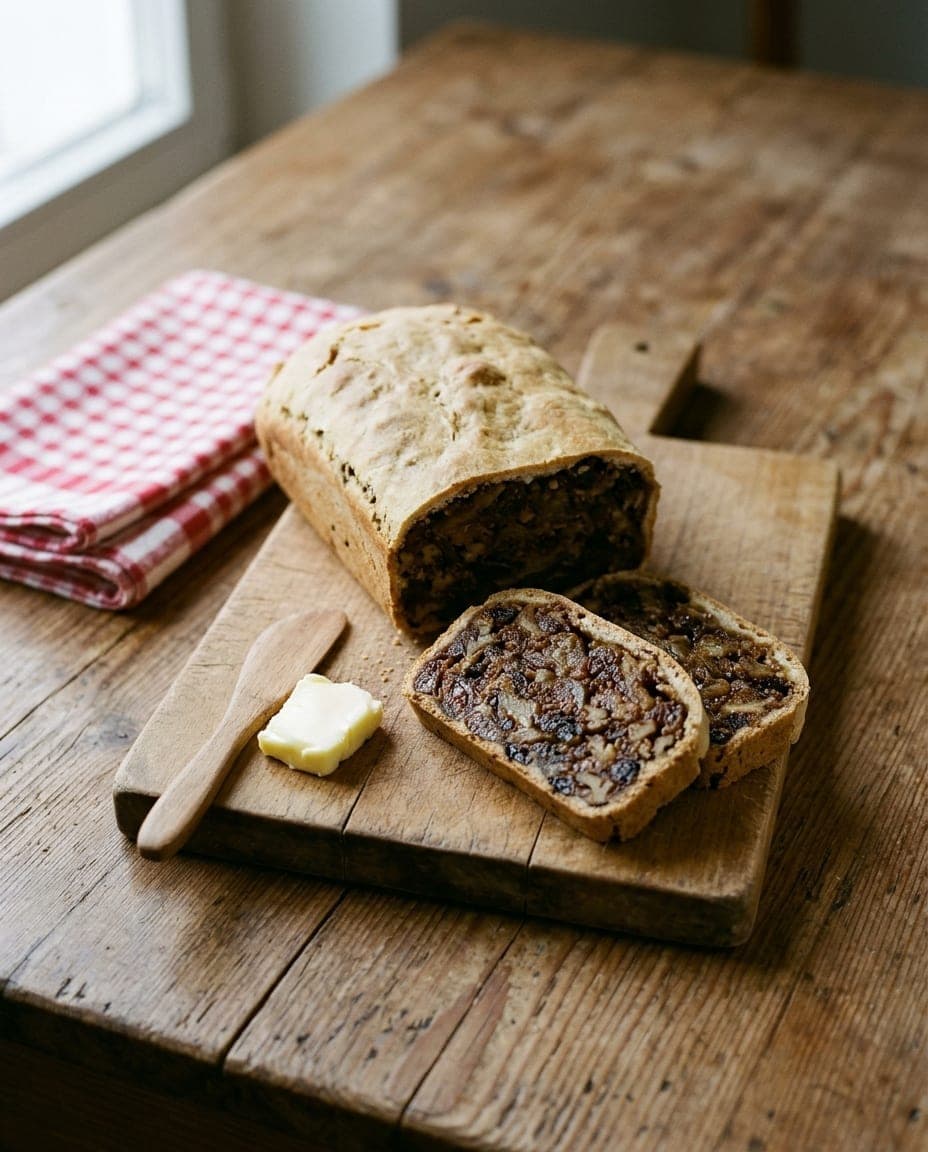
While it shares its filling with the Bündner Birnbrot, a famous loaf from the canton of Graubünden, the two are distinct in their casing. The Graubünden version wraps a dense mass of pear filling in a thin bread dough, resulting in a heavy, chewy loaf. The Lucerne version rolls the filling up in an enriched, buttery dough (usually yeasted, though some bakeries use a flakier pastry), creating a lighter bite. This difference transforms the experience from a rustic bread loaf to a delicate sweet treat.
The dish is a regional speciality rather than a nationwide standard. It is most closely associated with the city and canton of Lucerne and central Switzerland. Bakeries sell it year-round, though it was traditionally a Christmas bake and still belongs to autumn and winter, when the dried fruit and the spices make sense.
The filling and the casing
The heart of the dish is the filling, which mirrors the taste of many Swiss fruit pastries. Dried pears form the base, providing a deep sweetness that balances the savoury notes of the nuts. Figs and raisins are added to introduce texture and chewiness. The mixture is seasoned with spices such as cinnamon, cloves, aniseed or coriander, often with candied citrus peel, which give it a warm aroma suitable for cooler weather. A splash of kirsch, a clear spirit made from cherries, or wine is often included to lift the fruit flavours and add a subtle sharpness.
The casing is equally important to the identity of the dish. The baker rolls out a butter-enriched dough, spreads the dense fruit paste over it and rolls it up. When baked, the dough turns golden and tender with a crisp surface. The result is a contrast between the soft, sticky interior and the crisp exterior.
Unlike many pastries where the filling is a small core, the Birnenweggen contains a generous amount of paste relative to the pastry. This makes it substantial enough to be eaten as a snack or a light dessert rather than just a tiny sweet. The slices are often served slightly warm to soften the dried fruit further and release the scent of the spices.
How to eat it
The traditional way to enjoy this pastry is in a bakery in Lucerne, where the smell of fresh baking often fills the air. It is usually sold by the slice or as a whole roll that can be taken home. A cup of black coffee is the standard accompaniment. The bitterness of the coffee cuts through the sweetness of the dried fruit and balances the fat of the buttery pastry.
The texture requires attention. Because the filling contains dried pears and nuts, it can be chewy if the pastry has cooled completely. Many locals prefer to eat the slices while they are still warm from the oven. The kirsch in the filling adds a gentle warmth that pairs well with the hot coffee.
Bakers often serve the pastries on simple paper or plain plates, letting the food speak for itself. There is no need for elaborate garnishes or cream. The focus remains on the quality of the fruit and the crispness of the layers.
Where to try it
A bakery in Lucerne or one of the towns around the lake, where it is sold by the slice from a long roll on the counter or whole to take away. Most are small neighbourhood shops working to a recipe that has not changed in a generation.
Autumn and winter are when the windows fill with them. It is not a restaurant dish and will not be found on a dessert menu; it is bought over a counter, with coffee, and eaten the same day.
Curious facts
- A regional variation. The filling resembles that of the Bündner Birnbrot, but rolling it up in a richer, buttery dough instead of wrapping it in plain bread dough creates a different texture and identity.
- A winter treat. While sold year-round, the dish is most associated with the autumn and winter months when dried fruits and warming spices are in season.
- Simple pairing. The standard accompaniment is black coffee, which balances the sweetness of the dried fruit and the fat of the butter.
- No protected name. Unlike some Swiss cheeses or wines, there is no official protected designation for this pastry; it relies on local tradition rather than legal status.
- Born of thrift. Like other Swiss pear breads, it began as a way to stretch scarce flour with dried fruit, and only became an everyday bakery item in the 20th century.
Where to try it
1 region
 Boat Rentals2 destinations
Lucerne
Nestled by Lake Lucerne, this region is surrounded by stunning mountains, including the iconic Pilatus and Rigi. The area is renowned for its rich history, notably the Chapel Bridge, a covered wooden bridge dating back to the 14th century. Lucerne serves as a gateway to nearby villages like Weggis and Vitznau, which offer breathtaking views and hiking trails. The region's culture is reflected in its local festivals, such as Fasnacht, a vibrant carnival celebrated with elaborate masks and costumes. Known for its traditional Swiss cuisine, don't miss the chance to try local specialties like rösti and fondue. Lucerne's blend of natural beauty and cultural heritage makes it a unique destination for exploration.
Boat RentalsHikingLocal Cuisine