Luganighe
A spiced fresh pork sausage from Ticino's grottos
- Local name
- Luganighe
- Served with
- Risotto or polenta
- Best eaten at
- A Ticino grotto
- Pairs with
- Merlot del Ticino
What it is
Luganighe are fresh pork sausages from Switzerland's Italian-speaking canton of Ticino, made throughout its valleys. They are not cured meats meant for long storage but rather a fresh product, ready to be cooked. The defining characteristic is their spicing: wine, garlic and warm spices such as cinnamon, cloves and nutmeg, which set them apart from the dry, salted sausages found north of the Alps.
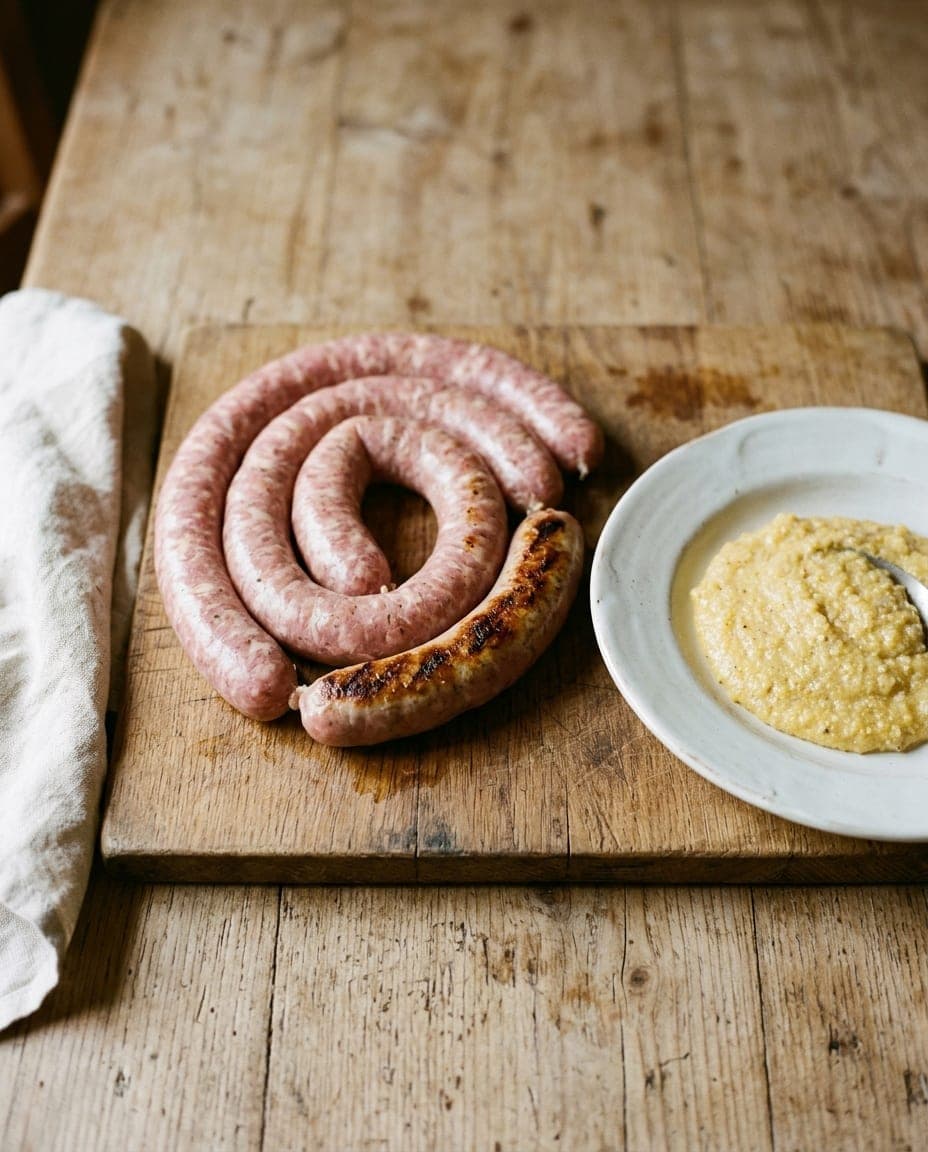
This dish is a regional speciality of Ticino, where Lombard culinary traditions blend with Swiss habits. A thinner relative, the luganighetta, is sold as a long, continuous coil, often by the metre, rather than in individual links; a Lugano record already praised a "luganighetta buona e fina" in 1653. The meat is ground fairly fine and mixes lean and fat pork, giving a juicy texture that holds up well against strong flavours.
Where it comes from
The roots of luganighe lie in the Lombard style of cooking that dominates Ticino. While northern Switzerland often focuses on dairy and dry-cured meats, this region looks south towards Italy for its inspiration. The use of cinnamon and cloves in a fresh sausage is unusual elsewhere in Switzerland but familiar in northern Italian cuisine. This spicing reflects the historical influence of the Duchy of Milan and the cultural exchange across the border.
In Ticino, the sausage is bound up with the local dining culture. It is a staple of the grotto, a traditional restaurant found throughout the canton that typically features stone walls, rustic tables and an open fireplace. These establishments serve food cooked over wood fires or in large cauldrons, and the fresh pork sausage fits perfectly into this setting. The dish is not meant to be eaten as a quick snack but rather as part of a slow, communal meal where the smoke and spices play a central role.
What goes into it
There is no single official recipe, and every cook in Ticino guards their own variation, but the core ingredients remain consistent across the region. The base is always fresh pork, ground coarsely to ensure a substantial mouthfeel. To this are added wine (red, or sometimes Marsala), which provides acidity and depth, and garlic for pungency.
The spice profile is what distinguishes it from other Swiss sausages:
- Cinnamon, used in small quantities to add warmth without overwhelming the meat.
- Cloves, which offer a sharp, aromatic counterpoint to the rich pork.
- Nutmeg or mace, rounding out the warm spice mix.
- Wine, often a local red, to bind the spices and moisten the mixture.
- Garlic, essential for the savoury backbone of the dish.
Salt and pepper season the mix, and some makers add grated hard cheese or a little veal, but the balance relies on the interplay between the meat, the wine and the warm spices. The result is a sausage that is neither too dry nor too salty, designed to absorb the flavours of what it is cooked with.
How to eat it
Luganighe are most commonly prepared in one of three ways: grilled over wood, simmered or stewed, or served with a rice dish. When served at a grotto, they are often grilled whole, allowing the fat to render slowly and the spices to caramelise on the surface. The luganighetta, being smaller, is frequently grilled as a single coil, creating a uniform texture throughout.
A classic everyday pairing is polenta: the sausage is simmered or pan-cooked and served alongside, creating a simple but filling meal. The festive pairing is saffron risotto, especially at Carnival, and the sausage is sometimes sliced and stirred into the rice, where it absorbs the spiced pork fat to create a creamy, aromatic dish. This method highlights the texture of the coarse meat against the smooth grains.
The traditional accompaniment is a glass of Merlot del Ticino. The tannin in the local red holds against the fat of the pork and picks up the cinnamon and cloves. For those who prefer a non-alcoholic option, a light beer or sparkling water can also work, though the wine remains the standard companion.
Curious facts
- A Lombard echo. The use of cinnamon and cloves in fresh sausage reflects northern Italian cooking and is unusual in the rest of Switzerland, where such spices more often turn up in baking.
- Sold as a coil. The thinner luganighetta is sold as a long continuous coil, often by the metre; in 2019 Locarno made one a kilometre long.
- The name is older than the place. Luganiga descends from the Latin lucanica, a sausage named after Lucania in southern Italy, and reached the Alps long before Lugano gave its name to anything.
- A regional identity. Similar sausages are made across the border in Lombardy; the Ticinese versions are a fixture of grotti, village festivals and the Carnival risotto.
Where to try it
A grotto in Ticino — the stone cellars with granite tables outside, scattered through the valleys above Lugano and Locarno — where the sausage is grilled over wood and served with polenta.
Butchers across the canton sell them fresh by the coil, and village festivals and Carnival cook them by the hundred beside the risotto pot. Most of the canton's grotti close for the winter, so the season runs roughly from spring to late autumn.
Where to try it
1 region
 Boat Rentals1 destination
Ticino
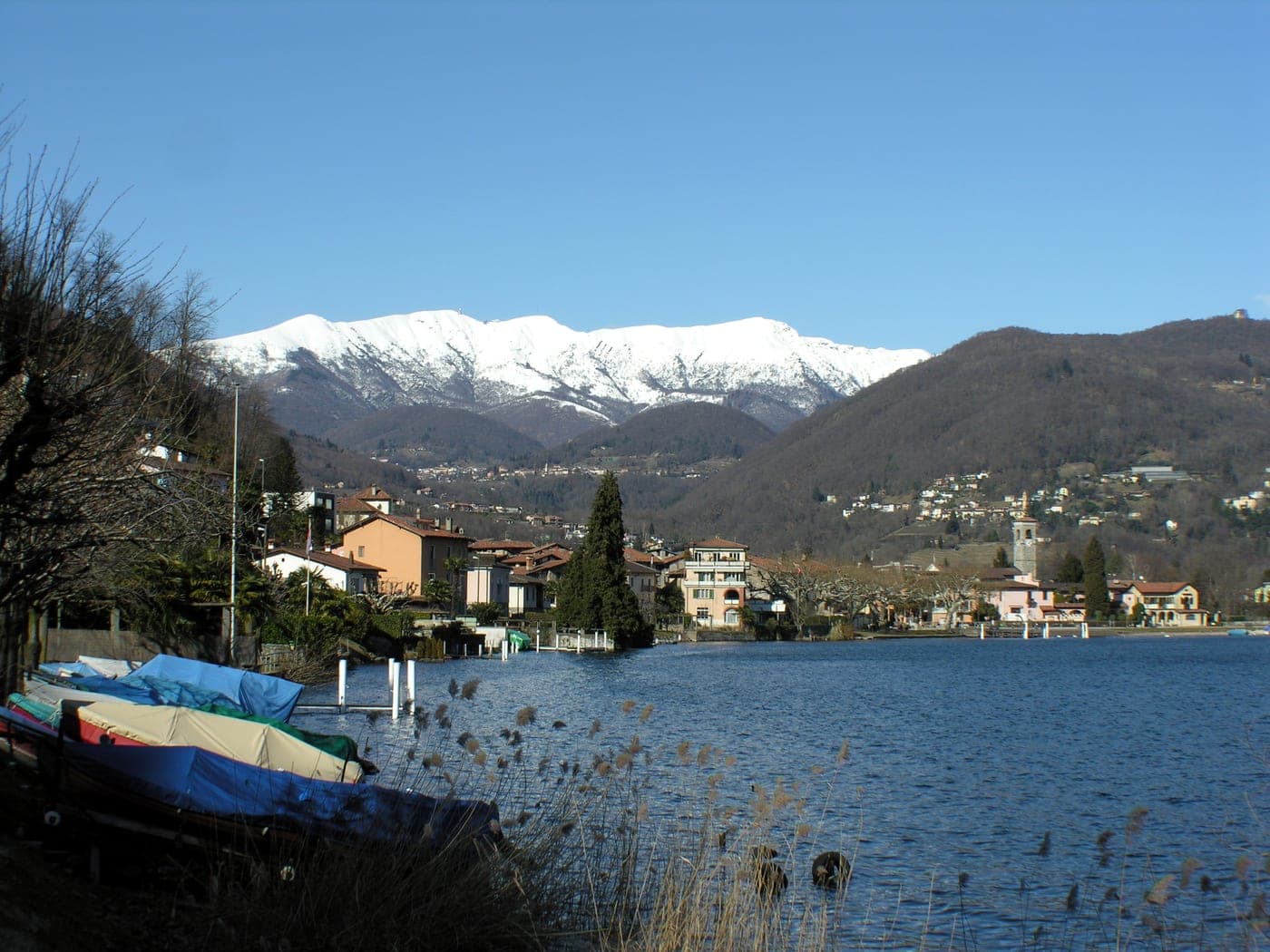
Ticino, the only Italian-speaking region in Switzerland, offers a unique blend of Mediterranean flair and Swiss efficiency. It features stunning landscapes, from the rugged peaks of the Alps to the lakeside beauty of Lugano and Locarno. The region is renowned for its picturesque villages like Morcote, where narrow streets lead to lakeside views. Known for its rich culinary traditions, Ticino is famous for polenta and Merlot wine, showcasing a blend of Italian and Swiss influences. Historic sites such as Castello di Montebello and the UNESCO-listed Bellinzona fortifications reflect its strategic importance. With its mild climate, Ticino is a haven for hiking, cycling, and exploring local markets, making it ideal for a relaxed travel experience.
Boat RentalsHiking