L'Etivaz AOP
Wood-smoked Alpine cheese from the Pays-d'Enhaut, Vaud
- Vegetarian
- Local name
- L'Etivaz
- Served with
- Bread
- Best eaten at
- The Pays-d'Enhaut cheese cellars
- Pairs with
- Vaud Chasselas
What it is
L'Etivaz is a hard cheese from the Vaud Alps, centred on the Pays-d'Enhaut around Château-d'Oex and produced on summer pastures between 1,000 and 2,000 metres. It belongs to the same family as Gruyère but follows a stricter set of rules that give it a distinctive character. The defining feature is how it is made: the milk is curdled only on the mountain pastures during the summer months, cooked in copper cauldrons over an open wood fire, and then matured in the producers' cooperative cellars in the village of L'Etivaz.
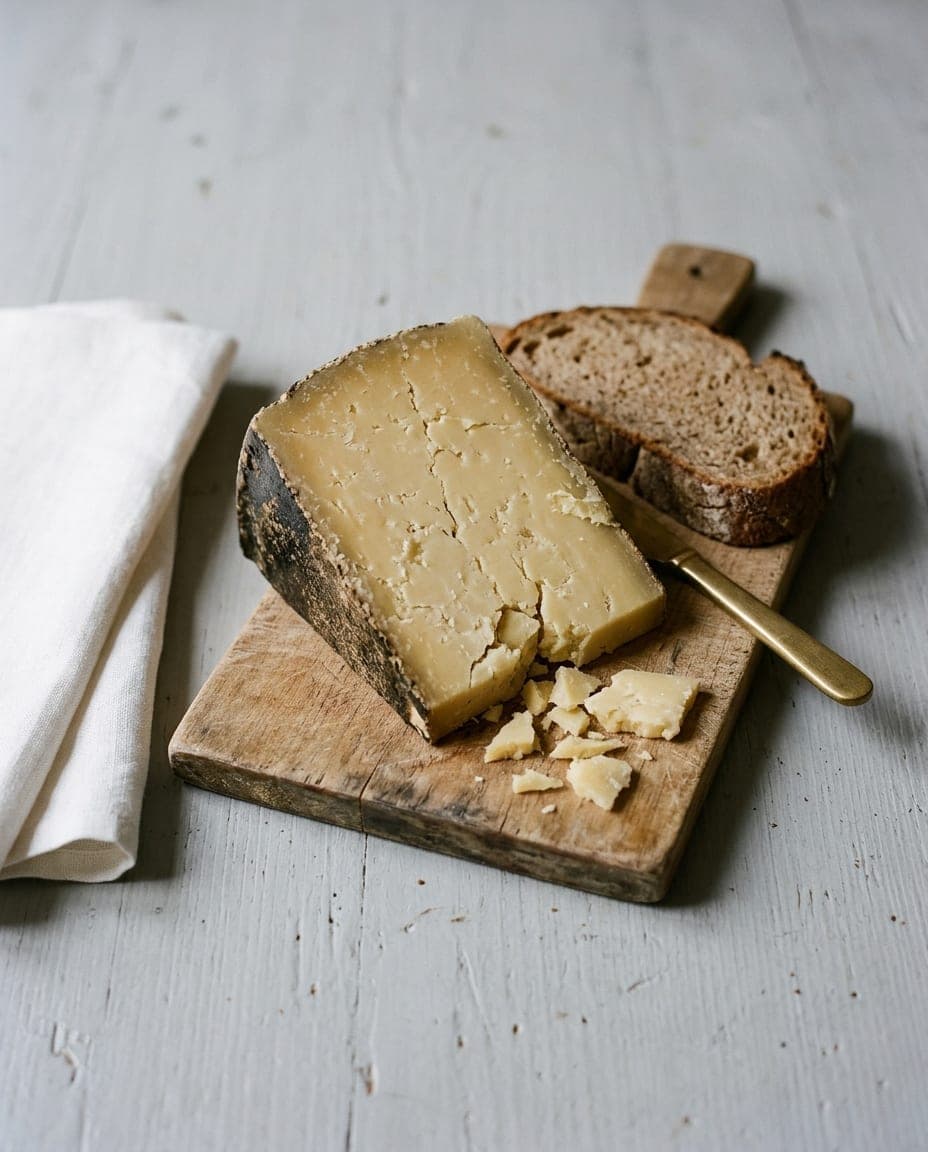
The result is a firm, dense cheese with a golden rind and an ivory-yellow interior that rarely has any holes. Its flavour is fruity and nutty, carrying a light note of smoke from the wood used to heat the cauldrons. This smoky aroma is not added later; it comes from the open fire during the making. The cheese is sold in wheels of 10 to 38 kilograms, though smaller portions are common for tasting.
The history of the 1930s standards
Cheese has been made in the Pays-d'Enhaut since the 12th century, but L'Etivaz as a name and a standard was created as a response to industrialisation. In the early twentieth century, Swiss alpine cheesemakers faced pressure to fall in with national rules for Gruyère-type cheese that, in their view, prioritised volume over the specific qualities of their local milk. Producers in the Pays-d'Enhaut refused to accept these new standards, which they felt would erase the unique taste of their high-altitude cheese.
In 1932 seventy-six producing families formed their own cooperative and wrote their own rules instead: milk from the alp only, cooked over wood, matured in shared cellars, the first of which opened in L'Etivaz in 1934. Those rules became the basis of the protected designation (AOC) the cheese was granted in 2000, the first for any Swiss product other than wine. Maturing the wheels together in the village cellars ensures that they share the same environment, allowing the local microclimate to influence their development uniformly.
What goes into it
The ingredients are simple, but the process is exacting. Only milk from the summer grazing season is used, raw, with farm starter cultures and calf rennet. The curd is cooked in copper cauldrons suspended over an open wood fire, a method that transfers heat gently while infusing the cheese with smoke.
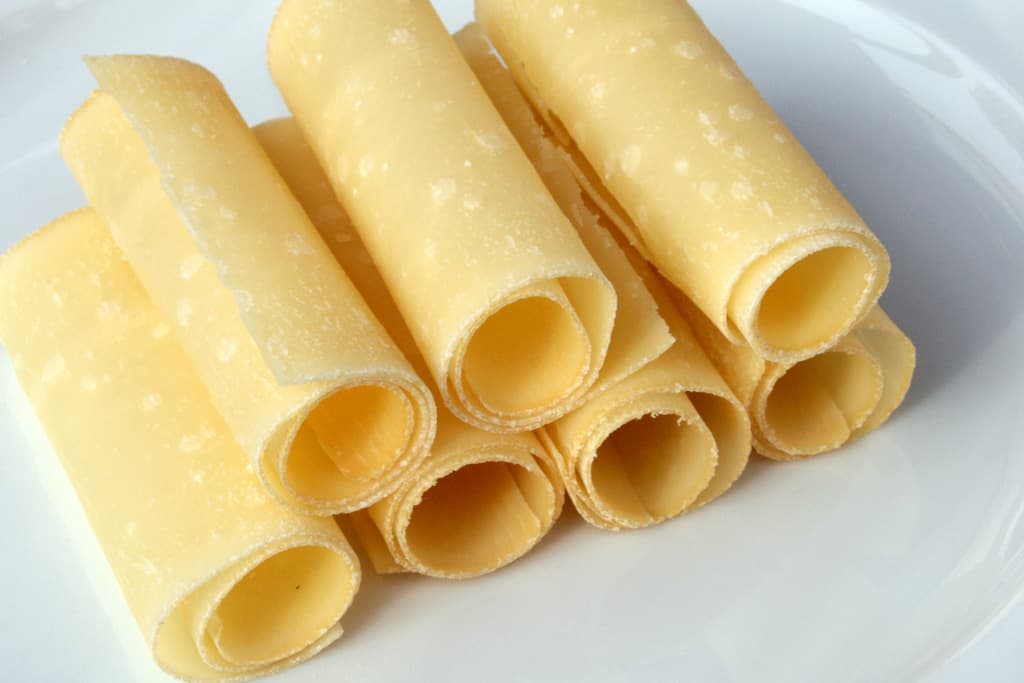
After at most a week on the alp, the wheels are moved to the cooperative cellar in L'Etivaz for maturation on spruce boards. Here they age for at least 135 days, turning from a mild young cheese into a sharper, more complex one. The milk comes exclusively from cows grazing the high pastures of the Pays-d'Enhaut and the neighbouring Vaud Alps, which contributes to the character of the final cheese. The best wheels are kept for at least 30 months in a ventilated attic to become L'Etivaz à rebibes, an extra-hard cheese shaved into thin curls.
How to eat it
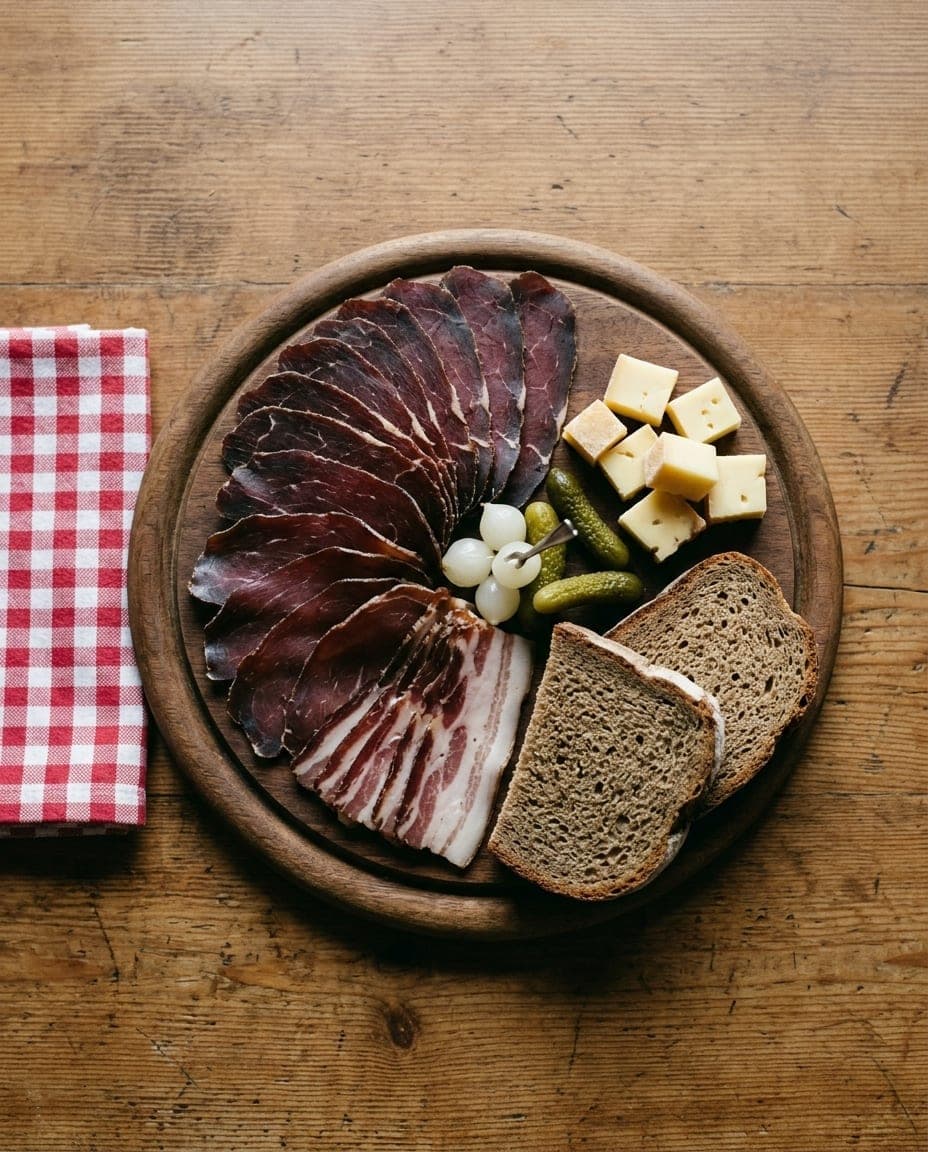
L'Etivaz is best enjoyed as a standalone item or paired with bread rather than as an ingredient in a cooked dish. The texture is firm enough to slice cleanly but softens slightly as it warms to room temperature. A traditional way to serve it is with a rustic loaf of bread, which complements the smoky notes without overpowering them.
For a complete experience, the cheese is often paired with Vaud Chasselas, a dry white wine from the nearby slopes that offers a crisp contrast to the fat of the L'Etivaz. The best time to visit the cheese cellars in the village of L'Etivaz is during the summer months when the production is still active and the pastures are green.
Curious facts
- Wood fire cooking. Unlike valley dairies with steam-heated vats, L'Etivaz must be made over a direct wood fire, which gives the cheese its light smoky note.
- Shared village cellars. The wheels are matured together in the cooperative's cellars in L'Etivaz, ensuring they share the same temperature and humidity conditions.
- Summer only production. The cheese is made only between 10 May and 10 October when the cows graze on the high mountain pastures; it is not produced during the winter months.
- Copper cauldrons. Traditional copper cauldrons hung over the fire are used for cooking, a method far older than the 1930s rules that preserved it.
- A breakaway standard. The rules date from 1932, when producers went their own way rather than follow the Gruyère standards of the day; the formal AOC, Switzerland's first outside wine, followed in 2000.
Where to try it
The Pays-d'Enhaut: the village of L'Etivaz itself, where the cooperative's cellars hold thousands of wheels, and Château-d'Oex a few kilometres down the valley.
The alp dairies above both villages sell at the door through the summer, and the autumn désalpe — the day the herds come down from the mountain, decorated, through the village — is when the valley puts the whole business on display. The cheese is in Swiss cheese shops year-round; the mountain is where the difference between a young wheel and a three-year one is laid out on one counter.
Where to try it
1 destination
 Panoramic Trains
Château-d'Oex
Picturesque alpine village known for its annual hot air balloon festival.
Panoramic Trains