Engadiner Nusstorte
A buttery walnut tart from Switzerland's Engadin valley
- Vegetarian
- Local name
- Engadiner Nusstorte
- Served with
- Coffee
- Best eaten at
- An Engadin confectioner
- Pairs with
- Coffee
What it is
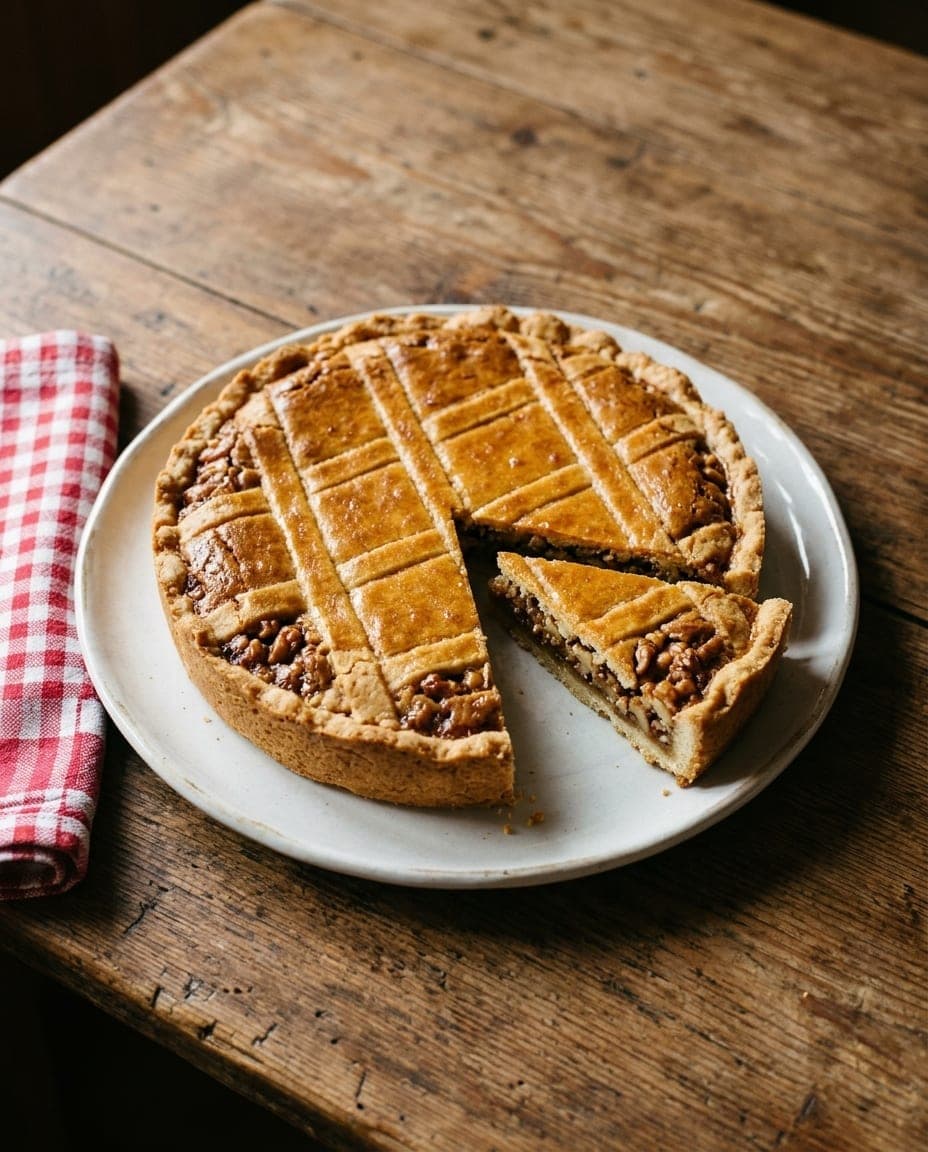
The Engadiner Nusstorte is a substantial, closed pastry from the high valley of the Engadin in Graubünden. It is not a light dessert served after a meal but a dense, sweet treat that can stand alone as a snack or a small meal. The tart consists of a thick base of buttery shortcrust, topped with a generous layer of chopped walnuts bound in caramel and cream, then covered by a second sheet of pastry to form a sealed case.
The result is a heavy, rich cake that keeps for weeks without drying out. Its durability is not accidental. The Engadin is a high valley linked to the rest of the Alps by mountain passes, and a sweet that could withstand long journeys was a practical one to sell. The sealed crust protects the filling from the dry mountain air, allowing the tart to be carried far from its place of origin without spoiling. This practicality turned a simple local recipe into a regional export that remains popular today.
How it came to be
The Engadiner Nusstorte is a product of the 20th century rather than an ancient tradition. Graubünden had a long tradition of emigrant confectioners, the Bündner Zuckerbäcker, who ran pastry shops across Europe from Venice to Toulouse, and the filled walnut tart is usually linked to recipes brought home by them. Its exact origin is disputed: a Samedan confectioner, Fausto Pult, who opened his shop in 1926, is often credited with first selling it on a larger scale, while a bakery in Chur claims to have sold it earlier.
The walnuts themselves were never a mountain crop: the Engadin is far too cold for nut trees, so the nuts have always come from lower valleys or from abroad. The modern version likely solidified as local bakeries sought to create a distinctive product that could be sold to tourists visiting the resorts of St Moritz and Pontresina. Unlike many Alpine sweets tied to religious festivals or specific seasonal harvests, this tart became a staple of everyday life in the region's towns.
What goes into it
The recipe is straightforward, yet the quality of the few ingredients determines the character of the final product. There is no chocolate in the traditional version, and the flavour relies entirely on the interaction between the nuts and the caramelised syrup. The filling is thick and sticky, holding the walnuts firmly in place within the pastry shell.
- Walnuts: Coarsely chopped walnuts form the bulk of the filling. They are chosen for their fresh, buttery taste rather than any bitter notes.
- Caramel: Sugar is melted until it turns a deep amber colour, creating the binding agent for the nuts. This caramelisation gives the tart its distinctive dark hue and toasted flavour.
- Cream: Stirred into the caramel so the filling sets chewy rather than hard.
- Shortcrust pastry: A thick layer of butter-rich dough forms both the base and the top lid of the tart. The crust must be sturdy enough to hold the heavy filling without breaking.
The balance between the sweetness of the caramel and the nuttiness of the walnuts is precise. Too much sugar makes the tart cloying; too little leaves the nuts dry. A well-made Engadiner Nusstorte has a texture that is both chewy and crumbly, with the pastry providing a firm contrast to the soft, sticky centre.
How it is eaten
The tart is typically served in thick slices at an Engadin confectioner or a small café in the valley. It is rarely sliced thinly; a substantial wedge is needed to appreciate the density of the filling and the thickness of the crust. The best time to eat it is with a cup of black coffee, which cuts the fat of the caramel and walnuts.
In the resorts of St Moritz, Pontresina and Samedan, it is common to find this pastry displayed in the windows of local bakeries alongside other regional treats. Visitors often buy a whole tart to take back home or to share with companions during a break from skiing or hiking. The seal of the pastry means the filling remains moist even after several days, making it an ideal travel companion for those heading out into the mountains or on long train journeys through the Alps.
Some confectioners serve the tart slightly warm, which softens the caramel and releases the aroma of the walnuts. Others prefer it at room temperature, where the texture is firm and the sweetness is more controlled. The choice depends on personal preference, but the pairing with coffee remains constant across the region.
Curious facts
- The lid is a seal. The top crust is not decoration: it keeps the caramel from drying, which is why the tart lasts for weeks.
- No chocolate. Unlike many Alpine pastries that include cocoa or chocolate shavings, the traditional Engadiner Nusstorte relies solely on walnuts and caramel for its flavour.
- A modern classic. The specific form of this tart is a 20th-century creation, and several families still dispute who sold it first.
- Heavy travel. The tart's durability made it a popular gift and travel snack, and it is still posted and carried home from the valley.
- Coffee companion. The pairing with black coffee is so standard that many locals consider the two inseparable, with the bitterness of the coffee balancing the sweetness of the caramel.
Where to try it
The Engadiner Nusstorte is a regional speciality, not a nationwide Swiss dish. Its heart lies in the Engadin valley, particularly in the towns of St Moritz, Pontresina and Samedan. Almost every confectioner in those towns has it, boxed and ready to travel, all year round.
Bakeries in Zurich and Bern sell versions of it, and supermarkets sell a boxed one. In the valley the tarts are sold whole as often as by the slice.
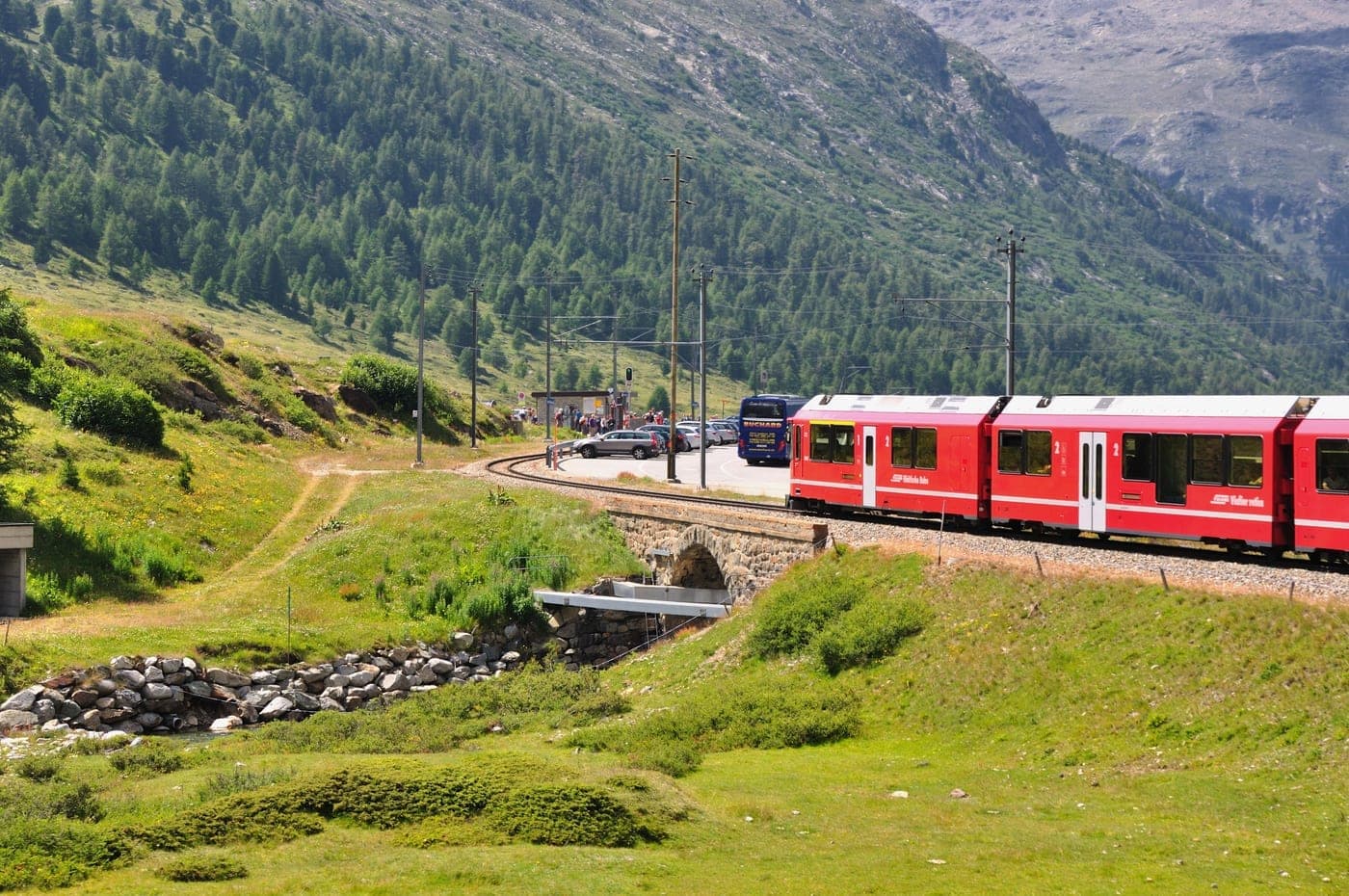
The Bernina railway runs from St Moritz over the pass to Poschiavo and Tirano, and a boxed Nusstorte is a common thing to carry onto it.
Where to try it
4 destinations
 Panoramic Trains
Bernina Diavolezza
High-altitude ski resort with panoramic glacier views and year-round cable car access
Panoramic Trains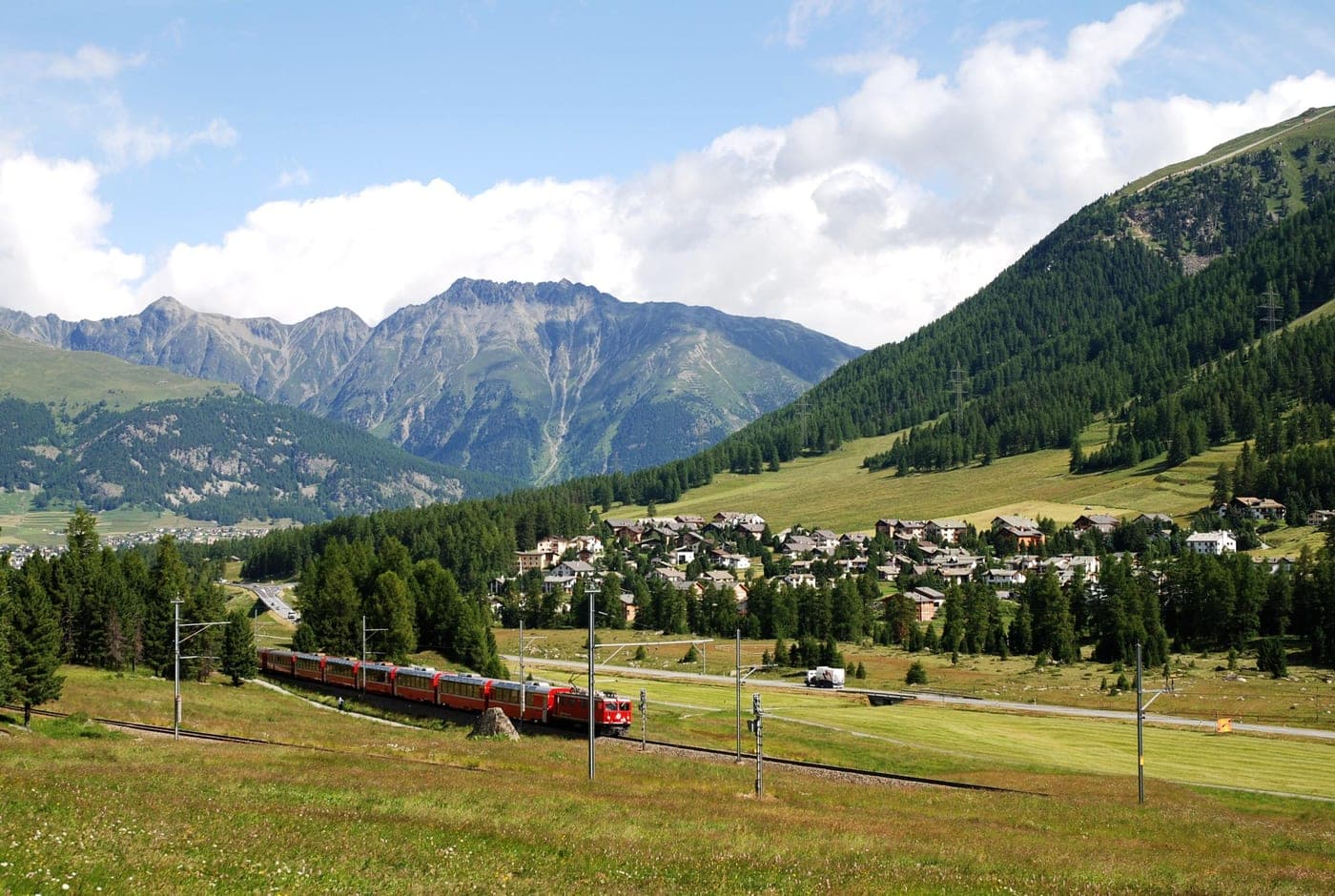 Panoramic Trains
Pontresina
Alpine resort town near St. Moritz with stunning mountain scenery.
Panoramic TrainsHiking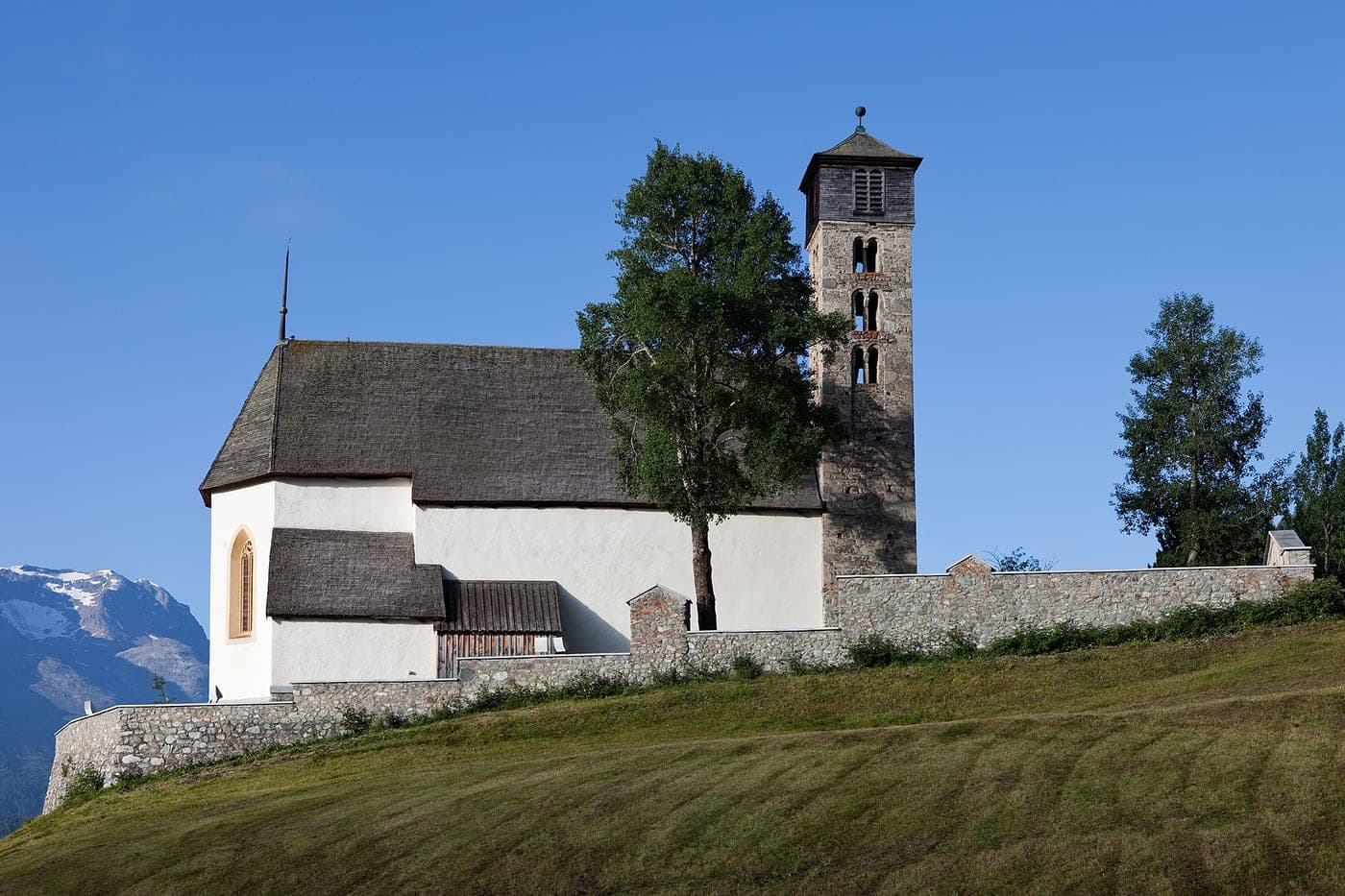 Panoramic Trains
Samedan
Mountain village in the Engadin valley near St. Moritz with alpine charm.
Panoramic TrainsHiking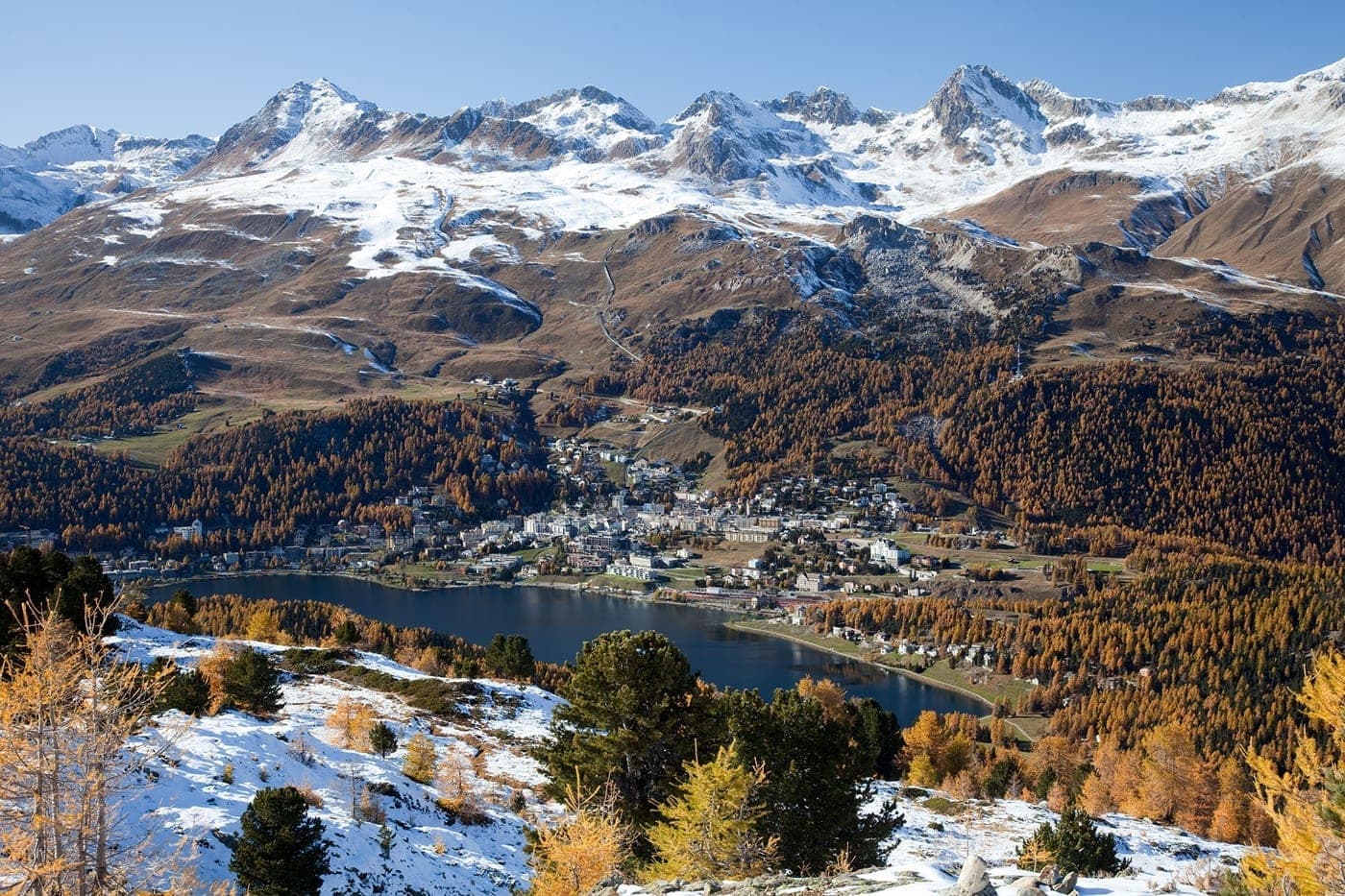 Panoramic Trains
St. Moritz
Luxury alpine resort known for winter sports and stunning lake views.
Panoramic TrainsHiking
1 region
 Panoramic Trains15 destinations
Graubünden
Graubünden is Switzerland's largest canton, known for its stunning alpine landscapes and unique cultural heritage. The region is famous for its diverse languages, with Romansh being one of the official languages. Notable cities include Chur, the oldest city in Switzerland, and the resort town of St. Moritz, renowned for winter sports and luxury. The area boasts the breathtaking Engadin Valley, home to picturesque villages like Sils and Maloja, and offers excellent hiking trails in the Swiss National Park. Graubünden is also known for its traditional cuisine, including hearty dishes like Capuns and Pizzoccheri, reflecting its rich agricultural roots. The region hosts lesser-known festivals that celebrate local traditions, adding to its authentic character.
Panoramic TrainsHiking