Cardon épineux genevois AOP (Geneva cardoon)
Geneva's spiny thistle baked in cream for Christmas
- Vegetarian
- Local name
- Cardon épineux genevois AOP
- Best eaten at
- A Genevan Christmas table
- Pairs with
- Geneva Chasselas
What it is
Cardon épineux genevois AOP is a winter dish that defines the culinary calendar in Geneva. It is a thistle grown as a vegetable, transformed from a spiny, bitter plant into a tender, creamy gratin that sits at the centre of the Genevan Christmas table. The dish is not a national staple across Switzerland; it is a regional speciality tied to the market gardens of the canton, grown from a local variety, the Cardon argenté épineux de Plainpalais, whose seeds are said to have come with Protestant refugees from France in the late 17th century.
The vegetable itself is unusual for a European kitchen. It begins as a large thistle with sharp, green leaves and purple flowers. To make it edible, farmers must keep the stalks from the light in autumn. They tie the leaves together and pull a black plastic bag over each plant, or dig the plants up and replant them in a dark cellar or tunnel, to blanch them. This process reduces the bitterness and turns the stalks pale and tender. The work is manual and labour-intensive, which explains why the finished vegetable commands a high price in the market.
How it is grown
The cultivation of cardon épineux genevois requires specific attention to the local climate of the Geneva countryside. Farmers sow the seeds in May, allowing the thistles to grow tall through the summer. From September the plants are bagged in the field for ten days to a month, or from November replanted in the dark for two to four weeks, so the stalks stay pale and mild. This blanching technique is the defining characteristic of the vegetable's quality. Without it, the stems remain too fibrous and sharp for a dish like this.
The effort involved is part of why the vegetable is protected: in 2003 it became the first Swiss vegetable to be granted an AOP. This designation recognises the local variety and the traditional farming methods of the Geneva region. The AOP ensures that only cardoons grown, blanched and prepared within the canton of Geneva using these techniques can bear the name Cardon épineux genevois.
What goes into it
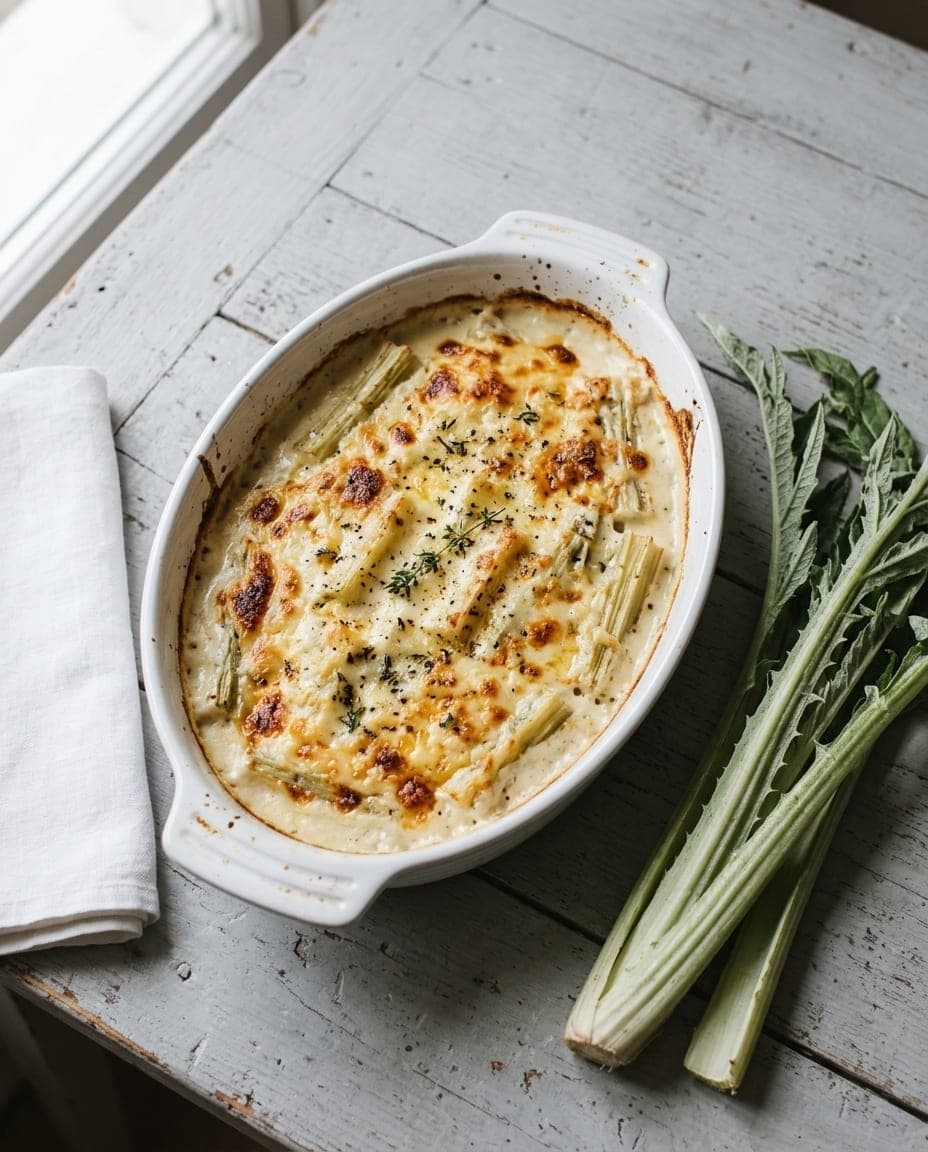
The dish is simple in its components but complex in its preparation. The blanched stalks are stripped of their remaining spines and strings by hand before they enter the pot. They are then boiled until tender, drained, and arranged in a baking dish. A béchamel or cream sauce is poured over the stems, and grated cheese, usually Gruyère, is scattered on top to form a golden crust under the oven's heat.
The final result is a warm, comforting gratin where the texture of the stalks contrasts with the smoothness of the sauce. The flavour is earthy and nutty, with only a faint hint of bitterness remaining from the thistle family. It is traditionally served as part of a larger festive dinner, acting as a substantial vegetable side that stands up to rich meats.
How to eat it
Cardon épineux genevois AOP is almost exclusively eaten during the winter months, particularly at Christmas. In Geneva, it appears on the menu of traditional restaurants and private dining tables from November through January. Fresh stalks are rarely found outside this season or region, as the fresh vegetable does not store well; the rest of the year it is sold preserved in jars.
The gratin is best paired with a glass of dry white wine from the canton, specifically a Geneva Chasselas. The crisp acidity of the wine cuts the fat of the cream and cheese, balancing the earthy notes of the thistle. On a Genevan table the cardoon sits beside the Christmas poultry or roast, as the main vegetable of the meal, often followed by rissoles filled with pears.
Curious facts
- The first vegetable. Swiss AOP status had gone to cheeses and spirits, among others, before the Geneva cardoon became the first vegetable to carry it in 2003.
- Labour intensive farming. The blanching process requires farmers to tie and bag, or replant, each plant by hand, driving up the cost of the final product.
- Seasonal limitation. Fresh cardon épineux is only available from late autumn until early winter, with most of the crop eaten in the two or three weeks around Christmas.
- Regional specificity. While cardoons are grown elsewhere in Europe, the Genevan version is distinct due to its local variety, AOP designation and cultivation methods.
- A Christmas tradition. The dish is so closely tied to the holiday season that it is often considered a necessary component of a proper Genevan Christmas dinner.
Where to try it
Geneva between November and January, in restaurants cooking the canton's own food, where it appears as the vegetable beside a roast and often only at Christmas.
The canton's market gardens sell the stalks at the city's markets through the season, trimmed and ready, at a price that reflects the hand-work. Outside those weeks the fresh vegetable is gone, but AOP cardoons in jars are sold year-round, and the AOP keeps them local.
Where to try it
1 destination
 Camper Van Rentals
Geneva
International city on the lake with UN headquarters and Alpine views.
Camper Van RentalsLocal Cuisine
1 region
 Boat Rentals4 destinations
Geneva
Geneva, located by the shores of Lake Geneva, is Switzerland's second-largest city and a hub for diplomacy and culture. The old town features the stunning St. Pierre Cathedral, where visitors can climb to the tower for panoramic views. Beyond the city, the surrounding region is known for its vineyards, particularly in the nearby Lavaux area, a UNESCO World Heritage site famous for terraced vineyards overlooking the lake. The region’s history reflects a blend of French and Swiss influences, with the International Red Cross and numerous global organizations based here. For nature enthusiasts, the nearby Jura Mountains offer hiking trails and breathtaking vistas, making Geneva a gateway to both cultural and natural exploration.
Boat RentalsHikingCamper Van RentalsLocal Cuisine