Capuns
Graubünden's chard-wrapped spätzle parcels baked in cream
- Local name
- Capuns
- Best eaten at
- A Grisons Stübli
- Pairs with
- Graubünden Pinot Noir
What it is
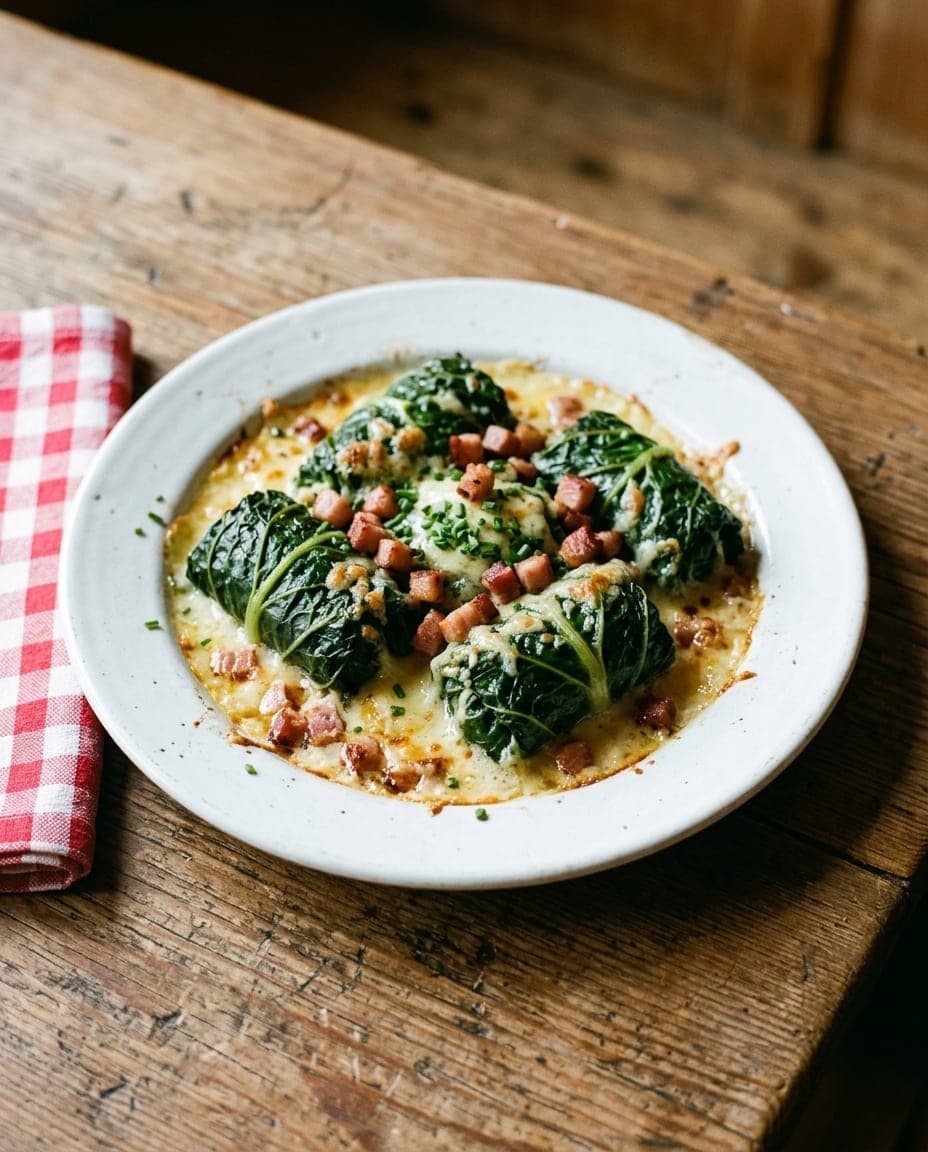
Capuns are a regional speciality of the Swiss canton of Graubünden, often called its most famous dish and cooked in valleys across the canton, from the Surselva to the Engadine. They are not dumplings in the Italian sense, but rather parcels made from spätzle dough that encase pieces of dried meat. The filling is wrapped in a chard leaf, which acts as both wrapper and vegetable, then simmered in milk and stock before being browned under a layer of grated cheese, sometimes with fried bacon or onions.
The dish is bound up with the landscape of the Alps. Chard was once a staple crop grown by almost every household in the valleys, providing the leaves necessary for the dish. The result is a savoury parcel that eats like a dumpling and a vegetable at once. It is farmhouse food, built for people who had been outdoors since dawn.
How it came to be
The history of capuns is not written in official documents but lives in the kitchens of local families. Recipes are treated as family property, with each household guarding its own method for mixing the dough or deciding how much dried meat goes into the parcel. This variation means there is no single standard version; a cook in one valley might prepare them quite differently to a neighbour in the next.
The dish likely emerged from the practical need to combine what every farmhouse had: flour, eggs and milk, preserved meat from the larder, and chard from the kitchen garden. The fresh chard leaf became the perfect vessel for the spätzle mixture. Over time, this humble combination of flour, egg, milk, dried sausage and herbs evolved into a signature dish that defines the culinary identity of the region.
What goes into it
The preparation relies on simple, local components that have been used in Graubünden for generations:
- Spätzle dough, made from flour, eggs and milk, which provides the soft, chewy base.
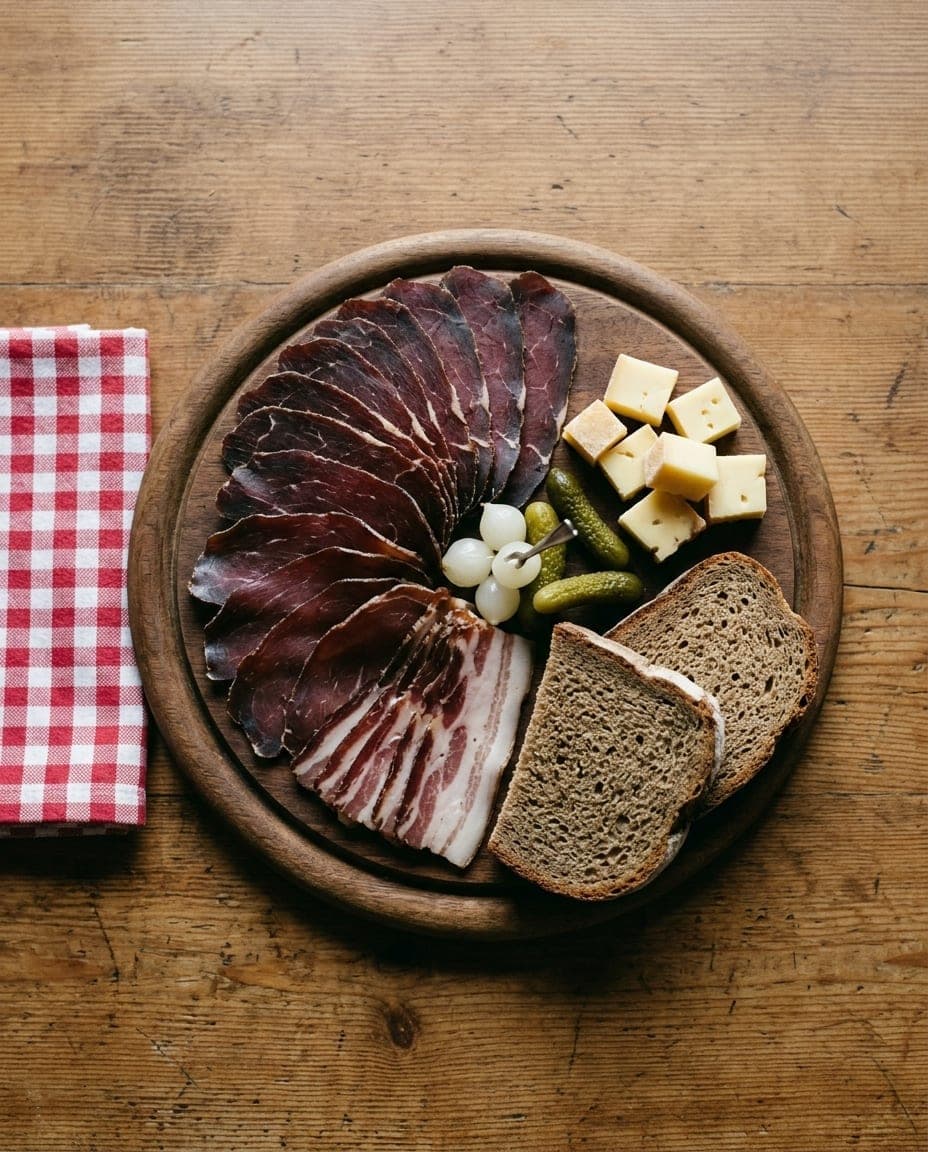
- Dried meat, usually Bündnerfleisch or the dried sausage salsiz, cut into small pieces to flavour the dough.
- Fresh herbs, often chives or parsley, added to the filling for a touch of green.
- Chard leaves, which are boiled briefly to soften them before wrapping the parcels.
- Milk and stock, used to simmer the parcels until they are tender.
- Grated cheese, sometimes with fried bacon, sprinkled on top to create a golden crust after baking.
The quantity of meat in the dough is often a point of debate between cooks, with some preferring a light hint of flavour and others packing it generously. The chard leaf absorbs the savoury juices from the meat and the creaminess of the milk, creating a unified taste.
How to eat it
They are eaten in a Stübli, the small panelled dining room of a Grisons inn, and arrive in a deep dish straight from the oven, still bubbling at the edges. The texture is soft and yielding, with the chard leaf offering a slight resistance before giving way to the creamy interior.
The dish pairs naturally with a glass of Graubünden Pinot Noir, whose earthy notes complement the savoury meat and the gentle sweetness of the chard. While it can be eaten alone, many locals serve it alongside a small side salad or a piece of rye bread to balance the richness. A fork and a spoon are both needed: the parcels cut easily and the sauce at the bottom of the dish is not left behind.
Curious facts
- The leaf is essential. The chard leaf is not just a wrapper; it becomes part of the vegetable component of the meal, softening into the dough during cooking.
- Family recipes vary. There is no official standard for the amount of meat or herbs, making each household's version unique.
- A larder dish. The dish relies on preserved meats and garden chard, reflecting the self-sufficient rhythm of mountain life in Graubünden.
- No dumpling comparison. Unlike Italian ravioli, capuns are not boiled in salted water but simmered in a mix of milk and stock before baking.
- Regional pride. The dish is a marker of Graubünden identity, and cooks across the canton defend their own family version.
Where to try it
The most authentic experience of capuns is found in a Stübli in the Graubünden valleys, whether in the Surselva or the Engadine. These are small family-run places where the recipe came down the household rather than out of a book, and the number of parcels on the plate is the main thing that varies.
The dish is on menus across the canton and is one of the few Graubünden specialities that has travelled as far as Zurich, where it appears in restaurants cooking Swiss regional food. Chard is the limiting factor: in a kitchen without good leaves, the parcels are made with cabbage, and it is not the same.
Where to try it
3 destinations
 Panoramic Trains
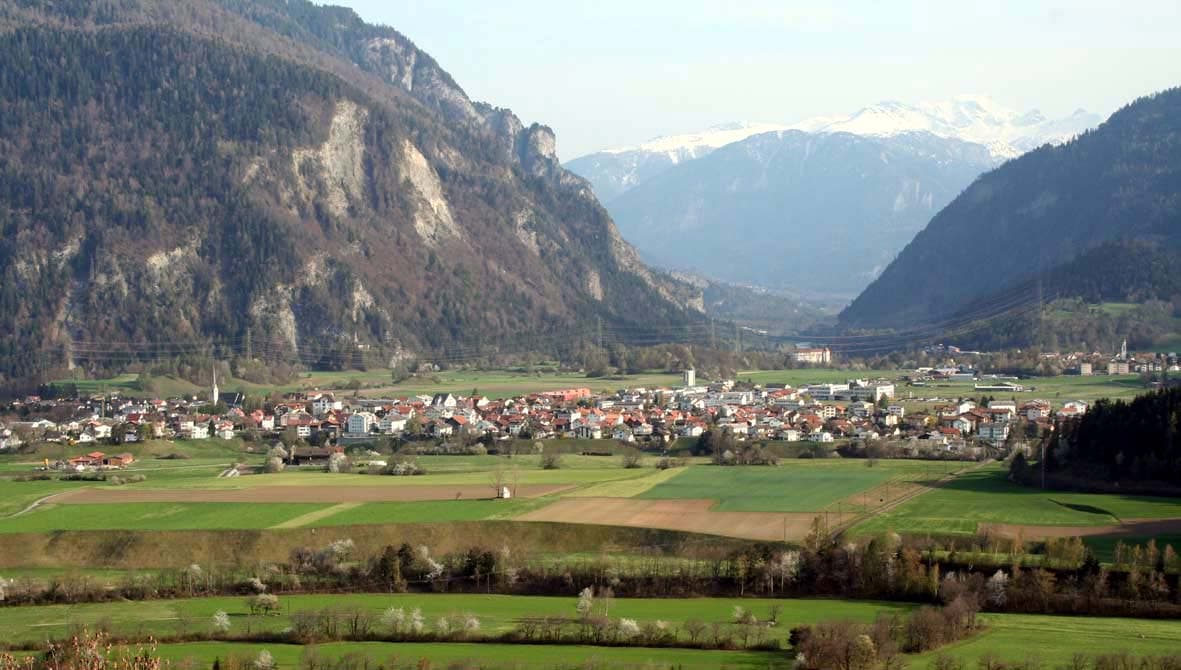
Bonaduz
Small village in the Rhine Valley with beautiful mountain views.
Panoramic TrainsHiking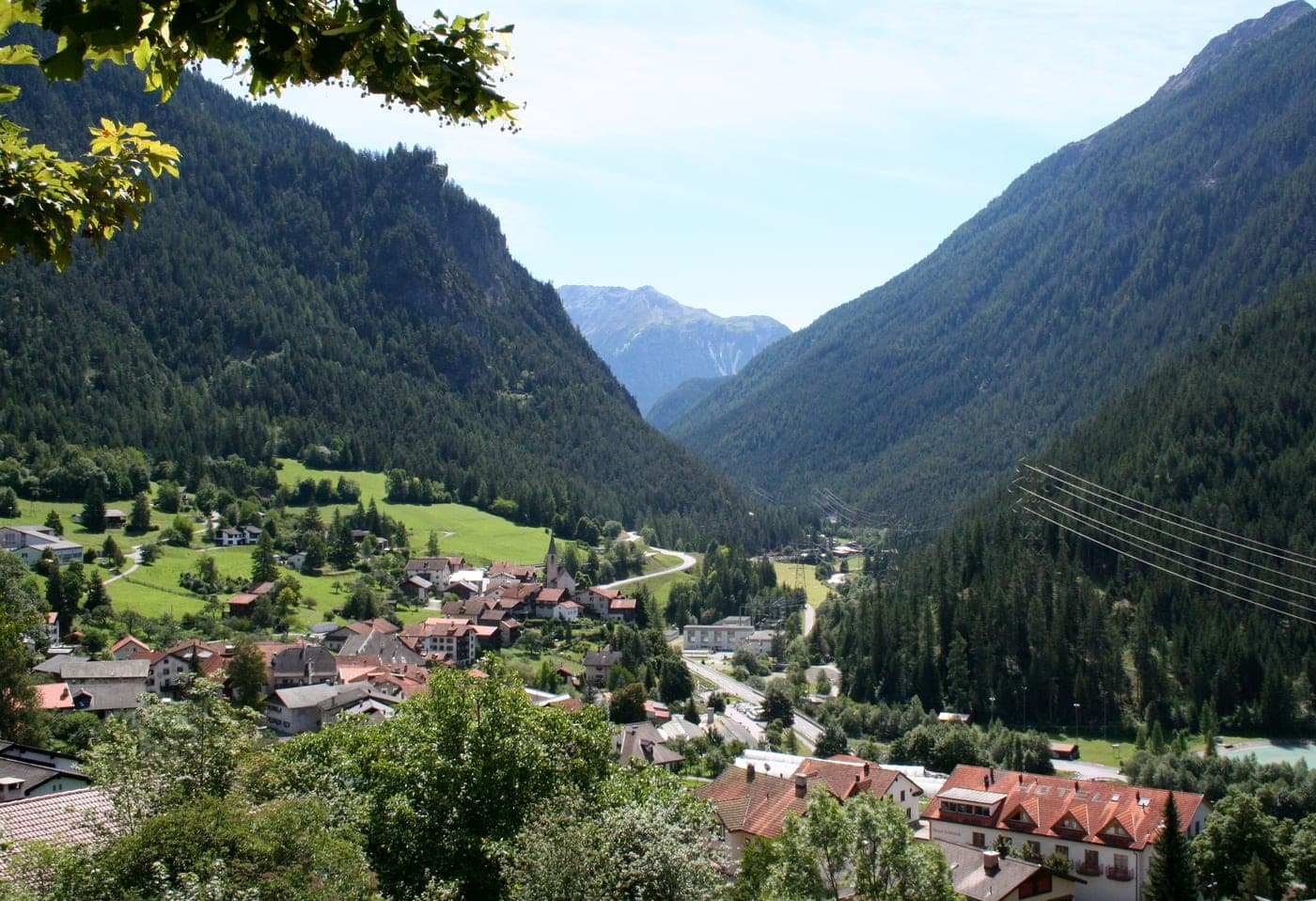 Panoramic Trains
Filisur
Village nestled in the Alps, known for its stunning viaducts.
Panoramic TrainsHiking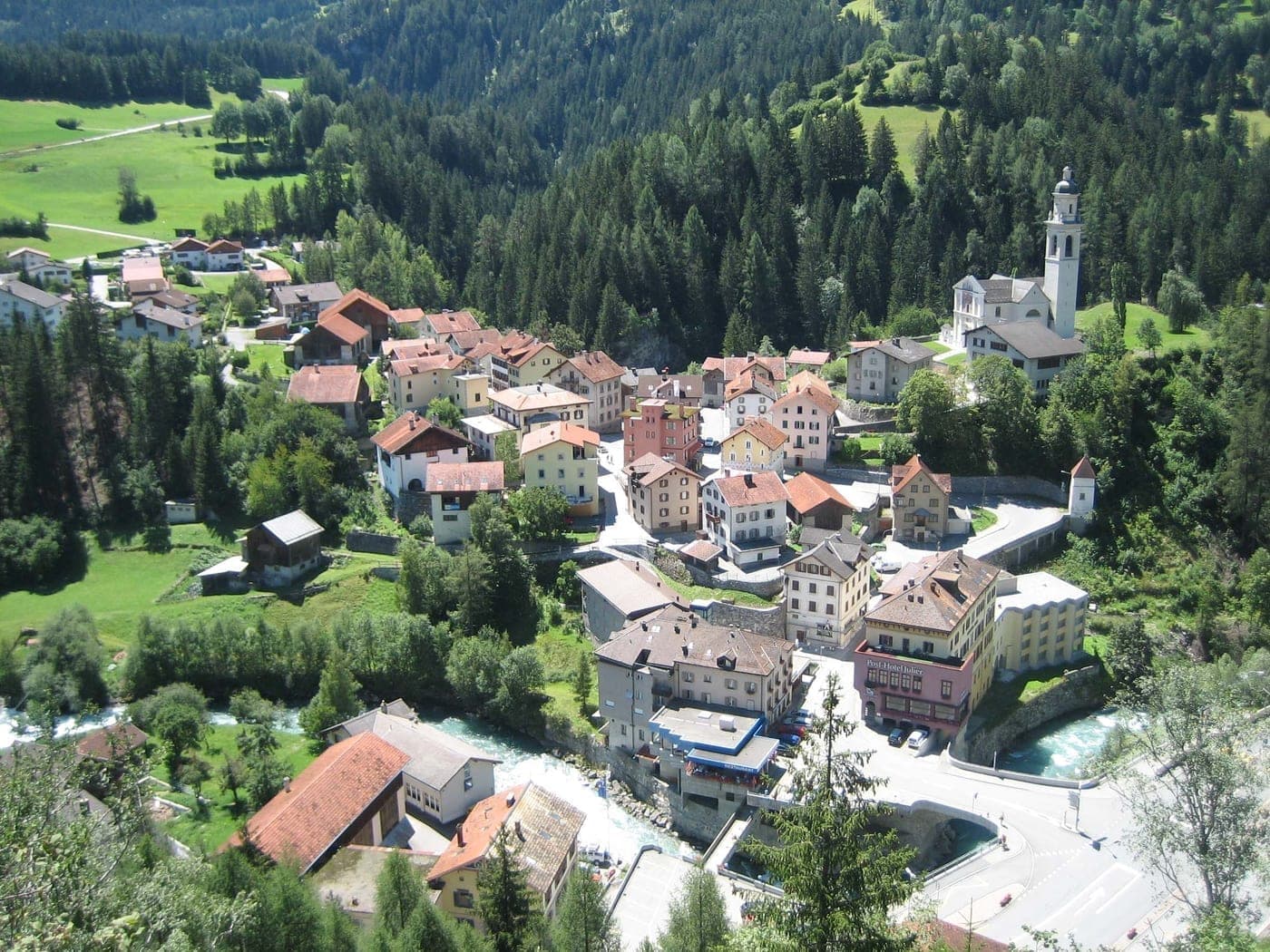 Panoramic Trains
Tiefencastel
Mountain village at the confluence of the Albula and Julia rivers.
Panoramic TrainsHiking
1 region
 Panoramic Trains15 destinations
Graubünden
Graubünden is Switzerland's largest canton, known for its stunning alpine landscapes and unique cultural heritage. The region is famous for its diverse languages, with Romansh being one of the official languages. Notable cities include Chur, the oldest city in Switzerland, and the resort town of St. Moritz, renowned for winter sports and luxury. The area boasts the breathtaking Engadin Valley, home to picturesque villages like Sils and Maloja, and offers excellent hiking trails in the Swiss National Park. Graubünden is also known for its traditional cuisine, including hearty dishes like Capuns and Pizzoccheri, reflecting its rich agricultural roots. The region hosts lesser-known festivals that celebrate local traditions, adding to its authentic character.
Panoramic TrainsHiking