Bündnerfleisch IGP
Air-dried beef from Graubünden, sliced paper-thin
- Local name
- Bündnerfleisch
- Served with
- Rye bread, pickles
- Best eaten at
- A Graubünden mountain hut
- Pairs with
- Pinot Noir from Graubünden
What it is
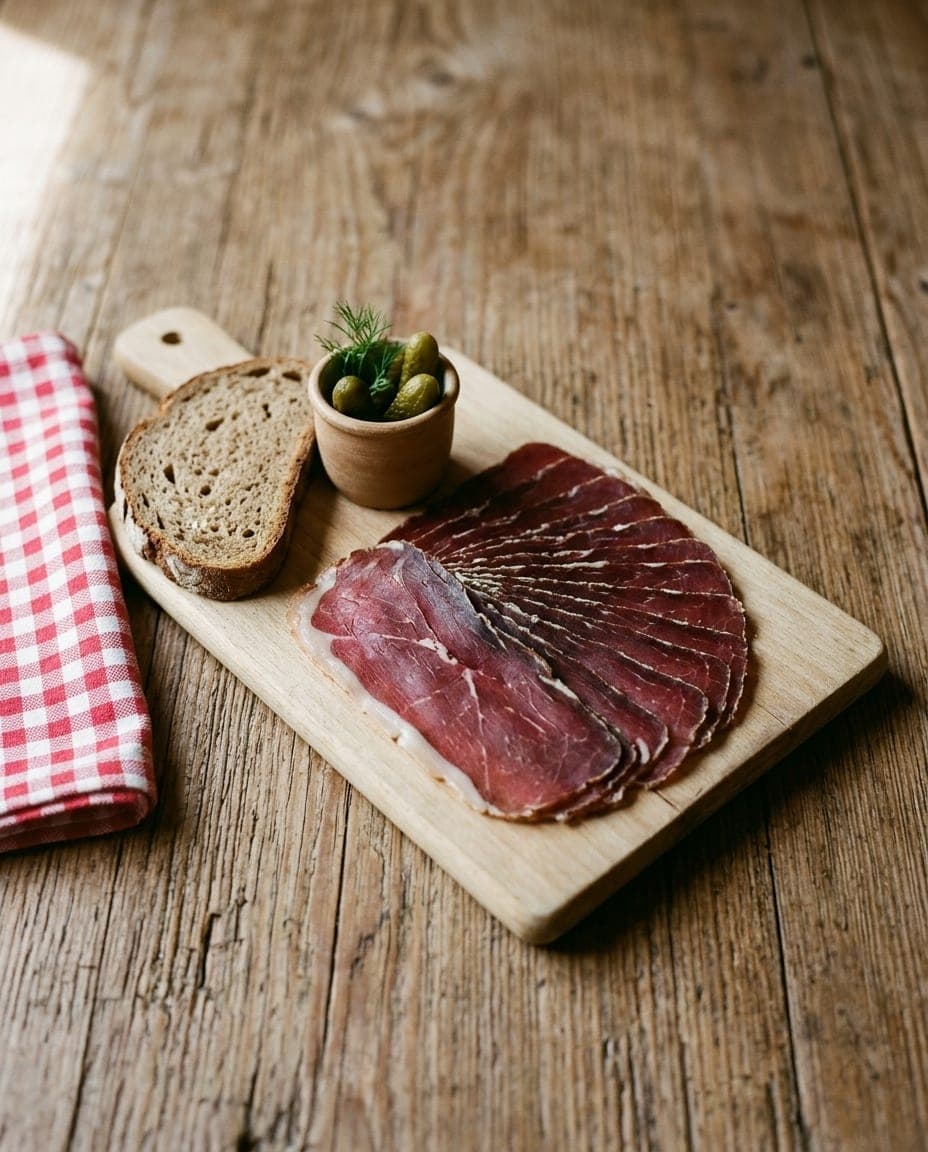
Bündnerfleisch, a protected geographical indication (IGP) from the Swiss canton of Graubünden, is beef that has been transformed by air rather than fire or smoke. The meat begins as a lean cut from the hind leg, which is rubbed with salt, saltpetre and spices and cured for several weeks, then hung to dry in cool, dry air for several months, being pressed into a flat, dense rectangle along the way. It ends with a deep ruby colour and a firm texture that can be sliced almost translucently across the grain.
This is not a smoked product, nor is it cooked. The process grew out of the climate of the region: low humidity, moving air, and cool temperatures that prevent spoilage while allowing the meat to lose water slowly — around half its weight by the end. The result is a savoury, concentrated flavour with notes of spice and a clean, salty finish. It is served cold, shaved into delicate ribbons that melt on the tongue, often accompanied by dark rye bread and pickled onions or gherkins.
How the mountain air does the work
The history of Bündnerfleisch is rooted in the practical needs of mountain communities rather than culinary invention. Drying meat in the valleys of Graubünden is documented since the early Middle Ages: people living there needed a way to keep meat through long winters. It was also long known as Bindenfleisch, after the cloth strips used in making it. The solution was to use the natural conditions of the Alps: the dry air and the constant breeze that flows through the valleys act as the preservative agents.
Unlike many European cured meats that rely on smoke, such as those from Germany or Austria, Bündnerfleisch remains unsmoked. This distinction is vital to its character. The absence of smoke means the taste relies purely on the quality of the beef, the salt, and the spice rub used during the curing process. The meat hangs in drying rooms, today mostly in purpose-built facilities rather than farmhouse attics and cellars.
The pressing technique is what gives the product its signature rectangular shape. As the meat dries, it is periodically pressed between heavy boards to squeeze out moisture and flatten the cut. This compression evens out the moisture between centre and edges and creates a dense block that can be sliced very thinly without falling apart. The final product is lean, with almost no visible fat, because fat and sinew are trimmed off before curing; a fine natural mould on the surface during drying adds to the aroma.
The ingredients behind the flavour
There are only three main components in the making of authentic Bündnerfleisch: beef, salt, and spices. The beef must come from the hind leg — cuts such as topside, silverside and thick flank — which provide the necessary structure for long drying. The salt is applied generously to draw out moisture and create an environment where harmful bacteria cannot thrive.
The third element is the seasoning mix, which varies from one producer to another. Pepper is the constant; juniper, garlic, onion, herbs, a little sugar or white wine are among the common additions. The spices are rubbed into the meat before it is cured and hung. The cure is salt and spice, with saltpetre or curing salt among them; what is absent is smoke and any cooking.
The IGP fixes where the meat is cured and dried, not where the cattle were raised, and a good share of the beef used is imported; producers working with Swiss or Graubünden beef say so on the label. The air-drying process concentrates the flavour, resulting in a product that is far more intense than fresh beef but lacks the heavy, gamey notes sometimes associated with aged meats.
How it is eaten
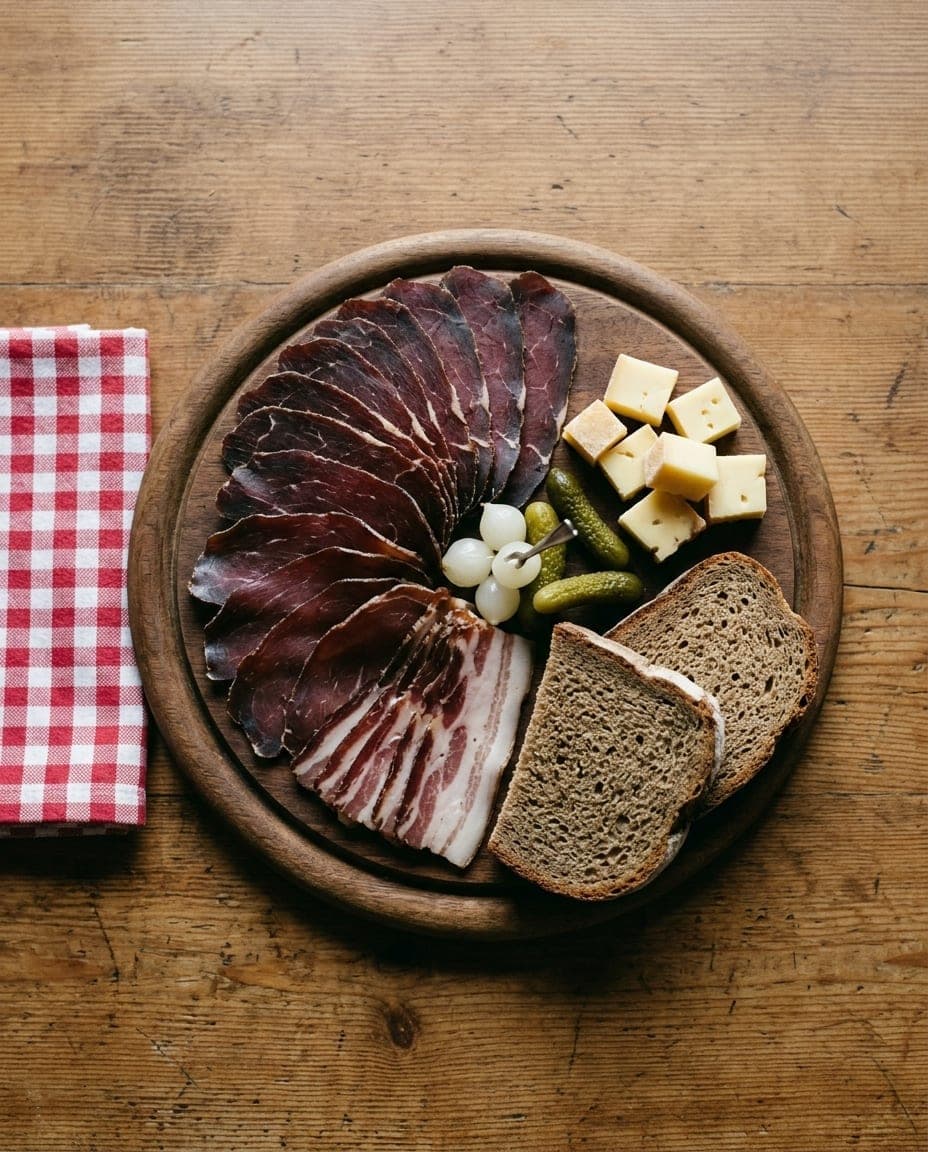
Bündnerfleisch is rarely served as a standalone dish. Instead, it acts as the centrepiece of an appetiser or a light lunch, often arranged on a wooden board alongside dark, dense rye bread. The bread provides a sturdy base for the thin slices and offers a textural contrast to the soft, yielding meat. It is common to see the meat served with pickled onions, gherkins, or mustard to add sharpness to the lean, salty beef.
The texture requires careful attention when slicing. A skilled carver will cut the meat across the grain into paper-thin slices that are almost transparent. If the slices are too thick, the texture becomes chewy and the flavour can be overwhelming. It is served cool rather than cold: straight from the refrigerator the taste closes up, and a few minutes on the board opens it again.
In the canton it also goes into Capuns and into barley soup, cut small, where it works as seasoning rather than as meat. A glass of Pinot Noir from Graubünden, known locally as Blauburgunder, complements the savoury notes of the meat without overpowering them. The tannins in the wine interact with the saltiness of the beef, creating a balanced finish that is highly prized by locals and visitors alike.
Where it comes from
The production of Bündnerfleisch is strictly tied to the canton of Graubünden, where the specific microclimate makes it possible. The IGP status ensures that the meat must be cured and dried within the canton, by the traditional method. Other cantons air-dry beef — the Valais does it under its own protected name — and the dried sausages of Graubünden, the salsiz, come out of the same tradition.
The tradition is strongest in the high valleys where cold winds are constant and humidity is low. The production area's cool, dry air, above about 800 metres, is what made slow natural drying possible in the first place, and producers like to say that each valley's air leaves its own trace on the meat.
The reputation of the meat has grown beyond Switzerland's borders, with exports across Europe, to the USA and Japan, yet it remains a regional speciality: it is sold all over the country but made only in Graubünden.
Curious facts
- No smoke involved. Unlike many cured meats across Europe, Bündnerfleisch is never smoked. The preservation comes from salt, curing salts and drying.
- Pressed into a block. The meat is flattened between heavy boards during drying, resulting in a dense, rectangular shape that is easy to slice thinly.
- A legal boundary. The IGP status restricts production to the canton of Graubünden, ensuring the meat is cured in the specific climate required for its unique character.
- Served paper-thin. The ideal texture requires slicing across the grain into translucent ribbons; thicker cuts become chewy and lose their delicate flavour.
- A winter tradition. The curing process traditionally takes place during the cold, dry months of late autumn and winter, when the air is most suitable for drying without spoilage.
- Paired with local wine. A favourite accompaniment is Pinot Noir from Graubünden, which balances the saltiness of the meat with its own fruity notes.
Where to try it
A mountain hut or a plain restaurant anywhere in Graubünden: it is on every board in the canton, cut to order and served with rye bread and pickles. St Moritz and Thusis are as good as anywhere, and the Rhaetian Railway passes through the valleys where it is dried.
Butchers across the canton sell it by weight, sliced on the machine while the customer waits, which is cheaper and better than the vacuum packs sold at airports. The thickness of the slice is the thing to watch: paper-thin is correct, and anything thicker turns chewy.
Where to try it
3 destinations
 Panoramic Trains
Ospizio Bernina
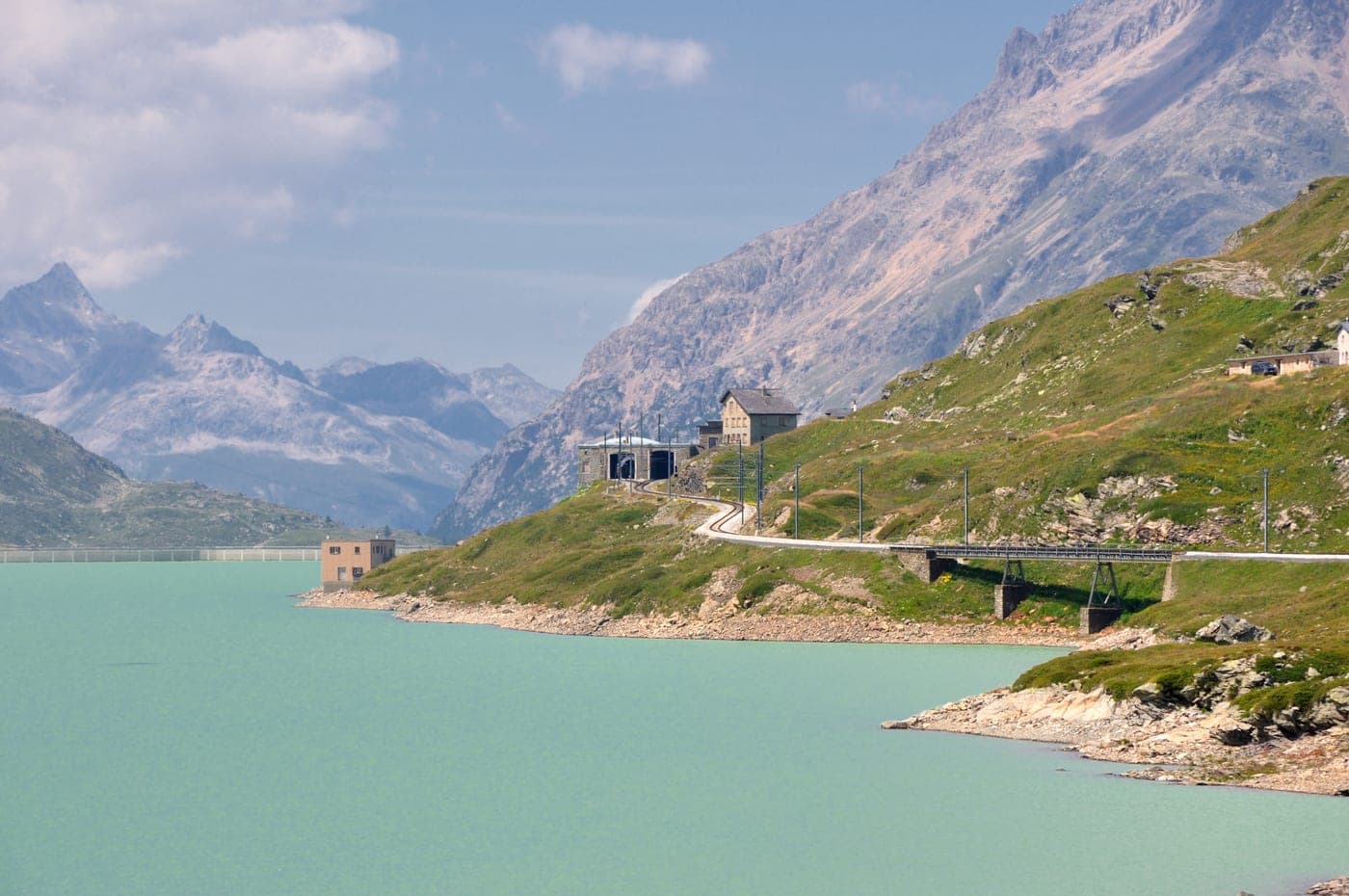
Mountain station at Bernina Pass with alpine lakes and the highest railway station on the route
Panoramic TrainsHiking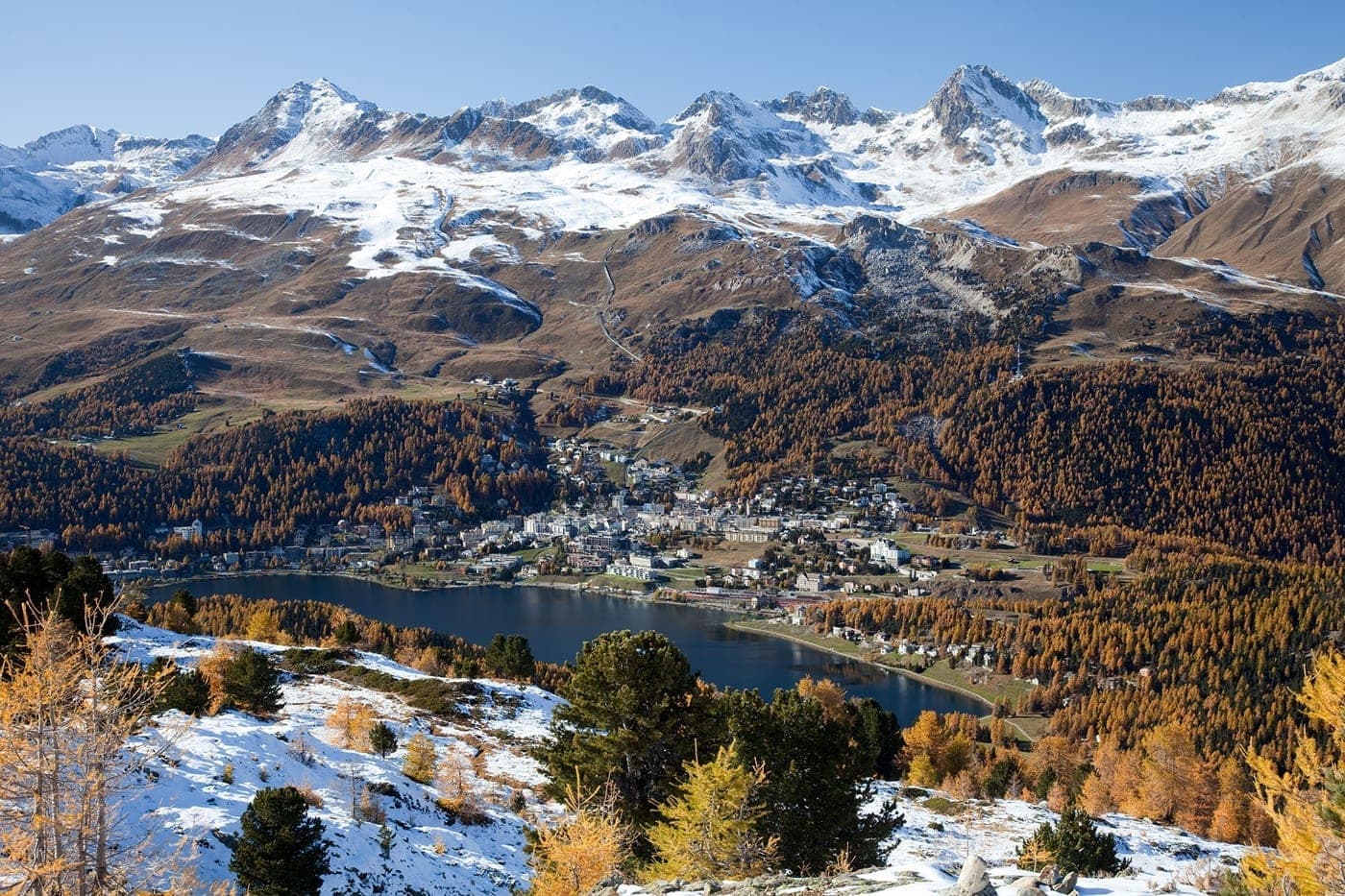 Panoramic Trains
St. Moritz
Luxury alpine resort known for winter sports and stunning lake views.
Panoramic TrainsHiking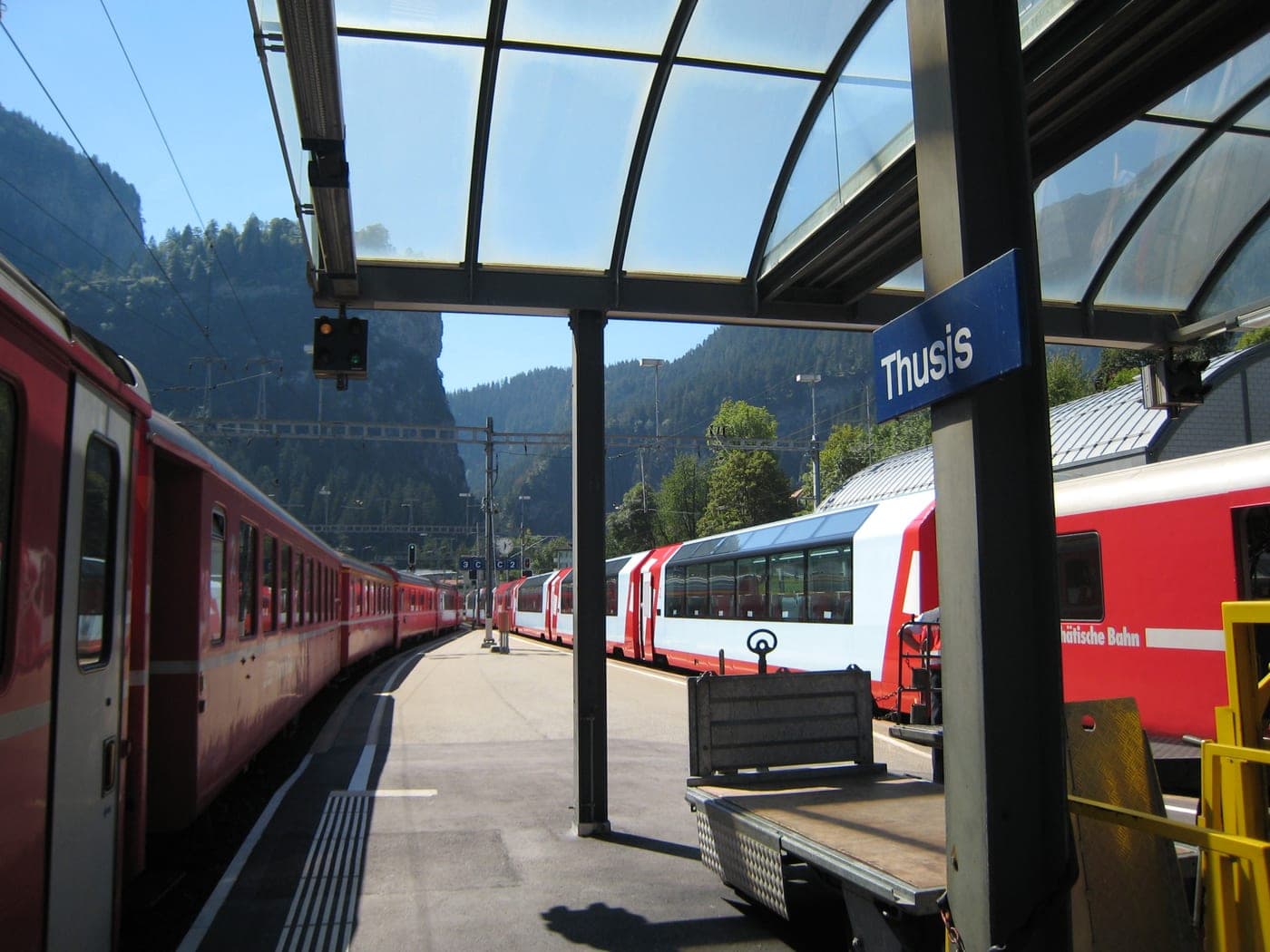 Panoramic Trains
Thusis
Gateway to the Via Mala gorge and starting point for mountain excursions.
Panoramic TrainsHiking
1 region
 Panoramic Trains15 destinations
Graubünden
Graubünden is Switzerland's largest canton, known for its stunning alpine landscapes and unique cultural heritage. The region is famous for its diverse languages, with Romansh being one of the official languages. Notable cities include Chur, the oldest city in Switzerland, and the resort town of St. Moritz, renowned for winter sports and luxury. The area boasts the breathtaking Engadin Valley, home to picturesque villages like Sils and Maloja, and offers excellent hiking trails in the Swiss National Park. Graubünden is also known for its traditional cuisine, including hearty dishes like Capuns and Pizzoccheri, reflecting its rich agricultural roots. The region hosts lesser-known festivals that celebrate local traditions, adding to its authentic character.
Panoramic TrainsHiking