Jamón ibérico de bellota
Acorn-fed Iberian ham from the oak pastures of south-western Spain
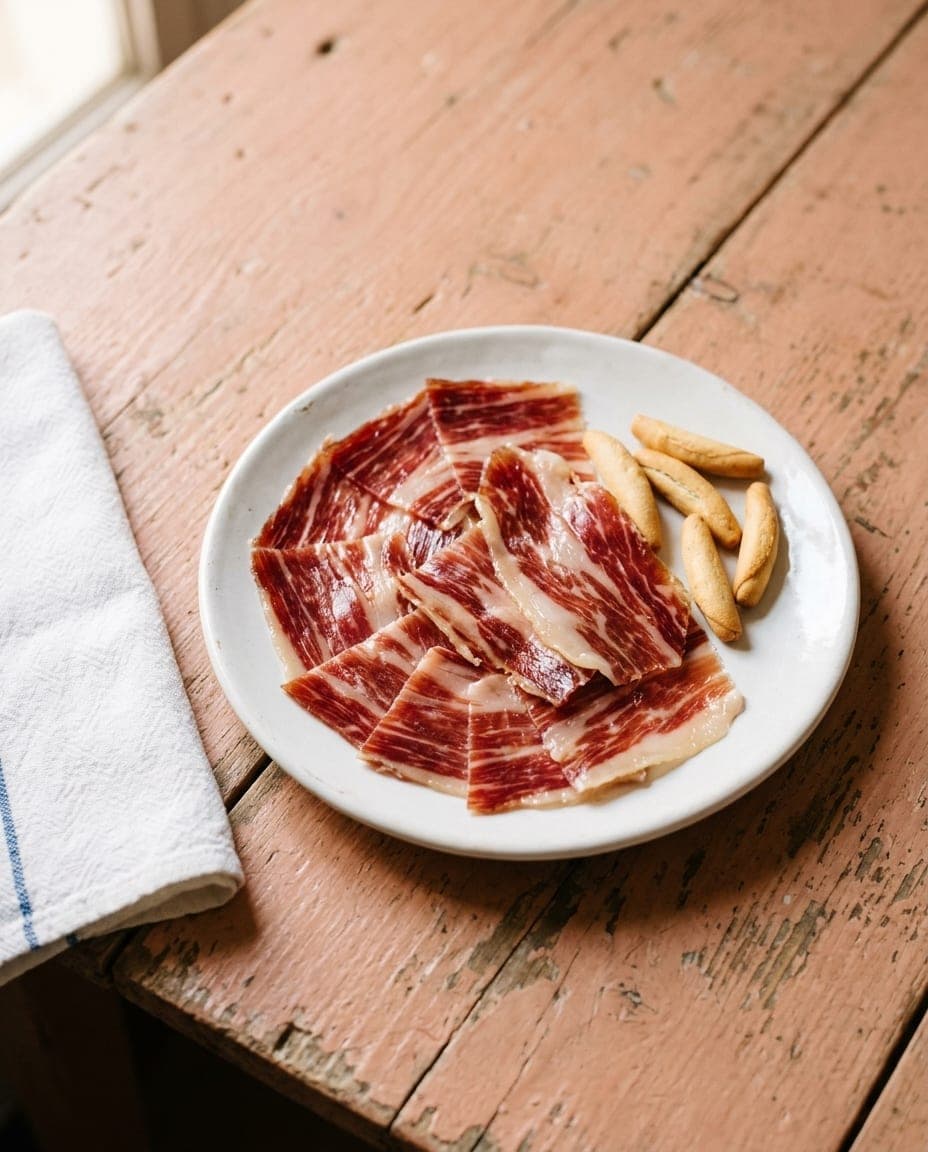
- Local name
- Jamón ibérico de bellota
- Served with
- Picos, bread
- Best eaten at
- An Andalusian tapas bar
- Pairs with
- Fino or manzanilla sherry
What it is
Jamón ibérico de bellota is the most celebrated cured meat in Spain, a deep red ham that melts on the tongue. It comes from the Iberian pig, a native breed often with dark hooves (hence the nickname pata negra), raised free-range in the dehesa, the open oak pasture of western and south-western Spain. The defining feature is the montanera, the autumn-to-winter period when the pigs roam the woodlands eating acorns and grass. During this time they gain significant weight, storing fat that gives the ham its soft texture and distinctive flavour.
The fat is rich in oleic acid, the same fatty acid that dominates olive oil, and it softens at around body temperature. This means the fat does not leave a waxy residue but dissolves into a deep, nutty taste. The ham is never cooked and is served at room temperature, after years of slow curing in cellars.
How it is made
The process begins with the fresh leg of the pig, which is buried in salt. After salting, the meat is washed and left to rest before being hung in natural drying rooms and cellars to mature. This curing takes place in several regions, most famously around Jabugo in the province of Huelva, around Guijuelo in Salamanca, and in Extremadura and Los Pedroches in Córdoba. The legs hang for years, losing moisture slowly while developing complex flavours.
Spanish law strictly regulates the labelling of Iberian hams to distinguish between breeds and feeding methods. The colour of the seal tells the story: a black label is reserved for 100% Iberian pigs fattened on acorns; a red label marks acorn-fed pigs that are Iberian crosses; green labels indicate pigs raised outdoors on feed and pasture (cebo de campo), and white labels are for feed-raised pigs (cebo). Only the black and red labels qualify as bellota. This system lets buyers know exactly what they are getting.
The dehesa landscape
The quality of the ham is inextricably linked to the dehesa, a man-made agricultural landscape where holm and cork oaks, grassland and livestock coexist. In this open woodland, the Iberian pig forages freely for the acorns that fall from the trees from autumn into winter.
This landscape shapes the character of the meat. The fat stored by the pig reflects its diet of acorns and grass, creating a nutty profile that cannot be replicated in a barn. The trees provide shade during the hot summer months, and the open ground allows the animals to move freely. It is a system that has existed for centuries, where the health of the land determines the quality of the food.
What goes into it
The ingredients are simple by definition: the pig itself, the acorns, the grass, salt and time. There are no smoke or spices involved, and the air of the curing cellars does the rest.
- Iberian pig: A native breed known for its ability to lay down fat marbled through the muscle.
- Acorns: The main food during the montanera, giving the fat its nutty sweetness and high oleic acid content.
- Grass: The pasture of the dehesa, eaten alongside the acorns.
- Salt: Used for the initial curing phase to draw out moisture and preserve the meat.
- Time: The years spent hanging in the cellars, during which enzymes slowly break down proteins and fats.
How to eat it
Jamón ibérico de bellota is best enjoyed at room temperature, straight from the ham stand. A skilled carver uses a long, flexible knife to cut slices so thin they are almost see-through, revealing the marbling of fat within the muscle. These slices are arranged on a plate or served on bread.
In Andalusia it is traditionally eaten with bread or with picos, the small crunchy breadsticks found on every bar counter. In a tapas bar it might be served as a single tapa or as a full ración, accompanied by other small plates such as olives.
A glass of fino or manzanilla sherry from the Jerez area is the classic Andalusian pairing. The dry, saline notes of the sherry cut through the fat and refresh the palate between bites, a combination found in bars across Andalusia and beyond.
Curious facts
- The black label rule. Only 100% Iberian pigs fattened on acorns and pasture during the montanera can carry the black label, making it the most prized and most expensive grade.
- A low melting point. The acorn-rich fat starts to soften at room temperature and melts at around body heat, which is why it dissolves on the tongue.
- The carver's skill. Hand-carving is a respected trade in Spain, and professional cortadores are hired for weddings and celebrations.
- Regional pride. Iberian ham has four designations of origin: Jabugo, Guijuelo, Dehesa de Extremadura and Los Pedroches.
- No cooking required. The ham is never heated; it is served raw and cured, relying entirely on salt and slow drying for its texture and flavour.
Where to try it
A classic place to taste jamón ibérico de bellota is an Andalusian tapas bar, particularly in the province of Huelva near the Sierra de Aracena, where the pigs are raised and the hams cured. In these bars the ham is sliced fresh from the leg, which is often displayed on a stand behind the counter.
The countryside around Jabugo offers the chance to see the dehesa where the pigs roam, though eating the ham in a traditional bar remains the most accessible way to appreciate it. A few slices with a glass of sherry offer a direct connection to the landscape and centuries-old curing traditions.
Related: Jamón de Guijuelo, the protected ham cured in the Salamanca town of Guijuelo.
Where to try it
1 region
 Wine Tasting12 destinations
Andalusia
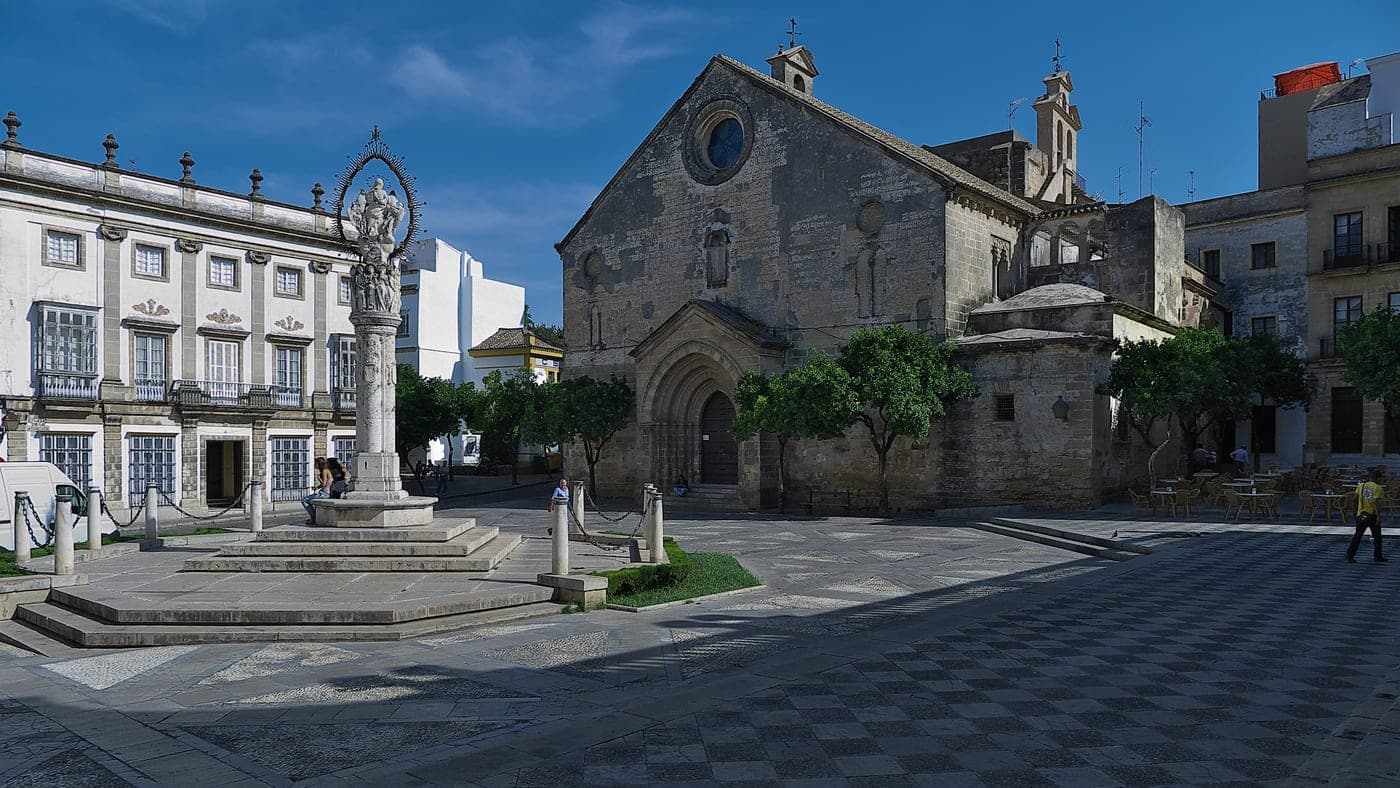
Andalusia stands as Spain's largest autonomous community, renowned for its diverse landscapes, from sun-soaked beaches to rugged mountains. The region is famed for its rich Moorish heritage, best exemplified in cities like Granada, home to the Alhambra, and Seville, known for its cathedral and flamenco culture. Cordoba boasts the stunning Mezquita, while Ronda captivates with its dramatic gorge. Unique local festivals such as Feria de Abril and Semana Santa highlight Andalusian culture. The region produces excellent wines, particularly from Jerez, and is the birthplace of tapas. Off the main tourist paths, towns like Grazalema and Mijas offer authentic experiences amid beautiful natural settings.
Wine TastingHikingLocal CuisineBoat Rentals





