Jamón de Guijuelo
Cured Iberian ham from Guijuelo, Salamanca's cold plateau
- Local name
- Jamón de Guijuelo
- Served with
- Bread
- Best eaten at
- A Salamanca tapas bar
- Pairs with
- Fino sherry or Ribera red
What it is
Jamón de Guijuelo is a cured Iberian ham from the town of Guijuelo and the surrounding area in the south-east of the province of Salamanca, part of Castile and León in north-western Spain. It belongs to the wider family of Iberian hams, but holds a distinct identity defined by where and how it matures. It is protected by the Guijuelo designation of origin (PDO), which ties the curing to 78 municipalities of south-eastern Salamanca.
The meat comes from the Iberian pig, either pure-bred or crossed with Duroc with at least 75% Iberian blood, reared in the open oak woodlands known as dehesa across western and south-western Spain. The finest examples come from pigs fattened on acorns and pasture during the final months before slaughter, a practice that gives the fat a unique texture and taste; other grades come from pigs raised outdoors on feed. The Guijuelo style is noted for its delicate sweetness and gentle salting. It is not aggressively salty; instead, it offers a refined taste that highlights the natural quality of the pork.
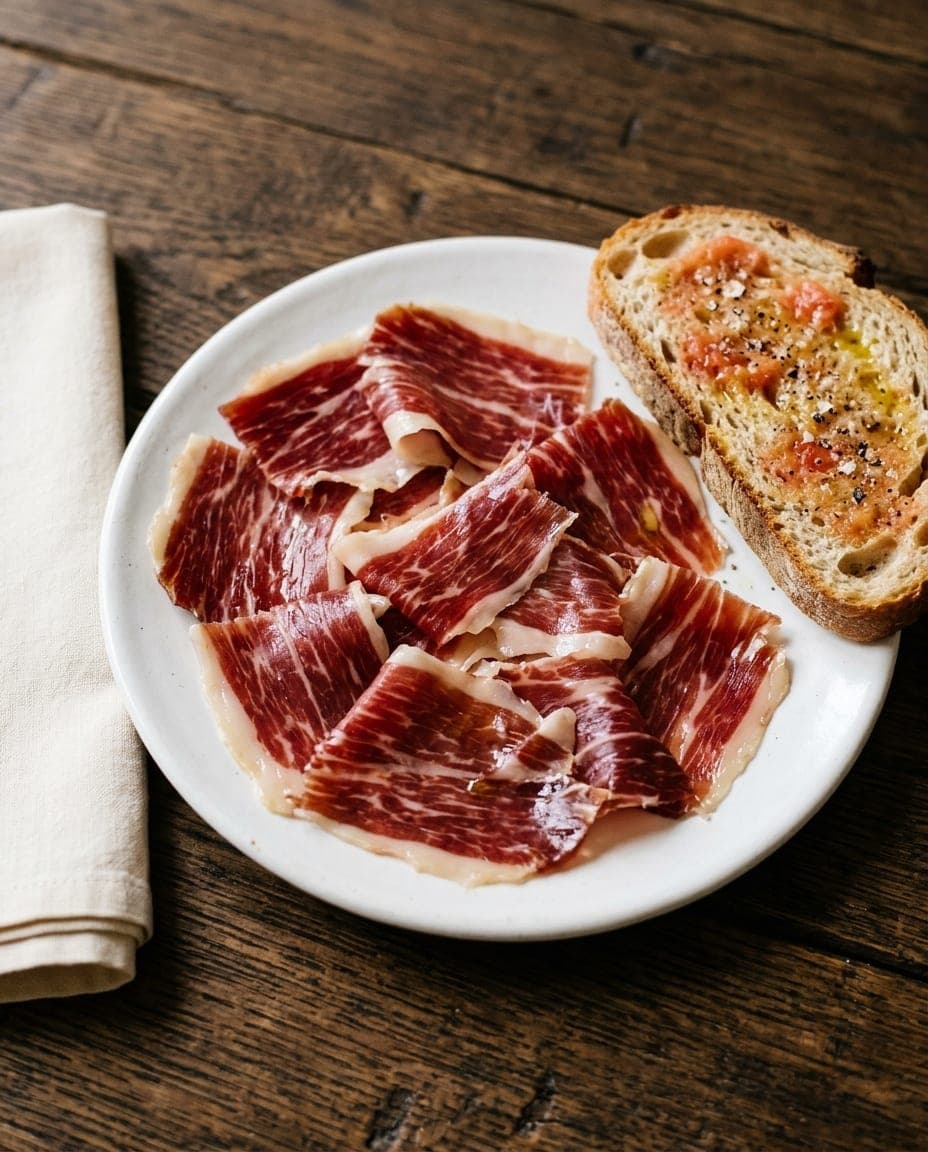
This ham is a staple of Spanish gastronomy and a source of strong regional pride. It is sliced thinly by hand and served at room temperature, allowing the fat to soften and release its aroma.
The climate of Guijuelo
The character of this ham is inextricably linked to the geography of the town where it is made. Guijuelo sits high on the Salamanca plateau, with the curing area averaging close to 1,000 metres above sea level, a cool, dry landscape that differs markedly from the warmer lowlands of Andalusia and Extremadura. The area experiences cold, dry winters and short, warm summers.
These climatic conditions are essential for the curing process. The cold air allows the ham to dry slowly without spoiling, which permits a long maturation with relatively little salt. Hams cured in warmer places traditionally needed more salt, which is why Guijuelo hams are often described as sweeter and milder than their southern counterparts.
The hams are hung in natural drying rooms (secaderos) and then moved to cellars (bodegas), where they mature for well over two years. During this time, the meat loses moisture and concentrates its flavours, becoming tender and aromatic, balanced by a natural sweetness.
How it is made
The production of Jamón de Guijuelo follows traditional methods, though the exact timing varies with the size of the ham and the weather in a given year. The process begins with fresh legs from Iberian pigs, which are first covered in salt to draw out moisture. In the cool climate of Guijuelo, this salting phase is kept short.
After salting, the hams are washed and left to rest before moving to the drying rooms. Here they hang in rows, exposed to the cold mountain air, which is let in or kept out through the windows. The designation sets a minimum of 730 days of curing for hams, and pieces cured for longer may carry the extra mention Gran Selección.
The final product is a whole leg with a dark rind and deep red flesh. When sliced, the meat reveals a fine marbling of fat that melts on the tongue. The flavour offers notes of nuttiness, sweetness and a gentle savouriness that lingers.
What goes into it
The ingredients are simple, yet their quality determines the final result. The primary component is the meat from the Iberian pig, with the highest grades coming from pigs fed on acorns in the dehesa. This diet gives the fat a soft, creamy texture and a sweet, nutty flavour.
The curing relies on natural conditions rather than additives. Salt is used sparingly, drawing out moisture without overwhelming the meat, and the cold, dry air of the plateau does the rest. No smoke or spices are used; the ham's character comes from the pig, the salt and the climate.
When served, the ham is usually accompanied by good bread, which provides a neutral base for the rich meat.
How to eat it
Jamón de Guijuelo is best enjoyed at room temperature, as the cold of the refrigerator hardens the fat and dulls the aroma. It is sliced thinly by hand, often in a ham shop or a traditional tapas bar, and served immediately on a wooden board or plate. The slices should be thin enough to be almost translucent but thick enough to retain their texture.
In Salamanca's bars the ham is served in small portions alongside other local specialities, with bread on the side. The experience is social and unhurried, meant to be shared among friends.
A glass of fino sherry or a Ribera del Duero red is a classic pairing. The crisp dryness of the sherry cuts through the fat, while the structure of a red wine from the region underlines the savoury notes of the meat.
Curious facts
- The designation protects the name. Only hams cured within the designated area of south-eastern Salamanca and certified by the regulatory council can bear the Guijuelo name.
- Pigs from far away. The pigs are reared in dehesas across several provinces, from Salamanca and Ávila to Extremadura and Andalusia; only the curing has to happen around Guijuelo.
- Acorns define the top grade. Pigs fattened on acorns in the dehesa produce a ham with a sweeter, nuttier flavour than those raised on feed.
- The cold is essential. The long, cold winters of the Salamanca plateau allow slow drying with little salt, creating a balanced taste.
- Room temperature matters. The fat must be served at room temperature to fully release its aroma and texture.
Where to try it
The natural place to taste Jamón de Guijuelo is the town itself, where ham shops and curing houses line the streets, and the surrounding villages of the designated area.
In Salamanca city, many traditional tapas bars serve excellent ham sourced from producers in the province. The experience is more about the atmosphere than the specific venue; a simple counter with a few stools and a row of hanging hams is often the most authentic setting.
Small shops in Guijuelo where the product is cured on-site or sourced directly from local producers are also well worth seeking out for ham to take home.
Related: Jamón ibérico de bellota, the acorn-fed top grade of Iberian ham, made across several regions.
Where to try it
1 destination
 Wine Tasting
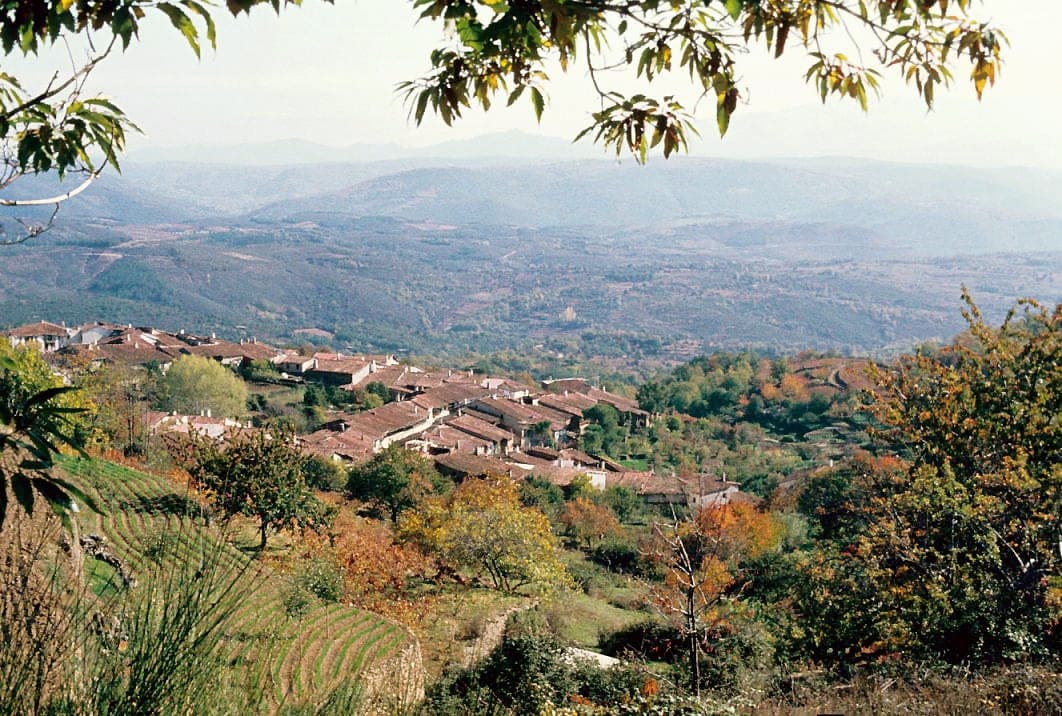
Villanueva del Conde
Mountain village in Salamanca with local wine traditions.
Wine TastingHiking