Queijo de Évora
A hard, sharp sheep's cheese from Évora
- Vegetarian
- Local name
- Queijo de Évora
- Served with
- Bread
- Pairs with
- Alentejo red
What it is
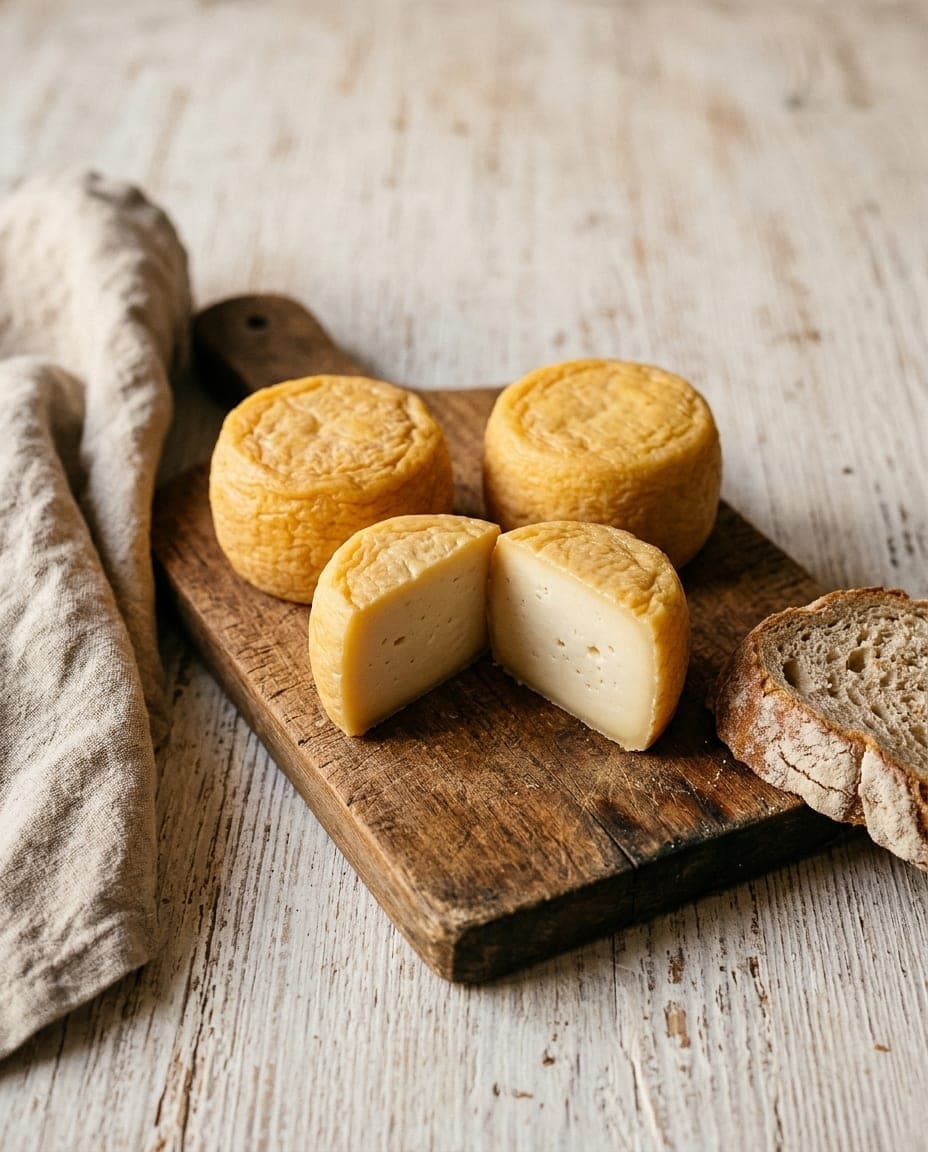
Queijo de Évora is a small, hard or semi-hard cheese of raw sheep's milk from the Alentejo region of southern Portugal. Protected Designation of Origin (PDO) since 1996, it comes from Évora and a group of surrounding municipalities. Unlike the softer, creamier cheeses common in the same region, this one is defined by its dryness and intensity. The semi-hard version is cured for about a month; the hard one is left for several months, which draws out moisture until the texture becomes firm and crumbly. When fully matured, it does not spread; instead, it breaks into thin, sharp shards or flakes that release a concentrated, salty flavour.
Traditionally the cheeses were kept submerged in olive oil in clay jars, which preserved them through the year; small cheeses in oil are still sold. It serves as a counterweight on the Alentejo table, where softer cheeses are common. While others offer a creamy mouthfeel, Queijo de Évora delivers salt, acid and a distinctively dry finish that cuts through the fat of local meats and breads.
The making of a hard cheese
The production of Queijo de Évora relies on raw milk from the sheep raised in the Alentejo, traditionally the Merino, and the local tradition of using thistle for coagulation. Like many cheeses from this part of Portugal, the curd is set with the dried flowers of the cardoon (Cynara cardunculus), which gives the cheese a slightly spicy, sharp edge. This method distinguishes it from cheeses made with animal rennet alone.
The difference lies in the curing. The cheese starts its life as a soft wheel, but over time it loses water weight. The longer it ages, the harder and more crumbly it becomes. Beyond the minimum curing times, the exact length depends on the producer, the cellar temperature and the humidity. A young Queijo de Évora may be slightly pliable, while an aged wheel will break cleanly when pressed. The result is a cheese that feels substantial in the hand but dissolves quickly on the tongue into a salty, savoury powder.
How to eat it
This cheese is rarely eaten alone as a light snack. It demands a partner. The traditional way to serve Queijo de Évora is with thick slices of local bread, the dense wheat sourdough of the Alentejo. The dry shards of cheese cling to the rough surface of the bread, creating a texture contrast that defines the experience.
It pairs naturally with the red wines of the region. The tannins and dark fruit notes of an Alentejo red wine complement the saltiness of the cheese without overpowering it. A glass of cold beer can also work if the wine feels too heavy for the occasion.
Curious facts
- Thistle curd. The use of cardoon flowers for coagulation gives the cheese its characteristic slightly spicy sharpness, setting it apart from cheeses made with animal rennet.
- A dry finish. Unlike many soft cheeses that melt in the mouth, this one crumbles into shards when fully cured, offering a salty crunch rather than a creamy flow.
- Oil preservation. The cheeses were traditionally stored under olive oil in clay talhas, which kept them edible all year.
- Regional focus. The PDO status restricts production to Évora and the surrounding Alentejo municipalities, and requires raw sheep's milk and cardoon.
- A table balance. It is often served alongside softer cheeses to provide a sharp contrast of salt and texture on the same platter.
Where to try it
Évora and the countryside around it. Production is small and tied to local dairies; the cheese does reach supermarkets elsewhere in Portugal, but the choice is widest in the Alentejo.
Some of the small dairies on the plains sell it at the door, often in jars of olive oil that keep it from drying further. In the city it appears on a board in traditional restaurants with chouriço, olives and bread, usually at the start of a meal and usually before anyone has ordered it.
Where to try it
1 destination
 Wine Tasting
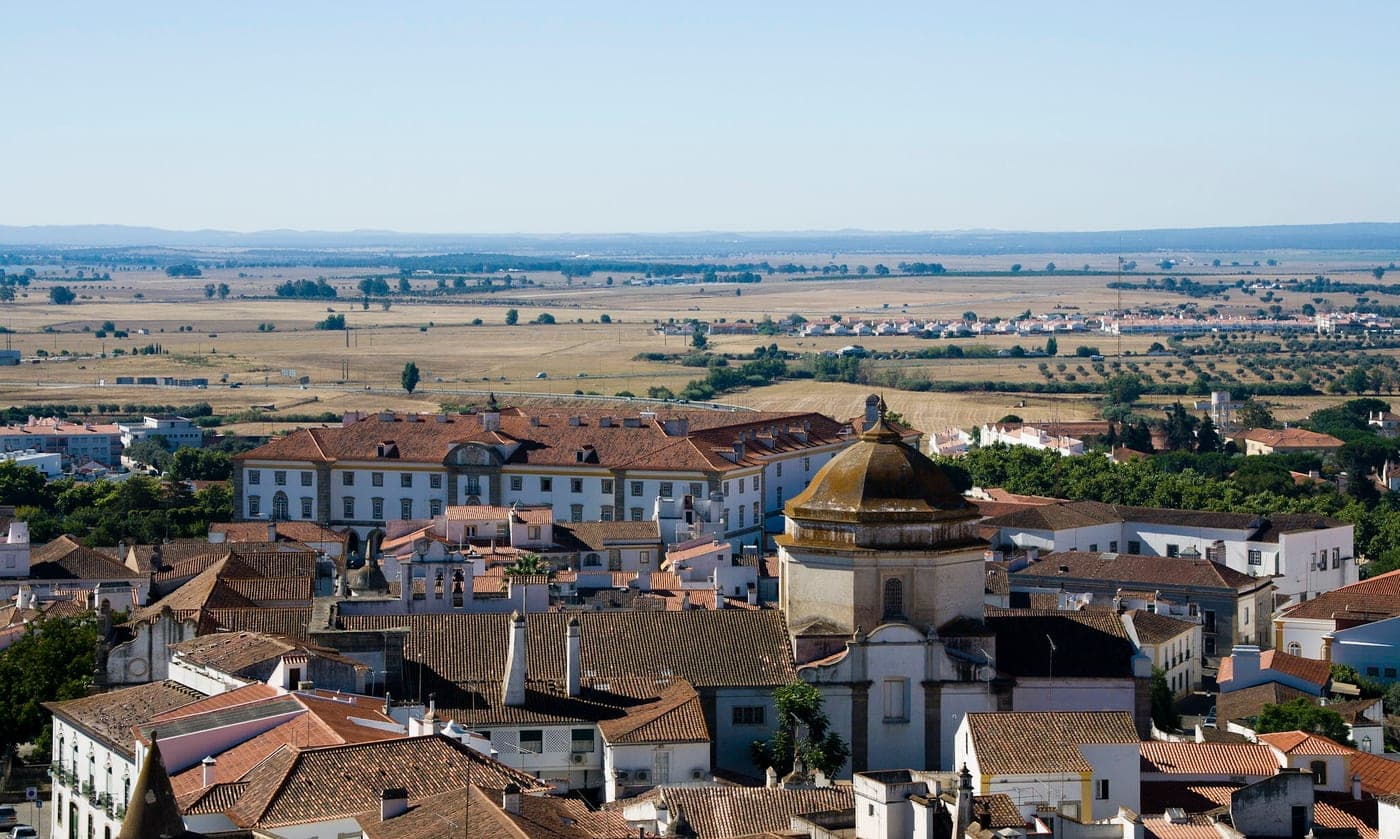
Évora
UNESCO World Heritage city in Alentejo wine region with Roman heritage.
Wine Tasting