Ginjinha
Sour-cherry liqueur drunk standing at a counter
- Alcoholic
- Local name
- Ginjinha
- Served
- In a tiny cup, with or without cherry
- Best eaten at
- A Rossio ginjinha bar
- Pairs with
- Chocolate cups (Óbidos)
What it is
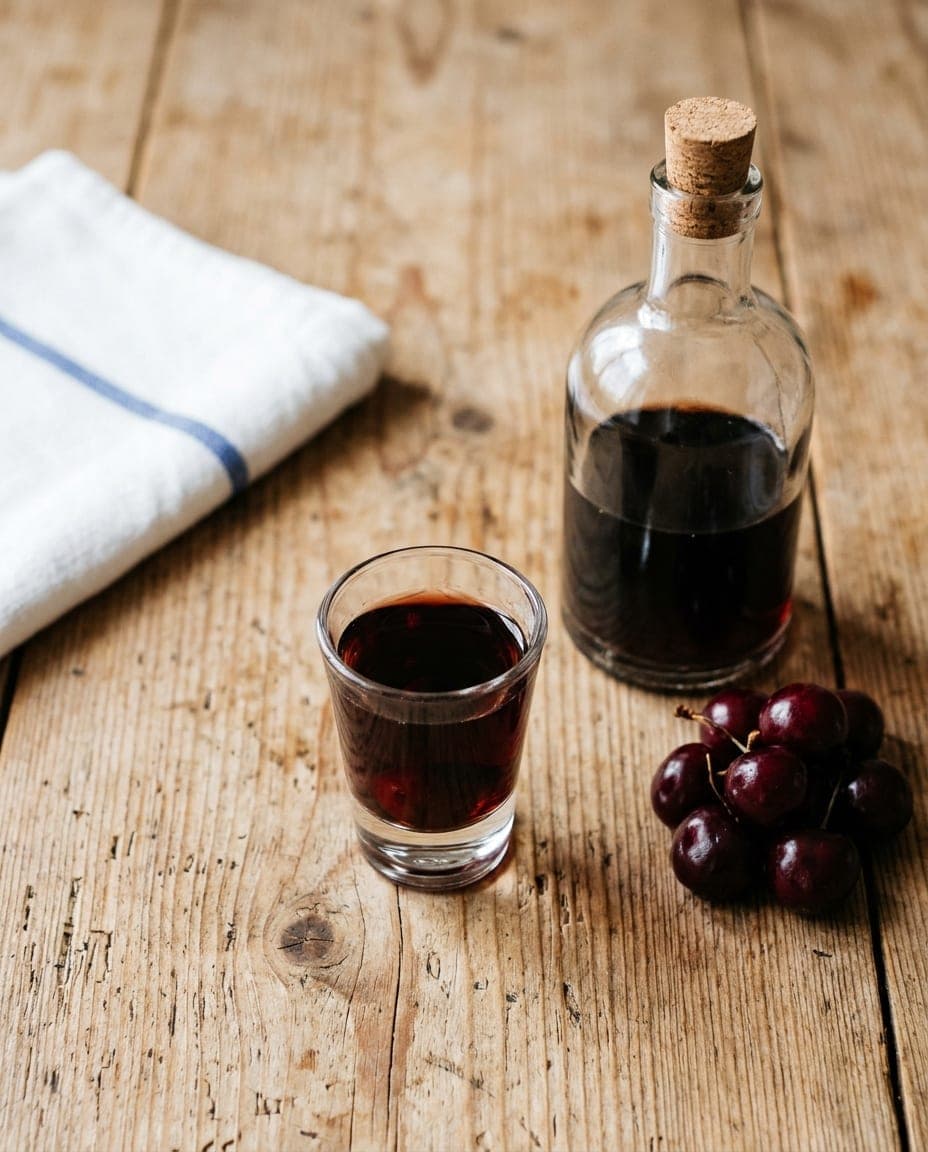
Ginjinha, often written as ginja, is a sour-cherry liqueur that forms a small but essential part of Lisbon's drinking culture. The drink is made by macerating sour cherries, known locally as ginjas, in aguardente, a strong grape spirit, with sugar and a stick of cinnamon for several months. The result is a dark ruby liquid, sharp and sweet at once.
In Lisbon the ritual is fixed. Nobody sits down: the drink is taken standing at a narrow counter, in a small glass filled to the brim, and finished in one or two mouthfuls. The cherries are either already in the cup or go in with the pour.
The trade is concentrated in a few specific neighbourhoods, particularly around the Praça do Rossio and the Largo de São Domingos. Here, small bars serve the drink from behind wooden counters that have stood for decades.
The history of the sour cherry trade
The Lisbon trade goes back at least to 1840, when a Galician named Espinheira opened a counter on the Largo de São Domingos; legend credits the recipe itself to a friar. Macerating sour cherries in aguardente was also a household custom, a way to preserve the harvest. Over time, this domestic custom evolved into a commercial trade, with specific families and shops refining their methods to create a consistent product.
The drink became a fixture of Lisbon's social life during the late 1800s and early 1900s. It was popular in the working-class districts as well as among the middle class, serving as an affordable treat that offered a moment of sweetness in a day often filled with hard labour. The specific location of the Rossio district became central to the trade, perhaps because of its position as a hub for travellers and locals alike.
Whatever the truth of the friar story, there is no documented inventor to attach to the drink. The tradition grew organically from the availability of wild cherries and the desire to preserve them in spirit. By the early 20th century, the small bars that still serve ginjinha today had already established their routines, serving the drink in the tiny cups that define the experience.
How it is ordered and served
The order is one word and one decision: ginja, then com elas or sem elas — with them or without. The "them" is the cherries. Com elas puts a steeped cherry in the bottom of the glass, to be eaten after the drink; sem elas leaves them in the jar.
The serving vessel is part of the ritual. In Lisbon, the drink comes in a small glass cup, often with a slightly flared rim. The cup is designed to be held in one hand while standing at the bar. The size ensures that the drink is consumed quickly.
The bars that serve ginjinha are typically small neighbourhood taverns, or tascas, with wooden counters worn smooth by years of use. There is no menu to consult; the only question is the one about the cherry. The staff will pour the drink with a steady hand, filling the cup to the brim without spilling a drop. It is a gesture that signals familiarity and trust between the server and the customer.
The Óbidos variation
North of Lisbon, in the walled town of Óbidos, the tradition takes a different form. Here, ginjinha is served in a small cup made entirely of dark chocolate. This practice is not an ancient custom but a relatively recent invention that has become the town's signature. The chocolate cup is filled with the liqueur and eaten afterwards, turning the vessel into a dessert as well as a drinking glass.
The Óbidos version is often associated with the town's medieval walls and its reputation for sweet treats. The liquid is the same — sour cherries steeped in aguardente — and the vessel changes everything about how it is drunk. The chocolate adds a layer of bitterness that balances the sweetness of the liqueur, creating a taste that feels more complex than the standard glass version.
This variation has spread beyond Óbidos in recent years, appearing in other towns and even in Lisbon itself as a novelty. However, the original Óbidos cup remains the most authentic example of the concept. It is a sign of the town's ability to adapt a traditional drink into something new while keeping the core spirit intact.
Curious facts
- The cherry is sour. Ginja is the Morello-type sour cherry, small and dark, grown in the orchards of the Oeste north of Lisbon around Óbidos and Alcobaça. It is nothing like a dessert cherry and the liqueur depends on that.
- A protected cherry. Since 2016 "Ginja de Óbidos e Alcobaça" has been an EU Protected Geographical Indication for the fruit grown in that area.
- Filled to the brim. The pour goes right to the rim of the glass, which is why the first movement is always to bend to it rather than lift it.
- The chocolate cup is new. The practice of serving ginjinha in a chocolate cup dates back only a few decades, making it a modern twist on an old recipe rather than a historical custom.
- A local trade secret. Recipes are guarded, and producers vary the ratio of cherries to spirit and the length of maceration, so the taste changes from one counter to the next.
Where to try it
A small bar around the Rossio or the Largo de São Domingos in Lisbon, where the counters are worn and the drink has been poured across them for generations. The transaction takes a minute: the order, the pour, the cherry, the glass back on the counter.
For the chocolate cup, Óbidos, an hour north: the shops inside the walls sell it on every street, and the cherries come from orchards a few miles away.
It is poured all year. In Lisbon it is a pause between other things rather than an occasion of its own.
Where to try it
1 destination
 Camper Van Rentals
Lisbon
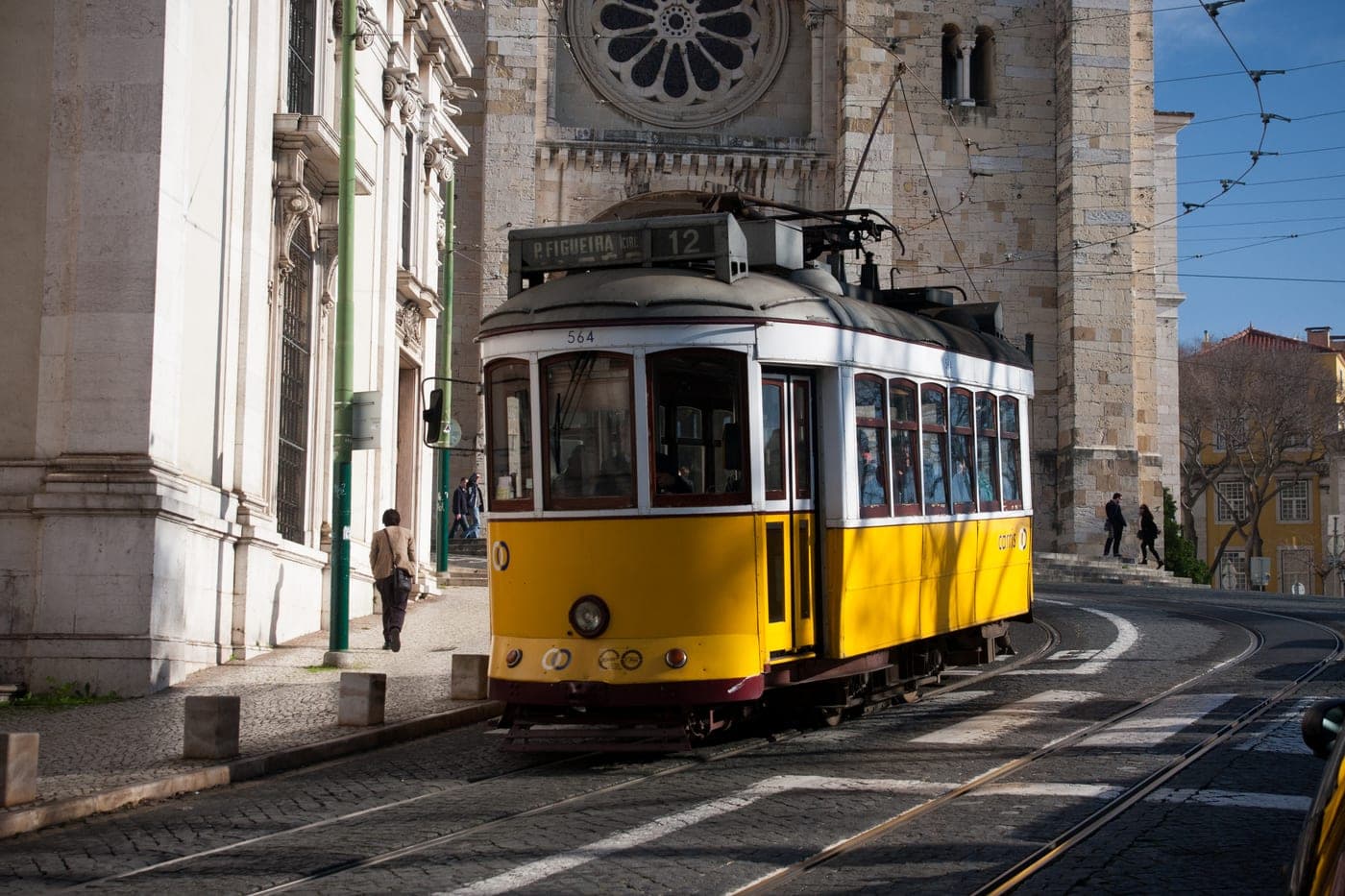
Hilly capital with historic trams, fado music, and Tagus River views.
Camper Van RentalsHiking
1 region
 Wine Tasting3 destinations
Lisbon
Lisbon, Portugal's capital, is a vibrant city known for its rich maritime history and unique architectural styles, including Manueline and Pombaline. It is situated on the edge of the Atlantic Ocean, making it the only capital city in Western Europe with a coastline. The Alfama district, with its narrow winding streets, offers a glimpse into the city's Moorish past, while the Belém area is home to the iconic Jerónimos Monastery. Off the beaten path, the neighborhood of Graça provides stunning viewpoints and local eateries. The region also hosts local festivals, like Festas de Lisboa, celebrating culture and tradition throughout June. Lisbon's proximity to the Sintra mountains allows for scenic hikes and exploration of palaces, making it a multi-faceted destination for those looking to explore at a leisurely pace.
Wine TastingHikingCamper Van RentalsBoat Rentals