Francesinha
Meat, melted cheese and a hot beer sauce
- Local name
- Francesinha
- Served with
- Fries, fried egg
- Best eaten at
- A Porto snack-bar
- Pairs with
- Cold beer
What it is
The Francesinha is one of the most substantial sandwiches in Portugal, and it belongs firmly to the city of Porto. It is not a light lunch or a quick snack for a passer-by; it is a heavy, complex dish that demands attention and often more than one person to finish it. The name translates literally as "little French girl", a reference to its origins, but the reality inside the bread is far from delicate.
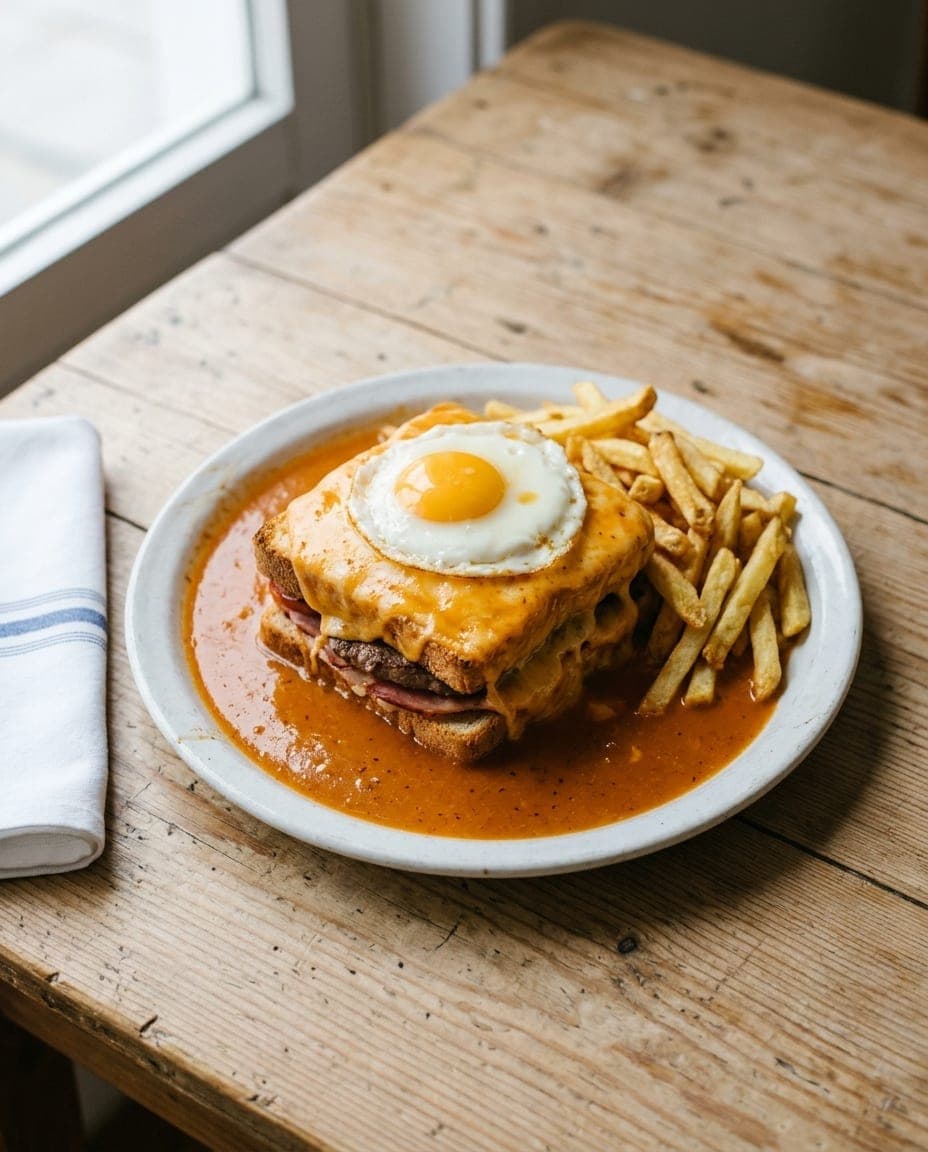
The structure begins with thick slices of white bread, layered with cooked ham, linguiça and fresh sausage, and usually a thin steak. The stack is closed with more bread and covered with sliced cheese, which melts into a skin under the heat of the oven and the sauce. The final touch is a flood of hot sauce made from beer, tomatoes and chilli, which soaks through the layers. A fried egg often sits on top, and the whole assembly is usually surrounded by a pile of thick-cut chips to soak up the excess sauce.
It is a dish born of appetite and adaptation, built to fill a hungry stomach. The result is a salty, spicy experience where the textures clash and merge: the crisp bread, the soft meat, the runny yolk, and the liquid sauce. It is the kind of meal that ends an afternoon rather than interrupting one.
The legend of the emigrant cook
The story of the Francesinha's creation is tied to a man named Daniel David Silva, who had worked in France and Belgium before joining a restaurant on Rua do Bonjardim in Porto, where he is said to have introduced the sandwich in 1953. Abroad he had encountered the croque-monsieur, a grilled sandwich of ham and cheese, and in Porto he set out to make something more filling for local tastes.
Silva adapted the French idea to suit Portuguese tastes and the ingredients available in the north. He added layers of cured ham and fresh sausages, which were staples in the region, and introduced a sauce that went beyond a simple tomato base. His exact sauce recipe is not on record, but the concept remained: a sandwich that was not just eaten, but experienced through its heavy, layered construction.
The name "Francesinha" was given because of these French connections. Some accounts say Silva, a noted admirer of women, named it after the French women he had met, while others say it was simply a nod to the emigrant cook's time abroad. The story is widely accepted in Porto, and the city claims the dish as its own, even though variations exist in other parts of the country.
How Porto made it its own
Through the 1960s and 1970s it spread across the city's bars and taverns. It became a staple for late-night meals, often eaten after a long day at work or during the city's nightlife. The dish was not initially served in fancy restaurants; it appeared in small, unpretentious eateries where the focus was on quantity and flavour rather than presentation.
Over the decades, the Francesinha became a symbol of Porto's working-class roots. It is a dish that does not shy away from excess, reflecting the city's reputation for hearty food and generous portions. The sauce, in particular, has become a point of pride for local cooks. Every establishment guards its version, often keeping the recipe secret and arguing over which one is the best. This rivalry has kept the dish fresh and varied, with each bar offering its own interpretation of the perfect balance between beer, tomato and chilli.
What goes into it
The components of a Francesinha are specific and consistent, though the proportions vary from place to place. The foundation is always thick slices of white bread, which provide a sturdy base for the heavy fillings. Inside are layers of cooked ham (fiambre), linguiça and a fresh sausage (salsicha fresca); a thin steak goes in too, and some houses add smoked sausage on top of that.
Over the top goes cheese — flamengo, the mild Portuguese melting cheese, or sliced processed cheese — which covers the whole sandwich and colours under the heat. The sauce is the defining element, made from a base of beer, tomatoes and piri-piri chilli. The beer adds a subtle bitterness and depth, while the tomato provides acidity and the chilli brings heat. Some versions include onions, garlic or a dash of Port, and recipes differ widely; beer is the one constant.
In the especial version a fried egg is placed on top, its yolk running into the sauce when cut. The dish is served with a side of thick-cut chips, which are used to mop up the remaining sauce. The combination of meat, cheese, sauce and egg creates a complex taste that is salty, spicy, rich and satisfying.
How to eat it
The Francesinha is usually served as a main course, often at lunch or late in the evening when the city is busy. It arrives in a large bowl or plate, with the sandwich sitting in the centre, surrounded by the sauce and chips. If ordered especial, a fried egg rests on top, ready to be broken into the mix.
The first cut goes down through the layers and lets the yolk into the sauce. The chips are not a side but a tool, used to finish whatever is left in the bottom of the dish. A cold beer goes with it.
It belongs in a snack-bar or a small tavern rather than a dining room, and it is eaten at speed.
Curious facts
- The name is French, but the soul is Portuguese. While the dish was inspired by the croque-monsieur, the addition of sausages, steak and the beer-based sauce makes it unique to Porto.
- The sauce is a secret. Every establishment guards its recipe for the beer-tomato-chilli sauce, leading to fierce local debates about which version is the best.
- A heavy meal. Half portions exist for a reason, and sharing one between two is common.
- A late-night favourite. It is traditionally eaten late in the evening, often after a night out or a long day of work, as a way to recharge.
- The egg makes it especial. A fried egg on top turns it into a francesinha especial; broken, the yolk adds a creamy texture to the sauce.
Where to try it
Porto, where it was invented and where the argument about who makes the best one has been running for seventy years. The snack-bars of the city centre and the streets around Boavista are where the trade is thickest, and most of them put the sauce at the centre of their reputation.
It is on menus across the country now, and in Lisbon it is treated as a Porto import. It is eaten all year, more in winter than in summer, and almost always after dark or at the end of a working lunch.
Where to try it
1 destination
 Boat Rentals
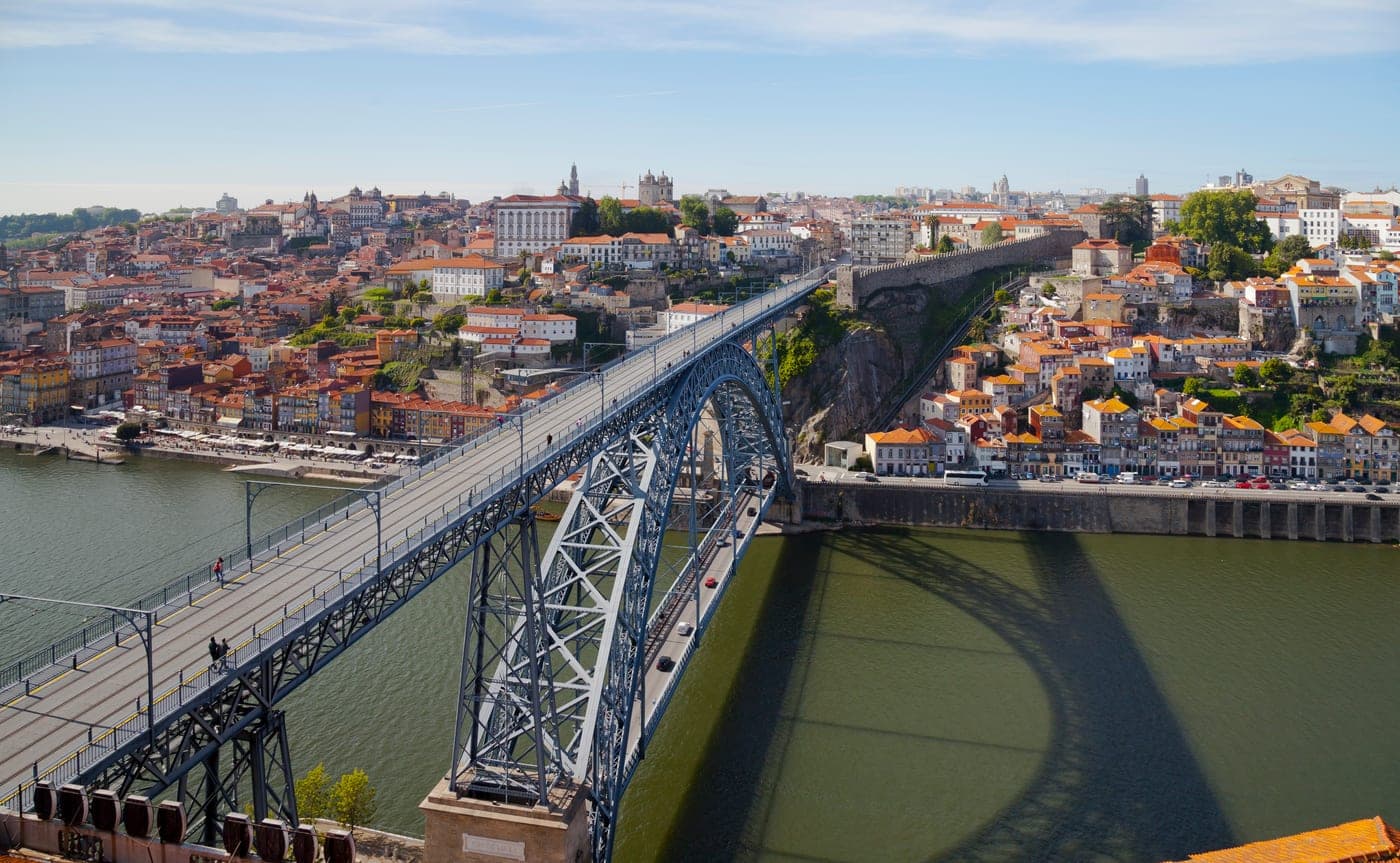
Porto
Historic riverside city famous for port wine cellars and azulejos.
Boat RentalsWine TastingCamper Van RentalsHiking
1 region
 Wine Tasting12 destinations
Norte
Norte is the largest region in Portugal, known for its diverse landscapes ranging from rugged mountains to a stunning coastline. Porto, the region's main city, is famous for its port wine and historic Ribeira district, while towns like Guimarães and Braga boast rich medieval history and architecture. The Douro Valley, a UNESCO World Heritage Site, offers breathtaking views and opportunities to explore terraced vineyards. Unique cultural festivals, such as the Festa de São João in Porto, showcase local traditions. The region is also noted for its traditional cuisine, including dishes like francesinha and regional cheeses. Nature lovers can hike in the Peneda-Gerês National Park, experiencing the region’s natural beauty away from the crowds.
Wine TastingHikingBoat RentalsCamper Van Rentals