Celestes de Santarém
Santarém's almond-and-yolk sweet baked on a wafer
- Vegetarian
- Local name
- Celestes de Santarém
- Served with
- Coffee
- Best eaten at
- A Santarém pastelaria
- Pairs with
- Moscatel or Port
What it is
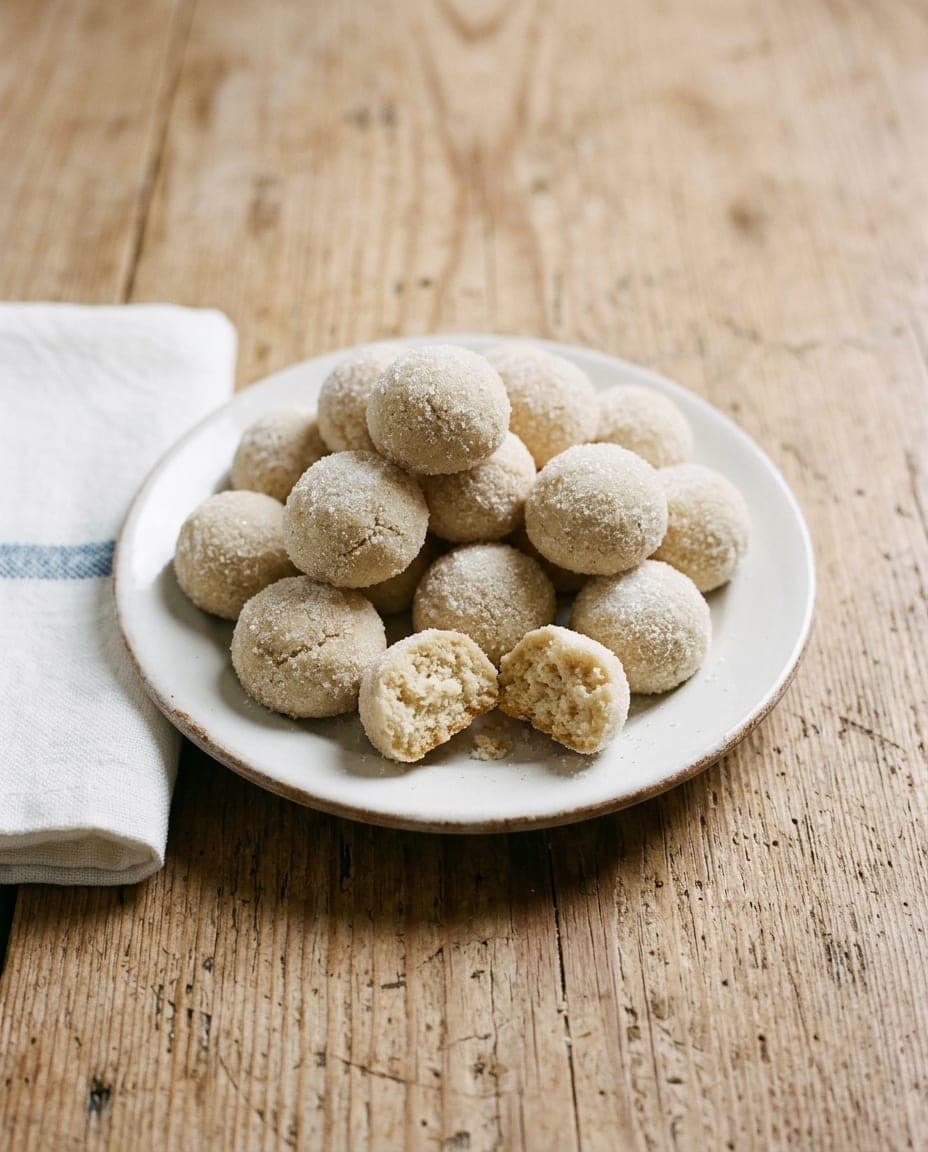
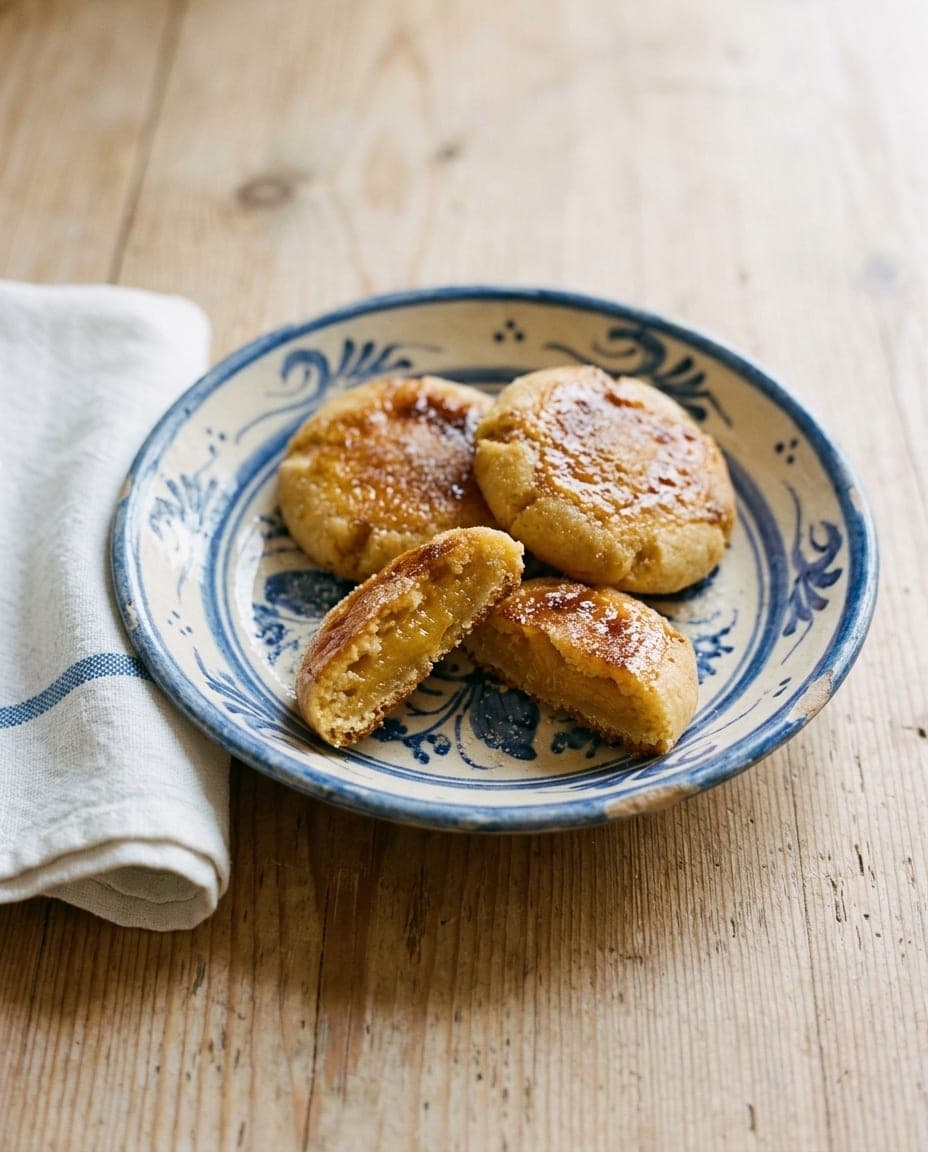
Celestes de Santarém are a small pastry of the Ribatejo region, specifically tied to the town of Santarém on the Tagus River. They are a type of convent sweet, known locally as doce conventual, made from a dense paste of ground almonds, egg yolks and sugar syrup, shaped into small balls, set on a thin wafer and baked briefly under a sugar glaze.
The texture is the defining feature. Unlike the airy sponge cakes found elsewhere, the celeste is heavy and moist, with a consistency closer to a firm marzipan or a sweet almond cake than to a light tart. The top is glossy from its sugar glaze, and the inside holds a deep golden hue from the yolks. They are sold in small, individual portions, each one sitting on a round of obreia, the thin edible wafer also used for communion hosts. The wafer is not just a support; it is part of the tradition, making the sweet easy to handle while eating on the go.
These pastries do not appear on menus across all of Portugal. They are a local speciality, found in Santarém and the surrounding Ribatejo countryside, but rarely elsewhere. While many Portuguese towns have their own version of almond and egg-yolk sweets, the celeste has a specific identity linked to the history of religious houses in this part of the valley.
The convent origin story
The history of these sweets is rooted in a practical reality that shaped Portuguese confectionery for centuries. Convents across Portugal were large households with strict dietary rules and labour-intensive tasks. Nuns used egg whites in large quantities to clarify wine or to starch the heavy habits worn by the order, leaving buckets of yolks as surplus. Rather than waste this resource, the nuns turned to sugar and almonds to create rich, sweet treats.
Santarém held several religious houses before the orders were dissolved in the 19th century, and the celeste is credited to the Poor Clares of its Convento de Santa Clara. The recipe was long kept inside the convent, and the sweets were sold in town through a local grocer before the recipe passed to the pastry shops. It does not have a single named inventor or a specific founding date attached to it. Like many doces conventuais, it evolved over time as a way to use up ingredients and feed the community.
The sweet is often described as simple in its ingredients but complex in its execution. The nuns had to master the balance of sugar, almonds and yolks to create a paste that would hold together when baked without becoming dry or crumbly. This technique was passed down through generations of kitchen staff within the convents, preserving the method even after the religious houses were secularised.
What goes into it
The ingredients are few, but each one plays a specific role in the final result. Most traditional recipes use no flour, which distinguishes it from many other pastries. The core components are:
- Ground almonds, which provide the base structure and the nutty flavour.
- Egg yolks, used in large numbers to bind the paste and give it a rich colour.
- Sugar, boiled with water to a syrup before the almonds and yolks go in.
- Obreia, the thin wafer each sweet is baked on.
The mixture is cooked slowly until it reaches a point where it pulls away from the sides of the pan. Some recipes fold egg threads (fios de ovos) into the cooled paste. It is then rolled into balls about the size of a walnut, pressed onto rounds of wafer, glazed with sugar and baked only until the top takes on a slight gloss. The wafer stays attached, so the paste does not stick to the fingers when eaten later.
How to eat it
Celestes de Santarém are best enjoyed in a local pastelaria, a traditional pastry shop found in the town centre or near the old convents. They are typically served at room temperature, which allows the almond paste to soften slightly and release its full flavour. The wafer is eaten along with the sweet.
A cup of strong black coffee is the standard accompaniment. The bitterness of the coffee cuts through the sweetness of the almond paste, creating a balanced finish. A glass of Moscatel or of Port is the other accompaniment, as it is with most Portuguese convent sweets. These drinks are not essential but are common in traditional settings where the sweet is served as part of an afternoon treat.
The pastry is small enough to be eaten in one or two bites, making it suitable for a quick snack or a dessert after a meal. It is not usually cut into smaller pieces unless shared among a group. The wafer base makes it easy to hold, so it rarely leaves crumbs on clothes.
Curious facts
- Little or no flour. The structure comes from almonds and egg yolks, which is what makes the texture dense rather than cakey.
- The wafer is part of the recipe. The round of obreia is not just a base; it holds the soft paste together in the oven and in the hand.
- It stays in the Ribatejo. Almond-and-yolk sweets are made all over Portugal; this one has not travelled beyond Santarém and the country around it.
- Seasonal independence. These pastries are made year-round, as the ingredients—almonds, eggs and sugar—are available regardless of the season.
Where to try it
Santarém, in the pastry shops of the old town above the Tagus, where they sit in the case with the other convent sweets of the region and are sold by the piece.
Markets across the Ribatejo carry them, and the national agricultural fair held in the town every June brings its busiest days of the year. Outside the region they are hard to find, even in Lisbon, which is an hour down the river.
Where to try it
1 region
 Wine Tasting4 destinations
Ribatejo
Ribatejo, located in central Portugal, is characterized by its rich agricultural land and historic towns. It is known for its diverse landscapes, including the Tejo River, which flows through the region. Santarém, the region's largest city, is famous for its Gothic architecture and the annual Festa de São Martinho. The region is also notable for producing high-quality wines, particularly the robust reds from the Tagus Valley. Off the beaten path, towns like Almeirim and Cartaxo offer authentic local gastronomy, including the iconic sopa da pedra. Ribatejo is steeped in history, with archaeological sites such as the Roman ruins in Conímbriga showcasing its ancient past. Outdoor enthusiasts will find numerous hiking trails along the riverbanks, making it an ideal area for slow exploration.
Wine TastingHiking