Cabrito assado
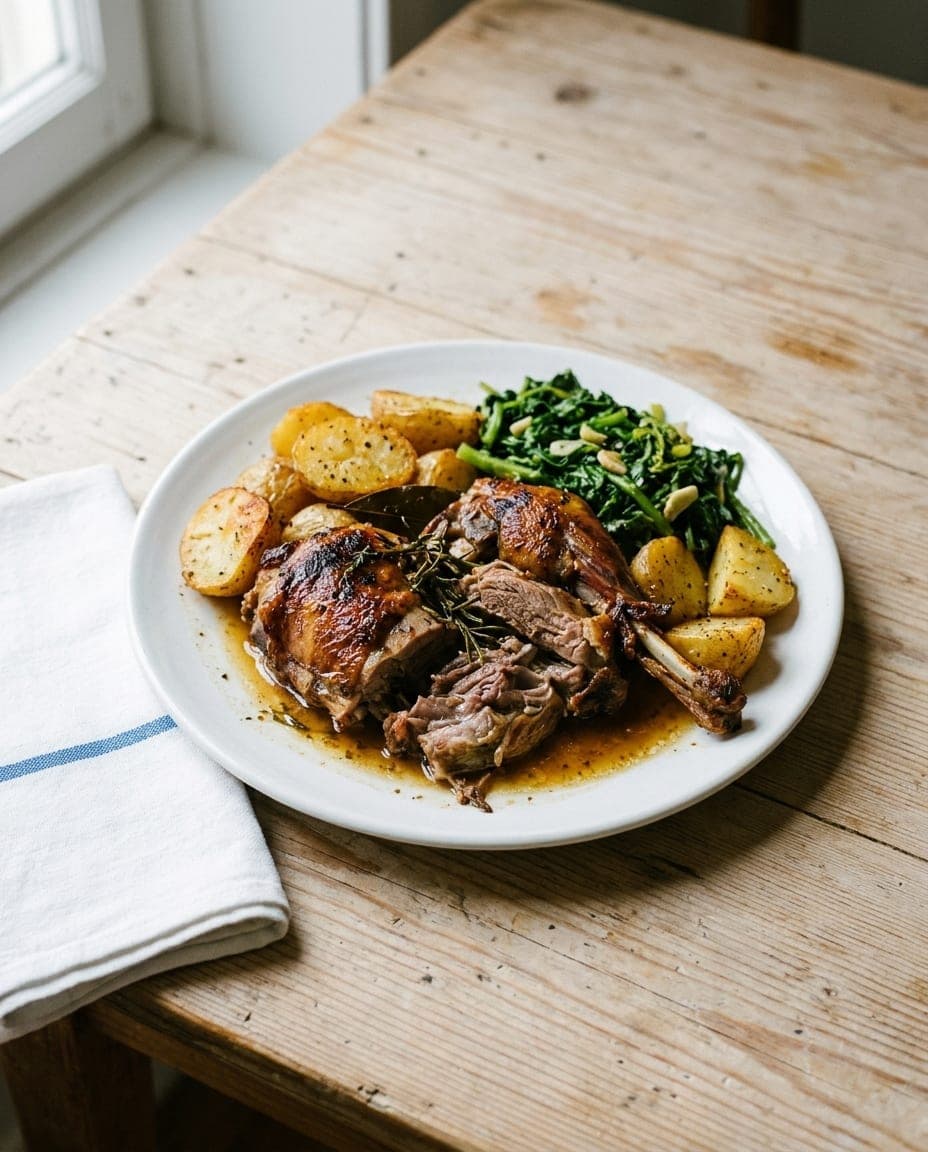
Roast kid goat with garlic, paprika, potatoes
- Local name
- Cabrito assado
- Served with
- Roast potatoes, greens
- Best eaten at
- A Douro village restaurant
- Pairs with
- Douro red
What it is
Cabrito assado is a dish defined by its simplicity and the quality of its single main ingredient: young goat meat, known as cabrito. In Portugal, this term refers to young kids, traditionally slaughtered while still largely milk-fed, which keeps the meat tender enough to roast without drying out. The dish is a staple of the mountainous north and interior, from the Minho and Trás-os-Montes to the Douro and the Beiras, where it has long served as the centrepiece of village celebrations and family gatherings.
The preparation relies on high heat and time rather than complex sauces or marinades. The kid, usually jointed into large pieces, is seasoned with garlic, bay leaf, paprika, lard or olive oil, and a splash of white wine before being placed in a wood-fired oven. As the meat cooks, its fat renders down, basting the flesh and dripping onto a bed of potatoes arranged beneath the roasting tray. The result is a deeply savoury meal where the goat's natural flavour is sharpened by the garlic and paprika, while the potatoes absorb the rich juices to become soft and golden. It is a dish that demands a full stomach, often served as a main course in substantial portions that can feed several people at once.
The mountain tradition
The roots of cabrito assado lie in the rugged terrain of northern Portugal, where the landscape dictates the food. In the Douro, Trás-os-Montes and the Beiras, the steep slopes are unsuitable for large-scale cattle farming but ideal for goats. These animals thrive on the sparse vegetation of the mountains, providing a reliable source of meat for rural communities. Historically, raising goats was a necessity for survival in these high-altitude areas, and the roasting of the young kids became a way to mark feast days and significant family events.
Today, the dish remains tied to the rhythm of the mountain villages. It is most commonly found on menus during the Easter season, when the arrival of spring and the birth of new lambs and kids make the meat particularly available. Beyond religious festivals, it appears at local festas, the annual celebrations of patron saints that bring entire communities together. In some villages the roasting still takes place in a communal oven, with neighbours sharing the meal once it is done.
Many mountain households still keep a few goats for their own occasions rather than for the market, which has helped the dish survive the general industrialisation of meat.
What goes into it
The ingredients are few, but each plays a specific role in creating the final taste. The primary element is the cabrito itself, selected for its young age and tender texture. The meat is typically seasoned with a generous amount of crushed garlic and sweet or smoked paprika, which provides a deep red colour and a warming aroma. Lard or high-quality olive oil is used to coat the skin, helping it to crisp up in the intense heat of the oven. A splash of white wine, often from the nearby vineyards, is added to the pan to deglaze the meat and create a light sauce.
Beneath the roasting tray, potatoes are arranged to catch the dripping fat. These become as important as the meat itself, absorbing the savoury juices until they are soft and rich. Some cooks also bake rice alongside, and in the Minho an arroz de miúdos made with the kid's offal is a common partner. The dish is usually served with a side of greens, such as sautéed turnip greens or couve, which offer a fresh, slightly bitter contrast to the fat of the roast.
How it is eaten
Cabrito assado is almost always served as a main course, typically for lunch or a late dinner. In a village restaurant it arrives in large pieces, often in the roasting dish itself, and is shared out at the table.
The potatoes are usually placed directly on the serving platter or in a separate bowl, ready to be dipped into the juices that have collected at the bottom of the roasting pan. The greens are served simply, perhaps with a drizzle of olive oil, to balance the heaviness of the roast. A Douro red is the traditional glass; the tannin is there to hold against the fat of the meat and the potatoes that cooked in it. The meal is slow and communal, often lasting well over an hour as conversation flows alongside the food.
Curious facts
- The definition of young. Cabrito is a young kid, traditionally still on milk, so that the meat does not toughen during roasting. Older goats are usually stewed or boiled rather than roasted.
- A mountain necessity. The dish thrives in areas like the Douro and Trás-os-Montes where the terrain is too steep for large livestock, making goats a practical choice for rural communities.
- Easter connection. While available year-round in many places, the roasting of the kid goat is traditionally linked to Easter celebrations in Portugal, marking the end of winter and the arrival of spring.
- Potato absorption. The potatoes placed under the roast are not merely a side dish; they act as a sponge for the rendered fat and wine juices, becoming the most savoury part of the meal for many diners.
- Protected heritage. Kid meat from several Portuguese regions holds EU protection: Cabrito Transmontano is a PDO, and Cabrito de Barroso, Cabrito da Beira, Cabrito da Gralheira, Cabrito das Terras Altas do Minho and Cabrito do Alentejo are PGIs. The protection covers the meat from those areas, not goat breeds as such.
Where to try it
The best place to eat cabrito assado is a village restaurant in the Douro Valley, around towns like Pinhão or Régua and in the villages above them. Kitchens there serve it most readily around Easter.
Further up into Trás-os-Montes the same dish appears under the same name and with better claim to the mountains. Supply is the constraint rather than the season: a kitchen roasts what it has been able to buy, and at Easter it is worth ordering ahead.
Where to try it
1 region
 Wine Tasting18 destinations
Douro
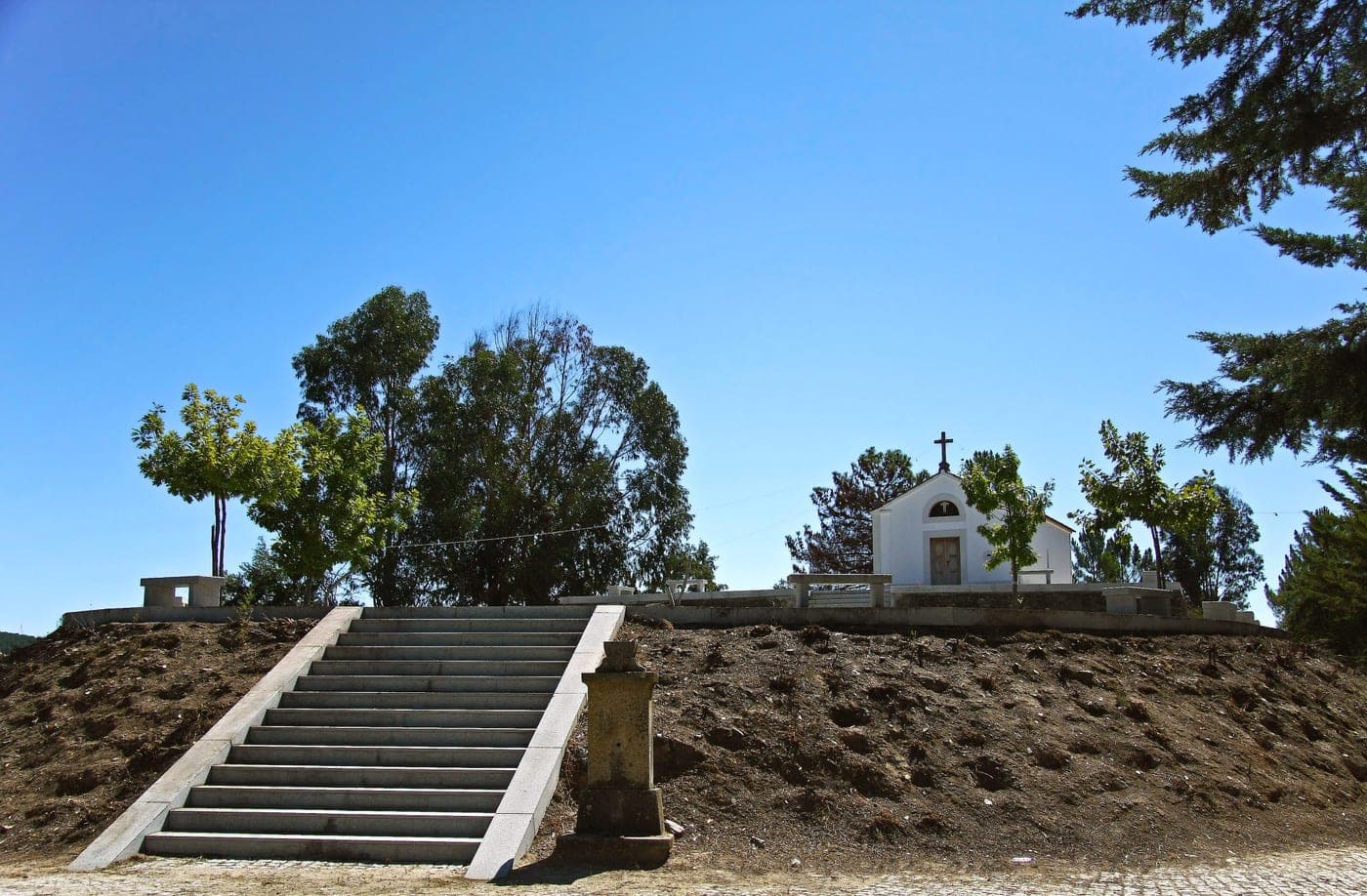
The Douro region, one of Portugal's oldest wine-producing areas, is famous for its terraced vineyards along the Douro River, a UNESCO World Heritage site. Its most notable cities include Peso da Régua, the heart of Port wine production, and Pinhão, known for its picturesque river views and traditional wine estates. The region's unique microclimate supports the growth of the indigenous grapes used for Port and Douro red wines. Off the beaten path, small villages like Lamego feature baroque architecture and ancient pilgrimage routes. Scenic boat trips and hikes reveal breathtaking landscapes, while local festivals celebrate wine and harvest traditions, providing an authentic glimpse into the region's rich culture.
Wine TastingHikingLocal Cuisine