Bacalhau à Brás
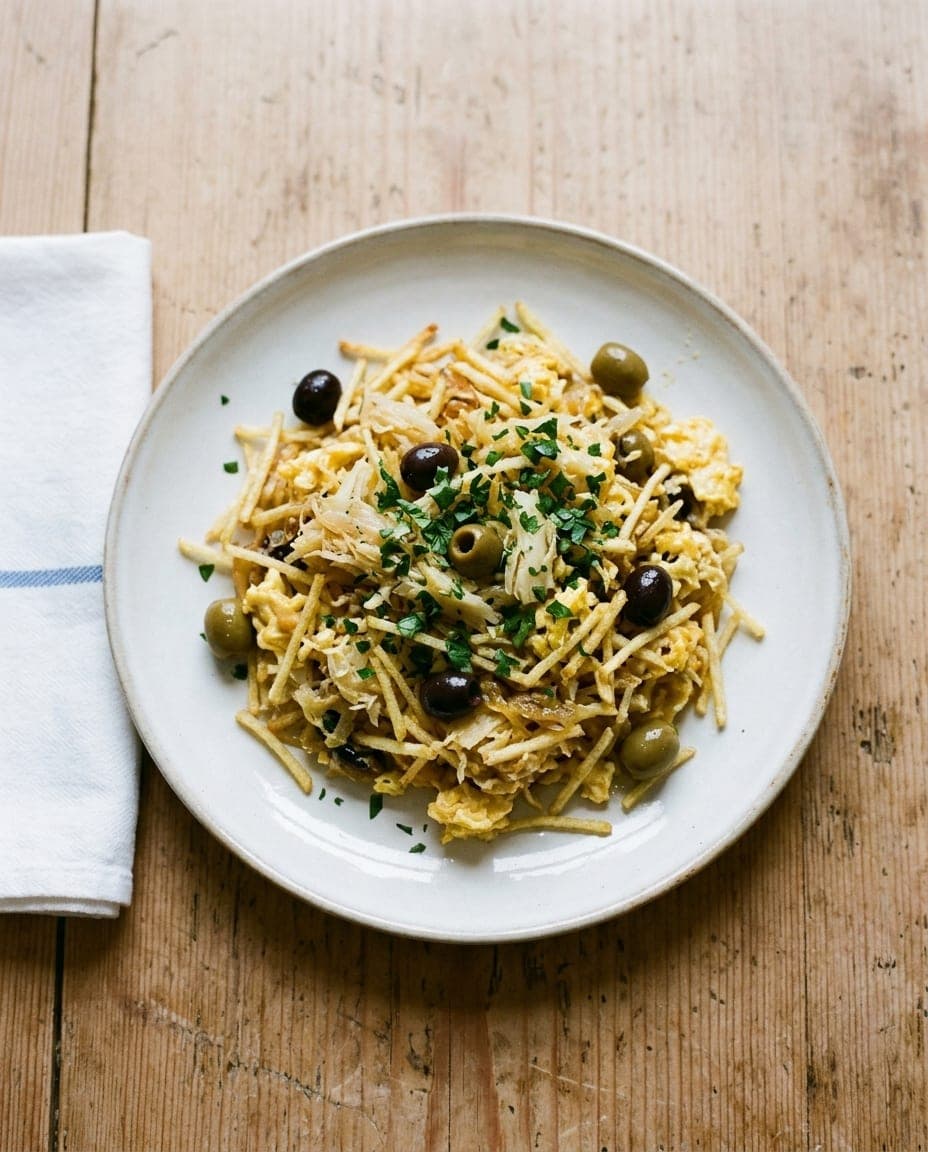
Shredded salt cod, potato straw and soft egg
- Local name
- Bacalhau à Brás
- Served with
- Black olives, parsley
- Best eaten at
- A Lisbon tasca
- Pairs with
- Vinho Verde
What it is
Bacalhau à Brás is one of the most reliable comfort foods in Portugal, a dish that appears on menus from the capital to the southern coast with remarkable consistency. It is a simple combination of shredded salt cod, matchstick potatoes known as batata palha, and beaten egg, all cooked together until the egg remains soft and creamy rather than set into an omelette. The texture is the defining feature: the potatoes should retain a slight crunch while the egg coats every strand in a pale yellow, creamy layer.
The dish is named after a specific tavern keeper in Lisbon, though the man himself belongs to the realm of local legend rather than historical record. It has become a staple of the city's tasca culture, a small neighbourhood tavern where the focus is on hearty food and quick service. While it originated in the capital, the dish has spread across the country as a standard offering in restaurants and family homes alike.
What distinguishes Bacalhau à Brás from other cod preparations is its texture and the way the ingredients interact. Unlike the flaky bacalhau cozido served with boiled potatoes or the rich stew of bacalhau com natas, this dish relies on the contrast between the soft, salty fish and the crisp, fried potato strands. The egg acts as a binder that holds the mixture together without drying it out, creating a dish that is substantial enough to be a main course but light enough for a quick lunch.
The legend of the tavern keeper Brás
The name à Brás refers to a man named Brás who ran a small tavern in the Bairro Alto district of Lisbon, usually placed in the second half of the 19th century. According to the story that circulates in kitchens and taverns, he was known for his ability to create a quick, filling meal from the few ingredients available when a hungry customer arrived late at night. The tale suggests that he combined leftover salt cod with fried potatoes and eggs, creating a dish that became so popular he began serving it as a speciality.
Nothing survives of the man but the name: no address, no date, no record of the tavern. Portuguese cooking does this often — a dish carries the name of a cook nobody can place — and Brás is the best-known case of it.
What goes into it
The ingredients are few, but each plays a specific role in the final texture and flavour. The salt cod is usually soaked and flaked by hand into thin shreds rather than chunks, ensuring that every bite contains a balance of fish and potato. The potatoes are cut into matchsticks and fried until golden, creating what is known as batata palha or straw potato. While some kitchens use pre-packaged crisps for convenience, traditional cooks prefer to fry their own strands to ensure the correct crunch.
Onions are softened gently in olive oil until they are sweet and translucent, providing a base that does not overpower the delicate egg. The beaten egg is poured over the mixture and stirred continuously as it cooks. The skill lies in stopping the process while the egg is still loose and creamy; if it sets completely, the dish becomes an omelette and loses its distinctive character.
The finished dish is typically garnished with black olives and chopped fresh parsley. These additions add a burst of colour and a salty or herbal note that cuts the fat of the egg and fish. The combination is straightforward, relying on the quality of the ingredients rather than complex techniques.
How to eat it
Bacalhau à Brás is usually served as a main course at lunch or dinner in a tasca, a small neighbourhood tavern. It arrives hot in a deep plate or shallow bowl, often with a side of bread for those who wish to mop up any remaining egg and oil. The dish is eaten with a fork, mixing the components together before taking each bite to ensure a balance of textures.
A glass of Vinho Verde is the usual drink beside it: the acidity works against the egg and the salt of the cod. A cold beer does the same job.
In a typical tasca, the dish is ordered as part of a quick meal, often accompanied by a simple salad or a slice of bread. It is not usually served as a starter, as it is substantial enough to stand alone.
Curious facts
- The egg must stay loose. If the egg sets fully, the dish becomes an omelette and loses its identity as Bacalhau à Brás.
- Potato texture is key. Traditional kitchens fry their own matchstick potatoes to ensure they remain crisp; pre-packaged crisps are a shortcut used in some places.
- A name without a date. The tavern keeper Brás is a legend, with no verified records of his life or the exact year the dish was created.
- Served across Portugal. While named after a Lisbon tavern, the dish is now a standard menu item in restaurants from the north to the south.
- Black olives and parsley. These are the traditional garnishes, adding salt and freshness to balance the rich egg and fish.
Where to try it
The best place to eat Bacalhau à Brás is in a Lisbon tasca, particularly in the Bairro Alto or Alfama districts where the tradition of quick, affordable food remains strong. Many small taverns in these areas have been serving the dish for decades.
It is on menus the length of the country, and a plate of it in Porto or Faro will be much the same as one in Lisbon. The variable worth watching is the potato: fried in the kitchen that morning, or poured from a bag.
Where to try it
1 destination
 Camper Van Rentals
Lisbon
Hilly capital with historic trams, fado music, and Tagus River views.
Camper Van RentalsHiking
1 region
 Wine Tasting3 destinations
Lisbon
Lisbon, Portugal's capital, is a vibrant city known for its rich maritime history and unique architectural styles, including Manueline and Pombaline. It is situated on the edge of the Atlantic Ocean, making it the only capital city in Western Europe with a coastline. The Alfama district, with its narrow winding streets, offers a glimpse into the city's Moorish past, while the Belém area is home to the iconic Jerónimos Monastery. Off the beaten path, the neighborhood of Graça provides stunning viewpoints and local eateries. The region also hosts local festivals, like Festas de Lisboa, celebrating culture and tradition throughout June. Lisbon's proximity to the Sintra mountains allows for scenic hikes and exploration of palaces, making it a multi-faceted destination for those looking to explore at a leisurely pace.
Wine TastingHikingCamper Van RentalsBoat Rentals