Wuzetka
A chocolate sponge named after a Warsaw road
- Vegetarian
- Local name
- Wuzetka
- Served with
- Coffee
- Best eaten at
- A Warsaw cukiernia
- Pairs with
- Coffee
What it is
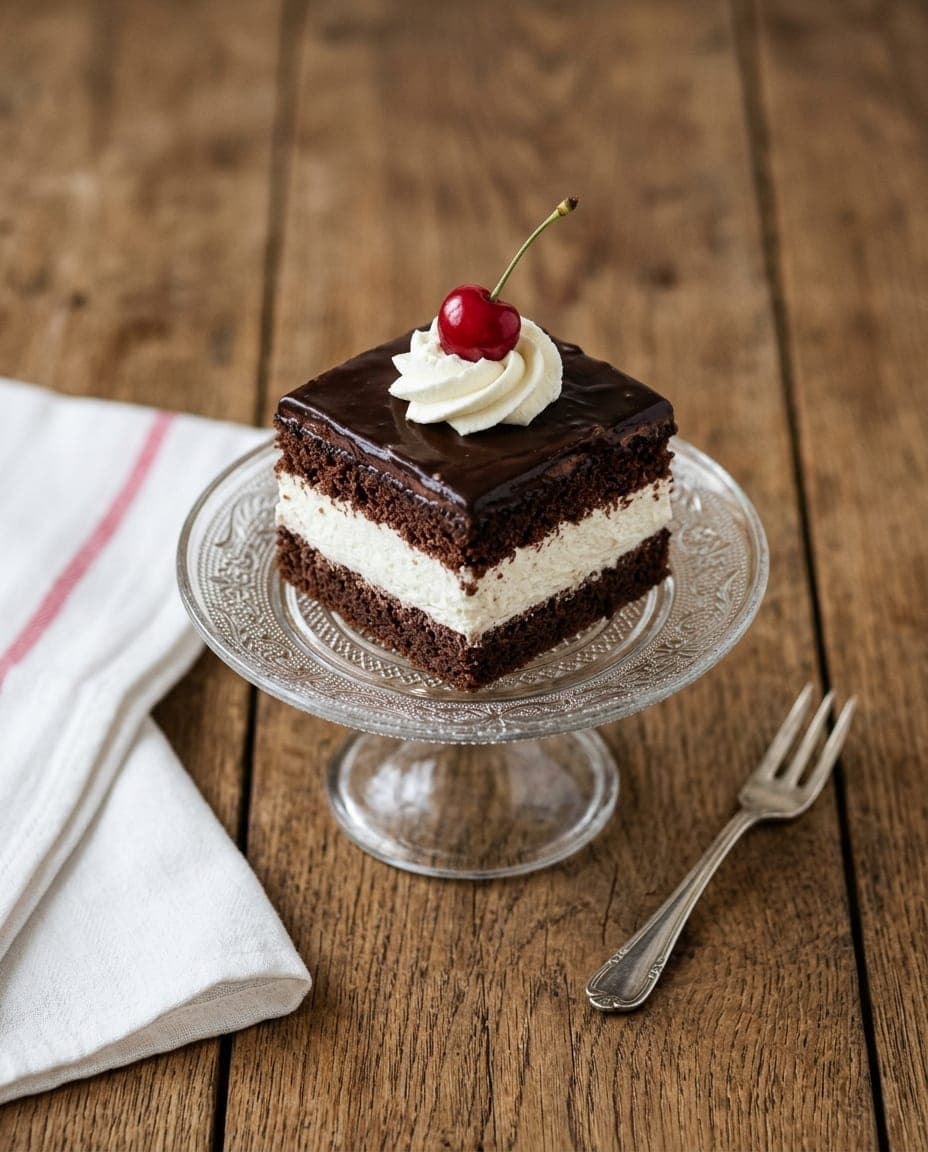
The wuzetka is a simple yet well-known sweet from Warsaw, consisting of two layers of chocolate sponge, lightly soaked and spread with a thin layer of jam, sandwiched around a thick filling of whipped cream. The top is coated in a smooth layer of chocolate icing and finished with a decorative rosette of the same cream. It is sold as a square, often cut from a larger tray, and is one of the most recognisable cakes in the Polish capital.
The cake belongs to the era after the Second World War, when Warsaw was being rebuilt from its ruins. It emerged alongside the reconstruction of the city's central thoroughfare, known as the W-Z route (Wschód-Zachód), which runs east to west through the centre. The name is widely understood to be a reference to this road, with the pronunciation "voo-zet" sounding like the letters W and Z. Other explanations exist, such as wypiek z czekoladą (a bake with chocolate) or the Warszawskie Zakłady Cukiernicze, but the link to the route remains the most common explanation found in local accounts.
Where it comes from
The wuzetka is a product of the city's cukiernie, the traditional Polish cake shops that became social hubs during the mid-20th century; it was most likely first sold in a new sweet shop in Muranów, beside the W-Z route. These establishments served as places for people to gather, meet friends, and enjoy a slice of cake with coffee. The cake was not a grand banquet dish but an everyday treat, affordable and accessible to many.
It is tied specifically to the Masovian region and the capital city of Warsaw. While similar sponge cakes exist elsewhere, the wuzetka carries the distinct identity of the city that rebuilt itself after the war. It is often remembered as a sweet bought by grandparents for their grandchildren, a taste associated with family outings and weekend visits to the city centre. The cake reflects the practical yet comforting nature of post-war Warsaw life, where a small indulgence was a significant pleasure.
How it is made
The structure of the wuzetka is straightforward but relies on specific textures. It begins with two thin layers of chocolate sponge, baked until they are light and airy rather than dense. Between these layers sits a generous amount of whipped cream, which is sweetened and usually set with a little gelatine. The top is then covered in a glossy chocolate glaze that hardens slightly to hold its shape.
A single rosette of cream crowns the cake, adding a final decorative touch that signals its readiness for serving. The sponge is usually moist enough to hold the cream without collapsing but firm enough to be cut cleanly into squares. This balance allows the wuzetka to remain stable in display cases while offering a soft bite when eaten.
How to eat it
The wuzetka is best enjoyed at a Warsaw cukiernia, where it is often displayed on trays behind glass or in open cases. It is shop food rather than restaurant food, bought by the square at the counter. The cake is traditionally served with a cup of strong black coffee, which cuts through the sweetness of the chocolate and cream.
The experience is casual and social. One might take the square to a nearby table or carry it home to share. The cream filling should be soft but not runny, and the sponge should yield easily under the bite. It is a cake meant for slow consumption, often paired with conversation rather than hurried meals. The combination of the rich chocolate glaze and the light cream creates a contrast that defines the taste.
Curious facts
- The name is a road. The W-Z route was a major reconstruction project opened on 22 July 1949, and the cake's name is widely linked to this thoroughfare rather than any specific person or event.
- A square shape. Unlike many layered cakes served as whole rounds, the wuzetka is cut into squares, making it easy to sell by the piece in a busy shop.
- Post-war origins. The cake appeared during the rebuilding of Warsaw, becoming a symbol of normalcy and sweetness after years of hardship.
- A local staple. While similar cakes exist in other regions, the wuzetka is distinctly associated with Warsaw and its cukiernia culture.
- The cream layer. The filling is typically whipped rather than cooked custard, giving it a light texture that contrasts with the moist chocolate sponge.
Where to try it
The best place to find an authentic wuzetka is in a traditional Warsaw cukiernia, particularly those in the city centre or near the W-Z route itself. Many of the city's older cake shops still make it to the classic recipe. A simple visit to such a place offers a direct taste of Warsaw's culinary history without the need for fancy reservations or menus.
Where to try it
1 destination
1 region
 Castles1 destination
Masovia
Masovia, the largest region in Poland, is known for its rich history and cultural heritage. Warsaw, the capital city, showcases a blend of modernity and tradition, particularly in the UNESCO-listed Old Town, reconstructed after WWII. The region features picturesque landscapes, including the Vistula River and numerous parks. Off the beaten path, towns like Płock, with its historic cathedral, and the idyllic Kampinos National Park offer a quiet retreat. Masovia also hosts various local festivals celebrating traditional music and cuisine, such as pierogi and żurek. The region's rural areas are dotted with charming villages that highlight local craftsmanship and agriculture, making it a rewarding area for deep exploration.
Castles