Smalahove
Salted, smoked sheep's head steamed in Voss before Christmas
- Local name
- Smalahove
- Served with
- Potatoes, swede mash
- Best eaten at
- A farm restaurant around Voss
- Pairs with
- Aquavit and beer
What it is
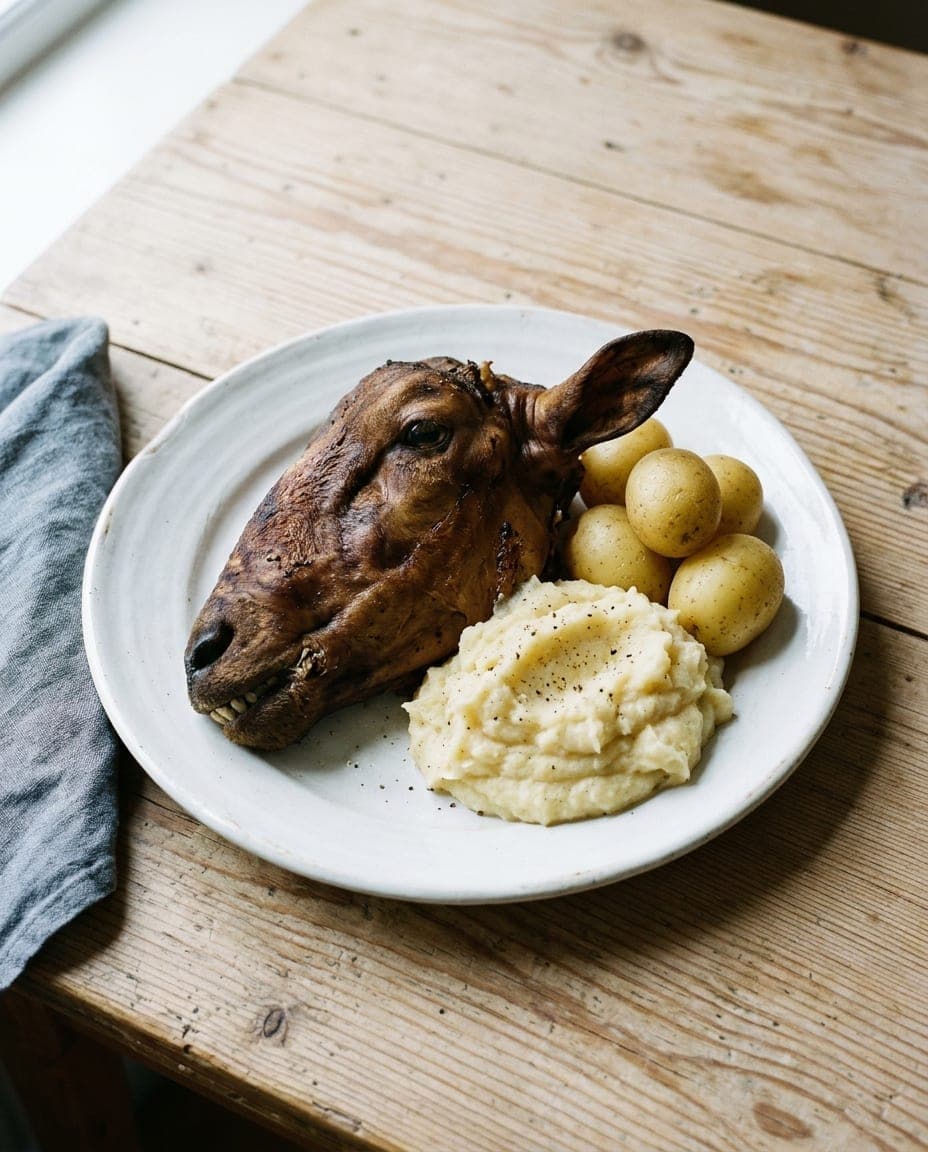
Smalahove is a sheep's head — today always a lamb's — prepared by singeing off the wool, splitting the skull and removing the brain, then salting, smoking and drying it before steaming or boiling it for around three hours until the meat comes away from the bone. It is a dish of stark simplicity and deep history, rooted in the Voss valley and surrounding areas of Vestland in western Norway. The season runs from late October through December, culminating just before Christmas.
To call it merely a "dish" feels insufficient; it is a ritual of the winter months. The preparation involves curing the head with salt and smoke, which preserves it through the cold season and intensifies its flavour. When ready to cook, the head is steamed or boiled rather than roasted or fried, a method that renders the cheek meat tender and gelatinous while keeping the skin firm.
The eating of smalahove is a communal affair, traditionally in the weeks leading up to Christmas. The presentation is unadorned: a portion is usually half a head, with the eye and ear still in place. Diners are expected to pick at the meat directly from the skull. There is a customary order: the ear and the eye come first, because they are the fattiest parts and best eaten warm, and the diner then works from the front of the head to the back.
The history of winter preservation
The origins of smalahove lie in the practical necessities of life in rural Norway before modern refrigeration. In the high mountains and deep valleys of Vestland, sheep were the primary source of meat for many families. When the animals were slaughtered in autumn, the head was often considered a by-product that should not go to waste. Instead of discarding it, farmers found a way to preserve it using salt, which was abundant and effective against spoilage during the long winter.
This practice was not unique to Voss but was particularly strong in this region where sheep farming has been central for centuries. The salting process allowed the meat to be stored safely until the coldest months arrived. Over time, the ritual of eating the head became tied to the pre-Christmas period, and in Voss the last Sunday before Christmas, skoltesøndag, was traditionally when the last heads had to be eaten.
The tradition is deeply local. While other parts of Norway may have their own ways of using sheep offal, smalahove remains the signature dish of Voss. It is a regional speciality that people travel specifically to experience, rather than a staple found on every menu across the country. The connection between the dish and the landscape is clear: it was born from the need to feed families in a place where food could be scarce for months at a time.
How it is prepared and served
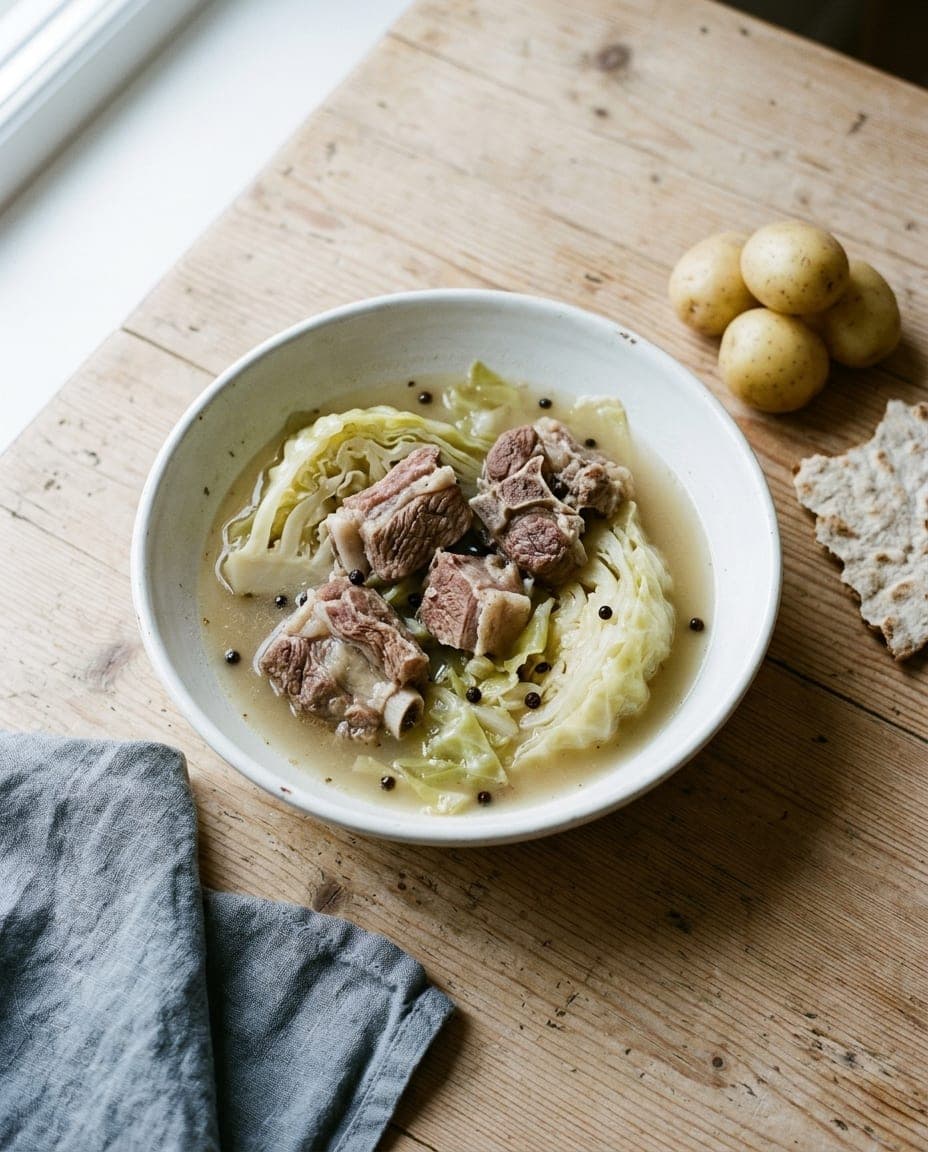
The preparation of smalahove begins with the selection of a sheep's head, which is then thoroughly singed over an open flame or hot coals to remove any remaining wool and clean the skin. The skull is split in half and the brain removed, though the eyes are left in place for the final presentation. The head is salted, smoked and dried, then steamed or boiled for about three hours until the meat is soft enough to be pulled away with a fork or knife.
In the past, families would prepare this dish at home, using large pots over open fires. Today, food-safety rules have changed how smalahove is made. Since 1998, rules adopted from the EU because of the sheep disease scrapie have barred heads from adult sheep, so smalahove may now be made only from lambs. Commercial smalahove is prepared by approved producers who can meet these standards.
The half-head is served with the jaw still attached. It is eaten off the bone, with the fingers or a small knife; the jaw is often called the tenderest part. The traditional accompaniments are simple: boiled potatoes and kålrabistappe, a mash of swede. A glass of aquavit or a local beer is the standard drink pairing, helping to cut the fat of the salted meat.
The order of the eye and the ear
The most distinctive aspect of eating smalahove is the order in which the head is consumed. Custom says to begin with the ear and the eye, the fattiest parts, which are best while still warm, and then to work from the front of the head towards the back.
The eye is the part most first-timers hesitate over because of its texture; the usual advice is to remove the pupil first. The ear can be tough and cartilaginous, so the gristle is cut away. A well-eaten head leaves little but bone on the plate.
This ritual serves as a bridge between the past and the present. It reminds diners of the harsh realities of life in the mountains while celebrating the resilience of the community. For many visitors, eating the eye is the memorable moment, one that connects them to the history of Voss and the people who have sustained it for centuries.
Curious facts
- Eye and ear first. The ear and the eye are traditionally eaten first, because they are the fattiest parts and best eaten warm.
- Salted and smoked. The head is salted, smoked and dried before cooking, a process that preserves it and concentrates its flavour for the winter season.
- Steamed, not roasted. Unlike many other meats, smalahove is steamed or boiled for about three hours to soften the cheek meat.
- Lamb only. Since 1998, scrapie rules have banned smalahove from adult sheep, so only lamb heads may be used.
- Regional only. Smalahove is a speciality of Voss and the surrounding valleys in Vestland, not a nationwide dish found across all of Norway.
Where to try it
The best place to experience smalahove is at a farm restaurant in the Voss valley or the wider Vestland region during the pre-Christmas season. These establishments are often family-run and have maintained the tradition for decades. They serve the dish by the half-head, accompanied by boiled potatoes and swede mash, alongside a glass of aquavit or beer.
Travellers seeking this experience should plan their visit between October and December, when the dish is at its peak. Many farm restaurants offer the smalahove as part of a larger Christmas meal or as a special winter menu item.
For those who wish to understand the full context of the dish, a visit to a local farm during the autumn months can provide insight into the sheep farming that underpins the tradition.
Where to try it
1 region
 Boat Rentals1 destination
Vestland
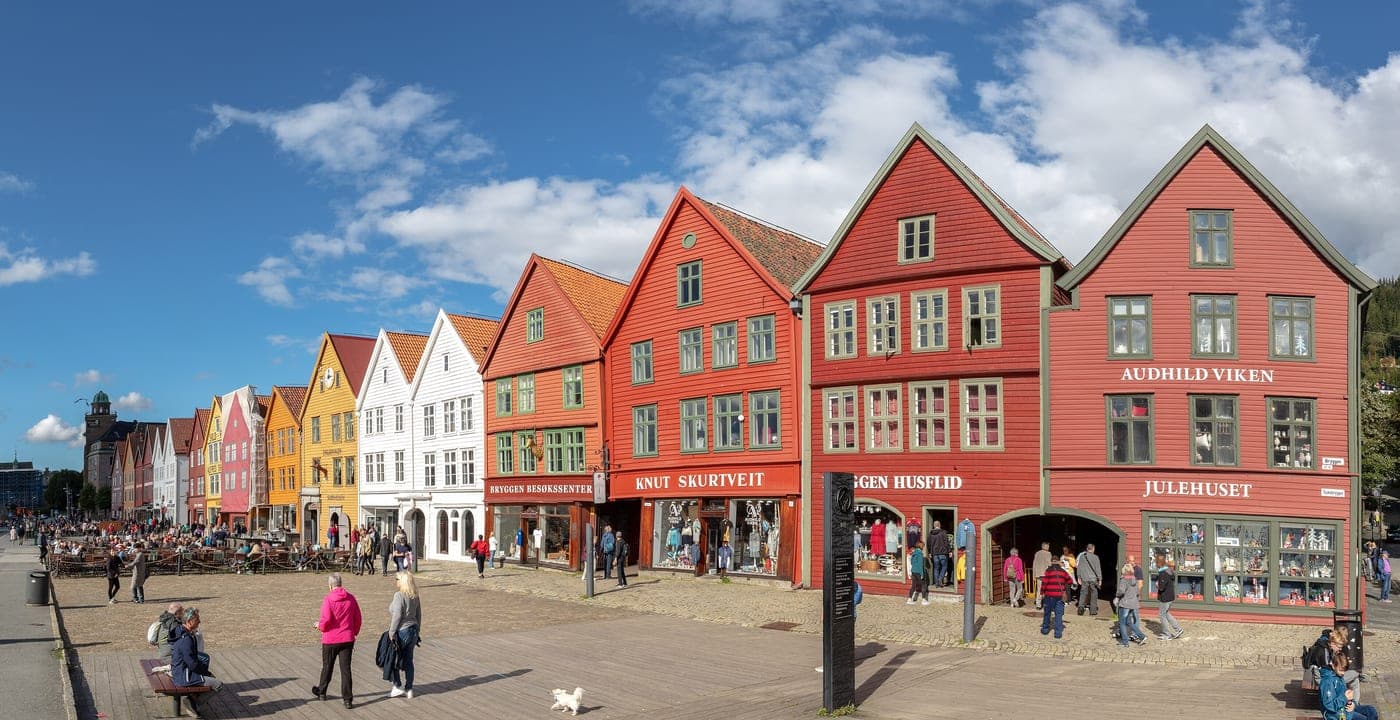
Nestled in western Norway, this is the largest region in the country, renowned for its breathtaking fjords and majestic mountains. Bergen, the only major city, serves as a gateway to the stunning landscapes of the area, including the UNESCO-listed Nærøyfjord. The region is steeped in history, with charming wooden houses dating back to the Hanseatic League. Small villages like Gudvangen and Flåm offer authentic experiences, showcasing local crafts and traditions. Known for its hiking trails, such as the famous Romsdalseggen Ridge, this region invites exploration of its natural beauty and cultural heritage. Local cuisine features fresh seafood and traditional dishes, providing a taste of the coastal culture.
Boat RentalsCamper Van RentalsHiking