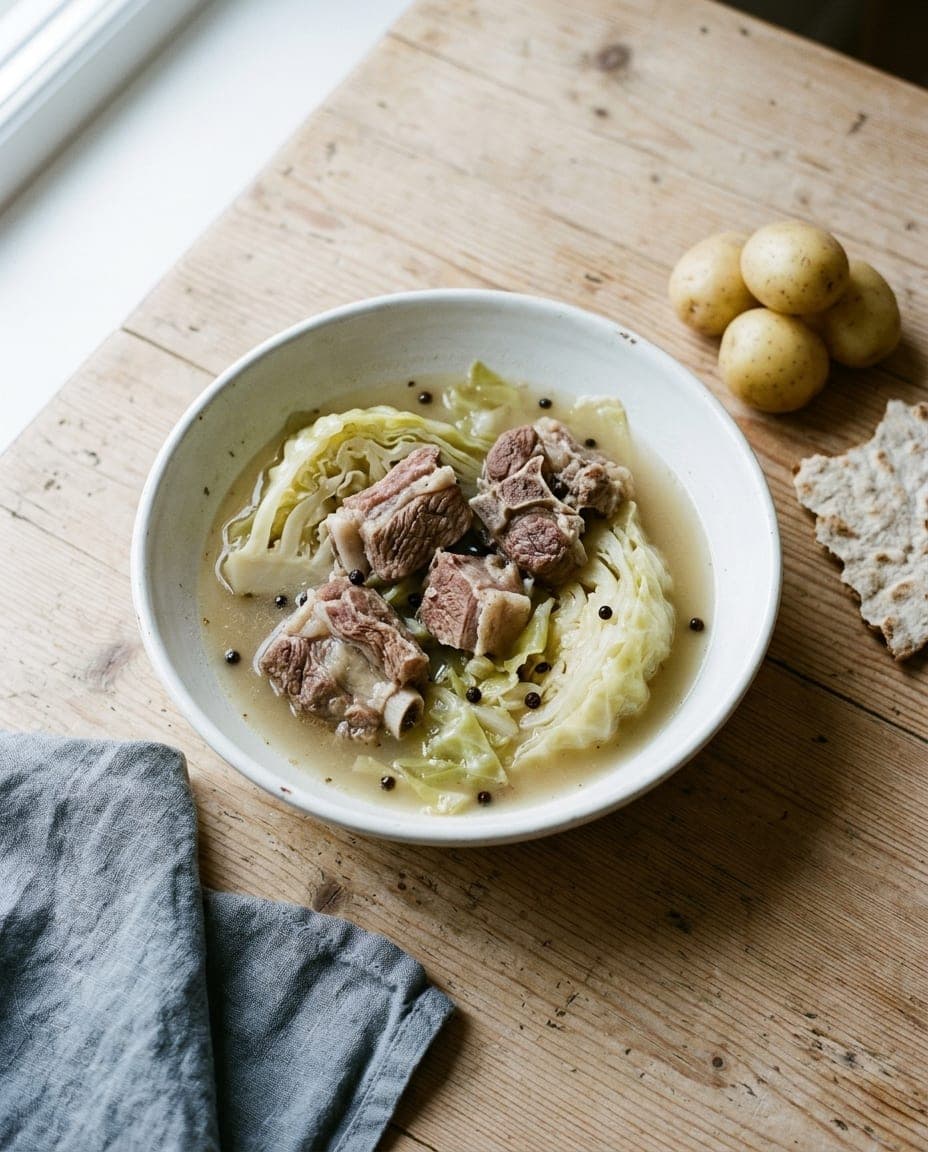
Mølje
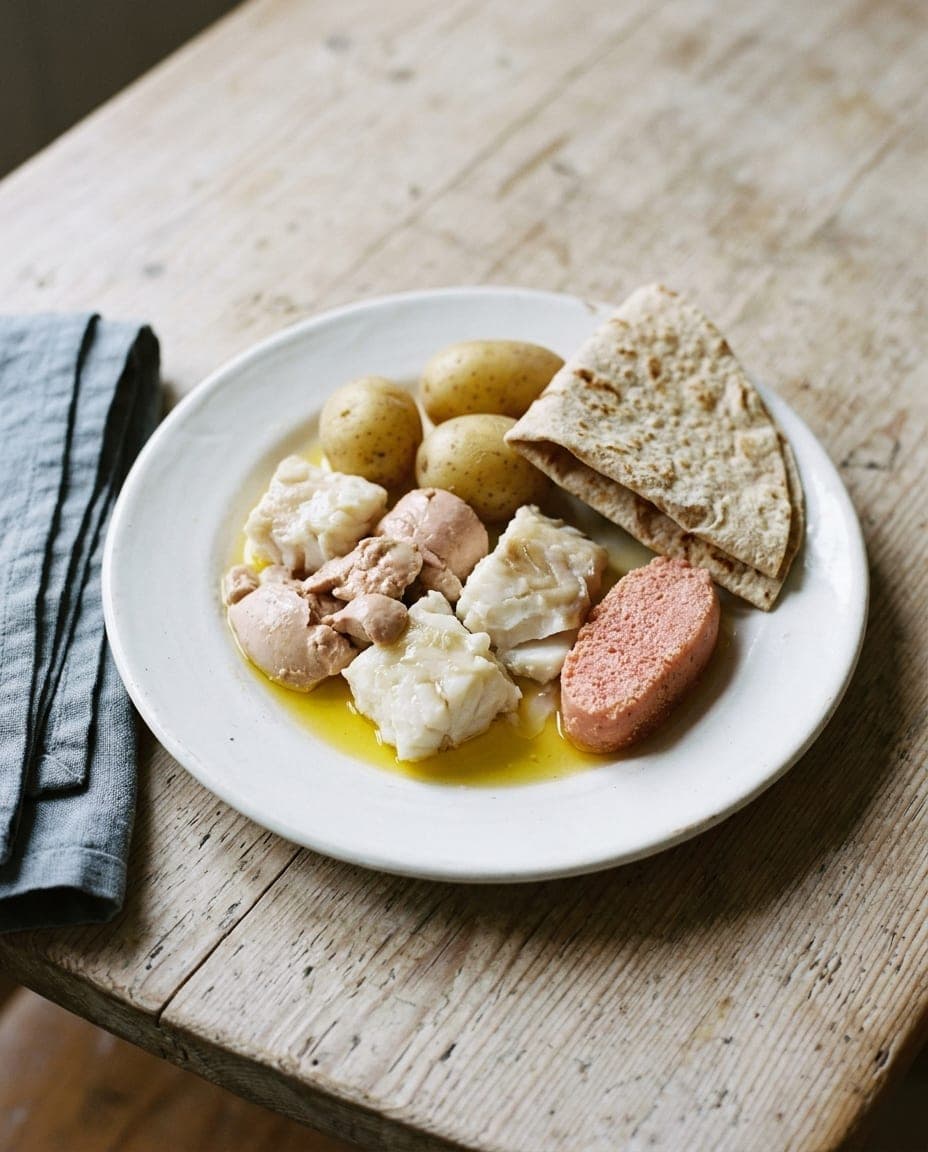
Poached cod with its liver and roe
- Local name
- Mølje
- Served with
- Boiled potatoes, flatbread
- Best eaten at
- A northern Norwegian mølje gathering
- Pairs with
- Red wine or aquavit
What it is
Mølje is a dish born of the deep north, specifically for the winter months when the Atlantic's migrating cod arrive off the coast of Norway. It is not merely a meal but a seasonal ritual centred on skrei, the term for the large cod that travels from the Barents Sea to spawn in the cold waters near Lofoten and Troms between January and April. The preparation is deceptively simple: the fish is cut into thick slices and poached briefly in salted water until the flesh turns opaque, while the liver and roe are cooked in pots of their own.
The defining feature of mølje is that the liver and the roe are served alongside the fish. The cod is traditionally cut into steaks on the bone, though restaurants now often use fillets. The liver is brought to the boil several times in fresh water to release its oil, sharpened with a little vinegar, and eaten in small amounts due to its intensity, while the roe hardens into firm, pale slices that offer a distinct texture. This dish is rarely made outside the window of the skrei season; when the fish migrate back to the deep in spring, the tradition ends until the next winter.
The mølje gathering
The true context for this dish is the møljekalas, a communal gathering or party that takes place during the winter months in Nordland, Troms and Finnmark. In these northern regions, food has long been tied to the rhythm of the seasons, and the arrival of skrei marks a time of celebration. The fish are often caught locally and brought straight to the kitchen, where they are prepared for a group of friends or family.
There is no formal seating arrangement for a mølje gathering. Diners sit around a large table, sharing dishes brought straight from the pots. The liver water goes cloudy with oil. It is a meal that requires patience and a willingness to eat slowly, often lasting for hours as the group enjoys the fish alongside other winter provisions.
What goes into it
The ingredients are few, reflecting the frugality of northern coastal life where fresh produce was historically scarce in winter. The core components are always the same:
- Skrei cod, caught during its spawning migration, which provides the lean white flesh and the essential organs.
- Cod liver, poached until soft and creamy, offering a deep, buttery flavour that is potent even in small portions.
- Cod roe, firm and pale after poaching, sliced thinly to be eaten alongside the fish.
- Boiled potatoes, often almond potatoes (mandelpotet) that hold their shape well, served warm to soak up the cooking juices.
- Flatbread (flatbrød), a thin, crisp unleavened bread, traditionally crumbled into the fatty broth or eaten alongside.
Apart from the potatoes and flatbread, everything on the plate comes from the fish — flesh, liver and roe — seasoned with little more than salt, pepper and a dash of vinegar for the liver.
How to eat it
Mølje is eaten as a main course, typically served in the pot or transferred to a large serving dish at the centre of the table. Diners use knives and forks to separate the flesh from the bone, but the liver and roe are often scooped directly onto the plate with a spoon. The potatoes are peeled and broken into chunks, while the flatbread is torn by hand.
Many drink aquavit with it, a strong spirit, in Norway usually distilled from potatoes, that cuts the fat of the liver; red wine is common too. In Tromsø and the surrounding areas, the dish is best enjoyed at a local møljekalas, where the focus is on the communal act of eating rather than fine dining. In the older tradition, flatbread was crumbled into the fatty broth so that none of it went to waste.
Curious facts
- The liver is the star. While the white flesh is important, the liver and roe are the prized elements that define the dish's status as a winter feast.
- No fish, no feast. The tradition strictly adheres to the migration schedule; without skrei, there is no mølje.
- Several pots, one table. Fish, liver, roe and potatoes are usually cooked in separate pans, then brought together for a shared meal.
- Winter specific. The dish disappears from menus outside the January to March window in northern Norway.
- Simple seasoning. The broth relies on the natural oils released by the liver and roe rather than heavy spices or herbs.
Where to try it
The best place to experience mølje is in a northern Norwegian home or a small, traditional restaurant in Tromsø or Lofoten during the winter months. The setting is a møljekalas — a local gathering — or a coastal restaurant cooking skrei in season. The dish is rarely found outside Nordland, Troms and Finnmark during the season. January to March is the window, while the skrei migration is on.
Where to try it
1 destination
 Boat Rentals
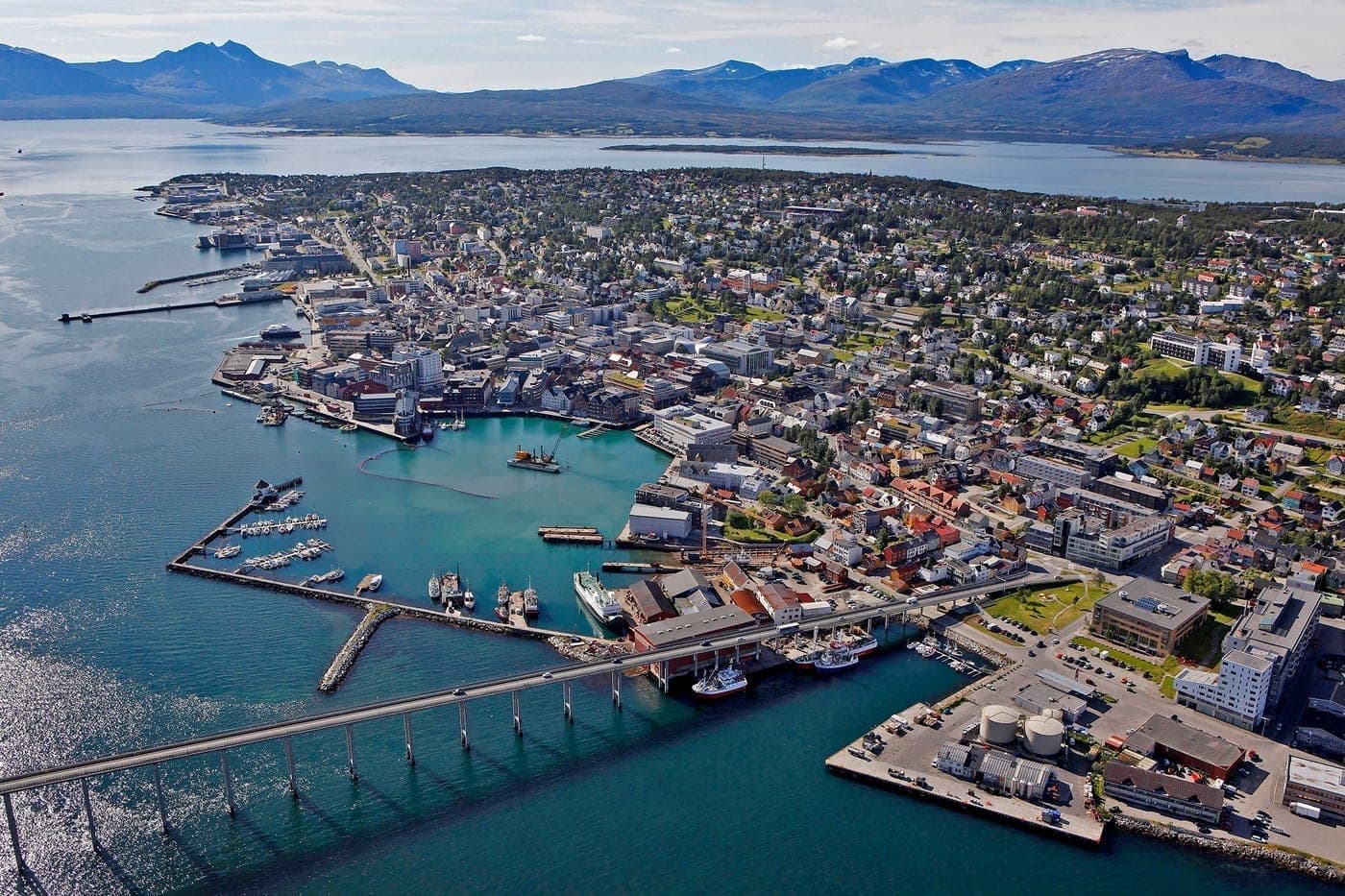
Tromsø
Gateway to the Arctic, known for stunning fjords and the Northern Lights.
Boat RentalsHikingLocal Cuisine
2 regions

Nordland
Nordland, the largest county in Norway, features a diverse landscape ranging from rugged mountains to stunning coastlines. This region includes the Lofoten Islands, known for dramatic peaks and traditional fishing villages like Reine and Henningsvær. The town of Bodø serves as a gateway to the scenic Saltstraumen, famous for its tidal current. Nordland is rich in Sami culture, with opportunities to experience traditional reindeer herding. Historical sites like the ancient rock carvings at Alta provide insight into the region's past. The coastal route along Kystriksveien offers breathtaking views and access to lesser-known islands, making it ideal for those seeking tranquility and local experiences.
- Boat Rentals2 destinations
Troms og Finnmark
Troms og Finnmark occupies the far north of Norway, where the coastline breaks into thousands of islands, skerries and deep fjords before the land opens into wide tundra. Settlements here are small and spread far apart, and the sea shapes almost everything, from fishing villages tucked into narrow inlets to the way daylight itself behaves through the year. Winter belongs to darkness broken by the aurora borealis, when the sky over the Lyngen Alps or the waters near Tromsø turns green and violet on clear, cold nights. Summer flips the pattern entirely: the midnight sun keeps the sky lit through what would elsewhere be night, and trails across the Finnmarksvidda plateau or the island of Senja stay open at hours that feel both wrong and right at once. Sámi culture runs through the region rather than sitting beside it. Reindeer herding continues across Finnmarksvidda, the great inland plateau Sámi families have used for grazing for generations, and joik singing, duodji handicraft and the lavvo tent remain part of daily life. Kautokeino and Karasjok stand as centres of this culture, home to institutions dedicated to Sámi language, governance and craft. Tromsø is the region's largest city and its cultural anchor: a university town with a lively arts scene, a striking Arctic Cathedral of glass and concrete, and a harbour that has long served Arctic expeditions. Alta, further north, holds one of Europe's most significant collections of prehistoric rock carvings, cut into stone over thousands of years and recognised as a UNESCO World Heritage Site. Further along the coast, the land narrows toward Nordkapp, the dramatic cliff long promoted as the northernmost point of mainland Europe. The plateau above it has drawn travellers for generations, and the wind there carries a sense of having reached an edge of the continent. Fishing villages along the coast still work much as they always have: drying racks for stockfish stand outside small harbours, and boats bring in cod, halibut and king crab that turns up on menus across the region. Skrei, the migratory cod that arrives each winter to spawn along the Finnmark coast, is a seasonal specialty worth planning around. Wildlife rewards patience here. Sea eagles nest along the cliffs, whales pass through fjords in the colder months, and reindeer cross roads and open ground. Inland, elk move through birch forest, and the mountains above the treeline hold ptarmigan. Exploring the region without a car is workable. Coastal ferries and the Hurtigruten route link villages along the fjords, while local buses connect Tromsø, Alta and the interior towns. Friluftsliv, the Norwegian idea of simple outdoor life, fits this pace: a walk along a fjord path, a swim in cold water, an evening watching the sky. An itinerary here tends to follow the coast and its ferry links, moving between Tromsø's museums and cafés, Alta's rock art, and the smaller fishing villages where the working harbour is still the centre of the day. Hiking trails on Senja and around Lyngen offer close views of the fjords without technical difficulty, and the Sámi towns of the interior add a different rhythm, built around herding seasons. Troms og Finnmark rewards those willing to let the region's own clock set the pace: short winter days and long summer light, ferry timetables, and a landscape that changes character between seasons.
Boat RentalsHikingLocal Cuisine