Trofie al pesto
Hand-rolled twists of pasta with basil sauce, potatoes and beans from Liguria
- Local name
- Trofie al pesto
- Best eaten at
- A Ligurian trattoria
- Pairs with
- Vermentino
What it is
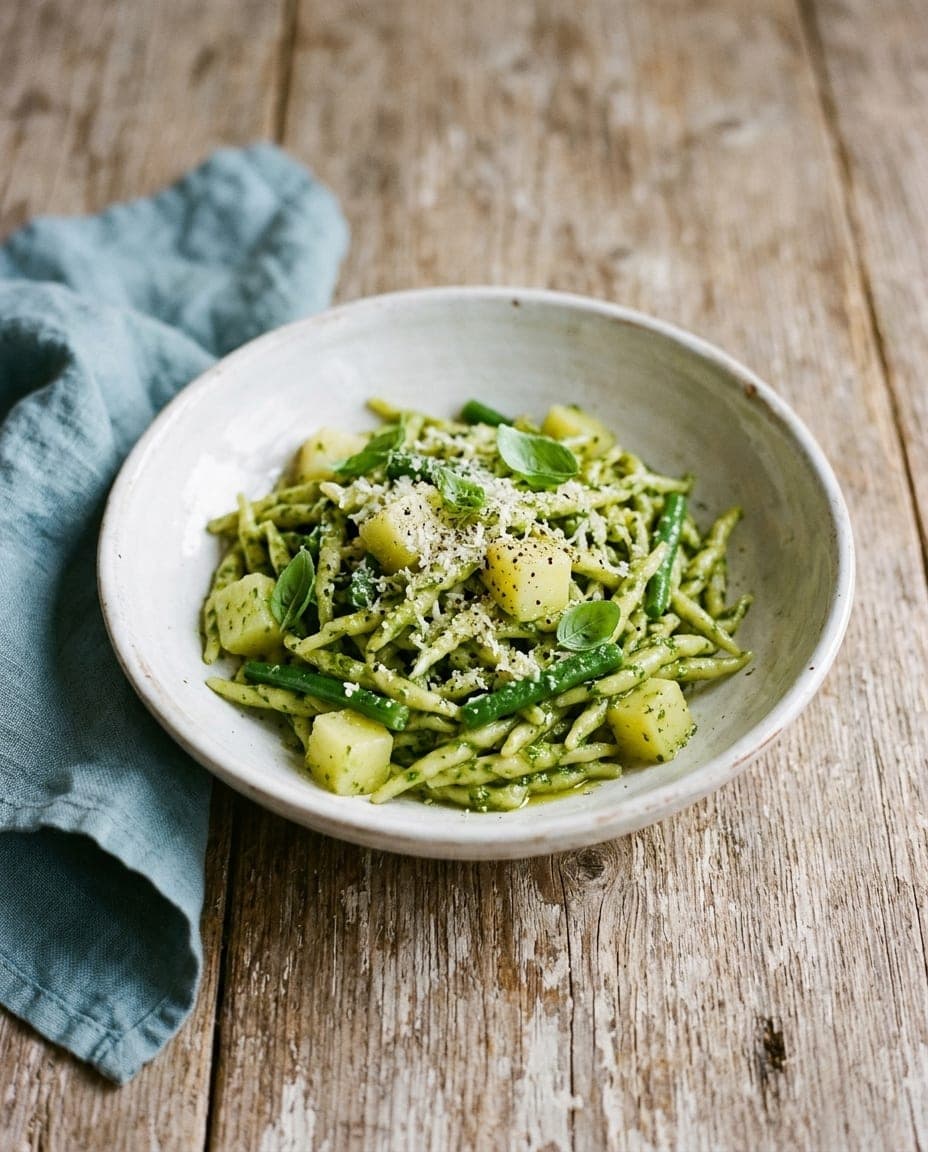
Trofie al pesto is one of the defining pasta dishes of Liguria, a narrow strip of Italian coastline running between the French border and Tuscany. It is not merely a meal but a specific combination of textures and flavours closely identified with the region. The dish consists of trofie, short, hand-rolled pasta twists with tapered ends, served with basil pesto and, in the fullest version, boiled potatoes and green beans.
The identity of the dish relies on the shape of the pasta. Unlike the long strands of spaghetti or the wide ribbons of tagliatelle found elsewhere, trofie are small, thin twists made without egg, about two to three centimetres long. They are rolled by hand on a wooden board using a quick sliding motion that creates a spiral twist along the body and thin points at the ends. This geometry is essential, as the grooves of the twist trap the oil and basil, ensuring every bite carries the full intensity of the sauce.
How the pasta is made
The making of trofie is a manual process that defines its character and separates it from mass-produced alternatives. The dough is made from flour and water, sometimes with a pinch of salt, but never egg; older Genoese versions also used chestnut flour. A small piece of dough is placed on a wooden board. Using the palm of one hand, the cook presses down on the piece while rolling it against the surface with a quick, sliding motion. This action creates the signature spiral twist and tapers the ends to fine points.
Each trofia is formed individually. A single roll takes only a few seconds, but the rhythm requires practice to ensure uniform size and shape. The pasta is associated with the Golfo Paradiso east of Genoa, in particular Sori, Recco and Camogli, where the technique has been passed down through generations of home cooks and small-scale producers; in 2019 the Trofie di Sori received a municipal De.Co. designation.
The nature of the pesto
Pesto for trofie is not cooked. The classic Genoese sauce consists of fresh basil leaves, pine nuts, garlic, coarse salt, grated Parmigiano Reggiano and Pecorino (traditionally Fiore Sardo), and extra virgin olive oil. These ingredients are crushed together in a mortar with a pestle, though many home cooks now use a food processor to achieve a similar consistency.
The heat of the pasta is the only source of warmth for the sauce. Once the trofie, potatoes and green beans have boiled, a spoonful of the starchy cooking water is added to the pesto in the bowl. The mixture is then tossed off the heat, allowing the residual warmth to loosen the oil and blend it with the cheese without heating the basil to the point of darkening or losing its fresh aroma. This method preserves the bright green colour and the fresh, grassy flavour of the herb.
How the vegetables bind the dish
The inclusion of potatoes and green beans marks the fuller Genoese way of serving pasta with pesto, as opposed to simpler versions. The potatoes are peeled and cut into chunks roughly the size of a walnut. They are boiled alongside the trofie and the green beans, which have been trimmed to a similar length.
As they cook, the potatoes release starch into the water, which becomes cloudy. When the pasta is drained, a little of this starchy water is reserved. The vegetables are then added to the bowl with the trofie and the pesto. The soft potato chunks break down slightly, creating a creamy base that binds the oil and basil to the pasta. The green beans retain their structure, offering a slight bite that contrasts with the softness of the potato and the chewiness of the trofie.
Where the tradition lives
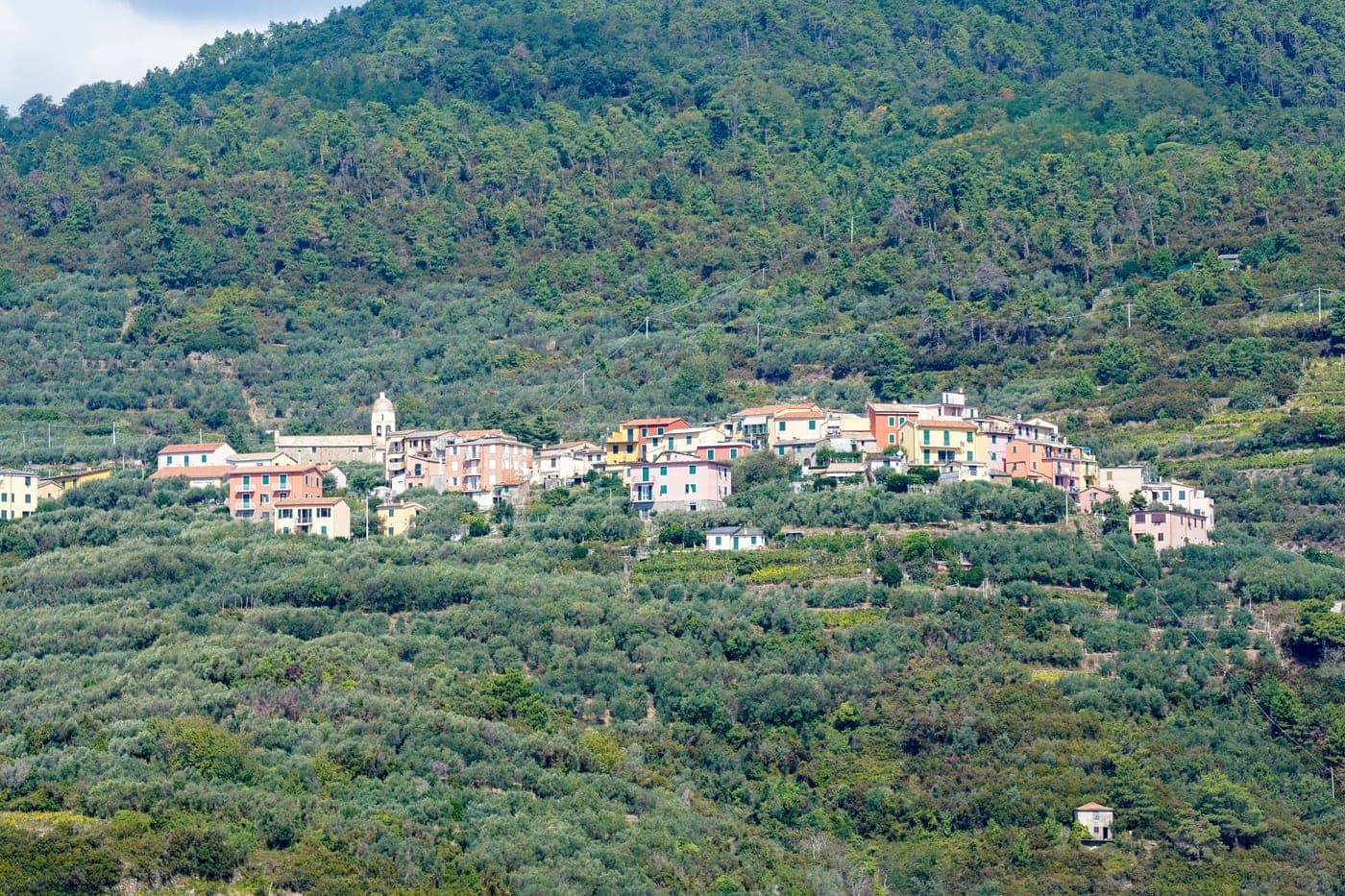
Trofie al pesto is bound up with the Ligurian landscape, along the coast and in the hinterland villages that overlook the sea. It is served throughout the region, from the Golfo Paradiso to the Cinque Terre, where trattorias offer it as a staple, especially in summer when basil is at its peak. Genoese basil, protected as Basilico Genovese PDO, is grown in the region's mild climate and has a distinct aroma compared to varieties grown elsewhere.
In the coastal towns, the dish is often served as part of a simple meal with bread and a glass of local white wine. The simplicity of the ingredients reflects the agricultural history of the region, where families grew their own basil, beans and potatoes on the narrow terraces known as fasce. These terraces, carved into the steep hillsides, required careful tending and yielded crops that were used directly in the kitchen.
Curious facts
- No egg in the dough. Like most dried pasta in Italy, but unlike the egg pasta of Emilia, trofie are made only with flour and water, resulting in a firm, elastic bite that holds its shape well when boiled.
- A regional signature. While pasta with pesto is eaten all over Italy, the combination with potatoes and green beans remains most closely associated with Liguria.
Where to try it
The most authentic experience of trofie al pesto is found in a traditional trattoria along the Ligurian coast, particularly around the Golfo Paradiso and in the villages of the Cinque Terre. These small establishments often serve the dish daily, prepared with ingredients sourced from local markets or nearby gardens.
The pairing is straightforward: a glass of Vermentino, a crisp white wine from the Ligurian coast, complements the richness of the pesto and the starch of the potato. The wine's acidity cuts through the oil, cleansing the palate between bites. Bread is also welcome for mopping up the last of the sauce, which often pools at the bottom of the bowl.
Related: Pesto alla genovese, the basil sauce on its own.
Where to try it
1 region
 Wine Tasting4 destinations
Liguria
Nestled between the Ligurian Sea and the Apennine Mountains, this region is the smallest in Italy, yet it boasts a rich tapestry of landscapes and cultures. Known for its picturesque coastline, it is home to the UNESCO World Heritage Site of Cinque Terre, where five colorful villages cling to steep cliffs. Beyond the coast, towns like Portofino offer a glimpse into the luxurious Mediterranean lifestyle, while inland, the olive groves and vineyards of the hinterland produce exquisite olive oil and Vermentino wine. Historical sites abound, such as the ancient maritime republic of Genoa, with its impressive palaces and rich maritime history. The region is also famous for its pesto, a culinary delight made from locally grown basil. With a mild climate year-round, Liguria offers a wealth of walking trails, scenic drives, and local festivals, providing an authentic experience of Italian coastal life.
Wine TastingBoat RentalsHiking





