Pesto alla genovese
Pesto alla genovese is a raw basil sauce from Genoa served with trofie
- Local name
- Pesto alla genovese
- Served with
- Trofie, trenette, potatoes, green beans
- Best eaten at
- A Genoese trattoria
- Pairs with
- Vermentino
What it is
Pesto alla genovese is the signature sauce of Genoa, the capital of Liguria on the north-west coast of Italy. It is not a cooked sauce in the way that a tomato sauce or a ragù is. Instead, it is a cold emulsion of ingredients pounded together into a coarse paste. The result is a vivid green condiment that clings to pasta with a texture that feels both rich and light.
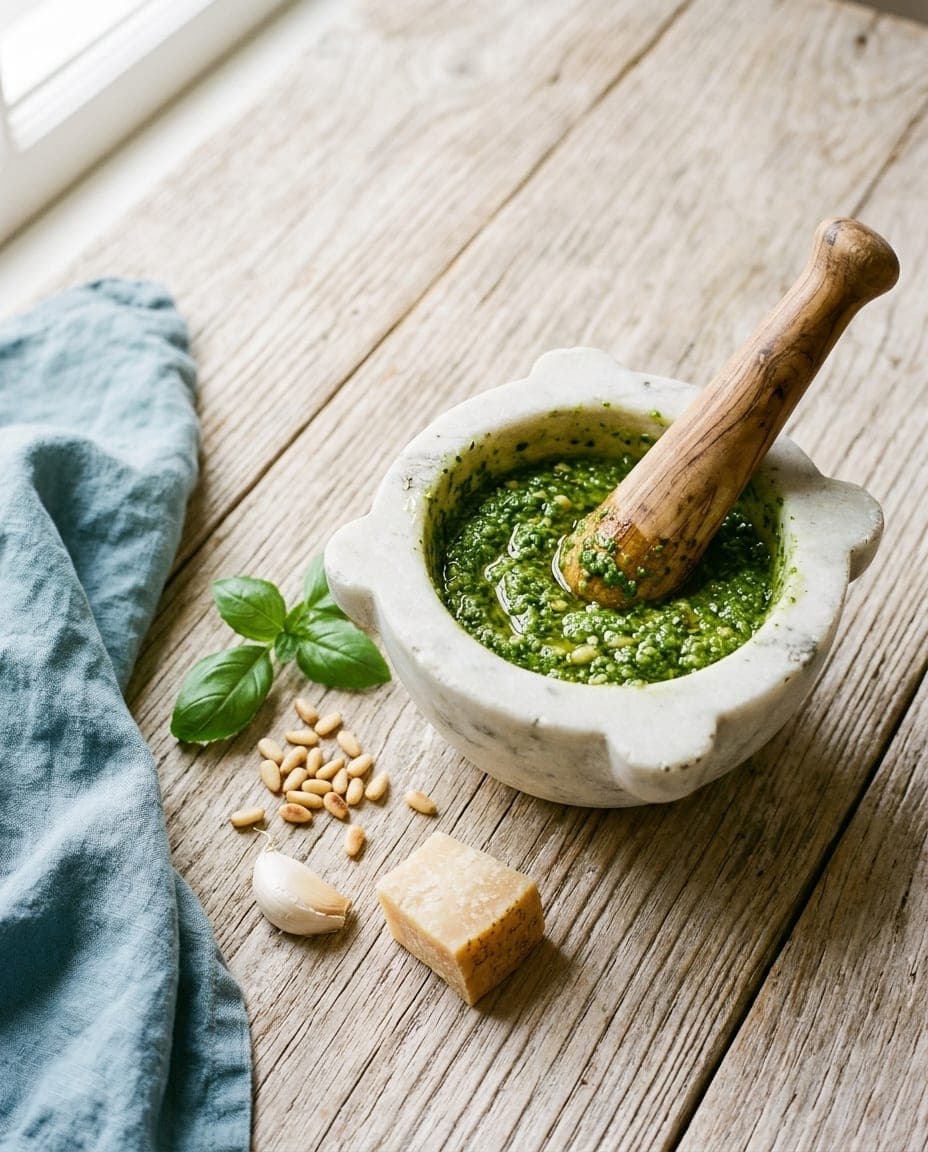
The sauce is defined by its simplicity and the specificity of its components. It relies on Basilico Genovese, a protected sweet basil grown in Liguria, with the district of Pra' on Genoa's western edge the most celebrated growing area. The leaves are picked young and small, avoiding any minty aftertaste. They are combined with pine nuts, garlic, hard cheeses and extra virgin olive oil. Traditionally the mixture is not blended by machine but crushed in a marble mortar with a wooden pestle, a method that keeps the basil from turning dark or losing its fresh aroma.
While herb-based sauces exist across Italy, the Genoese version is distinct for its refusal to cook the ingredients. The only heat comes from the pasta itself, which is boiled and then tossed with the sauce. This technique preserves the raw, grassy character of the basil and the sharpness of the garlic.
The history of the mortar
The word pesto derives from the verb pestare, meaning to pound or crush. This etymology points directly to the tools used for its creation: the mortaio, a deep marble bowl, and a wooden pestle. Before the arrival of the blender in the twentieth century, this was the only way to make the sauce. The tradition is so deeply rooted that Genoa hosts the World Pesto Championship, held every two years since 2007, where competitors must prepare their sauce using only the traditional mortar and pestle.
The origins of the sauce are often linked to ancient pounded mixtures such as the Roman moretum, made with herbs, garlic, oil and cheese, and to the medieval garlic-and-walnut agliata. The basil-based recipe as it is known today appears in print in the 1860s, in Giovanni Battista Ratto's cookbook La cuciniera genovese.
Over time, what began as a home kitchen staple became a symbol of Ligurian identity, recognised far beyond the borders of Italy.
What goes into it
The ingredients are few, but each one matters if the goal is to replicate the traditional taste of Genoa.
- Basilico Genovese: The heart of the sauce. The protected basil from Liguria gives a sweet, non-minty flavour.
- Pine nuts: Small, pale Mediterranean pine nuts provide a creamy texture and a subtle nuttiness that balances the sharpness of the garlic.
- Garlic: A small amount gives the sauce its characteristic bite, mellowed by the other ingredients.
- Hard cheeses: The usual base is Parmigiano Reggiano, often joined or replaced by a sheep's milk pecorino. Together they add a salty, savoury depth without overwhelming the basil.
- Extra virgin olive oil: A mild Ligurian oil binds the ingredients and adds fruitiness and body.
- Coarse salt: Used sparingly; its grains also help break down the leaves in the mortar.
The process involves crushing the garlic and pine nuts first, then adding the basil leaves a few at a time and working them with a circular motion until they break down into a paste. The cheeses are added next, followed by the oil, poured in slowly while the pestle keeps working. The goal is a thick, green paste that loosens easily when mixed with hot pasta.
How it is eaten
Pesto alla genovese is most often served with trofie, short, twisted hand-rolled pasta from the Ligurian coast east of Genoa, or with trenette, flat, narrow ribbons similar to linguine. It also dresses potato gnocchi and is stirred into minestrone. With trenette or trofie it is traditionally accompanied by green beans and potatoes boiled in the same pot as the pasta.
The hot pasta, drained but still steaming, is tossed with the pesto in a large bowl, often loosened with a spoonful of cooking water. The heat from the pasta is enough to warm the oil and release the aromas without cooking the basil.
In a Genoese trattoria, pasta al pesto is usually a primo, the pasta course, sometimes followed by a simple fish dish or a salad. The sauce pairs well with a crisp white wine from the Ligurian coast, such as Vermentino, which cuts the richness of the oil and cheese.
How the method matters
The distinction between the mortar and the machine is not merely a matter of tradition; it changes the final result. A blender spins at high speed, generating heat that can darken the basil and dull its flavour. The marble mortar and wooden pestle work slowly, crushing the leaves without heating the oil.
This gentle handling preserves the aromatic oils in the basil, keeping the colour bright green and the flavour sharp. The texture achieved by hand-pounding is coarser, with visible flecks of herb and nut.
Curious facts
- A protected basil: Basilico Genovese is a protected designation of origin (PDO) in the EU, grown in Liguria; the basil of Pra' is the most famous.
- The World Pesto Championship: Held in Genoa every two years, it requires participants to use only a marble mortar and wooden pestle, with judges assessing colour, aroma and texture.
- A nineteenth-century recipe: The first printed recipe for basil pesto appeared in Genoa in the 1860s.
Where to try it
The most authentic experience of pesto alla genovese is found in a traditional Genoese trattoria, where the sauce is still made by hand in the kitchen. Such places often pride themselves on using local ingredients and sticking to the old methods.
Spring and early summer, when the basil is at its peak, are a fine time to visit Genoa for this sauce.
Related: Trofie al pesto, the Ligurian twisted pasta that is its classic partner.
Where to try it
1 region
 Wine Tasting4 destinations
Liguria
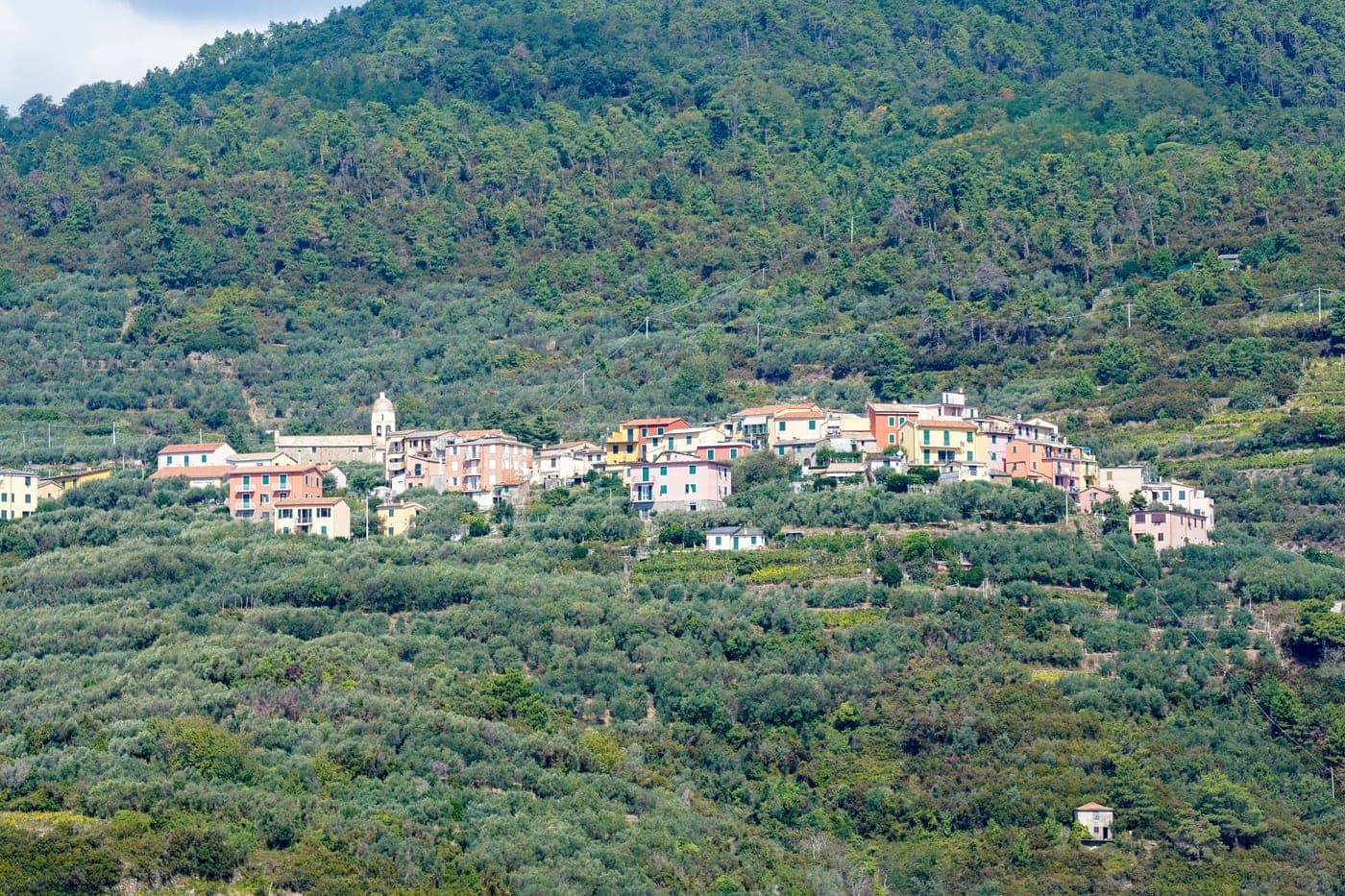
Nestled between the Ligurian Sea and the Apennine Mountains, this region is the smallest in Italy, yet it boasts a rich tapestry of landscapes and cultures. Known for its picturesque coastline, it is home to the UNESCO World Heritage Site of Cinque Terre, where five colorful villages cling to steep cliffs. Beyond the coast, towns like Portofino offer a glimpse into the luxurious Mediterranean lifestyle, while inland, the olive groves and vineyards of the hinterland produce exquisite olive oil and Vermentino wine. Historical sites abound, such as the ancient maritime republic of Genoa, with its impressive palaces and rich maritime history. The region is also famous for its pesto, a culinary delight made from locally grown basil. With a mild climate year-round, Liguria offers a wealth of walking trails, scenic drives, and local festivals, providing an authentic experience of Italian coastal life.
Wine TastingBoat RentalsHiking





