Tirtlan (Tirteln)
Tirtlan: rye pastries from South Tyrol's Puster Valley
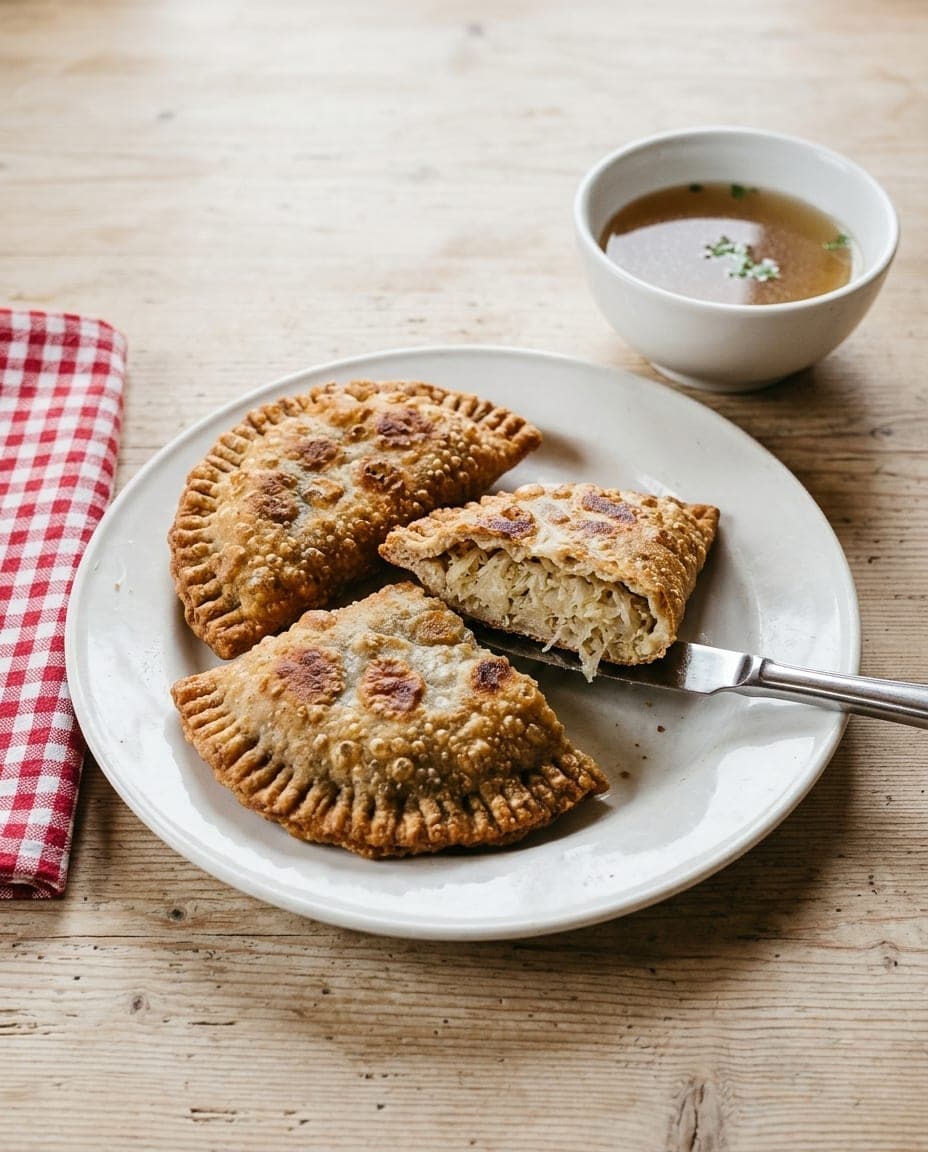
- Local name
- Tirtlan
- Served with
- Barley soup or clear broth
- Best eaten at
- A South Tyrolean farm tavern
- Pairs with
- South Tyrolean Vernatsch
What it is
Tirtlan, also known as Tirteln or Tirtlen, are fried filled pastries that originated as a farmhouse speciality of the Puster Valley in South Tyrol, the northernmost part of Italy, and are also traditional in the Eisack Valley, the Gader Valley and around Brixen. They are not a nationwide Italian dish but a local speciality of the German-speaking Alpine region. The pastry consists of two thin discs of dough made from rye and wheat flour, sealed around a savoury filling and fried in hot fat until the surface is blistered and golden.
The result is a warm, crisp pastry that is often eaten by hand. While the dough might seem simple, the use of rye gives it a distinct earthy flavour that sets it apart from the wheat-based pastries common elsewhere in Italy. The filling is savoury: Topfen (quark), spinach mixed with Topfen, sauerkraut and potato are the classic choices.
Where it comes from
These pastries belong to the German-speaking culture of South Tyrol, where Alpine traditions have been preserved for centuries alongside Italian influences. The name is a dialect word, and its spelling shifts slightly from valley to valley, reflecting the local linguistic heritage of the region.
Tirtlan are bound up with the rhythm of the farming year. Once a festive farmhouse dish rather than everyday food, they are now popular at village festivals, in inns and on farms that serve food to guests. They also appear during Törggelen, the autumn tradition, centred on the wine-growing Eisack Valley, in which locals and visitors call at farm taverns to taste new wine and seasonal produce. On these occasions, hot tirtlan are often served fresh from the pan to warm the hands and the stomach against the cooling mountain air.
How it is eaten
In these settings, the pastries are often brought out in batches while still hot. They are traditionally eaten without cutlery: folded in half and bitten into, which makes them ideal for a farmhouse table or a festival stand.
Tirtlan are often served alongside a bowl of soup, such as barley soup (Gerstensuppe) or a clear broth, which balances the richness of the fried dough. The dish is meant to be shared among a group, often paired with a glass of South Tyrolean Vernatsch wine, which complements the earthy notes of the rye and the tang of the filling.
Curious facts
- Rye is the mountain grain. Unlike wheat, rye copes well with the cool climate of the high Alpine valleys, giving the pastry its characteristic darker colour and robust flavour.
- A dialect with many spellings. The name varies by valley and village: Tirtlan, Tirteln and Tirtlen are all used for the same pastry.
- Fried, not baked. The pastries are fried floating in hot fat until light brown on both sides; many modern recipes simply use oil.
- A festival food. These pastries are a fixture of village festivals and of the Törggelen season in autumn.
- Many fillings. Topfen, spinach, sauerkraut and potato fillings are all part of the local repertoire, and each household has its favourite.
Where to try it
The most authentic tirtlan can be found in the Puster Valley and the neighbouring Eisack Valley, at village festivals and in farm taverns. During the autumn months, many farms open their doors for Törggelen, offering fresh pastries alongside new wine.
Where to try it
1 destination
 Castles
Rasun di Sopra
Tranquil South Tyrolean alpine village in the Val di Anterselva, known for biathlon and mountain trails.
Castles





