Riso, patate e cozze
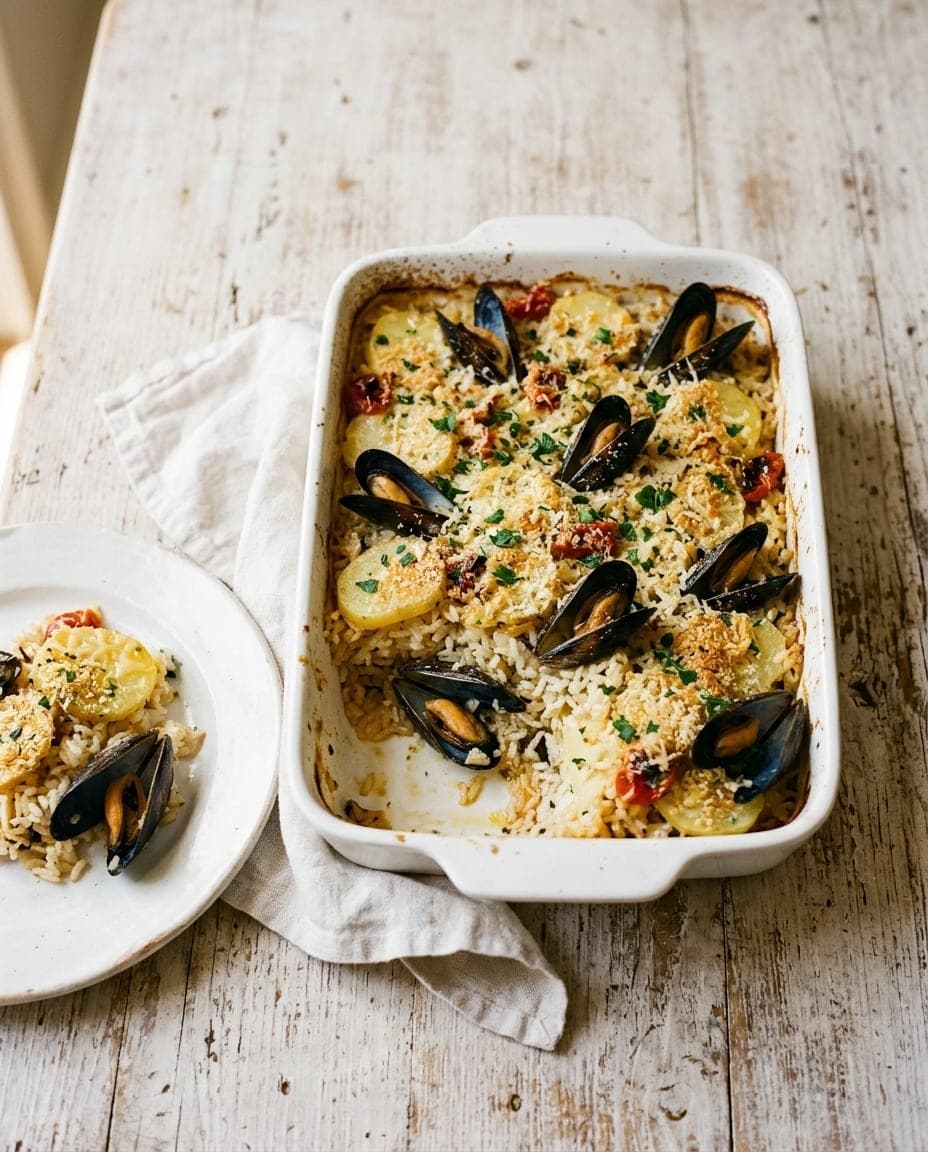
Bari's baked dish of rice, potatoes and mussels in a terracotta pan
- Local name
- Riso, patate e cozze
- Best eaten at
- A Bari Sunday family lunch
- Pairs with
- Puglian rosato
What it is
Riso, patate e cozze is a baked dish that defines the kitchen of Bari and the surrounding coast of Puglia. It consists of layers of sliced potatoes, raw rice, mussels left in their half shells, tomato, onion, garlic, parsley and grated cheese, all cooked together in a pan called a tiella, which also gives the dish its other name, tiella barese. The result is a moist, savoury bake where the rice absorbs the briny liquor of the mussels and the potato starch thickens the sauce into a creamy texture.
The dish is not a soup nor a dry casserole. It sits somewhere between the two: a wet, steaming plate that holds its shape when served but yields easily to the spoon. The name tiella refers to the pan in which the ingredients are assembled and baked, traditionally made of terracotta. This pan conducts heat evenly and allows the top layer of potato to brown while the bottom layers cook in the mussel broth. The dish is often said to descend from Spanish paella, introduced during Spanish rule in southern Italy, though this link is a popular theory rather than a documented fact.
What makes it a true Bari speciality is the method. Nothing is pre-cooked. The raw rice meets the raw mussels, the raw potatoes meet the raw tomatoes, and everything cooks together in the oven. The mussels are opened raw with a knife, and the liquid saved from their shells, filtered and poured into the pan, becomes part of the cooking water for the rice and potatoes. This technique ensures that the seafood flavour permeates the entire dish without any separate boiling step.
The Sunday tradition
Riso, patate e cozze is bound up with the rhythm of life in Bari. It is a favourite for a Sunday or holiday family lunch. The dish requires time and attention, making it a natural fit for a day when the household moves at a slower pace. In many Bari homes, the preparation begins in the morning, with the mussels scrubbed and opened and the vegetables sliced into thin rounds.
The meal is rarely served in isolation. It is often accompanied by a glass of Puglian rosé, known as rosato, whose freshness suits the briny mussels and the olive oil of the bake.
In Bari's old town and the neighbourhoods near the harbour, the dish appears on the menus of traditional trattorie and family-run eateries. It is not a tourist novelty but a staple for locals who return to it year after year. It is cooked throughout the year, though the quality of the mussels varies with the season.
How it is assembled
The assembly of the dish is where the family argument begins. There is no single official order for the layers. Many cooks start with sliced onion and a layer of potato at the bottom to prevent burning, then add the rice and the mussels, and finish with more potato. The mussels sit in their half shells, open side up, so their juices flow down through the layers.
The ingredients are simple but precise. Sliced potatoes form the base or the top layer, depending on the cook's preference. Short-grain rice is scattered evenly over the potatoes. Mussels in their half shells are placed in a single layer, often with the open side facing up. Chopped tomatoes, onion, garlic and olive oil go in between the layers. Parsley, grated pecorino or Parmigiano and often breadcrumbs are scattered on top, and some cooks add slices of courgette.
A little water is added to the pan before it goes into the oven. This ensures that the rice has enough liquid to cook without drying out, while the mussels release their own liquor to flavour the dish. The pan bakes for around an hour, until the liquid is absorbed and the top layer browns; some cooks cover it for part of the time. The result is a cohesive bake where the flavours have melded together completely.
What goes into it
The ingredients are those found in the Bari market and the surrounding fields:
- Rice, added raw, which absorbs the mussel liquor and becomes creamy without turning to mush.
- Sliced potatoes, usually waxy varieties that hold their shape during the long bake.
- Mussels in their half shells, opened raw by hand, with their briny liquid saved for the pan.
- Tomatoes, usually fresh cherry tomatoes, with onion and garlic.
- Olive oil, poured generously over the layers to keep the dish moist.
- Fresh parsley, added for a bright finish that contrasts with the rich bake.
- Grated cheese, usually pecorino or Parmigiano, often with breadcrumbs on top.
- Courgette, sometimes included for extra moisture and texture.
Curious facts
- The name comes from the pan. Tiella, the dish's other name, refers to the baking pan, not the ingredients themselves.
- A family debate. The order of the layers is often a subject of heated discussion in Bari households, with no single version considered correct.
- Sunday ritual. The dish is a favourite for Sunday lunch, fitting the slower pace of the day and the need for a substantial meal.
- Local wine pairing. Puglian rosato is a popular companion, its acidity balancing the richness of the bake.
Where to try it
The best place to eat riso, patate e cozze is in Bari itself, particularly in the neighbourhoods near the old harbour or in the historic centre. Traditional trattorie and family-run eateries serve the dish as a main course, often with a side of fresh bread to mop up the juices.
Outside the city, similar versions are cooked in other towns of Puglia, such as Monopoli or Polignano a Mare. The dish is a regional speciality, not a nationwide Italian classic, so it remains most authentic where the mussels are fresh and the tradition is strong.
Where to try it
1 destination
 Boat Rentals
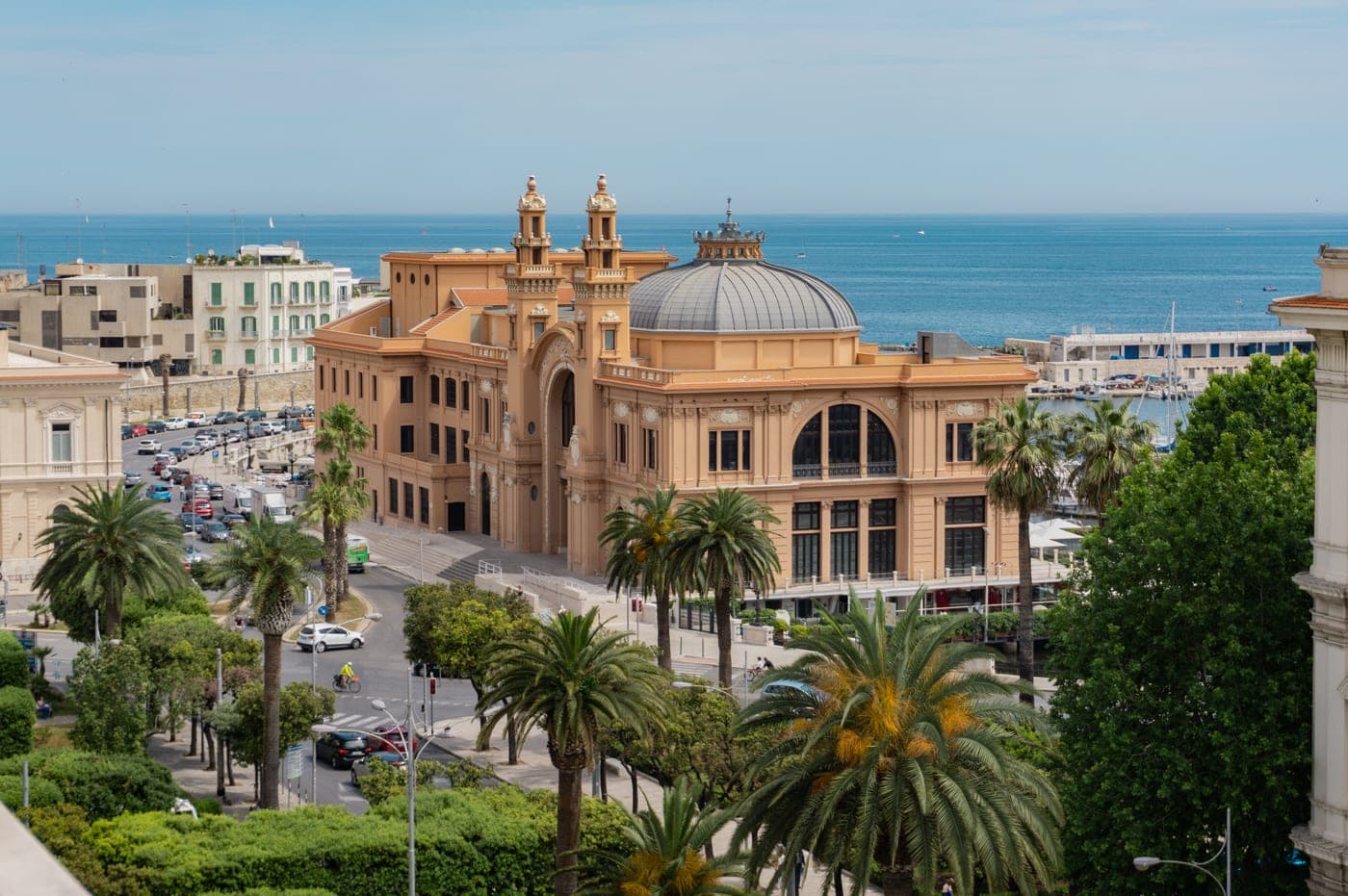
Bari
Historic port city featuring Romanesque architecture and bustling markets.
Boat RentalsHiking





