Panforte di Siena
A dense Sienese cake of honey, nuts and spices for Christmas
- Vegetarian
- Local name
- Panforte
- Best eaten at
- A Sienese Christmas table
- Pairs with
- Vin Santo
The sweet that tastes like medieval Siena
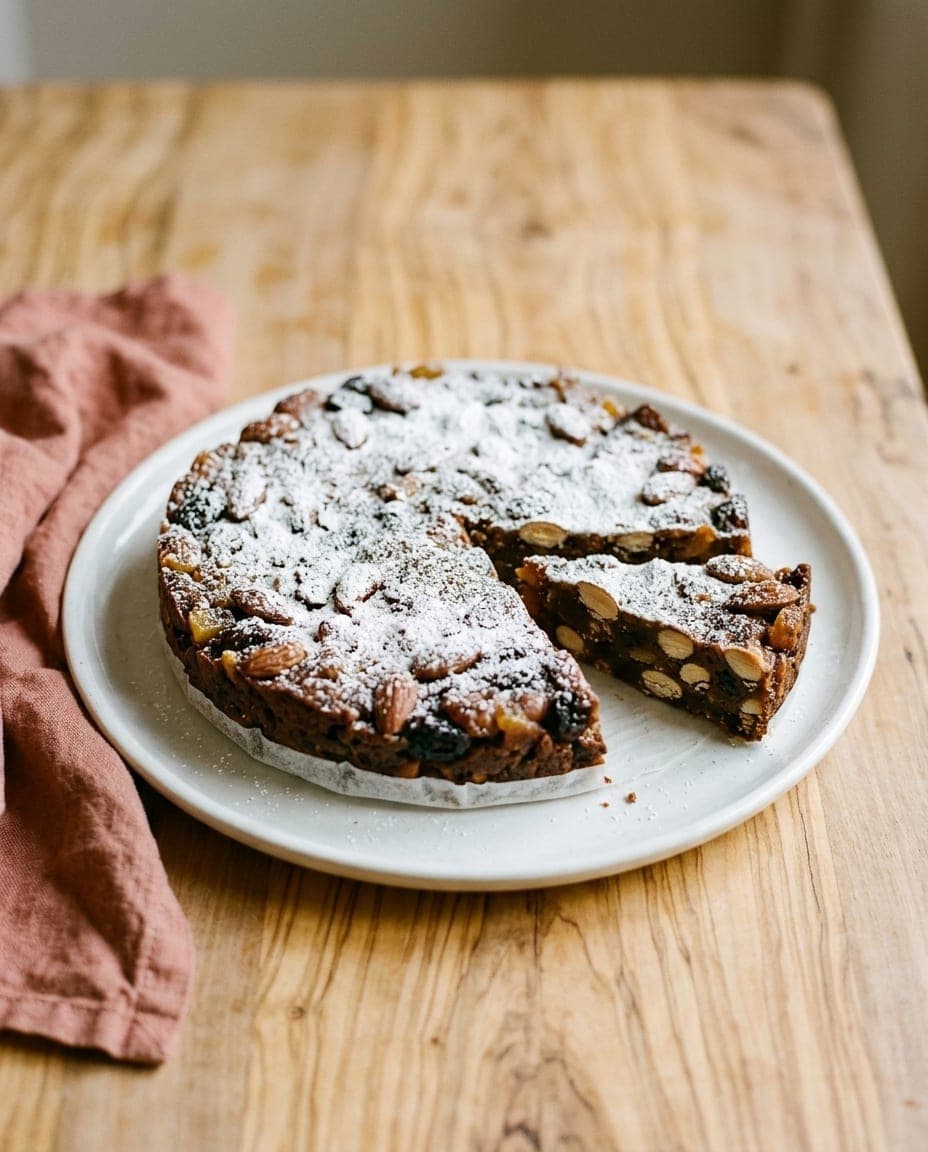
Panforte di Siena is a dense, flat cake from the city and province of Siena in Tuscany. It is not a light cake or a fluffy sponge; it is a heavy, compact disc of honey, sugar, almonds, candied fruit and spices, bound with a little flour and finished either with icing sugar or with a dark coating of spices. The name translates literally as "strong bread", a reference to the intense, spicy flavour rather than any resemblance to an ordinary loaf.
A single wedge is substantial, often requiring a sharp knife to cut through the tight mass of nuts and fruit. It is a food of winter, traditionally served at Christmas tables across Tuscany, particularly in Siena and the surrounding countryside, where it remains a staple of the festive season.
The texture is unique: chewy yet firm, sticky but not messy, with the crunch of whole almonds and the soft chew of candied fruit.
Pepper bread and the spice trade
The roots of panforte lie in medieval Siena, a city on the Via Francigena, the great pilgrimage route from Canterbury to Rome, and a prosperous centre of trade and banking. Honey, dried fruit, nuts and spices made a cake that kept for a long time without spoiling, and tradition holds that such sweets were carried by travellers and merchants.
The earliest ancestors of panforte were breads rich in pepper and honey: a chronicle of 1205 records them as obligatory gifts owed to the nuns of the abbey of Montecelso, near Siena. Spices were costly, and production is said to have flourished in convents and among the city's speziali, the apothecaries who traded in them.
The name panforte itself is attested only from the early 1800s, and the first factory dedicated to it opened in Siena in 1810. Pellegrino Artusi included it in his celebrated 1891 cookbook.
The royal variant and the darker cousin
Two versions of panforte di Siena are made today. The most famous is the panforte Margherita, created in 1879 for the visit of Queen Margherita of Savoy to Siena during the August Palio. This version, also called panforte bianco, is paler and less spiced, and it is covered in a generous layer of icing sugar. It was named after the queen and quickly became a symbol of Sienese hospitality.
The darker, more robust version is panforte nero, whose surface is coated in a mixture of spices that gives it a deep brown colour and a more intense, peppery flavour. It is closely related to panpepato, "pepper bread", which recalls the older, spicier recipes from which panforte descends.
Both share the same structure of honey and sugar binding almonds, candied peel and a little flour; the difference lies in the spices and the colour. The Margherita is often preferred by those who find the spices of the darker version too intense, while traditionalists may favour the peppery kick of the nero.
How it is made
The preparation of panforte follows a method that has changed little over generations, though each baker in Siena guards their own proportions. The process begins with the toasting of almonds to release their oils. These are then mixed with candied fruit, typically orange peel and citron, along with flour and the chosen spices.
The binding agent is a mixture of honey and sugar, heated together until it reaches a thick syrup. This hot syrup is stirred into the nut and fruit mixture, which is then pressed into a shallow round tin lined with a thin starch wafer, known as ostia. The wafer is not removed after baking; it remains attached to the base of the cake, making it easier to handle and slice without sticking.
After a short spell in the oven, the cake is allowed to cool completely before being dusted generously with icing sugar or spices. No leavening agents are used; the density comes from the heavy load of nuts and fruit bound by the syrup.
Where it is eaten and what it pairs with
Panforte di Siena is traditionally a Christmas sweet, served at the end of a meal or alongside coffee in the days leading up to the holiday, though today it is made all year round. It often appears as part of a festive spread that includes other Sienese treats like ricciarelli and cavallucci.
The traditional pairing is with Vin Santo, a sweet Tuscan wine made from dried grapes. The richness and sweetness of the wine complement the dense texture of the panforte and the warmth of its spices.
In Siena, the cake is available in almost every traditional pasticceria, though the quality varies. The best versions are those where the nuts are whole or in large pieces and the candied fruit tastes of the fruit rather than of sugar alone.
Curious facts
- The name means strong bread. The term panforte refers to its intense, spicy flavour rather than any resemblance to actual bread, although the dough does contain a small amount of flour.
- The wafer stays on the bottom. Unlike most baked goods, the cake is baked on a thin starch wafer that remains attached to it, preventing sticking and aiding slicing.
- A protected geographical indication. Panforte di Siena has been an EU Protected Geographical Indication (PGI) since 2013; it must be made and packed within the province of Siena.
- Older than its name. Honey-and-pepper breads were recorded near Siena in 1205, but the word panforte only appears in the early 19th century.
Where to try it
The most authentic experience of panforte di Siena is in the city itself, particularly in the historic centre, where traditional pasticcerie have served locals for generations. Shops near the Piazza del Campo or along the streets leading to the Duomo display the cakes all year, and in greater numbers during the Christmas season.
Because the PGI covers the whole province of Siena, panforte is also made in smaller towns across the area, where family-run shops often offer handmade batches with careful attention to detail.
Many establishments offer packaging suitable for travel. The cake keeps well for weeks if stored in a cool, dry place, though it is best enjoyed while the spices are at their freshest.
Where to try it
2 destinations
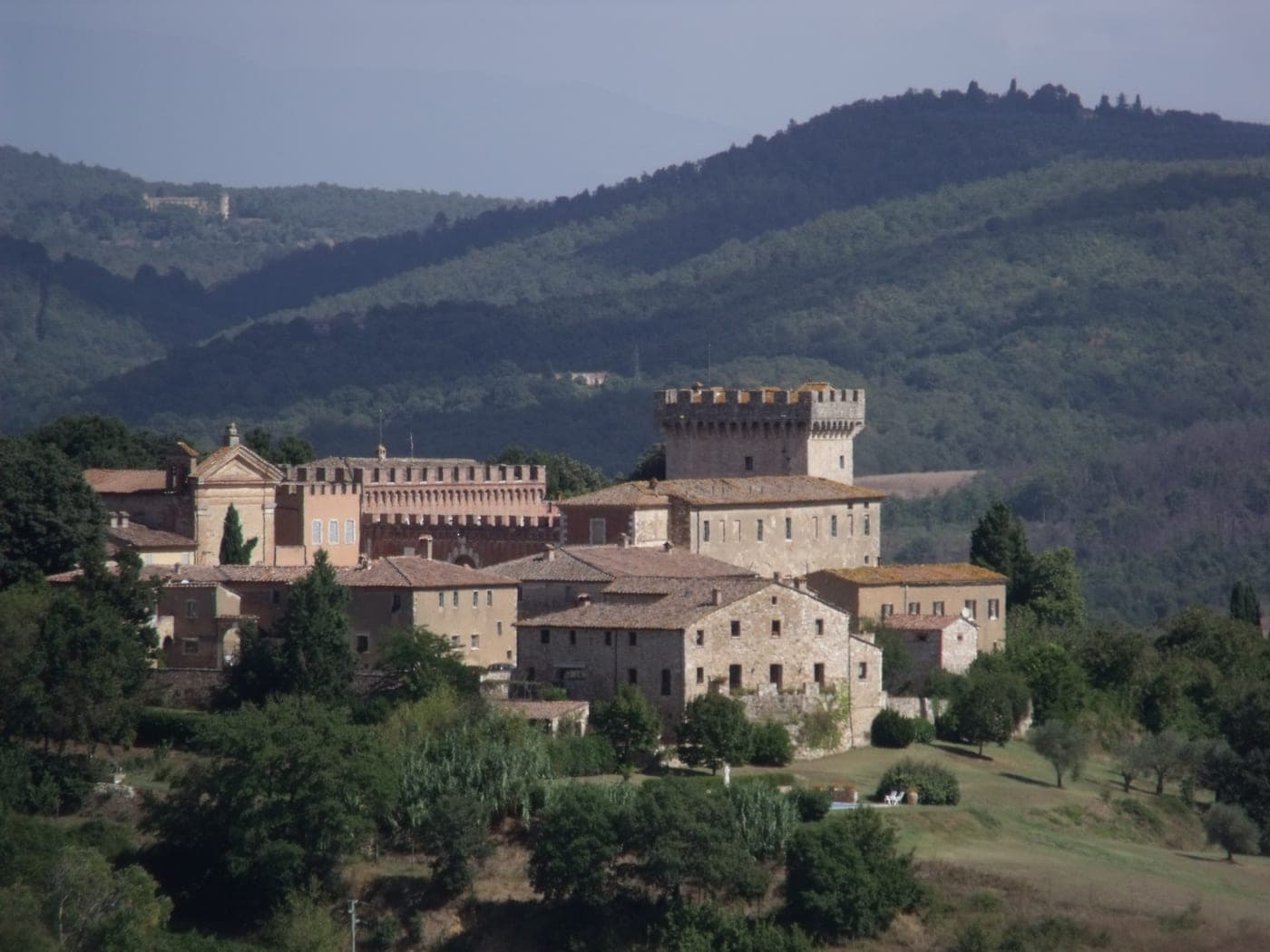 Agritourism
Rapolano Terme
Tuscan spa town with agriturismo farms offering thermal baths, olive groves, and wine tastings.
AgritourismThermal SpasHiking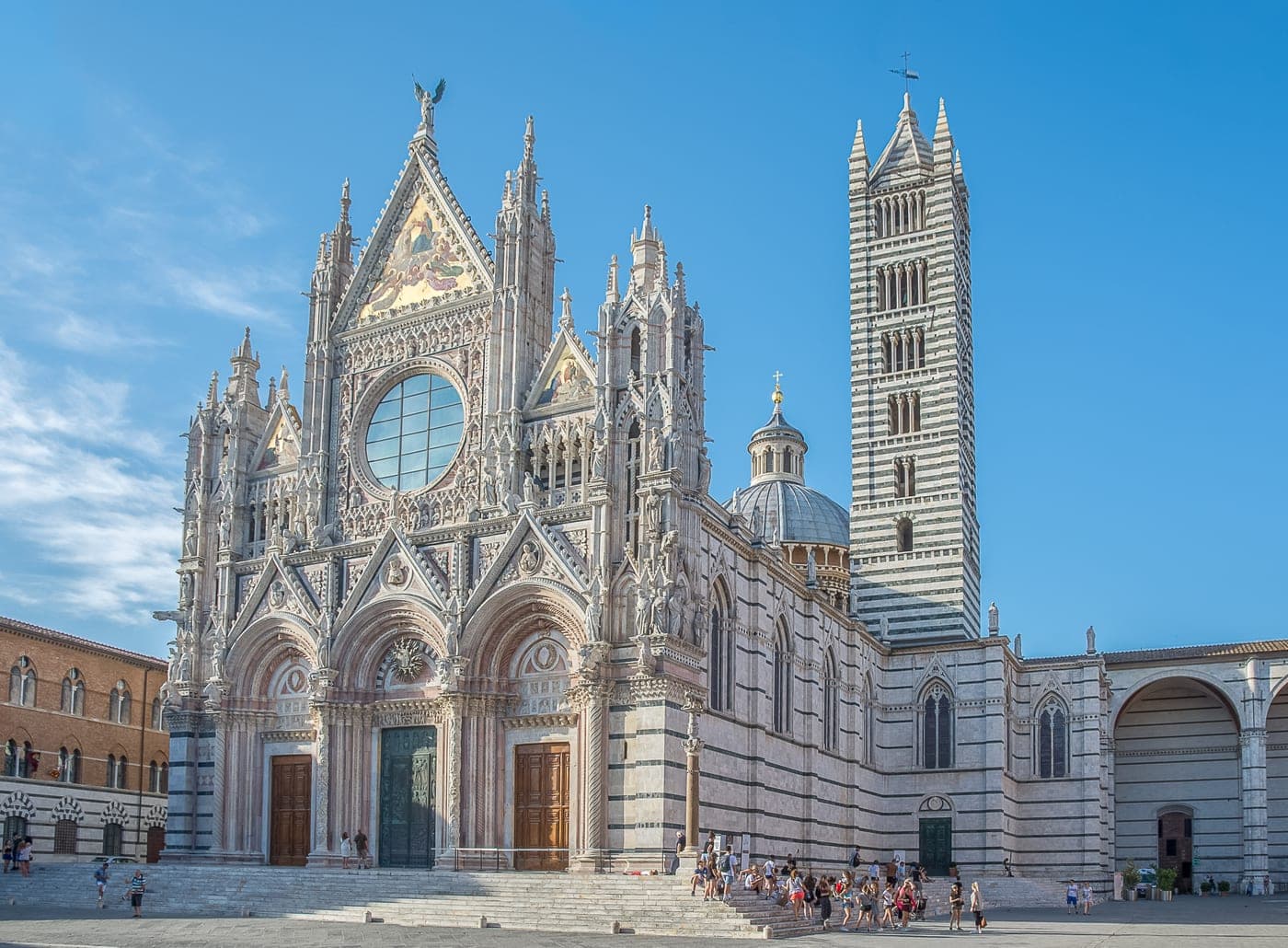 Wine Tasting
Siena
UNESCO medieval city in the heart of Tuscany's wine country with historic Palio horse race.
Wine TastingHiking
1 region
 Wine Tasting38 destinations
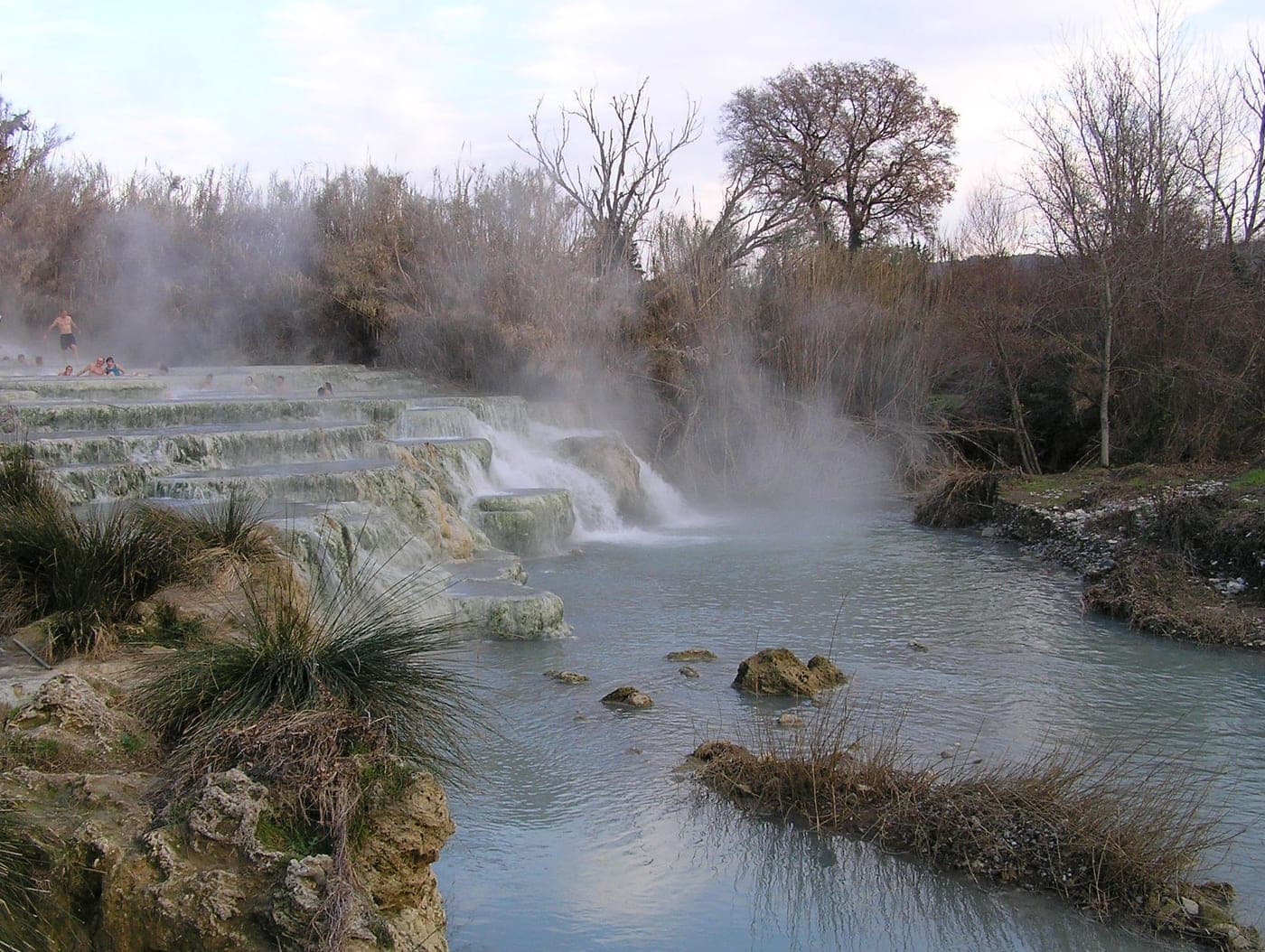
Tuscany
Tuscany, known for its rolling hills and rich history, is the second-largest region in Italy. Florence, its capital, is renowned for Renaissance art and architecture, but also worth exploring are smaller towns like Pienza, famous for pecorino cheese, and San Gimignano, known for its medieval towers. The region boasts diverse landscapes from the Chianti vineyards to the coastal Maremma. Tuscany is also celebrated for its local festivals, such as the Palio di Siena, and its traditional cuisine that emphasizes fresh, local ingredients. This area offers a glimpse into Italy's agrarian past with its rustic farms and olive groves, making it a unique place to slow down and connect with the local culture.
Wine TastingThermal SpasHikingAgritourism





