Ossobuco alla milanese
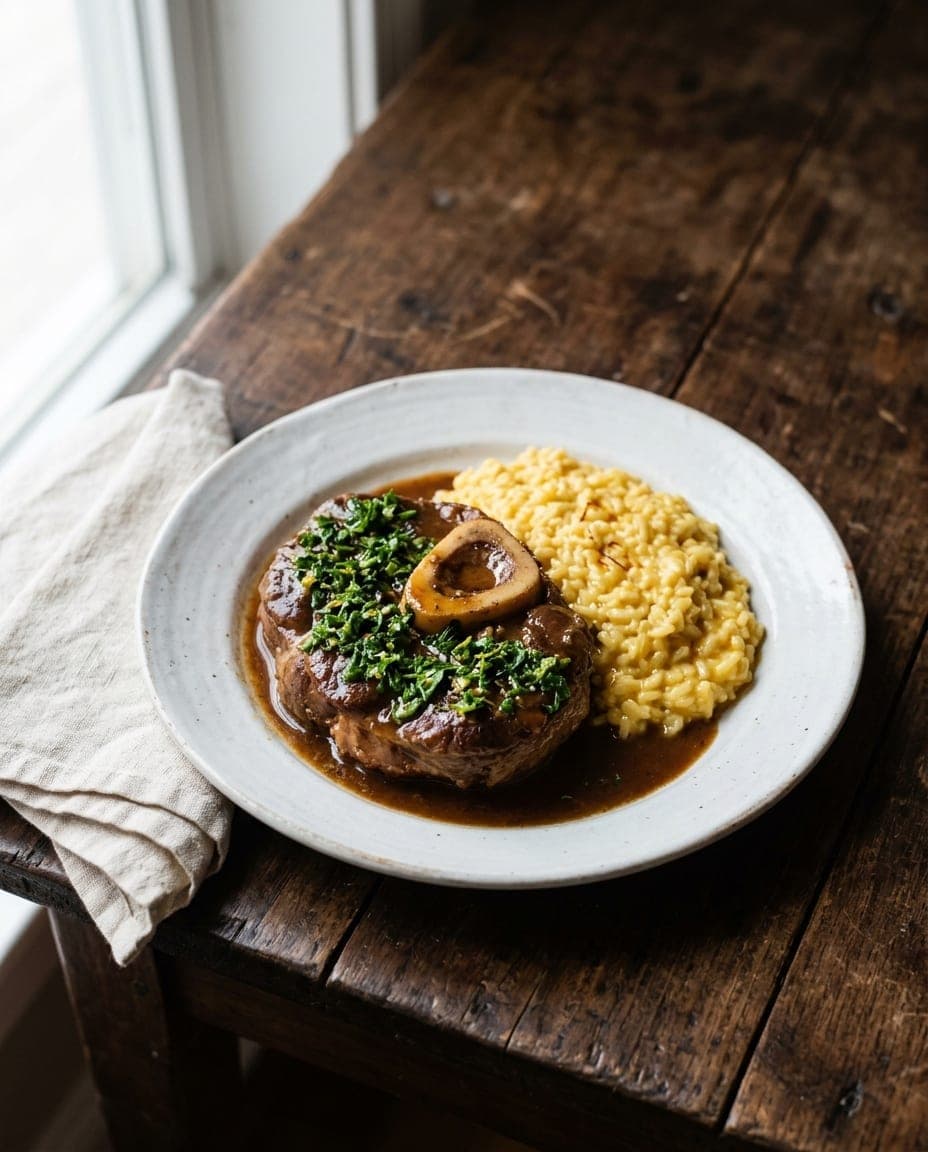
Braised veal shanks with gremolata, served with saffron risotto in Milan
- Local name
- Ossobuco alla milanese
- Served with
- Risotto alla milanese
- Best eaten at
- A Milanese trattoria
- Pairs with
- Nebbiolo or Barbera
What it is
Ossobuco alla milanese is among the most celebrated meat dishes of Milan and a defining example of Lombard cooking. It consists of thick, cross-cut slices of veal shin, braised slowly until the meat falls away from the bone and the marrow inside becomes soft and creamy. The dish is defined by its finishing touch: a raw mixture of lemon zest, garlic and flat-leaf parsley called gremolata (gremolada in Milanese), which is sprinkled over the hot meat just before serving to cut the richness with fresh citrus notes.
In its traditional form, in bianco, the sauce contains no tomato, relying on onion, white wine and stock to build a deep, golden flavour. While the modern tomato-based version is now widespread, the classic preparation remains the reference for Milanese cooks. The dish is substantial enough to be a main course, yet the bright gremolata keeps it from feeling heavy.
The name explains the central feature of the cut: osso buco is Italian for "bone with a hole" (oss bus in Milanese), referring to the marrow cavity visible when the shank is sliced across. The meat is usually tender enough to be eaten with a fork alone, particularly the gelatinous connective tissue that surrounds the bone.
The history of the Milanese cut
Ossobuco has its roots in the home cooking of Lombardy, where cheaper cuts of meat were made into something special through patient cooking. The veal shin, a hard-working muscle from the lower leg, needs long, slow braising to break down its connective tissue. This suits the climate of northern Italy, where hearty, warming dishes are valued during the cooler months, though the dish is now enjoyed year-round.
The tradition of serving it with risotto alla milanese, the saffron-infused rice dish, is deeply entrenched. Unusually for an Italian meal, the two are served together as a single course rather than as separate primo and secondo. The creamy risotto absorbs the savoury juices of the braised meat, while the bright gremolata contrasts with the earthy saffron flavour of the rice.
Over time the preparation moved from family kitchens into the city's trattorias and restaurants, many of which still treat it as a signature of Milanese cooking.
The ingredients that define it
The dish relies on a small number of good-quality components. There is no single official recipe, but the core elements remain consistent across traditional kitchens.
- Veal shin, cut into thick cross-sections with the marrow bone intact, usually tied with string to hold its shape.
- Onion, softened in butter; many cooks also add carrot and celery.
- Flour, lightly dusted over the meat before browning.
- Dry white wine, used to deglaze the pan and add acidity to the sauce.
- Stock, typically meat stock, which provides the braising liquid.
- Gremolata, a fresh mixture of finely chopped lemon zest, garlic and parsley, added just before serving.
The absence of tomato in the oldest version is a point of pride for many cooks in Milan, allowing the natural sweetness of the veal and the sharpness of the gremolata to shine. The gremolata itself is not cooked; its raw state keeps the citrus oils potent when they meet the hot meat.
How it is eaten
Ossobuco alla milanese is served as a main course, usually alongside a generous portion of risotto alla milanese, with the meat resting on or beside the saffron rice on the same plate. The presentation is rustic but elegant, emphasising the contrast between the dark, glossy sauce and the golden rice.
A small, narrow spoon is traditionally provided to extract the marrow from the centre of the bone. This is considered a delicacy, and many diners eat it on its own rather than mixing it into the sauce. Polenta or mashed potatoes are common alternatives to the risotto, especially with the tomato version.
The dish is often paired with a Nebbiolo or Barbera, red wines whose acidity complements the richness of the veal without overpowering it.
Curious facts
- The bone is the prize. The marrow inside the ossobuco is considered by many the best part of the dish, with a small spoon often provided specifically for it.
- No tomato in the original. The traditional in bianco version uses white wine and stock rather than tomatoes.
- Gremolata is essential. The raw mixture of lemon zest, garlic and parsley is what gives the Milanese version its signature freshness.
- A one-plate meal. Served with risotto alla milanese, it breaks the usual Italian rule of keeping rice or pasta and meat in separate courses.
- The name tells the story. Osso buco literally means "bone with a hole", referring to the marrow cavity in the cross-cut shank.
Where to try it
The best place to eat ossobuco alla milanese is a traditional Milanese trattoria, where the dish is prepared with care and served in the classic style. These establishments are often family-run and may be small and unassuming, but they serve the dish in its most authentic form.
In Milan, restaurants specialising in Lombard cuisine almost always offer risotto alla milanese alongside the ossobuco, allowing diners to experience the full traditional pairing. The dish also appears across the rest of Lombardy and northern Italy, but its heart remains in the city, where it is a staple of the local menu for residents and visitors alike.
Where to try it
1 destination
 Camper Van Rentals
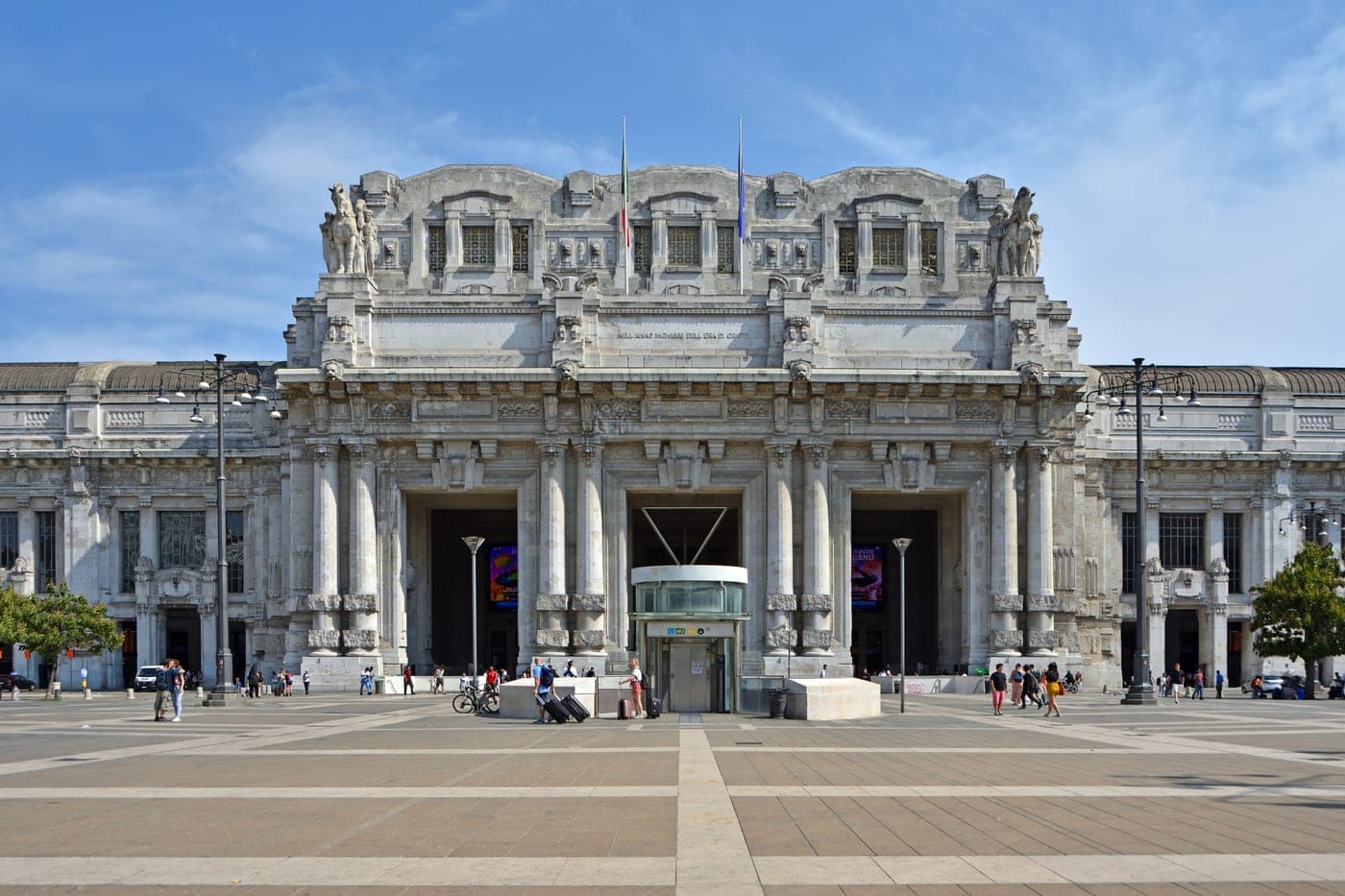
Milan
Italy's fashion and design capital with historic cathedral and opera house.
Camper Van RentalsHiking
1 region
 Boat Rentals12 destinations
Lombardy
Lombardy runs from Alpine peaks in the north down to the flat rice fields of the Po valley in the south, and this range sits behind almost everything the region does well for slow travel. Milan anchors it as a capital of fashion and finance, but the quieter pace that draws travellers who like to slow down lives outside the city, spread across lake villages, hill towns, and wine roads that ring it on every side. Lombardy rewards a traveller who picks one valley, one lake shore, or one wine road and stays with it rather than trying to cover the whole region at once. Lake Como is one of Lombardy's most recognisable landscapes, its stone villages stacked against steep slopes and its old villas opening their gardens to the water. Bellagio, Varenna, and Menaggio each keep a small working harbour where boats still connect the shoreline settlements. Further east, the region also touches the western shore of Lake Garda, where towns like Sirmione sit on a narrow peninsula with Roman ruins at its tip, and Lake Iseo sits quieter still, ringed by Franciacorta's vineyards on one side and Monte Isola, the largest lake island in southern Europe, on the other. Between the lakes, the Brianza hills and the lower Alpine valleys hold smaller villages built around a single church square, a mill, or a market that still runs on its traditional day, largely untouched by the crowds that gather on the main lake shores in summer. Wine gives the region another rhythm, and Lombardy's wine roads are built for slow exploring rather than a single tasting stop. Franciacorta, in the hills east of Brescia, produces Italy's best-known sparkling wine made in the traditional method, and its cellars sit among vineyards that climb gently toward Lake Iseo, many open for visits by appointment. Further south, the Oltrepò Pavese hills near Pavia grow both still and sparkling wines on slopes that agriturismo farms have worked for generations, offering rooms and meals built around what the land produces that season. In the far north, the Valtellina valley grows Nebbiolo on narrow terraces held up by dry stone walls, alongside the mountain cheeses and cured meats the valley is known for; the Strada del Vino e dei Sapori della Valtellina links the terraced vineyards to the villages and cellars below them. The hill towns carry this same unhurried character. Bergamo's upper town, the Città Alta, sits behind a ring of stone walls built by Venice when the city belonged to its inland territories; inside them, narrow lanes lead to a Renaissance chapel and a quiet main square that empties out once the day-trippers head back down. Mantua, ringed by three artificial lakes, kept its Gonzaga-era palaces and squares largely intact and shares a joint UNESCO listing with the smaller fortress town of Sabbioneta, built from scratch as an ideal Renaissance city. Cremona, on the Po plain, has built violins since the Amati and Stradivari workshops opened there, and the craft continues in small workshops around its cathedral square. Pavia, a university town south of Milan, holds a Carthusian monastery on its outskirts whose carved marble façade is one of the region's finest. Smaller villages such as Clusone in the Val Seriana or Gromo, with its old ironworking streets, keep the same rhythm on a smaller scale, each built around a single square, a mill stream, or a covered market. Food ties all of this together, and it is where Lombardy's slow food traditions show clearest. The region cooks with butter and rice rather than the olive oil of the south: risotto alla milanese, coloured with saffron, is the signature dish, while polenta remains a staple in the mountain valleys, often served alongside stewed meat or local cheese. Grana Padano is made across much of the Po plain, and the mountain dairies of Valtellina produce their own aged cheeses, including Bitto and Casera. Markets in the smaller towns still run on a weekly schedule, selling produce grown within a short distance of the stall, and many agriturismo farms across Oltrepò Pavese and Franciacorta serve meals built entirely from what they grow or raise themselves. Landscape and table hold Lombardy together: a lake village built around its harbour, a wine road that climbs from valley floor to ridge line, a hill town that keeps its own pace once the tour groups leave. The towns and wine roads below each hold a different piece of this pattern, from the Renaissance squares of Mantua to the terraced vineyards of the Valtellina, and together they map out a version of Lombardy built for slow travel rather than a checklist of sights.
Boat RentalsWine TastingHikingCamper Van Rentals





