Grana Padano
The Po Valley's granular cow's-milk cheese, milder than Parmigiano and aged from nine months
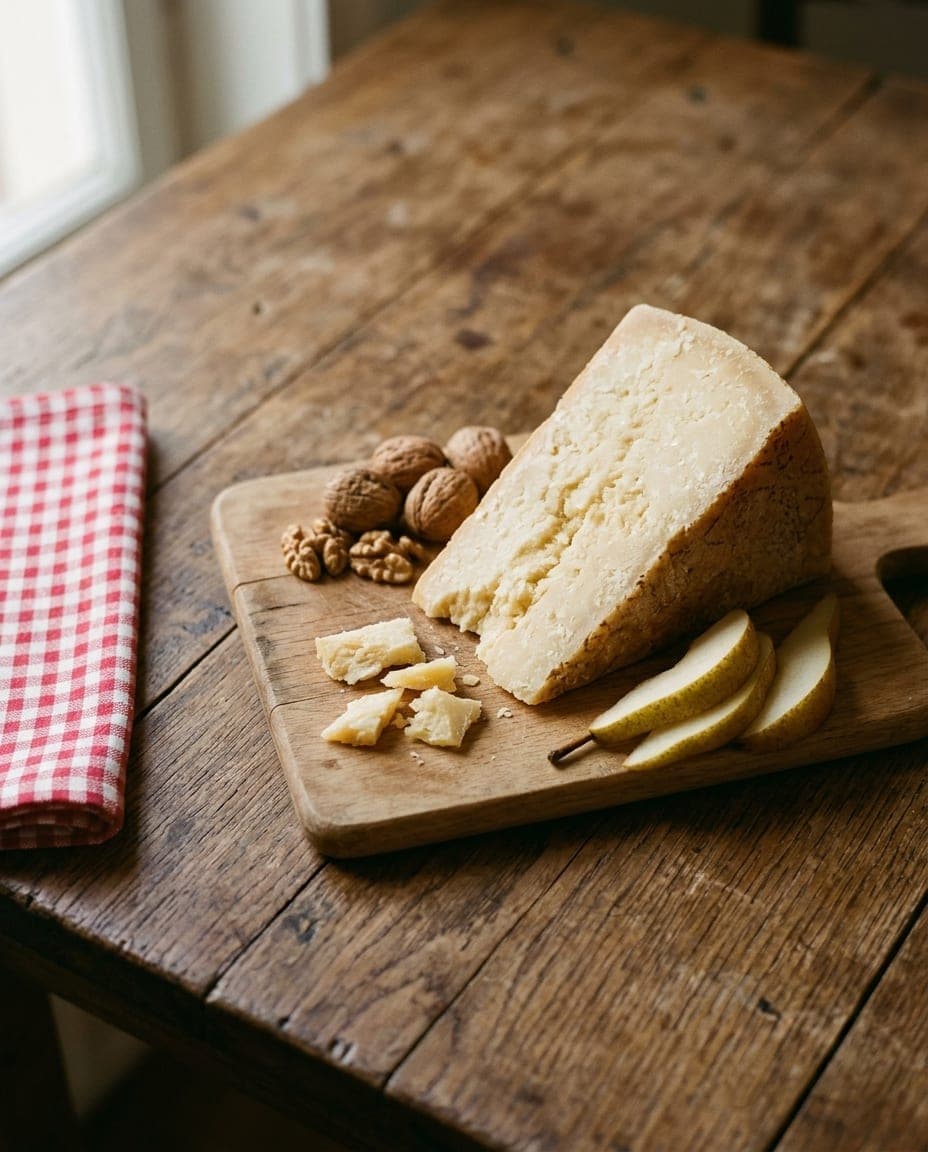
- Local name
- Grana Padano DOP
- Served with
- Pears, walnuts
- Pairs with
- Lombard red or Franciacorta
What it is
Grana Padano is a hard, granular cheese made from cow's milk in the Po Valley of northern Italy. It shares the same family tree as Parmigiano Reggiano, yet occupies its own space with a distinct character and a much wider geographical footprint. The name itself offers a clue to its texture: grana means grain in Italian, referring to the fine, grainy structure of the mature paste, while Padano refers to the Po (Padus in Latin).
This is a dense wheel of pale yellow, dry and firm enough to be grated finely or broken into splinters. The taste is savoury and nutty, but generally milder than its famous cousin. Where an old Parmigiano Reggiano can offer sharp notes of dried fruit or spice, Grana Padano tends towards a gentler, rounder sweetness that pairs easily with food rather than dominating it. It is a cheese for grating over pasta and eating in chunks alongside fruit or cured meats.
The production area covers a vast stretch of the Po Valley across five regions: Lombardy, Piedmont, Veneto, the province of Trento (plus a handful of municipalities in South Tyrol) and parts of Emilia-Romagna, chiefly around Piacenza. Lombardy is its historic heartland.
The story behind the wheel
The history of Grana Padano begins in the Middle Ages, in the lower Lombard plain between Milan and the Po. Land reclamation from the 11th century onwards produced a surplus of milk, and the Cistercian monks of Chiaravalle Abbey, near Milan, are credited with developing a long-keeping hard cheese to preserve it. The monks are said to have called it caseus vetus, "old cheese", because of its long ageing. By the Renaissance it was known at the courts of northern Italy; a letter by Isabella d'Este from 1504 mentions it.
The modern rules came much later. The name Grana Padano was recognised as a national designation of origin in 1955, and the cheese was registered as a Protected Designation of Origin (DOP) by the European Union in 1996. Only cheese made within the designated area and following its production rules can bear the name.
How it differs from Parmigiano Reggiano
The two cheeses are often placed side by side, but the differences are real. The most obvious is the production area. Parmigiano Reggiano comes from a compact zone covering the provinces of Parma, Reggio Emilia and Modena, plus parts of Bologna and Mantua. Grana Padano spans five regions and many more provinces.
The rules on the cows' diet also set them apart. Both cheeses are made with partly skimmed raw milk, but Parmigiano Reggiano forbids silage, while Grana Padano permits it, including chopped maize. Ageing differs too: Grana Padano must be aged for at least nine months, Parmigiano Reggiano for at least twelve. Wheels aged at least 20 months can be sold as Grana Padano Riserva.
Lysozyme, an enzyme derived from egg white, is another key differentiator. It is permitted in Grana Padano to prevent the unwanted fermentation that silage-fed milk can cause during maturation, and it is not used in Parmigiano Reggiano. A silage-free variant made in Trentino, sold as Trentingrana, does without lysozyme.
What goes into it
Grana Padano is made from raw cow's milk that is partially skimmed by letting the cream rise. The milk is coagulated with calf rennet, so the cheese is not suitable for vegetarians, and the curd is broken into tiny grains, cooked and left to settle before being lifted out and placed in moulds.
The young wheels are brined and then aged for months or even years. The rind is impressed with the dotted marks of the designation, and a casein plate records the production year and a unique code. Wheels that pass inspection receive the consortium's fire brand.
The flavour evolves over time. Younger wheels, aged around nine months, offer a mild, milky taste. Beyond a year, the flavour deepens and becomes more savoury and nutty, and small white crystals form in older wheels, adding a pleasant crunch.
How it is eaten
Grana Padano is most often grated over pasta, soups and risottos, where its mild flavour enhances the dish without overpowering it, and it melts readily into sauces.
For eating plain, it is best served in splinters or thin shards. It pairs naturally with fresh pears, which offer a sweet, juicy contrast to the cheese's saltiness, and with walnuts. This combination is common on antipasto platters across northern Italy.
The cheese also pairs well with local wines. A Lombard red from the Oltrepò Pavese, such as a Barbera or a Bonarda, complements its nutty notes, while a Franciacorta sparkling wine offers a crisp contrast.
Curious facts
- The clover mark. Each wheel is stamped with a four-leaf clover bearing the dairy's serial number, alongside the dotted pattern of the designation.
- A name that describes texture. The word grana refers to the grainy structure of the cheese.
- Lysozyme is permitted. Unlike Parmigiano Reggiano, Grana Padano may use lysozyme from egg white.
- Silage is allowed in feed. Cows producing milk for Grana Padano may be fed silage, which Parmigiano Reggiano forbids.
- A monastic origin. The Cistercians of Chiaravalle, just south of Milan, are credited with the first wheels.
Where to try it
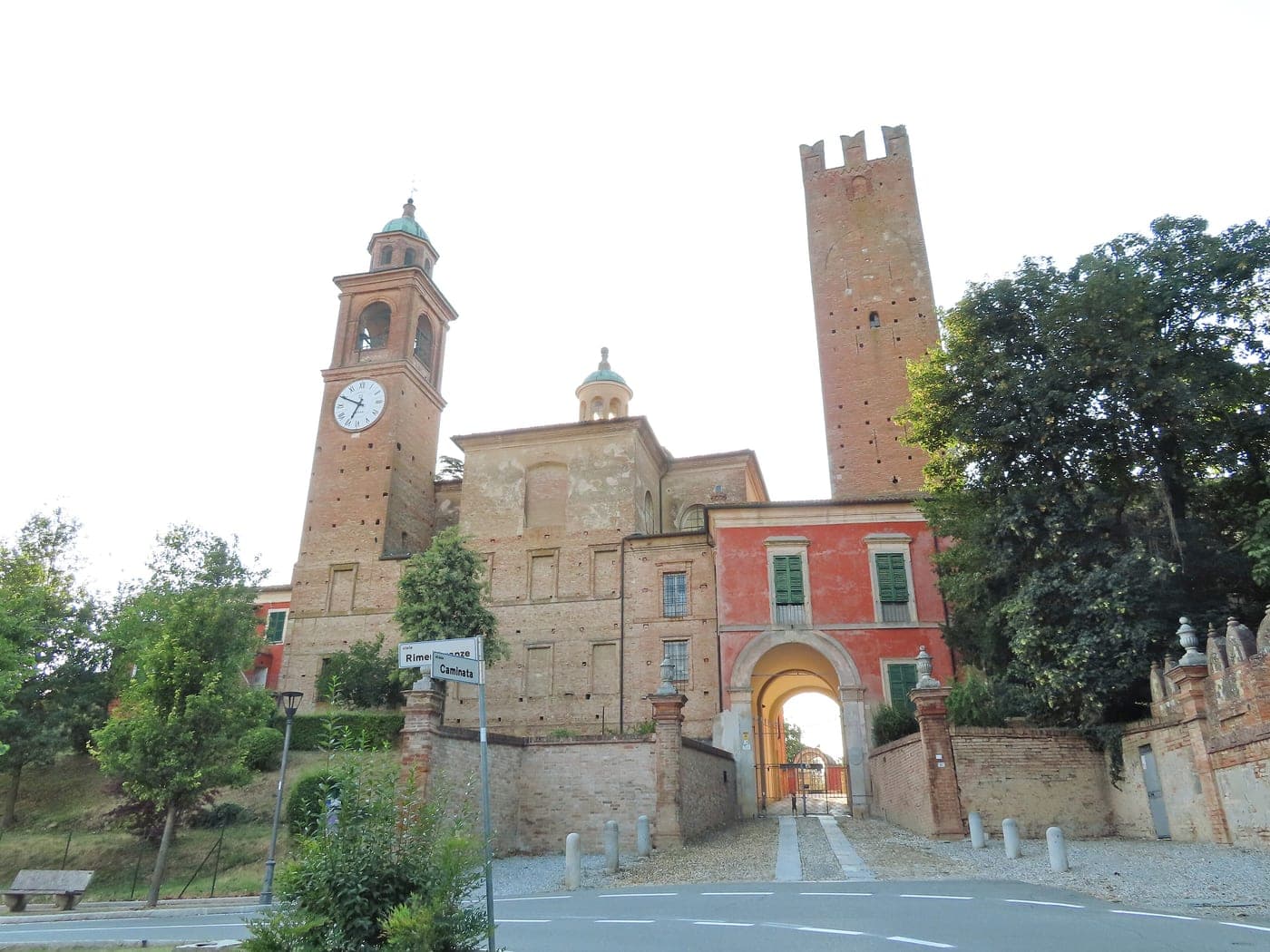
The cheese is best tasted where it is made, across the Po Valley. Around Milan, Chiaravalle Abbey connects the cheese to its monastic origins. In the province of Piacenza, in the Emilia-Romagna part of the production area, the countryside around Castelnuovo Fogliani is a quiet base among dairy farms on the border with the Parma area. Local shops and dairies across the production zone often offer samples of different ages, allowing visitors to taste the evolution from young, mild wheels to older, more complex ones.
Traditional trattorias throughout the Po Valley serve Grana Padano grated over local pasta and risotto or in shards with pears and walnuts, a simple connection to the land and the people who have sustained its production for generations.
Where to try it
1 destination
 Agritourism
Castelnuovo Fogliani
Po Valley countryside with agriturismo farms producing Grana Padano cheese and cured meats.
Agritourism
3 regions
 Boat Rentals12 destinations
Lombardy
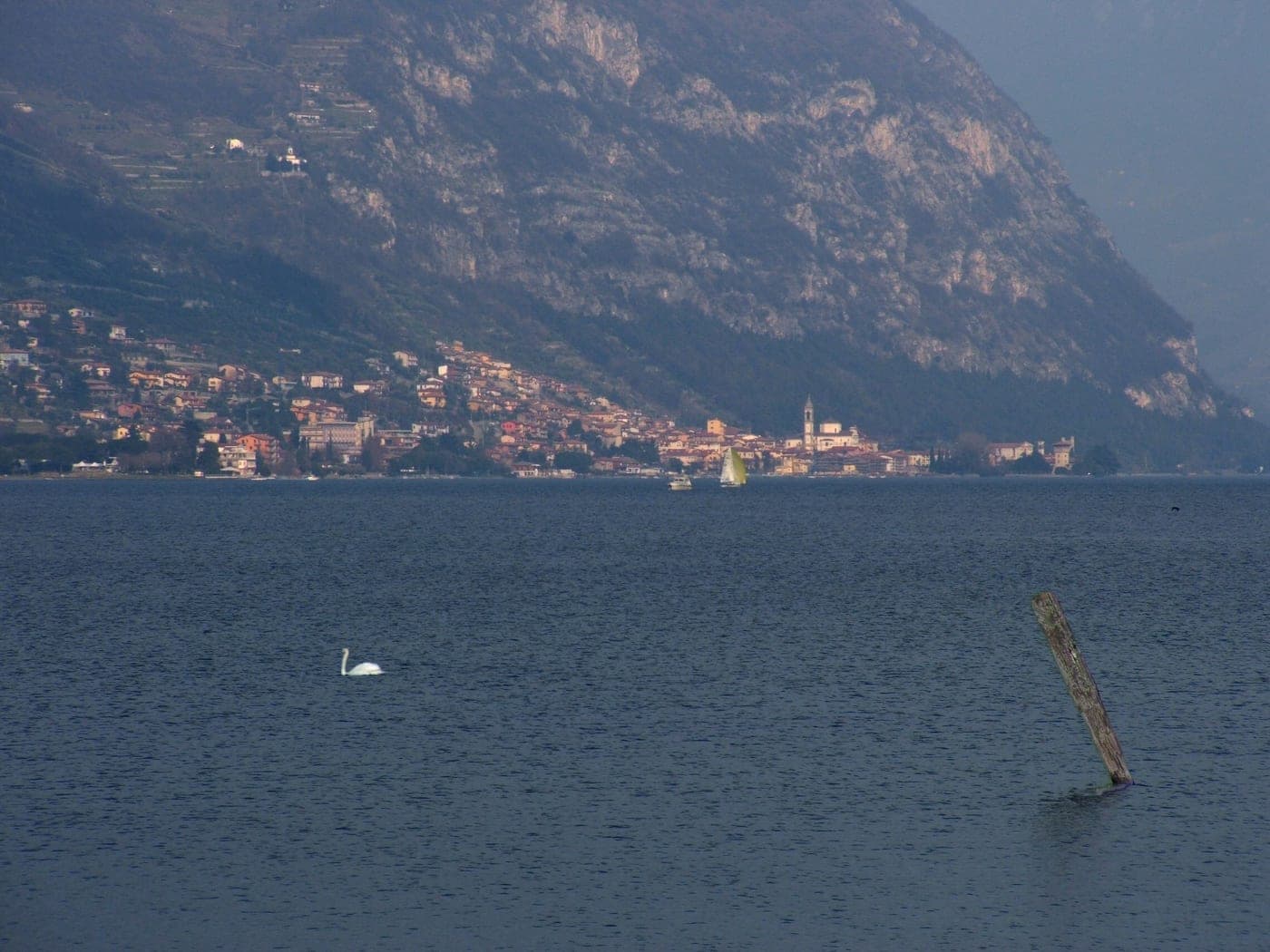
Lombardy runs from Alpine peaks in the north down to the flat rice fields of the Po valley in the south, and this range sits behind almost everything the region does well for slow travel. Milan anchors it as a capital of fashion and finance, but the quieter pace that draws travellers who like to slow down lives outside the city, spread across lake villages, hill towns, and wine roads that ring it on every side. Lombardy rewards a traveller who picks one valley, one lake shore, or one wine road and stays with it rather than trying to cover the whole region at once. Lake Como is one of Lombardy's most recognisable landscapes, its stone villages stacked against steep slopes and its old villas opening their gardens to the water. Bellagio, Varenna, and Menaggio each keep a small working harbour where boats still connect the shoreline settlements. Further east, the region also touches the western shore of Lake Garda, where towns like Sirmione sit on a narrow peninsula with Roman ruins at its tip, and Lake Iseo sits quieter still, ringed by Franciacorta's vineyards on one side and Monte Isola, the largest lake island in southern Europe, on the other. Between the lakes, the Brianza hills and the lower Alpine valleys hold smaller villages built around a single church square, a mill, or a market that still runs on its traditional day, largely untouched by the crowds that gather on the main lake shores in summer. Wine gives the region another rhythm, and Lombardy's wine roads are built for slow exploring rather than a single tasting stop. Franciacorta, in the hills east of Brescia, produces Italy's best-known sparkling wine made in the traditional method, and its cellars sit among vineyards that climb gently toward Lake Iseo, many open for visits by appointment. Further south, the Oltrepò Pavese hills near Pavia grow both still and sparkling wines on slopes that agriturismo farms have worked for generations, offering rooms and meals built around what the land produces that season. In the far north, the Valtellina valley grows Nebbiolo on narrow terraces held up by dry stone walls, alongside the mountain cheeses and cured meats the valley is known for; the Strada del Vino e dei Sapori della Valtellina links the terraced vineyards to the villages and cellars below them. The hill towns carry this same unhurried character. Bergamo's upper town, the Città Alta, sits behind a ring of stone walls built by Venice when the city belonged to its inland territories; inside them, narrow lanes lead to a Renaissance chapel and a quiet main square that empties out once the day-trippers head back down. Mantua, ringed by three artificial lakes, kept its Gonzaga-era palaces and squares largely intact and shares a joint UNESCO listing with the smaller fortress town of Sabbioneta, built from scratch as an ideal Renaissance city. Cremona, on the Po plain, has built violins since the Amati and Stradivari workshops opened there, and the craft continues in small workshops around its cathedral square. Pavia, a university town south of Milan, holds a Carthusian monastery on its outskirts whose carved marble façade is one of the region's finest. Smaller villages such as Clusone in the Val Seriana or Gromo, with its old ironworking streets, keep the same rhythm on a smaller scale, each built around a single square, a mill stream, or a covered market. Food ties all of this together, and it is where Lombardy's slow food traditions show clearest. The region cooks with butter and rice rather than the olive oil of the south: risotto alla milanese, coloured with saffron, is the signature dish, while polenta remains a staple in the mountain valleys, often served alongside stewed meat or local cheese. Grana Padano is made across much of the Po plain, and the mountain dairies of Valtellina produce their own aged cheeses, including Bitto and Casera. Markets in the smaller towns still run on a weekly schedule, selling produce grown within a short distance of the stall, and many agriturismo farms across Oltrepò Pavese and Franciacorta serve meals built entirely from what they grow or raise themselves. Landscape and table hold Lombardy together: a lake village built around its harbour, a wine road that climbs from valley floor to ridge line, a hill town that keeps its own pace once the tour groups leave. The towns and wine roads below each hold a different piece of this pattern, from the Renaissance squares of Mantua to the terraced vineyards of the Valtellina, and together they map out a version of Lombardy built for slow travel rather than a checklist of sights.
Boat RentalsWine TastingHikingCamper Van Rentals Wine Tasting20 destinations
Veneto
Veneto is a diverse region in northeastern Italy, home to Venice, the only city on the water. It is the eighth largest region in Italy and boasts a rich history shaped by its Roman and Venetian heritage. The countryside features rolling hills, vineyards, and olive groves, producing wines like Prosecco and Amarone. Beyond Venice, towns like Verona, known for its Roman amphitheater, and Vicenza, famous for Palladian architecture, provide cultural depth. The region also offers the picturesque Dolomites for hiking and outdoor activities. Lesser-known villages such as Asolo and Bassano del Grappa reveal local crafts and traditions, ideal for those seeking authentic experiences away from crowds.
Wine TastingHikingThermal Spas Wine Tasting9 destinations
Emilia-Romagna
This region in Italy is renowned for its diverse landscapes, ranging from the Apennine Mountains to the Adriatic coastline. It is the only Italian region with a significant stretch of coastline, featuring vibrant seaside towns like Rimini. Bologna, the capital, is famous for its medieval architecture and culinary heritage, being the birthplace of tagliatelle al ragù. The region is also known for its rich history, with towns like Modena showcasing UNESCO-listed sites such as its cathedral and the renowned balsamic vinegar. Slow travelers can explore hidden gems like the medieval village of Dozza, known for its painted walls, or the thermal baths in Salsomaggiore Terme. Emilia-Romagna is the largest region in northern Italy, offering a blend of art, culture, and gastronomy that invites deeper exploration.
Wine TastingHikingCamper Van RentalsLocal Cuisine





