Cotoletta alla milanese
Bone-in veal chop, breaded and fried to gold in butter in Milan
- Local name
- Cotoletta alla milanese
- Served with
- Lemon wedge
- Best eaten at
- A Milanese trattoria
- Pairs with
- Franciacorta or Barbera
What it is
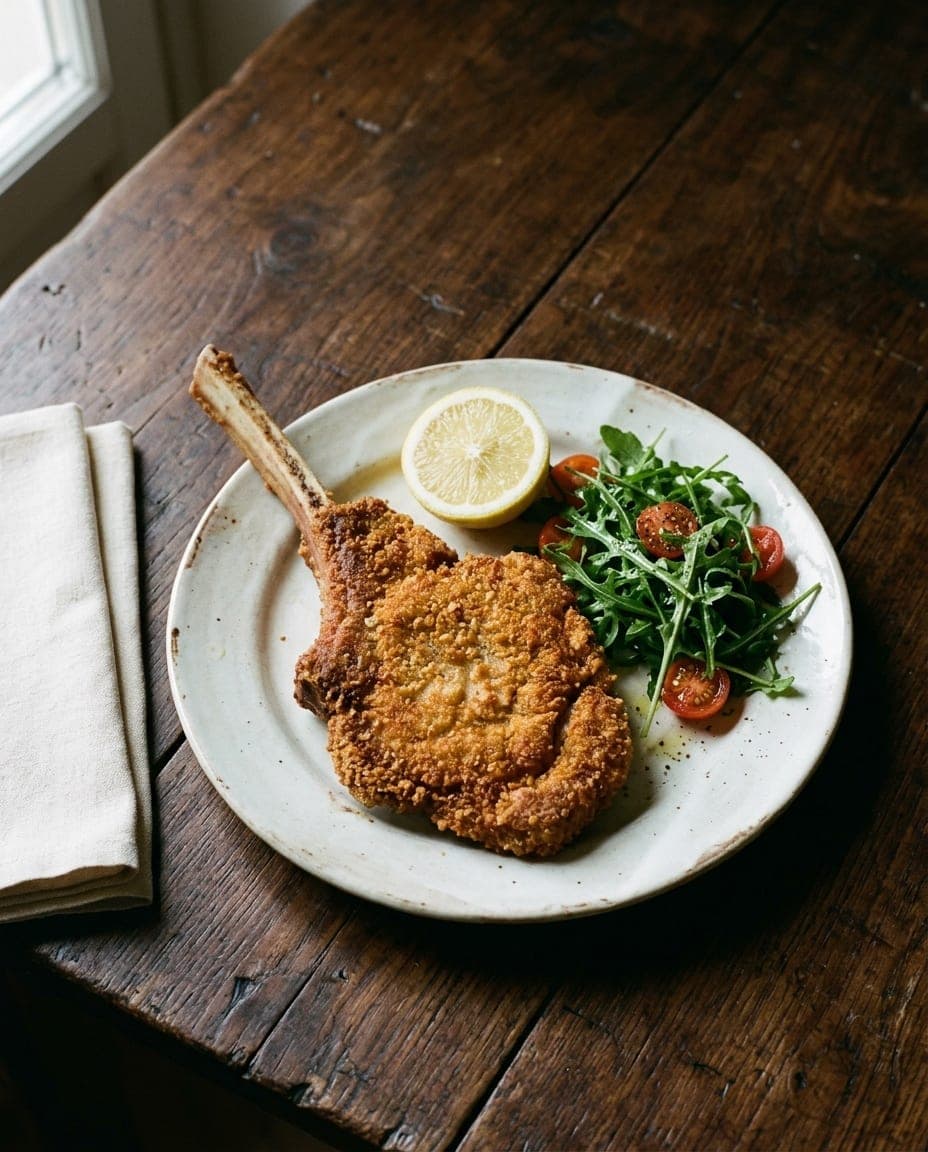
The cotoletta alla milanese is the most celebrated dish of Lombardy's capital, a simple yet imposing presence on the table that defines the city's culinary identity. In its classic form it is a thick veal chop cut from the rib section, with the bone left attached. The meat is dipped in beaten egg, coated in breadcrumbs and fried in clarified butter until it turns a deep, uniform gold. There are no sauces and no garnish on the plate other than a wedge of lemon.
The dish is a study in contrasts. The exterior offers a crisp, nutty crunch from the breadcrumbs, while the interior remains tender, moist and rosy near the bone if cooked correctly. It is not a light starter; it is a substantial main course eaten with a knife and fork. In Milan, the cotoletta is often described as a dish that demands respect for its simplicity: there is nowhere to hide if the butter is burnt or the meat tough.
The bone is the defining feature. The name cotoletta comes from costoletta, a rib chop, and in the Milanese tradition the rib bone remains attached. A popular variant, the orecchia d'elefante or elephant's ear, is beaten out until it is very thin and wide, and covers most of the plate. Purists consider the thick, bone-in chop the orthodox cotoletta alla milanese.
The debate over origins
The history of the cotoletta involves a long-running rivalry between Milan and Vienna. Both cities lay claim to the idea of breading and frying a cut of veal, and the Wiener Schnitzel is the dish's closest relative.
The Milanese argument rests on a 12th-century menu for a banquet of the canons of the basilica of Sant'Ambrogio, quoted by the historian Pietro Verri in his Storia di Milano, which lists lombolos cum panitio, breaded loin of veal. It is usually dated to 1134, though some sources give 1148. The Viennese side of the story centres on Field Marshal Radetzky, who governed Lombardy for the Austrian Empire in the 19th century: he is said to have praised the Milanese cutlet in a letter and carried the recipe back to Vienna. That letter has never been found, and the tale is best treated as legend.
Neither side has secured a definitive verdict. Breaded, fried meat was known in many European kitchens, and the two dishes may have evolved independently or through mutual influence. What matters today is how each city has kept its own version. The Wiener Schnitzel is a thin, boneless slice, while Milan insists on the bone and on butter.
The ingredients and the method
There are only a few essential components: high-quality veal, eggs, breadcrumbs and clarified butter. The choice of meat matters most. Traditionally it is a bone-in rib chop from milk-fed veal, cut from the first ribs and left several centimetres thick, so that the meat stays juicy inside its crust.
The coating is simple. There are no herbs added to the breading and, in the classic version, no flour dusting. The chop is dipped into beaten egg to act as an adhesive, then pressed into dry breadcrumbs until fully covered. The result is an even layer that fries up crisp and golden.
The cooking fat is the final element that separates this dish from its relatives. While many other fried meats are cooked in vegetable oil or lard, the cotoletta alla milanese calls for clarified butter, butter from which the milk solids have been removed, leaving a clear fat with a higher smoke point and a nutty flavour. The chop is fried gently on both sides until the crust is set and the meat inside is just cooked. The butter gives the dish its distinctive aroma and a subtle sweetness that oil cannot provide.
How it is served
In a traditional Milanese trattoria, the cotoletta arrives as a solitary star on the plate. The only addition is a wedge of lemon, to be squeezed over the hot meat just before eating. The acidity of the lemon cuts the richness of the butter without altering the dish itself.
A side of insalata mista, or mixed salad, or a portion of potatoes may be ordered separately. The thin elephant's-ear version, by contrast, is often served topped with rocket and cherry tomatoes. The cotoletta is best eaten immediately after it leaves the pan, before the crust begins to soften as it cools.
Where to find it
The cotoletta belongs to the traditional trattorias of Milan, the neighbourhood places that have served the city for generations rather than fancy hotels or tourist traps. In some, the kitchen is visible from the dining room and the butter can be seen bubbling in the pan. While many places in Milan serve the dish, those that specialise in it often have a reputation for consistency.
Curious facts
- The bone matters. The classic cotoletta keeps its rib bone; the wide, thin orecchia d'elefante is a popular variant.
- Butter over oil. The orthodox Milanese recipe calls for clarified butter, giving the crust its signature nutty aroma and golden colour.
- A solitary plate. The dish is served alone, with a lemon wedge as the only garnish.
- The Vienna argument. Milan and Vienna have long debated who invented the breaded veal cutlet; the story of Radetzky's letter is unproven.
- A 12th-century reference. A medieval menu from the basilica of Sant'Ambrogio, quoted by Pietro Verri, mentions lombolos cum panitio, often cited as the earliest written trace of the dish.
- Pairing with Franciacorta. The rich, buttery chop pairs well with Franciacorta, a sparkling wine from Lombardy, or a light Barbera, both of which cut through the fat without overpowering the meat.
Where to try it
The most authentic experience is found in a traditional Milanese trattoria, where the cotoletta alla milanese remains a staple on the menu. These establishments are scattered throughout the city, from the historic centre to the outer neighbourhoods, and share a commitment to the classic preparation.
The lack of sides and sauces can surprise those expecting a more elaborate presentation, yet this restraint is precisely what makes the dish so powerful. With a glass of sparkling Franciacorta or a light red alongside, it shows why the cotoletta remains a cornerstone of Milanese cuisine.
Where to try it
1 destination
 Camper Van Rentals
Milan
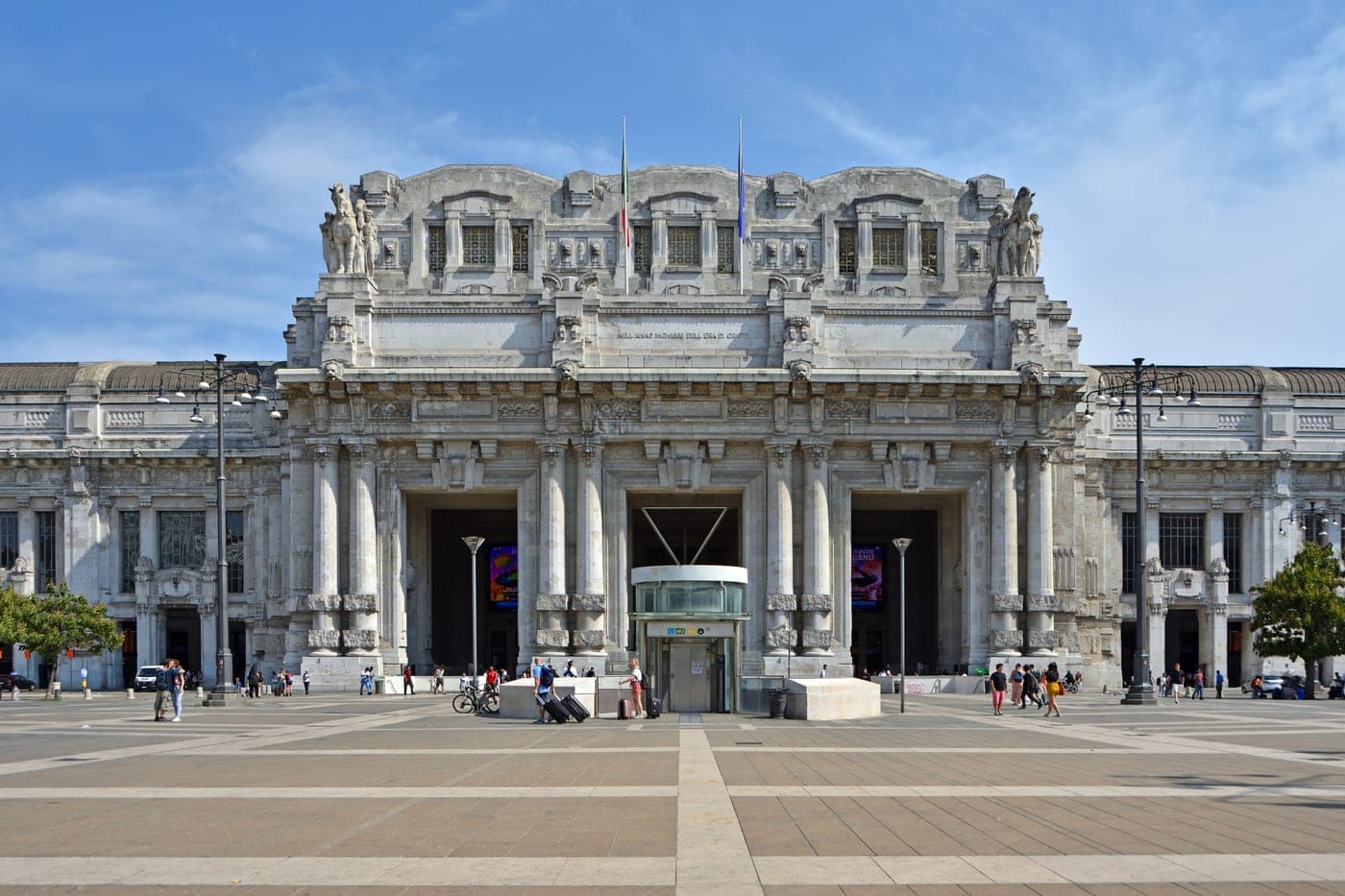
Italy's fashion and design capital with historic cathedral and opera house.
Camper Van RentalsHiking
1 region
 Boat Rentals12 destinations
Lombardy
Lombardy runs from Alpine peaks in the north down to the flat rice fields of the Po valley in the south, and this range sits behind almost everything the region does well for slow travel. Milan anchors it as a capital of fashion and finance, but the quieter pace that draws travellers who like to slow down lives outside the city, spread across lake villages, hill towns, and wine roads that ring it on every side. Lombardy rewards a traveller who picks one valley, one lake shore, or one wine road and stays with it rather than trying to cover the whole region at once. Lake Como is one of Lombardy's most recognisable landscapes, its stone villages stacked against steep slopes and its old villas opening their gardens to the water. Bellagio, Varenna, and Menaggio each keep a small working harbour where boats still connect the shoreline settlements. Further east, the region also touches the western shore of Lake Garda, where towns like Sirmione sit on a narrow peninsula with Roman ruins at its tip, and Lake Iseo sits quieter still, ringed by Franciacorta's vineyards on one side and Monte Isola, the largest lake island in southern Europe, on the other. Between the lakes, the Brianza hills and the lower Alpine valleys hold smaller villages built around a single church square, a mill, or a market that still runs on its traditional day, largely untouched by the crowds that gather on the main lake shores in summer. Wine gives the region another rhythm, and Lombardy's wine roads are built for slow exploring rather than a single tasting stop. Franciacorta, in the hills east of Brescia, produces Italy's best-known sparkling wine made in the traditional method, and its cellars sit among vineyards that climb gently toward Lake Iseo, many open for visits by appointment. Further south, the Oltrepò Pavese hills near Pavia grow both still and sparkling wines on slopes that agriturismo farms have worked for generations, offering rooms and meals built around what the land produces that season. In the far north, the Valtellina valley grows Nebbiolo on narrow terraces held up by dry stone walls, alongside the mountain cheeses and cured meats the valley is known for; the Strada del Vino e dei Sapori della Valtellina links the terraced vineyards to the villages and cellars below them. The hill towns carry this same unhurried character. Bergamo's upper town, the Città Alta, sits behind a ring of stone walls built by Venice when the city belonged to its inland territories; inside them, narrow lanes lead to a Renaissance chapel and a quiet main square that empties out once the day-trippers head back down. Mantua, ringed by three artificial lakes, kept its Gonzaga-era palaces and squares largely intact and shares a joint UNESCO listing with the smaller fortress town of Sabbioneta, built from scratch as an ideal Renaissance city. Cremona, on the Po plain, has built violins since the Amati and Stradivari workshops opened there, and the craft continues in small workshops around its cathedral square. Pavia, a university town south of Milan, holds a Carthusian monastery on its outskirts whose carved marble façade is one of the region's finest. Smaller villages such as Clusone in the Val Seriana or Gromo, with its old ironworking streets, keep the same rhythm on a smaller scale, each built around a single square, a mill stream, or a covered market. Food ties all of this together, and it is where Lombardy's slow food traditions show clearest. The region cooks with butter and rice rather than the olive oil of the south: risotto alla milanese, coloured with saffron, is the signature dish, while polenta remains a staple in the mountain valleys, often served alongside stewed meat or local cheese. Grana Padano is made across much of the Po plain, and the mountain dairies of Valtellina produce their own aged cheeses, including Bitto and Casera. Markets in the smaller towns still run on a weekly schedule, selling produce grown within a short distance of the stall, and many agriturismo farms across Oltrepò Pavese and Franciacorta serve meals built entirely from what they grow or raise themselves. Landscape and table hold Lombardy together: a lake village built around its harbour, a wine road that climbs from valley floor to ridge line, a hill town that keeps its own pace once the tour groups leave. The towns and wine roads below each hold a different piece of this pattern, from the Renaissance squares of Mantua to the terraced vineyards of the Valtellina, and together they map out a version of Lombardy built for slow travel rather than a checklist of sights.
Boat RentalsWine TastingHikingCamper Van Rentals





