Cannoli
Crisp Sicilian tubes of fried dough filled with sweet sheep's-milk ricotta
- Local name
- Cannoli
- Best eaten at
- A Sicilian pasticceria
- Pairs with
- Marsala or passito
What it is
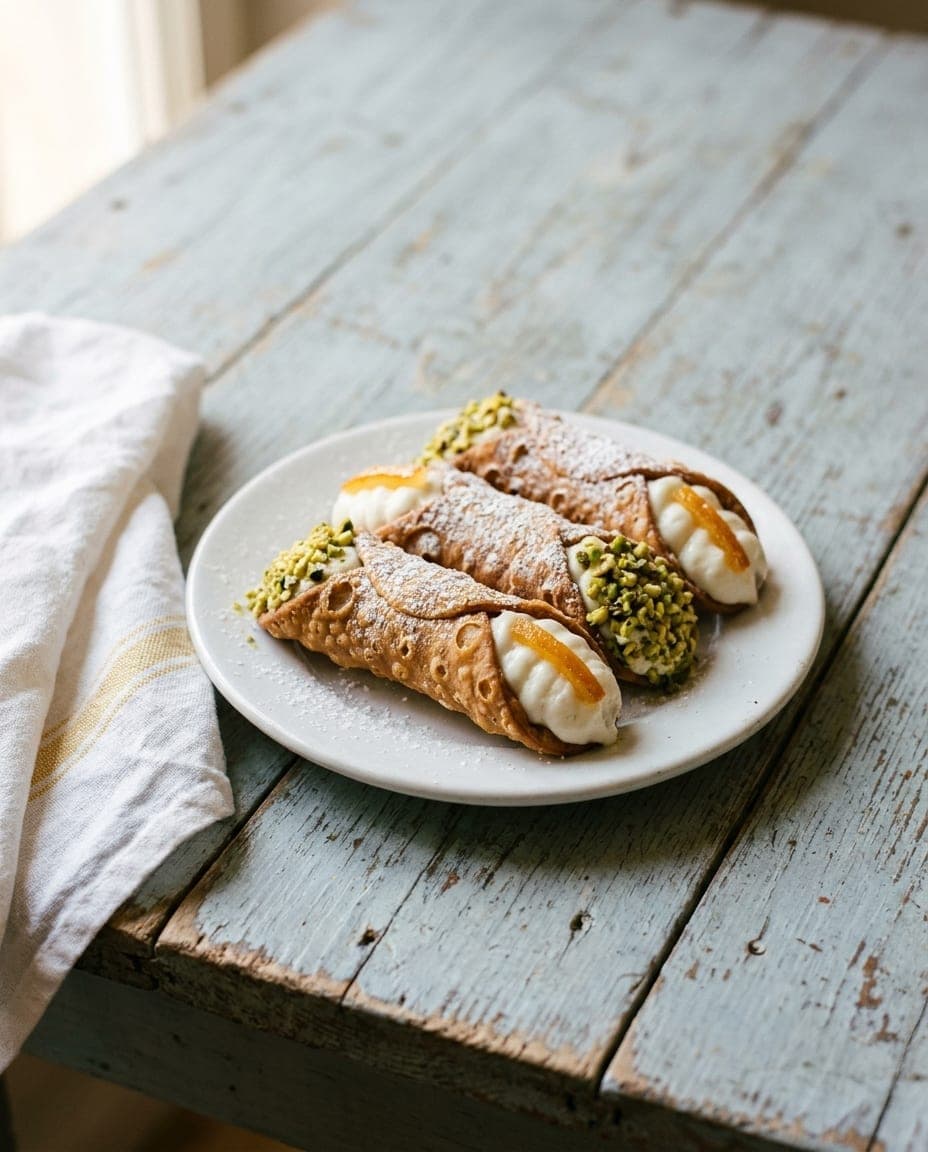
Cannoli are the best-known sweet of Sicily, appearing in almost every window of a traditional pasticceria across the island. The name translates simply as "little tubes" (the singular is cannolo), describing their shape perfectly: crisp, cylindrical pastry cases filled with a sweet, creamy filling. While similar fried pastries exist elsewhere in Italy and beyond, the Sicilian cannolo is distinct in its construction and its ingredients.
The shell is the defining feature. It must be hard, brittle and capable of shattering when bitten into, providing a sharp contrast to the soft, cool filling inside. The pastry is made from flour, sugar and traditionally lard, and usually includes a splash of Marsala wine (or, in many recipes, wine vinegar) along with touches such as cocoa or cinnamon. Rolled very thin, the dough is wrapped around metal tubes and deep-fried until it blisters into a golden, crunchy shell.
The filling is equally specific. It relies on fresh sheep's-milk ricotta that has been drained and often sieved to remove any graininess, then sweetened with sugar. The ends of the filled tubes are typically decorated with chopped pistachios, candied orange peel or chocolate, and a dusting of icing sugar finishes the presentation.
The origins of the sweet tube
The exact birthplace of the cannolo remains a subject of local debate, and its early history is wrapped in legend. The most popular story places it in Caltanissetta, whose name is often traced to the Arabic for "castle of women": the women of an emir's harem are said to have invented the pastry during the period of Arab rule. A related legend credits nuns in a Caltanissetta convent, who supposedly made it for Carnival. Neither story can be documented, but both reflect the Arab influence on Sicilian sweets, with their ricotta, sugar and candied fruit.
The cannolo is traditionally linked with Carnival, the season of indulgence before Lent, and its shape has often been read as a symbol of fertility. Today, however, any seasonal restriction has long faded, and cannoli are available year-round in Sicilian pastry shops.
The name itself offers a clue to its humble beginnings. Cannolo derives from canna, the river reed around which the dough was once wrapped for frying, before metal tubes became the standard tool.
The shell as a craft
The making of the cannolo shell is a skill that separates a good pasticceria from a mediocre one. The dough must be rolled so thinly that it is almost translucent, yet strong enough to hold its shape. The Marsala or vinegar in the dough helps it blister and gives the shell a slight tang that balances the sweetness of the filling.
Once rolled out, the dough is cut into circles or squares and wrapped around the tubes, which are then plunged into hot fat. The heat must be precise: if the fat is too cool, the pastry absorbs too much of it and becomes greasy, while if it is too hot the shell burns before it cooks through. The finished shell should be golden brown, blistered and crisp.
This leads to the most important rule: cannoli should be filled at the last possible moment. The moisture from the ricotta quickly softens the shell, turning the crisp texture soggy. In a good Sicilian pastry shop, the shells are kept separate and filled when the customer orders, so that the first bite is always a satisfying snap followed by the cool cream.
The filling and its variations
The heart of the cannolo lies in the ricotta filling, traditionally made from sheep's milk, which has a richer, more pronounced flavour than cow's-milk ricotta. The cheese is drained of excess whey, often sieved until completely smooth, and sweetened; some makers add vanilla, cinnamon or citrus zest.
Decorations and additions vary across the island. In the Palermo style, the ricotta is often studded with chocolate drops and the ends finished with candied orange peel. In Catania, sieved ricotta may be paired with candied pumpkin, chocolate or pistachios from Bronte, grown in the volcanic soil near Mount Etna and prized for their deep green colour and intense flavour. Despite these variations, the core principle remains: the shell must be crisp, and the filling must be fresh and sweet.
How it is eaten
The ideal cannolo is eaten soon after it is filled, while the shell retains its hardness. Sizes range from bite-sized versions to large cannoli that make a substantial treat on their own.
Pairing the cannolo with a glass of Marsala is a classic combination. The fortified wine, produced in the west of the island around the town of the same name, has a sweet, nutty profile that matches the richness of the ricotta. A passito, made from dried grapes, offers a similar harmony. For a non-alcoholic option, a strong espresso balances the sweetness.
Curious facts
- The shell must be crisp. A soft cannolo is considered a failure in Sicily; good shops fill the pastry only when it is ordered.
- Sheep's milk is the tradition. Sheep's-milk ricotta gives the classic Sicilian cannolo its depth of flavour.
- Carnival roots. The pastry was traditionally associated with Carnival before Lent, though it is now available year-round.
- The name means little tube. Cannolo comes from canna, the reed once used to shape the pastry for frying.
Where to try it
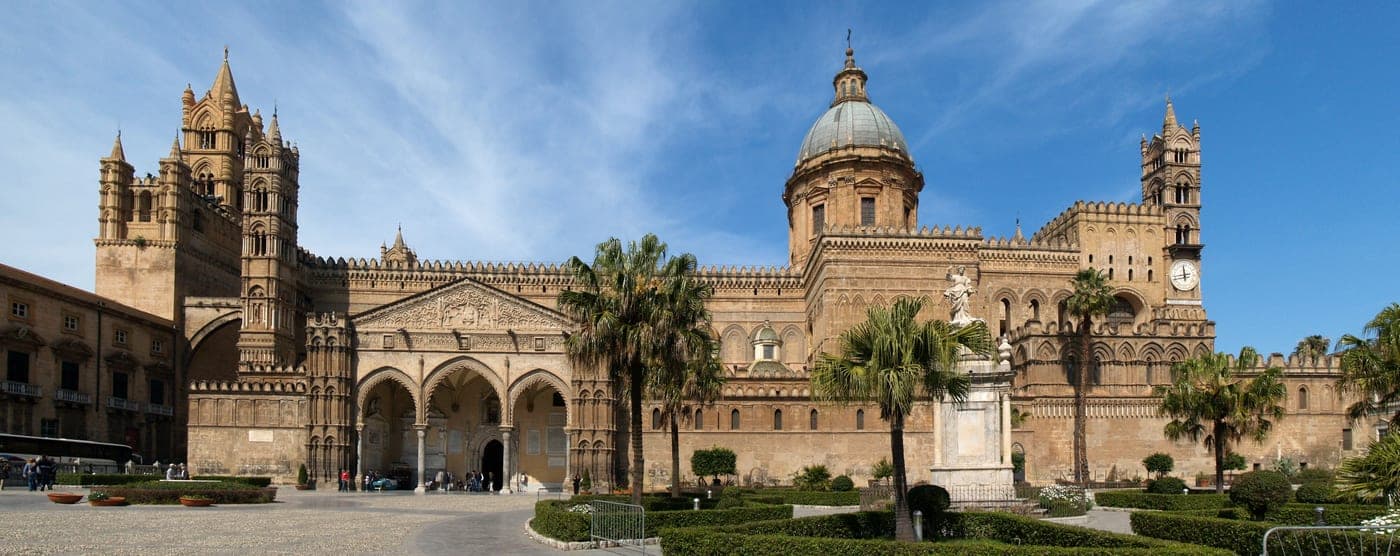
The best place to taste a proper cannolo is a Sicilian pasticceria, particularly in cities with strong pastry traditions such as Palermo, Catania and Syracuse. Monreale, in the hills just south-west of Palermo, is also known for its pastry shops, and a cannolo there makes a fitting end to a visit to its Norman cathedral.
Cannoli are found all over Sicily, but quality varies with each shop's commitment to freshness: pre-filled pastries left on a counter will have lost their texture. Late morning or early afternoon is a good time to visit, and a glass of Marsala or passito turns a simple sweet into a memorable taste of Sicily.
Where to try it
1 destination
 Wine Tasting
Monreale
Town near Palermo famous for Norman cathedral and surrounding wine estates.
Wine TastingHiking
1 region
- Wine Tasting21 destinations
Sicily
Sicily, the largest island in the Mediterranean, boasts a rich tapestry of history and culture. Its unique position has made it a crossroads of civilizations, evident in the remnants of Greek temples in Agrigento and the Arab-Norman architecture in Palermo. The island features a diverse landscape, from the volcanic Mount Etna to the picturesque coastal towns of Taormina and Cefalù. Sicilian cuisine stands out for its use of fresh ingredients, with specialties like arancini and cannoli. The region is also famous for its local wines, particularly Nero d'Avola. Off the beaten path, discover the ancient ruins of Selinunte or the quaint streets of Erice. With charming villages and vibrant markets, Sicily offers a deep dive into authentic Italian culture and history.
Wine TastingHikingBoat RentalsAgritourism





