Bistecca alla fiorentina
A massive T-bone steak, ideally from Chianina cattle, grilled rare and shared
- Local name
- Bistecca alla fiorentina
- Served with
- White beans, roast potatoes
- Best eaten at
- A Florentine trattoria
- Pairs with
- Chianti Classico
What it is
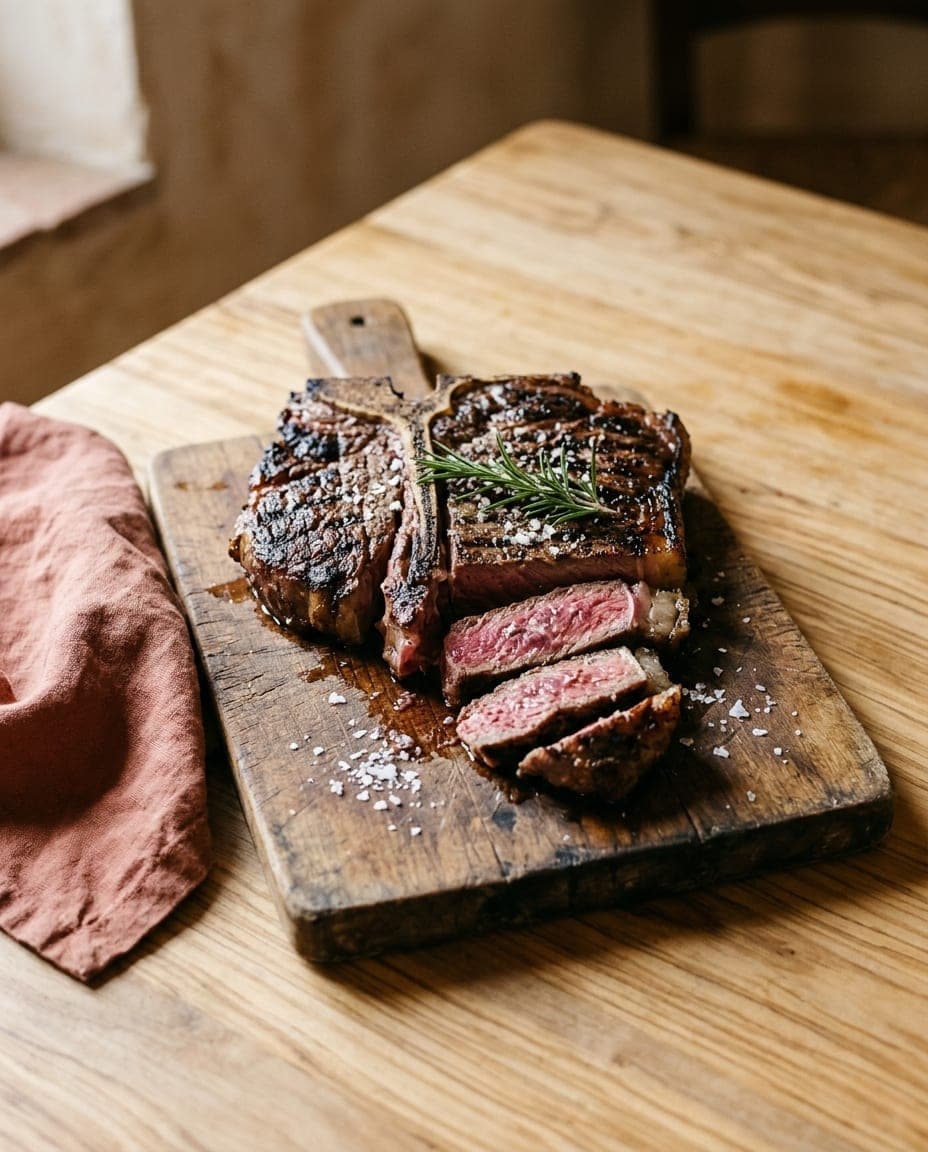
The bistecca alla fiorentina is not merely a dish but an institution of Florence. It is a massive cut of beef, a T-bone or porterhouse that includes both the fillet and the sirloin either side of the bone, grilled over wood embers or charcoal and served rare. The defining characteristic of the dish is its sheer scale. A proper fiorentina is cut very thick and often weighs well over a kilogram, so it is usually priced by weight rather than as a single portion. It is designed to be shared among diners at a table, not eaten by one person alone.
To order a bistecca is to commit to a specific culinary ritual. The meat is never marinated or basted with sauces during cooking. It is seasoned with coarse salt and black pepper, and perhaps drizzled with olive oil after it has been removed from the heat. The interior must remain red—al sangue; in Florence, a steak cooked much beyond rare is considered a failure of the craft. The exterior develops a dark, smoky crust while the centre stays soft and juicy.
The history of the great white cow
The identity of the bistecca alla fiorentina is closely linked to the Chianina cattle breed, one of the oldest in the world and native to the Valdichiana, the valley in the provinces of Arezzo and Siena south-east of Florence. These animals are known for their striking white coats and large size, and were historically bred as draught cattle for pulling ploughs rather than for meat. Over time they became prized for beef too, and Chianina is now the most celebrated choice for a fiorentina, although steaks from other breeds are widely served.
The exact origins of the dish are debated among food historians, and the stories told about its invention are best treated as legend. What is certain is that the steak became a symbol of Florentine hospitality and abundance. It was not always affordable for the average citizen, but over time it became a fixture of local feasts and family gatherings, and today it is prized for its lean meat and full flavour.
How it is prepared
The cooking method is deceptively simple but demands precision. The steak is placed over glowing embers rather than open flames, which would burn the surface too quickly. It is turned only once, a few minutes on each side, so that an even crust forms without overcooking the interior. Many cooks then stand the steak upright on its bone for a few minutes so the heat reaches the meat closest to it.
Seasoning is minimal. Coarse salt and freshly ground black pepper are the rule, and some cooks add a final drizzle of extra virgin olive oil, but no herbs, garlic or marinades are used. The result is a dish where the flavour of the beef and the smoke of the embers take centre stage.
The serving style reinforces its communal nature. The steak is usually brought to the table whole to be admired, then sliced and served on or beside the bone, accompanied by white beans or roast potatoes. Seeing the colour of the meat as it is cut is part of the ritual.
The ban that nearly ended it
In January 2001, at the height of the BSE ("mad cow") crisis, the European Union required the spinal column to be removed from cattle over 12 months old. Because the T-bone is part of the vertebra, this effectively took the classic bistecca alla fiorentina off Italian menus.
The decision caused an uproar in Florence, where the steak is considered a cultural treasure. The restriction was eased only gradually and at EU level, not through any Tuscan exemption: the fiorentina returned to the table in the mid-2000s, the age limit was raised to 24 months in 2006, and in 2008 it was raised again to 30 months.
Today the steak is once again a staple of Florentine menus, and the memory of the ban is a reminder of how deeply rooted the dish is in local identity.
What goes into it
The list is short: a thick T-bone cut, ideally Chianina or another Tuscan-raised beef; coarse salt; black pepper; perhaps a little extra virgin olive oil; and white beans or roast potatoes on the side. The simplicity of the ingredients allows the quality of the beef to shine through. The white beans, often simply boiled and dressed with salt and olive oil, provide a soft contrast to the smoky crust of the meat and absorb its juices.
How to eat it
The bistecca alla fiorentina is best enjoyed in a traditional Florentine trattoria. It is served as a main course for lunch or dinner, usually accompanied by a glass of Chianti Classico, a red wine from the hills between Florence and Siena that complements the beef's richness; Vino Nobile di Montepulciano is another local choice.
The centre is rare, with a deep red colour that may surprise those accustomed to well-done steaks. This is not a sign of undercooking but the intended state of the dish, and many kitchens decline to cook it further.
Curious facts
- Sold by weight. Florentine butchers and restaurants price the bistecca by the kilogram, reflecting its size and shared nature.
- A breed with history. Chianina cattle are among the oldest breeds in the world, originally raised for ploughing fields rather than for eating.
- The 2001 ban. EU BSE rules on the spinal column kept the T-bone off menus for several years after 2001.
- A shared meal. The steak is designed for a table of diners rather than a single plate.
Where to try it
The most authentic experience is found in Florence itself, where the bistecca alla fiorentina is a staple in nearly every traditional trattoria. Establishments that specialise in local meat often highlight their use of Chianina beef.
Beyond the city, Panzano in Chianti offers another opportunity to taste the dish in a rural setting, and in the Valdichiana and around Arezzo the tradition continues in smaller, family-run osterie close to where the Chianina is raised. As the steak is sized for sharing, it is best ordered by a group, with room saved for the white beans or potatoes that provide a counterpoint to the bold flavour of the beef.
Where to try it
2 destinations
 Wine Tasting
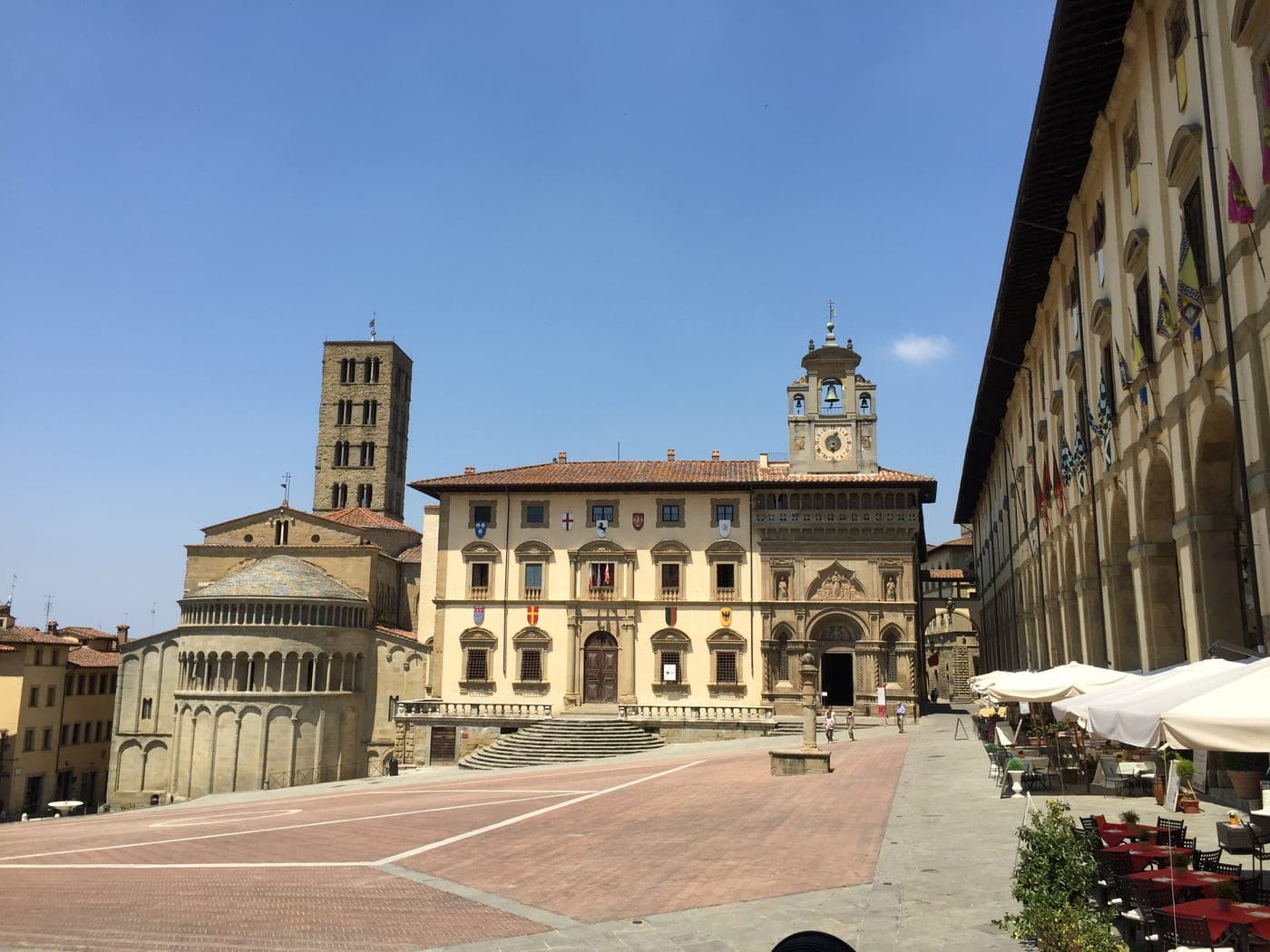
Arezzo
Arezzo is a historic city in eastern Tuscany, known for its Renaissance art, medieval architecture, and proximity to several wine regions including Chianti and Vino Nobile di Montepulciano. The sloping Piazza Grande hosts one of Italy's most important antique markets, while churches contain masterpieces by Piero della Francesca and other Renaissance artists. The city blends cultural richness with Tuscan wine traditions, serving as a gateway to explore surrounding vineyards while offering authentic urban life with local markets, traditional restaurants, and artisan workshops that have operated for generations.
Wine TastingHiking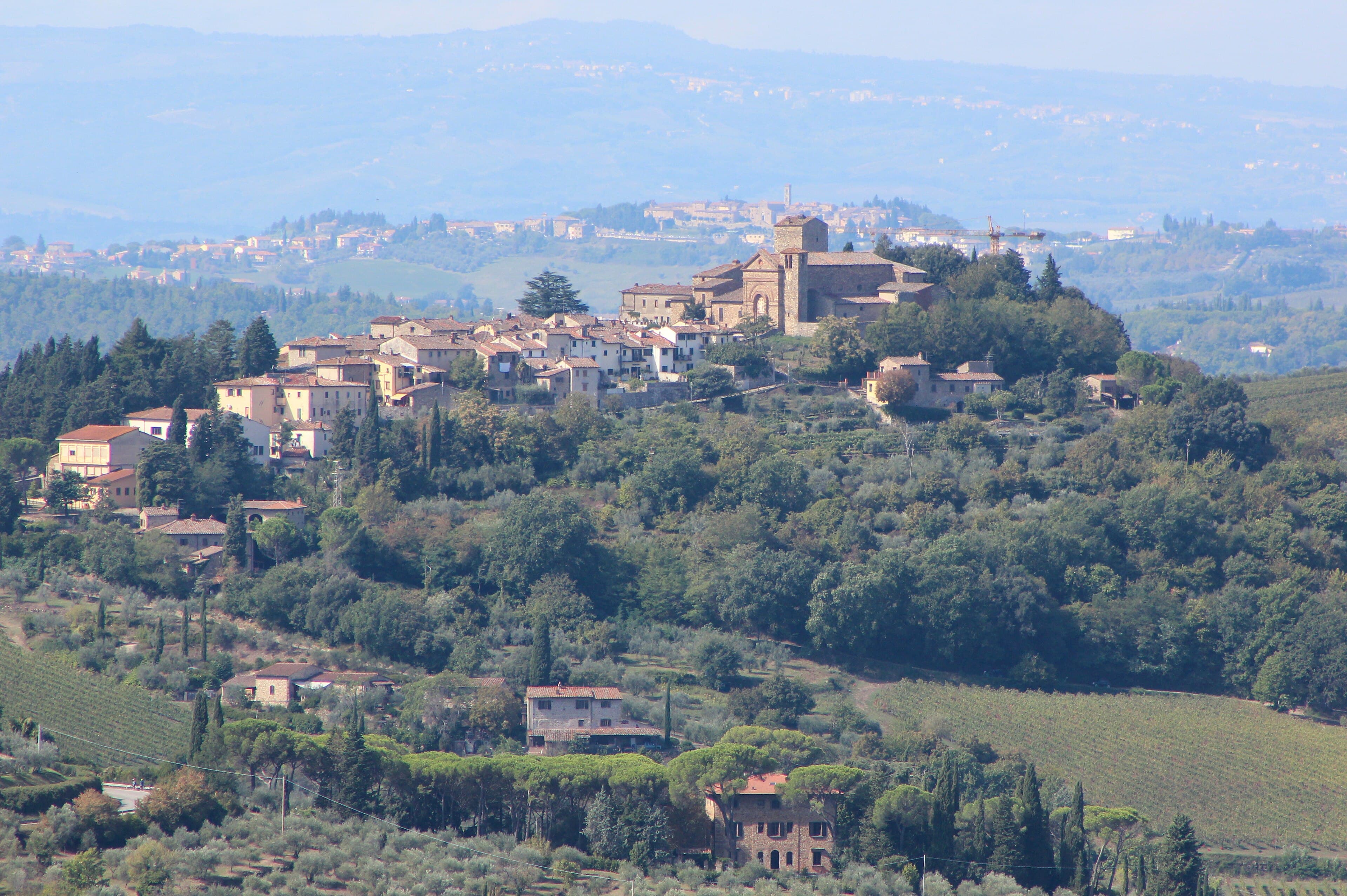 Wine Tasting
Panzano in Chianti
Hilltop village in Chianti Classico famous for butchers and excellent wine production.
Wine TastingHiking
1 region
 Wine Tasting38 destinations
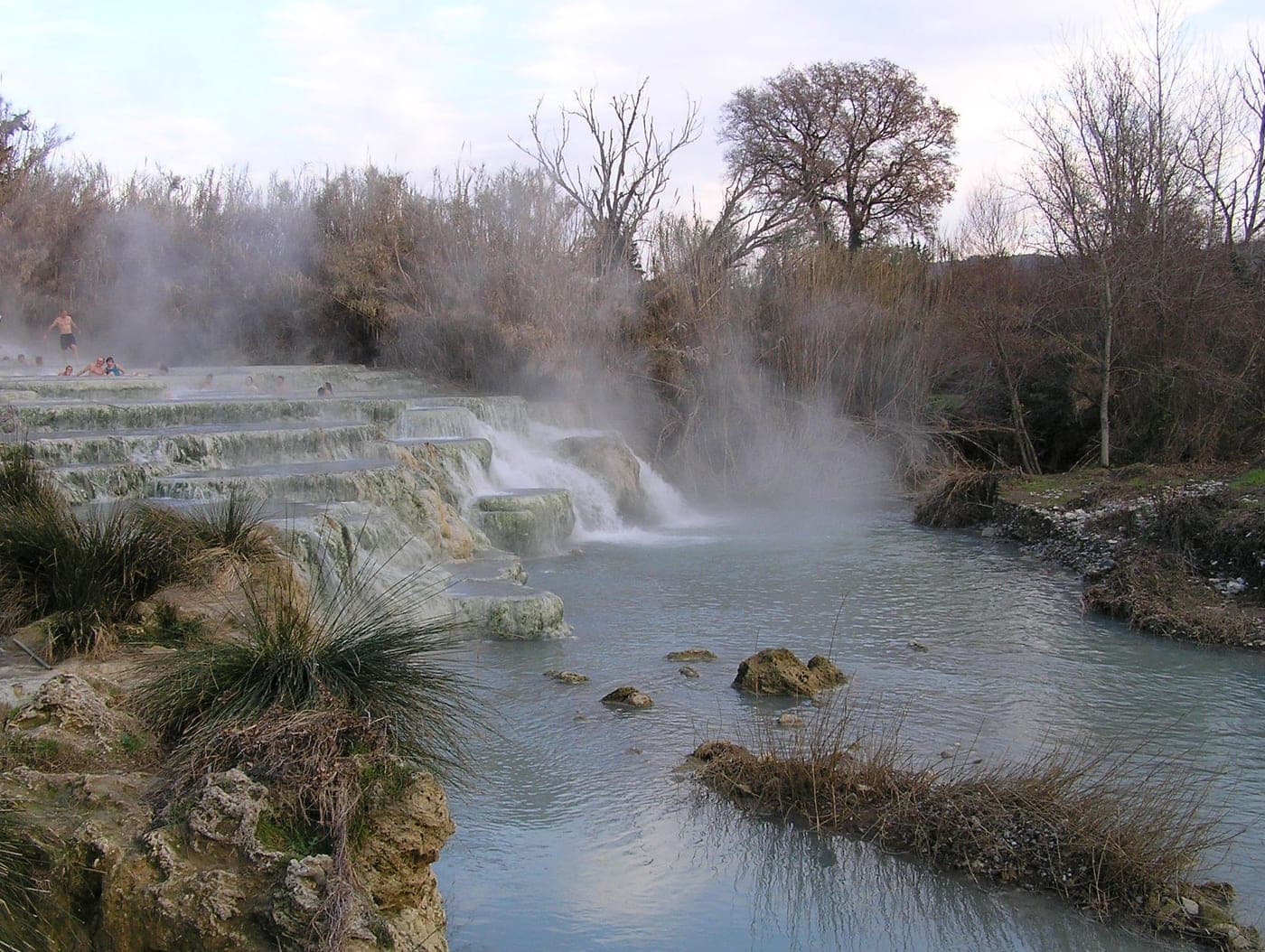
Tuscany
Tuscany, known for its rolling hills and rich history, is the second-largest region in Italy. Florence, its capital, is renowned for Renaissance art and architecture, but also worth exploring are smaller towns like Pienza, famous for pecorino cheese, and San Gimignano, known for its medieval towers. The region boasts diverse landscapes from the Chianti vineyards to the coastal Maremma. Tuscany is also celebrated for its local festivals, such as the Palio di Siena, and its traditional cuisine that emphasizes fresh, local ingredients. This area offers a glimpse into Italy's agrarian past with its rustic farms and olive groves, making it a unique place to slow down and connect with the local culture.
Wine TastingThermal SpasHikingAgritourism





