Regensburger Bratwürste (Wurstkuchl)
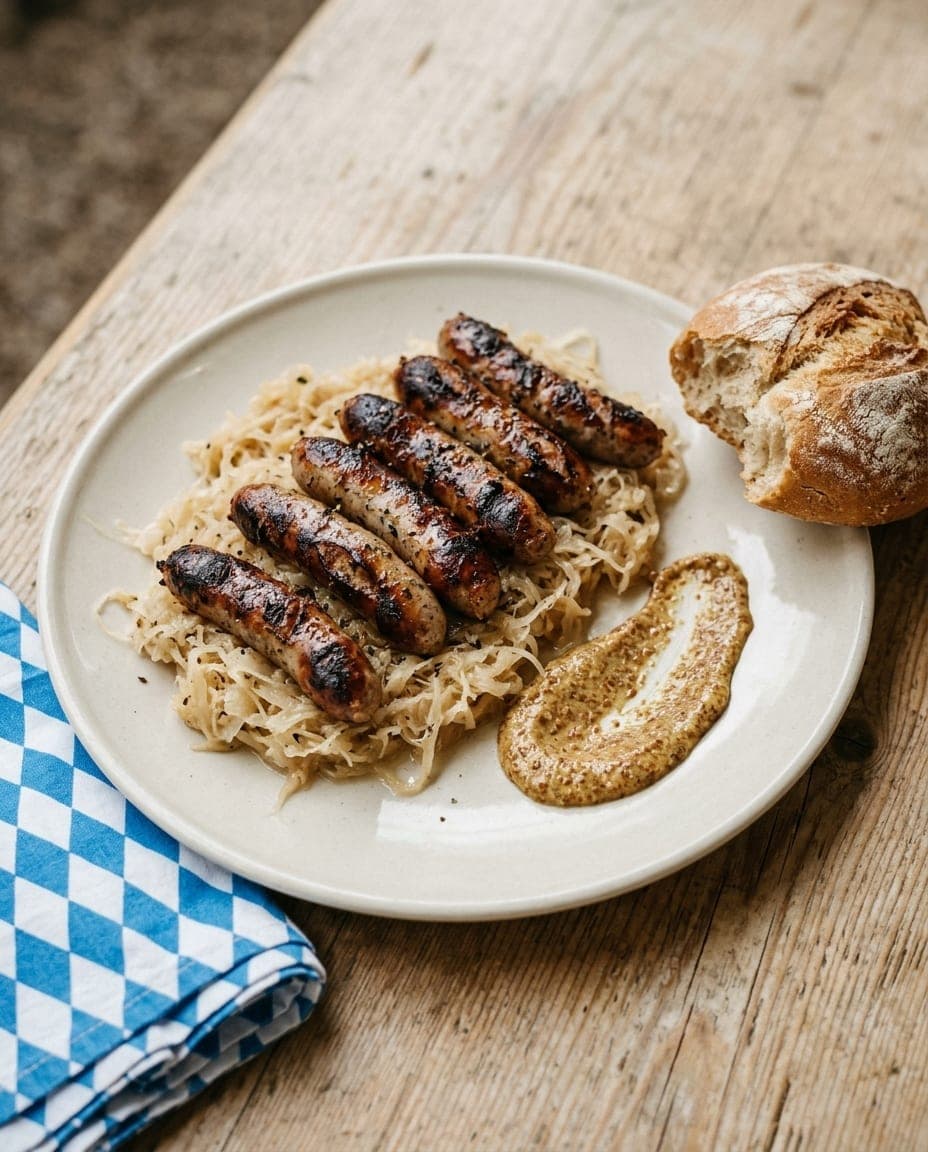
Small charcoal-grilled pork sausages served with sauerkraut at a riverside kitchen in Regensburg
- Local name
- Regensburger Bratwürste
- Served with
- Sauerkraut, sweet mustard, roll
- Best eaten at
- A Danube-side sausage kitchen in Regensburg
- Pairs with
- Bavarian lager
What it is
Regensburger Bratwürste are small, slender pork sausages grilled over charcoal and served as a quick, hearty meal on the banks of the Danube in Regensburg. They are the signature offering of the Historische Wurstküche, known locally as the Wurstkuchl, a low stone kitchen that stands beside the medieval Stone Bridge. It is often described as perhaps the oldest continuously open public eatery in the world, though how far back that continuity reaches is a matter of local tradition as much as surviving records.
The sausages themselves are modest in size: around ten centimetres long and barely thicker than a little finger. They are made from pork, according to the kitchen from lean ham meat, to a recipe kept in-house. The defining feature is the cooking method: they are grilled over an open charcoal fire until the skin is crisp and browned, then served immediately.
The meal is completed by the house sauerkraut, a sweet mustard and a bread roll on the side. Portions come in six, eight or ten sausages, usually on a bed of sauerkraut. It is a dish that prioritises flavour and speed over ceremony.
The legend of the stone bridge kitchen
The Wurstkuchl traces its story back to the construction of the Stone Bridge between 1135 and 1146. According to the kitchen's own history, a building on this spot served as the site office for the bridge works and afterwards became a cookshop feeding dock workers, boatmen and the masons of the nearby cathedral workshop. A cookshop here is documented in 1378, and archaeologists have found traces of a 12th-century predecessor of similar size; the present building dates mainly from the 17th century.
For centuries the speciality was boiled meat. Grilled sausages became the main dish only after 1806, when the family that still runs the kitchen took it over.
The building itself is unassuming: a single-storey stone structure with a small dining room that seats around 35 people, reached through the kitchen. In summer most guests eat outside on wooden benches and tables facing the river. The view of the bridge and the old town's medieval towers adds a historic backdrop to the simple act of eating a sausage.
How it is made
The sausage meat is pork, mixed with a seasoning blend that gives the sausages their distinctive aroma, and stuffed into narrow natural casings. The sausages are grilled over charcoal on an open fire in the kitchen, turned frequently to ensure even cooking and a crisp exterior.
The accompaniments are equally traditional. The sauerkraut is made in-house: white cabbage from a local grower ferments in wooden barrels in the kitchen's historic cellar, which handles tens of tonnes a year. The mustard is a sweet Bavarian-style mustard, also made in-house, with a touch of horseradish for a spicy edge. It complements the smoky char of the sausages without masking it.
How it is eaten
Regensburger Bratwürste are designed for speed and ease of eating. The sausages arrive hot on a plate with sauerkraut, and mustard is spread or dipped as the diner prefers. The small size means they are easy to eat several at a time, with the roll used to mop up juices.
The meal is typically eaten at the benches outside or in the small dining room. The sauerkraut provides a tangy contrast to the smoky char of the meat.
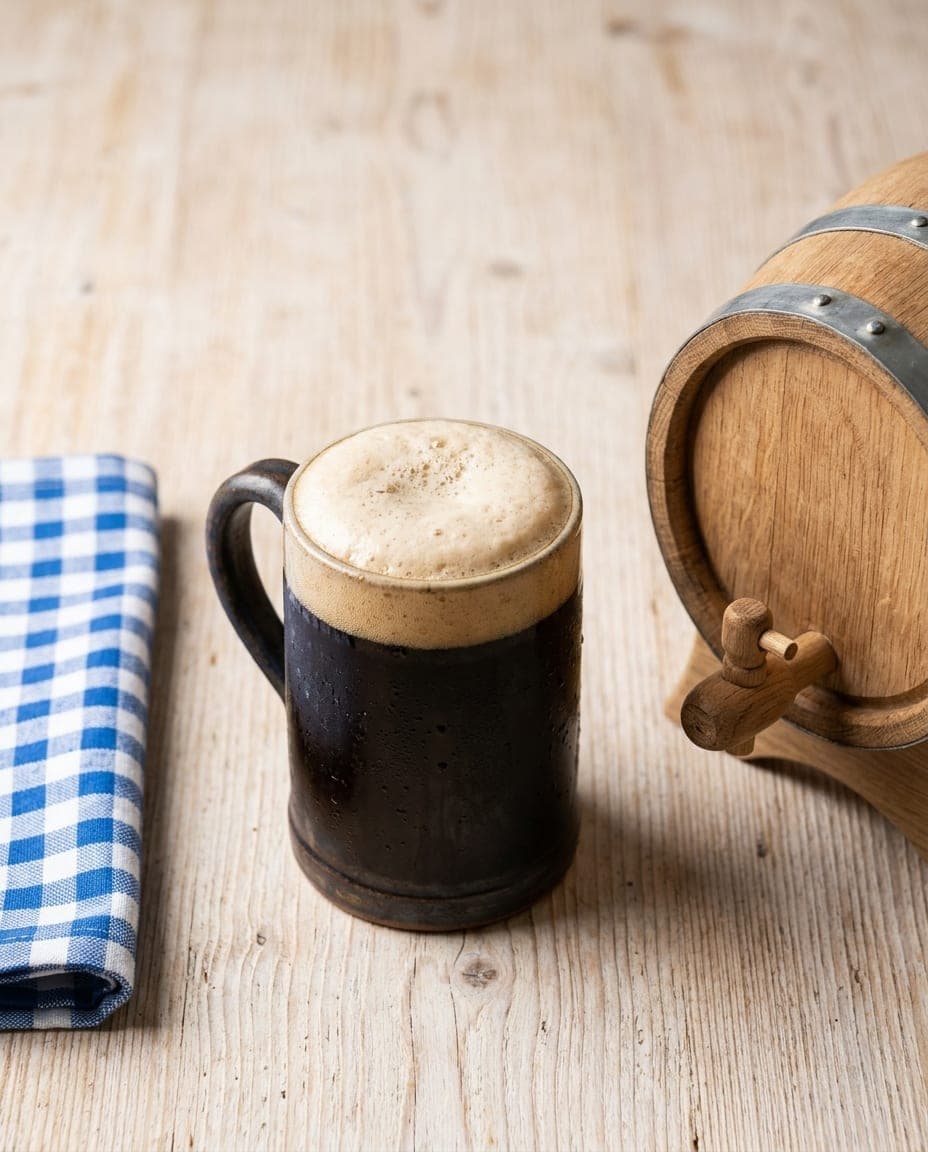
A glass of Bavarian lager is the usual companion. The beer's carbonation and slight bitterness cut through the fat of the pork and the sweetness of the mustard, balancing the flavours in each bite.
Curious facts
- The stone bridge connection. The kitchen stands directly beside the Stone Bridge, built between 1135 and 1146, and its history is tied to the bridge's construction.
- Sausages since 1806. Grilled sausages have been the speciality only since the early 19th century; before that, the kitchen was known for boiled meat.
- Small by design. The sausages are about ten centimetres long and barely a finger thick, so they are ordered in sixes, eights or tens.
- Sweet mustard tradition. The mustard is a house-made sweet variety, distinct from the sharper mustards common in other parts of Germany.
- Home-made sauerkraut. The cabbage ferments in wooden barrels in the kitchen's own cellar.
Where to try it
The place to eat Regensburger Bratwürste in their original context is the Wurstkuchl on the banks of the Danube in Regensburg. While small grilled sausages are common throughout Bavaria, the combination of the charcoal-grilled pork, the sweet mustard, the house sauerkraut and the riverside setting belongs to this single location.
The kitchen is open daily from morning until early evening. In summer, the atmosphere is lively with locals and tourists alike eating in the open air with a view of the Stone Bridge; in winter, guests retreat to the small dining room inside. The experience is casual and direct, a place to eat quickly and watch the river flow past.
Where to try it
1 destination
 Camper Van Rentals
Regensburg
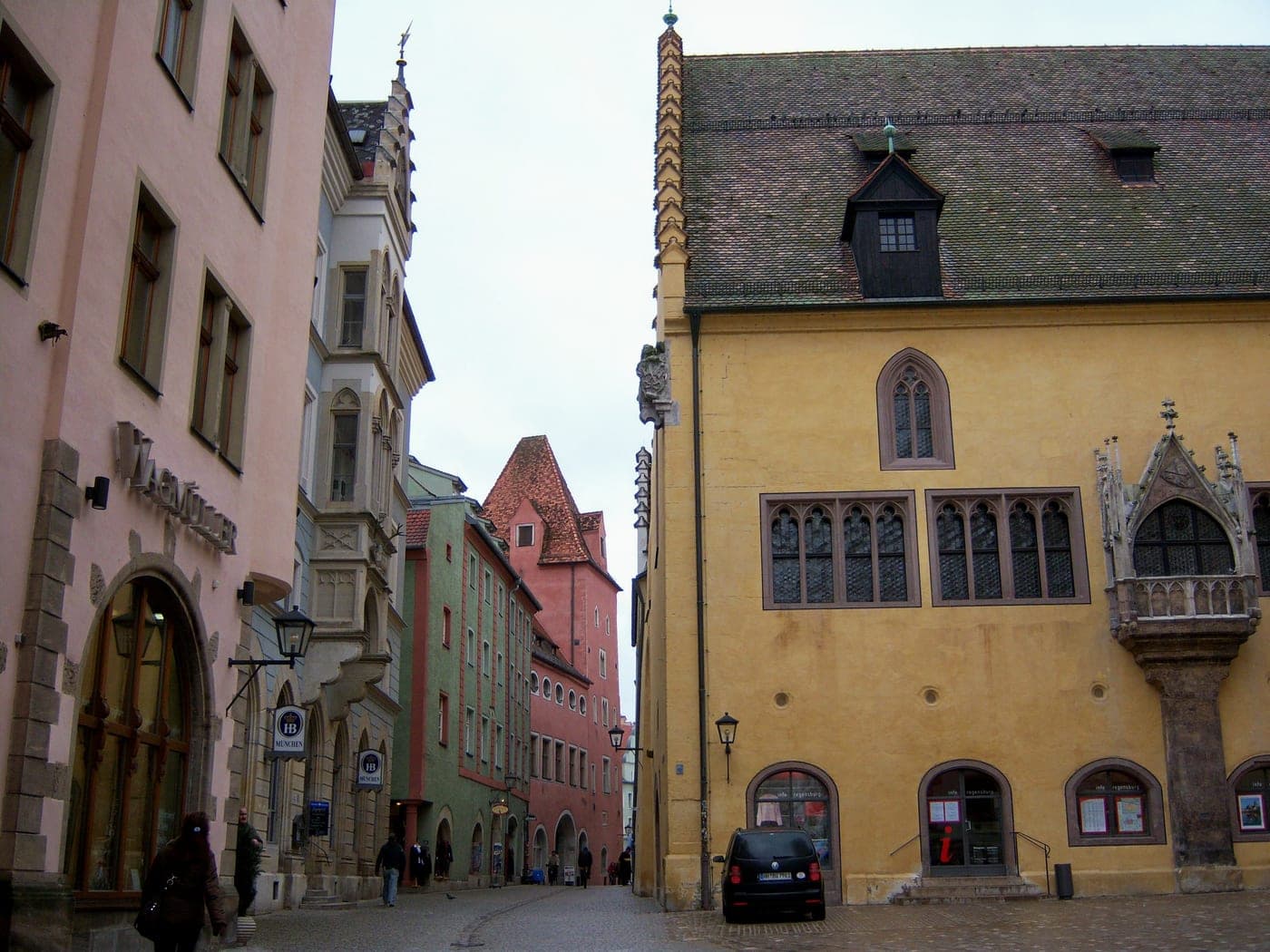
Medieval Bavarian city on Danube with Gothic cathedral and stone bridge.
Camper Van RentalsHiking
1 region
 Cabins31 destinations
Bavaria
Bavaria is Germany's largest state, and one of its most varied. In the south, the land rises into the Alps, with peaks above Berchtesgaden and Garmisch-Partenkirchen, and lakes such as the Chiemsee and the Königssee nearby. Further north, the hills flatten into the Franconian wine country, where Silvaner and Müller-Thurgau vines cover slopes above the Main river. Between these two landscapes sit market towns, river cities, and castle villages that reward slow attention. Munich, the state capital, has its beer gardens, its baroque churches, and its markets selling Weißwurst in the morning. But much of Bavaria's character lives outside the capital, in places built for a quieter pace. Regensburg, on the Danube, keeps a medieval old town of narrow lanes, stone bridges, and merchant houses that once served river trade. Bamberg spreads across seven hills and several arms of the Regnitz river, and is known for its smoked Rauchbier, brewed in local taverns much as it always has been. Rothenburg ob der Tauber sits inside its own medieval walls, with half-timbered houses and a walkway along the ramparts that circles the whole old town. Franconia, in the north, is Bavaria's wine country. Vineyards climb the terraces above Würzburg and along the Main, and small wine villages sell their own vintages from cellar doors and courtyard taverns. The wine here is usually bottled in the round Bocksbeutel flask, a shape associated with the region. Cycling paths follow the river through the vines, linking one village to the next at an easy, level pace, past chapels, wine presses, and stone crosses set among the rows. In the Allgäu, close to the Austrian border, the town of Füssen sits below the castle hill of Neuschwanstein, built by King Ludwig II in the nineteenth century. The castle draws attention, but the surrounding countryside holds its own appeal: lakes, foothills, and villages where farming and dairy traditions continue much as before. Bavaria's lakes add another layer of slowness. The Chiemsee, the largest, can be crossed by boat to its island monasteries, where former royal buildings and quiet cloisters sit surrounded by water and reed beds. Smaller lakes near the Alpine foothills, such as the Staffelsee and the Ammersee, are ringed by paths used for walking and cycling rather than for speed. Food and drink run through the region's identity. Beer gardens, some centuries old, work on a simple principle: food brought from home, a beer ordered at the counter, a seat under chestnut trees for as long as the weather allows. Franconian taverns serve local wine alongside dishes built around potatoes, dumplings, and river fish. Bakeries sell pretzels still warm from the oven, and markets in towns like Nuremberg keep old traditions of spiced gingerbread and roasted sausages. A morning market in Regensburg, an afternoon among the Franconian vines, an evening in a Bamberg tavern: each has its own pace. Villages across Bavaria keep their own customs — wine festivals in Franconia, woodcarving and dairy traditions in the Alpine foothills. Mountains and vineyards, river cities and castle villages: Bavaria fits them into a single state, each within reach of the next.
CabinsCastlesHikingCamper Van Rentals