Quarkkäulchen
Saxon fried cakes of quark, potato and cinnamon sugar
- Vegetarian
- Local name
- Quarkkäulchen
- Served with
- Apple sauce
- Best eaten at
- A Saxon café
- Pairs with
- Coffee
What they are
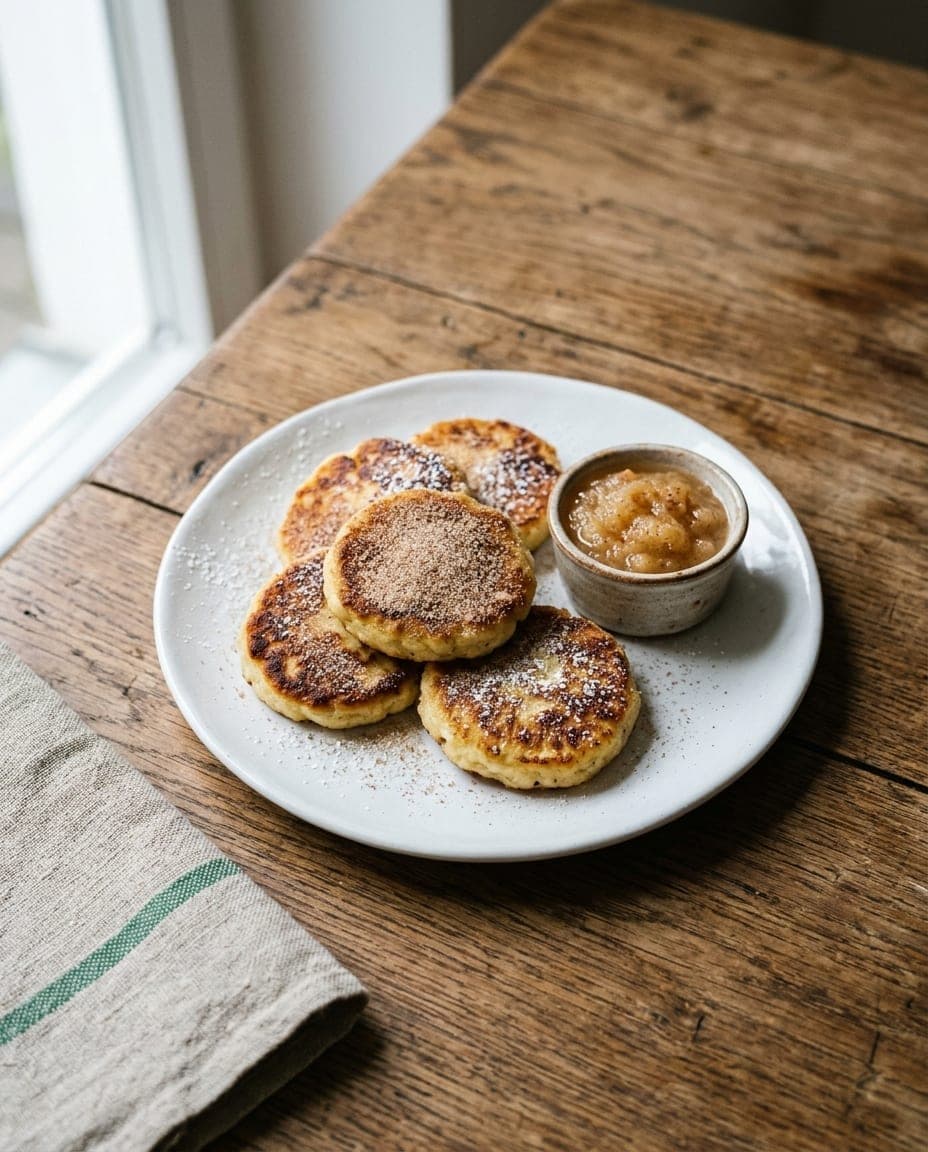
Quarkkäulchen are small, pan-fried cakes from the German state of Saxony. They look like thick, golden pancakes or fritters, but their texture is distinct: soft, slightly tangy and tender rather than cakey or crisp. The base is a simple mixture of cooked, cooled mashed potato and quark, a fresh curd cheese that is common across Germany. Egg, flour, sugar, raisins and lemon zest bind the ingredients before the batter is fried in butter until it turns a deep golden brown on both sides.
The name itself offers a clue to their character. Quarkkäulchen (also spelled Quarkkeulchen) is a Saxon name: Käulchen is a diminutive of the dialect word Kaule, a ball or round lump, so the name means roughly "little quark balls". The dish is not a nationwide German staple but a regional speciality of Saxony, particularly associated with the cities of Leipzig and Dresden. It occupies a specific place in the local culinary rhythm: a sweet main course eaten at lunch or as a substantial afternoon snack, rather than a light dessert served after a meal.
Why potato makes them Saxon
The defining feature of Quarkkäulchen is the use of potato. Quark pancakes elsewhere are often made with flour alone; in the Saxon version, a large share of mashed potato, often around two-thirds of the dough, creates a unique density and moisture that distinguishes the dish from other regional variations. The potato is not added fresh; it is traditionally boiled potato from the previous day, cooled and then mashed or grated until smooth. This practice reflects a tradition of resourcefulness common in many rural households, where nothing was wasted and leftovers were transformed into something new.
The result is a batter that holds together well during frying but remains soft inside. The quark provides a mild acidity that cuts through the sweetness of the sugar and the fat of the butter, while the potato adds body without making the cakes heavy. Raisins, sometimes soaked in rum or tea, are often folded in, offering bursts of chewy texture, though plain versions exist as well.
How they are served
Quarkkäulchen arrive hot from the pan, dusted generously with a mixture of sugar and cinnamon. The heat is essential; the butter melts into the surface, and the spices release their aroma immediately. They are rarely served alone. The traditional accompaniment is apple sauce, often made from local apples stewed until soft and slightly sweet. Some variations include stewed plums or pears, but the apple sauce remains the standard partner.
The dish is eaten as a sweet main course. It may be eaten for lunch, or in the late afternoon alongside a cup of coffee. It is substantial enough to replace a meal rather than cap one. The combination of warm potato, tangy quark and sweet spices creates a balance that feels both comforting and satisfying.
Where they appear
Quarkkäulchen are a fixture of traditional Saxon cafés and restaurants, places where locals meet over cake and coffee. In Leipzig and Dresden they appear on menus alongside other regional specialities such as Leipziger Allerlei, and at home they are a classic of family cooking, remembered by many East Germans as a childhood dish.
They are also found in smaller bakeries and restaurants across Saxony that focus on traditional home cooking. While the dish is not as widely exported as some German pastries, it remains a reliable presence in any establishment that takes its regional identity seriously.
Curious facts
- Leftover potato is key. The authentic version relies on cooled mashed potato from the previous day, turning a simple side dish into a new creation.
- Dialect name. Käulchen comes from the Saxon Kaule, a ball, and means "little balls".
- A sweet main course. They are often served as a meatless sweet lunch or with afternoon coffee rather than as a dessert after a meal.
- Apple sauce pairing. Stewed apple sauce is the standard accompaniment, balancing the tang of the quark with its own sweetness.
- Regional focus. The dish is most closely associated with Saxony, though it is also known in other parts of eastern Germany.
Where to try it
1 region
 Camper Van Rentals3 destinations
Saxony
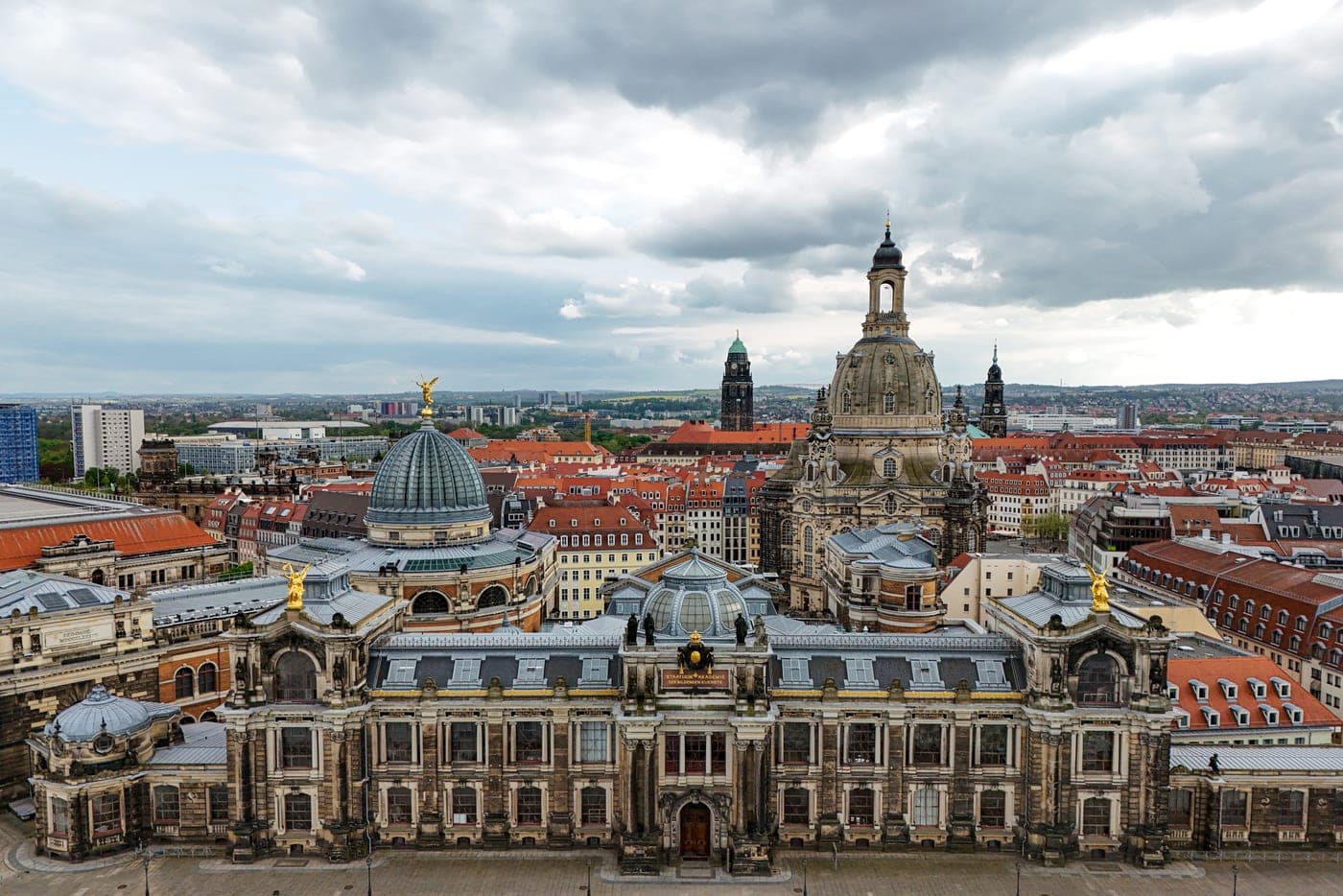
Saxony sits in the eastern corner of Germany, where the Elbe river cuts through sandstone cliffs before opening onto vineyard slopes, old market squares and quiet river towns. Its landmarks stand close enough together that a slow route through the region tends to follow the water itself, from wine terraces near Meißen to the rock plateaus above Dresden and the old craft towns further east. Between Pirna and Meißen the Elbe valley softens into one of Germany's smallest wine regions, a narrow band of terraced vineyards known locally as the Sächsische Weinstraße. Riesling and Müller-Thurgau grow on steep slopes above the river, alongside Goldriesling, a grape found almost nowhere else. Small wineries around Radebeul and Diesbar-Seußlitz open their cellars for tastings, and cycling paths thread through the vines past baroque villas and old wine presses built into the hillside. Dresden's rebuilt old town gathers around the Elbe's curve. The Frauenkirche's stone dome rises over a square lined with baroque facades, the Zwinger holds courtyards once used for royal festivities, and the Semperoper stages opera beside collections of old master paintings and porcelain built up by Saxony's electors. The riverside terraces on either bank give a clear view of the skyline and are used for walking rather than for any particular sight. A short stretch upstream, Meißen has made porcelain since 1710, and its manufactory still marks pieces with the blue crossed swords first used to guard the recipe. Workshops there remain open for viewing, and the town's own hilltop cathedral and castle look down over the river from above the vineyards. West of the Elbe, the wooded Erzgebirge hills carry a different craft tradition: turners and carvers in towns such as Seiffen have shaped nutcrackers, incense smokers and candle pyramids for generations, work that fills the region's Christmas markets each winter. South-east of Dresden, the sandstone plateaus of Saxon Switzerland rise straight out of the forest. Deep gorges cut between the flat-topped hills, and paths climb to viewpoints such as the Bastei, where the sandstone has weathered into towers, arches and narrow ridges. Painters of the German Romantic period worked from these same outcrops, and the light across the plateau still shifts through the day in a way that made the landscape famous long before it became a national park. West of Dresden, Leipzig tells a different part of Saxony's story. Bach directed music at the Thomaskirche for almost three decades, and the church still holds regular concerts drawing on that tradition. The city built its wealth on trade fairs and publishing rather than a royal court, and that older commercial energy now shows in a large student population, independent bookshops and cafes, and former cotton mills and rail yards converted into galleries and studios. Further east, Bautzen keeps its old town wall and a line of towers above the Spree river, and remains one of the centres of Sorbian culture, a Slavic minority whose language, dress and Easter egg traditions are still visible around the town, especially at Easter. Near the Polish border, Görlitz preserves long streets of Gründerzeit and older facades that survived the twentieth century largely undamaged, giving its old town an unusually complete and continuous look. Festivals mark the Saxon year in different corners of the region: organ and choral concerts fill Dresden's and Leipzig's churches, autumn wine festivals bring open cellars to the Elbe valley towns, and lit wooden pyramids and carved figures fill Erzgebirge markets through December. Moving between the wine slopes, the sandstone hills and the old craft and university towns, Saxony reads less like a single sight and more like a set of related landscapes, each shaped by a particular trade or river bend, and each within easy reach of the next.
Camper Van RentalsHikingCabins