Saxony sits in the eastern corner of Germany, where the Elbe river cuts through sandstone cliffs before opening onto vineyard slopes, old market squares and quiet river towns. Its landmarks stand close enough together that a slow route through the region tends to follow the water itself, from wine terraces near Meißen to the rock plateaus above Dresden and the old craft towns further east.
Between Pirna and Meißen the Elbe valley softens into one of Germany's smallest wine regions, a narrow band of terraced vineyards known locally as the Sächsische Weinstraße. Riesling and Müller-Thurgau grow on steep slopes above the river, alongside Goldriesling, a grape found almost nowhere else. Small wineries around Radebeul and Diesbar-Seußlitz open their cellars for tastings, and cycling paths thread through the vines past baroque villas and old wine presses built into the hillside.
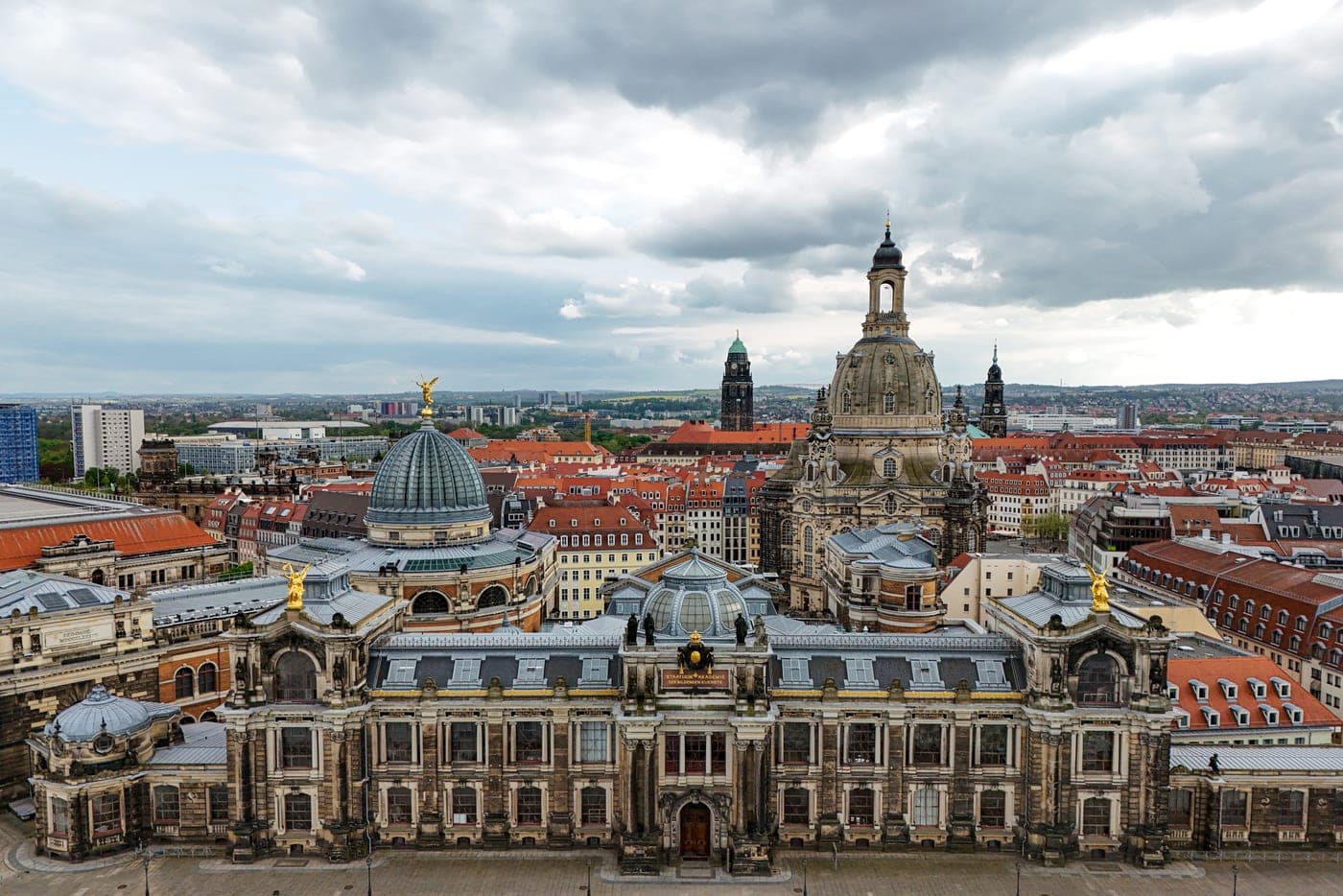
Dresden's rebuilt old town gathers around the Elbe's curve. The Frauenkirche's stone dome rises over a square lined with baroque facades, the Zwinger holds courtyards once used for royal festivities, and the Semperoper stages opera beside collections of old master paintings and porcelain built up by Saxony's electors. The riverside terraces on either bank give a clear view of the skyline and are used for walking rather than for any particular sight.
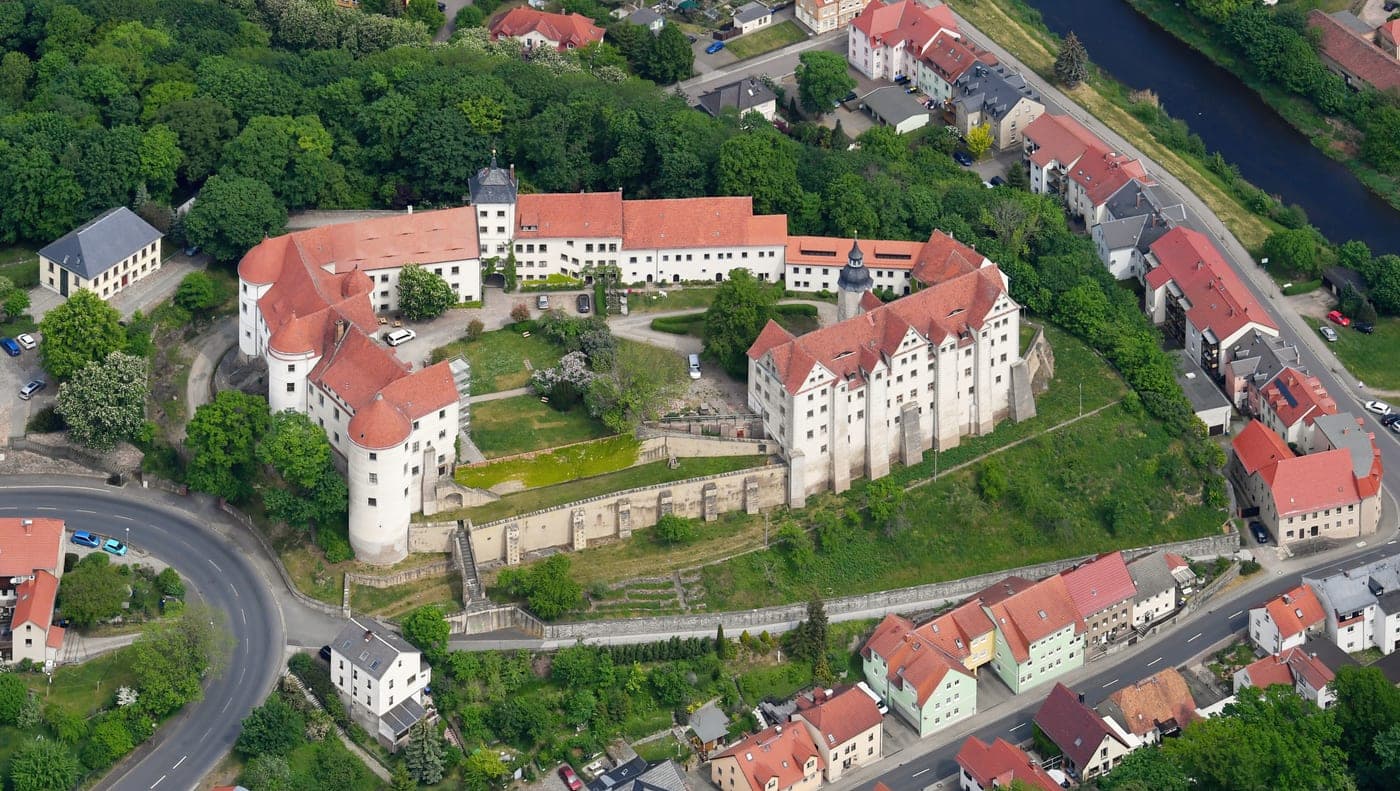
A short stretch upstream, Meißen has made porcelain since 1710, and its manufactory still marks pieces with the blue crossed swords first used to guard the recipe. Workshops there remain open for viewing, and the town's own hilltop cathedral and castle look down over the river from above the vineyards. West of the Elbe, the wooded Erzgebirge hills carry a different craft tradition: turners and carvers in towns such as Seiffen have shaped nutcrackers, incense smokers and candle pyramids for generations, work that fills the region's Christmas markets each winter.
South-east of Dresden, the sandstone plateaus of Saxon Switzerland rise straight out of the forest. Deep gorges cut between the flat-topped hills, and paths climb to viewpoints such as the Bastei, where the sandstone has weathered into towers, arches and narrow ridges. Painters of the German Romantic period worked from these same outcrops, and the light across the plateau still shifts through the day in a way that made the landscape famous long before it became a national park.
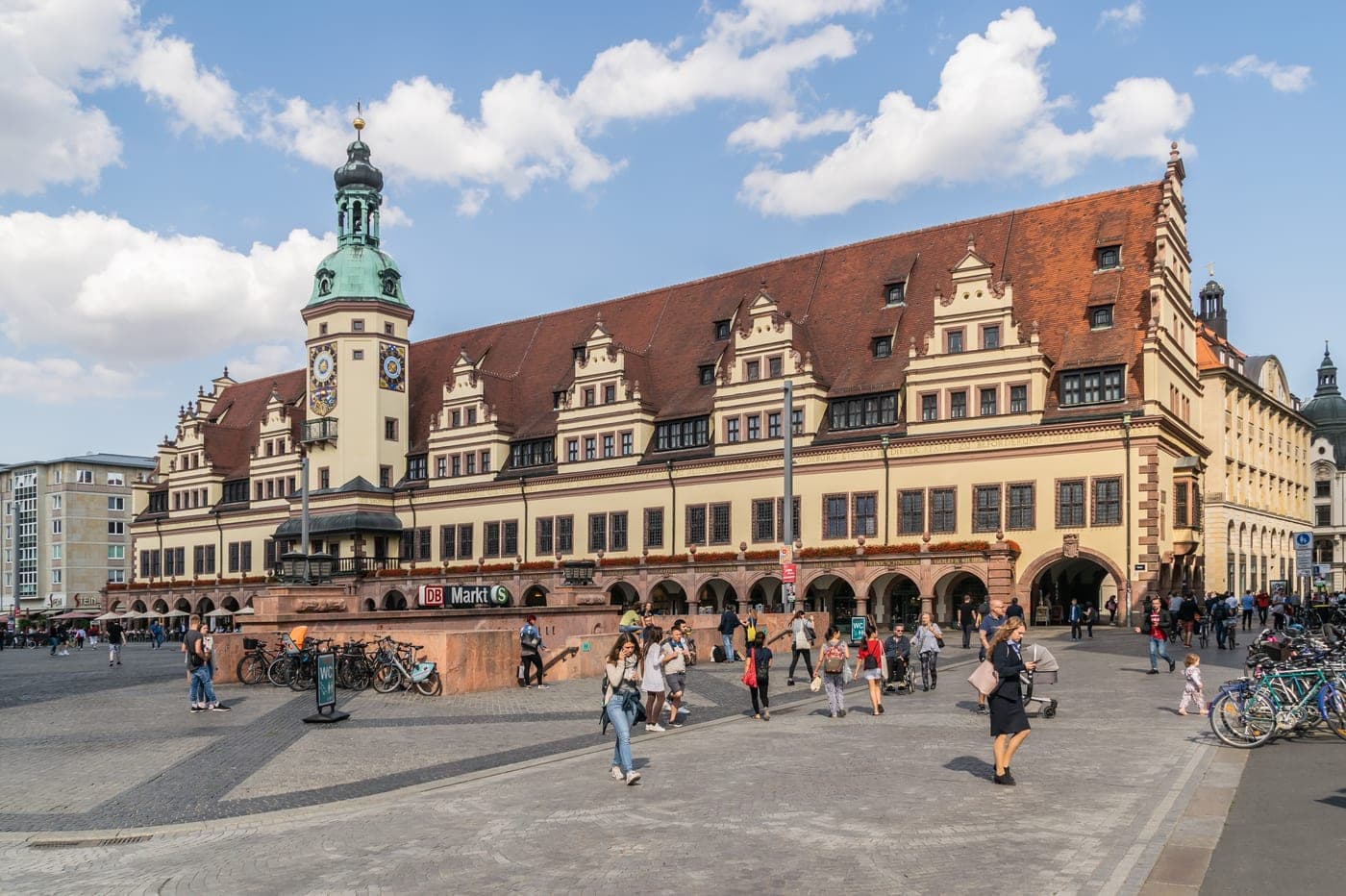
West of Dresden, Leipzig tells a different part of Saxony's story. Bach directed music at the Thomaskirche for almost three decades, and the church still holds regular concerts drawing on that tradition. The city built its wealth on trade fairs and publishing rather than a royal court, and that older commercial energy now shows in a large student population, independent bookshops and cafes, and former cotton mills and rail yards converted into galleries and studios.
Further east, Bautzen keeps its old town wall and a line of towers above the Spree river, and remains one of the centres of Sorbian culture, a Slavic minority whose language, dress and Easter egg traditions are still visible around the town, especially at Easter. Near the Polish border, Görlitz preserves long streets of Gründerzeit and older facades that survived the twentieth century largely undamaged, giving its old town an unusually complete and continuous look.
Festivals mark the Saxon year in different corners of the region: organ and choral concerts fill Dresden's and Leipzig's churches, autumn wine festivals bring open cellars to the Elbe valley towns, and lit wooden pyramids and carved figures fill Erzgebirge markets through December. Moving between the wine slopes, the sandstone hills and the old craft and university towns, Saxony reads less like a single sight and more like a set of related landscapes, each shaped by a particular trade or river bend, and each within easy reach of the next.